
What Crane Positioning Accuracy Data Reveals About Lifting Risk
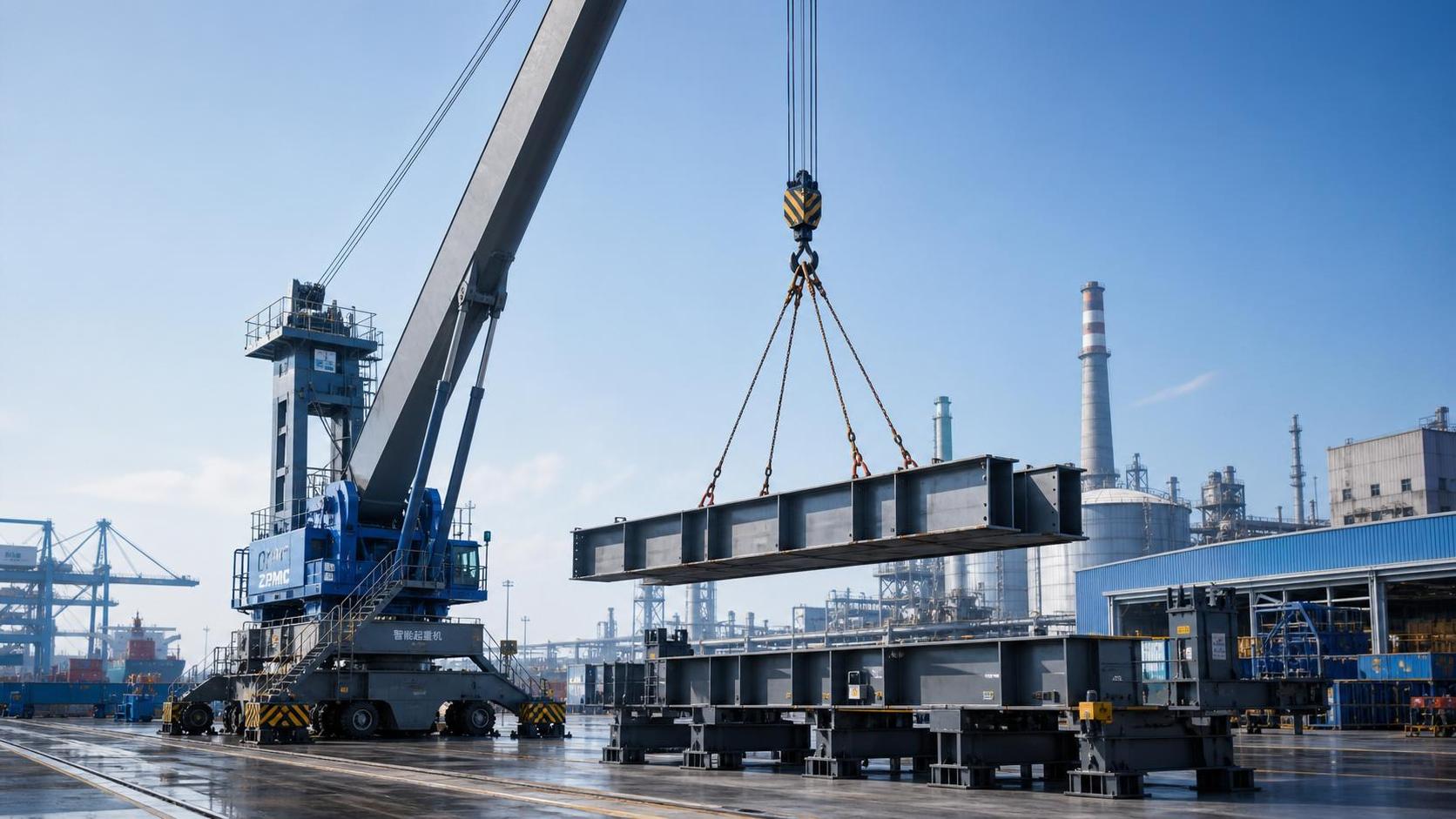
Crane positioning accuracy data is often treated as a technical detail, yet it says far more about lifting risk than many project reviews reveal. Small deviations in hook location, swing control, or final placement can signal instability in site conditions, operator consistency, equipment response, and load behavior. In sectors where heavy lifting connects construction, manufacturing, metals handling, logistics, and infrastructure delivery, those signals matter because they shape safety exposure, schedule confidence, and cost predictability.
Why positioning accuracy has become a practical risk indicator
Lifting operations are under growing pressure to be faster, safer, and more traceable. That shift has made crane positioning accuracy data useful beyond maintenance teams and equipment suppliers.
It now supports broader industrial decisions, especially where projects depend on modular installation, steel structure assembly, plant expansion, port handling, precast placement, or automated material flow.
A crane can complete a lift without incident and still produce warning signs. Repeated micro-corrections, slow settling, and variable landing precision may indicate elevated risk even before a visible failure occurs.
That is why crane positioning accuracy data increasingly appears in discussions about industrial safety, digitalized operations, and supply chain resilience. It offers measurable evidence instead of assumption.
What crane positioning accuracy data actually measures
At a basic level, crane positioning accuracy data describes how closely actual load movement matches the intended lifting path and final target position.
That can include horizontal offset, vertical placement error, swing amplitude, response lag, drift during hoisting, and the number of corrections needed before release.
In more connected operations, the data may also be linked with wind readings, load weight, lifting radius, operator inputs, cycle times, and ground or structural conditions.
Simple data sets answer one question: was the load placed correctly? Better data sets answer a more useful question: how stable and repeatable was the entire lifting process?
Accuracy is not the same as capacity
Many lifting plans focus heavily on rated capacity, boom configuration, and clearance. Those are essential, but they do not fully describe operational control.
A crane may be operating within load limits while still showing poor positional control. That gap is where hidden lifting risk often develops.
What the data reveals about real lifting risk
When reviewed carefully, crane positioning accuracy data can expose several categories of risk that are easy to underestimate during routine operations.
Load instability and uncontrolled motion
If a load repeatedly overshoots the target position or requires frequent correction, the issue may involve sling geometry, center-of-gravity misjudgment, wind influence, or delayed control response.
This matters because unstable motion raises collision risk with adjacent structures, vehicles, installed equipment, or personnel exclusion boundaries.
Environmental sensitivity
Positioning deviations that increase only during certain shifts or weather windows often point to environmental effects rather than isolated operator error.
Wind gusts, uneven ground, visibility limitations, rain, and changing surface friction can all reduce placement precision. The data helps separate pattern from anecdote.
Equipment degradation or calibration drift
A gradual decline in crane positioning accuracy data may suggest wear in control systems, sensor drift, mechanical backlash, hydraulic inconsistency, or delayed braking performance.
These trends are especially important in repetitive lifting environments where small errors can accumulate into downtime, rework, or near misses.
Process inconsistency
Two crews using the same crane on similar lifts may produce very different accuracy profiles. That difference can reflect signaling quality, path planning, communication discipline, or rigging setup.
In other words, crane positioning accuracy data often reveals process maturity, not just machine behavior.
Where the business impact becomes visible
Poor lifting accuracy does not only create safety exposure. It also affects schedule reliability and commercial performance across the project chain.
In steel erection, inaccurate placement slows bolt-up and alignment. In manufacturing plants, it can delay equipment installation and commissioning. In logistics yards or ports, it reduces handling efficiency.
For supply chain planning, repeated lifting delays can cascade into transport rescheduling, labor idle time, crane rental extension, and missed handover dates.
That broader impact fits a data-based industrial view. A positioning problem at the lifting stage can become a delivery, compliance, or cost issue downstream.
Typical scenarios where the data is most useful
The value of crane positioning accuracy data becomes clearer when the lift is complex, repetitive, or highly connected to downstream work.
- Precast and modular construction, where installation tolerance is tight and each placement affects the next sequence.
- Steel and metal fabrication projects, where beams, coils, plates, or assemblies require controlled movement near finished surfaces.
- Factory relocation or line installation, where equipment landing precision influences alignment, utilities connection, and startup timing.
- Port, warehouse, and heavy logistics operations, where cycle repetition makes even small inefficiencies commercially significant.
- Energy and infrastructure sites, where weather exposure and large lift radius increase the gap between theoretical and actual control.
Across these cases, crane positioning accuracy data works best when combined with site context rather than reviewed as an isolated machine metric.
How to interpret the numbers without oversimplifying them
Accuracy thresholds should never be read without asking what kind of lift is being performed. A tolerance acceptable for bulk material handling may be unacceptable for equipment installation.
It is also important to compare trend behavior, not just single events. One poor lift may reflect a temporary disturbance. Repeated variance usually points to a system issue.
Useful questions during review
- Does deviation increase with certain load shapes, weights, or radii?
- Are correction counts rising over time on the same crane?
- Do specific locations on site produce poorer positioning results?
- Is there a difference between day and night performance?
- Are data patterns aligned with near misses, delays, or rework records?
These questions help convert crane positioning accuracy data into operational judgment, which is more valuable than collecting numbers without follow-up.
A wider industrial context for data-based lifting control
Industrial operations are becoming more measurable, from machine uptime and metal flow to warehouse visibility and export compliance. Lifting control belongs in that same transition.
For an information platform that connects industry, manufacturing, metals, global trade, and supply chain topics, crane positioning accuracy data is not a narrow technical subject.
It links factory digitalization with site safety, equipment performance with installation quality, and operational precision with supply chain reliability. That cross-sector relevance is exactly why the topic deserves closer attention.
Practical next steps for better risk judgment
A useful starting point is to define which lifts truly need precision monitoring and which only need basic compliance control. Not every operation requires the same data depth.
Then compare crane positioning accuracy data against lift plans, weather logs, maintenance records, and downstream delay reports. The strongest insights usually come from those connections.
Where repeated variance appears, review rigging methods, communication routines, sensor calibration, and exclusion zone design before assuming the problem is only operator skill.
Over time, the goal is not simply to achieve tighter numbers. It is to build a more dependable lifting process, one that supports safer execution and more predictable project delivery.
That makes crane positioning accuracy data a practical decision tool: not just for evaluating a crane, but for judging how resilient the entire lifting operation really is.
Related Intelligence