
What Does an Industrial Safety Inspection Include in Manufacturing Facilities?
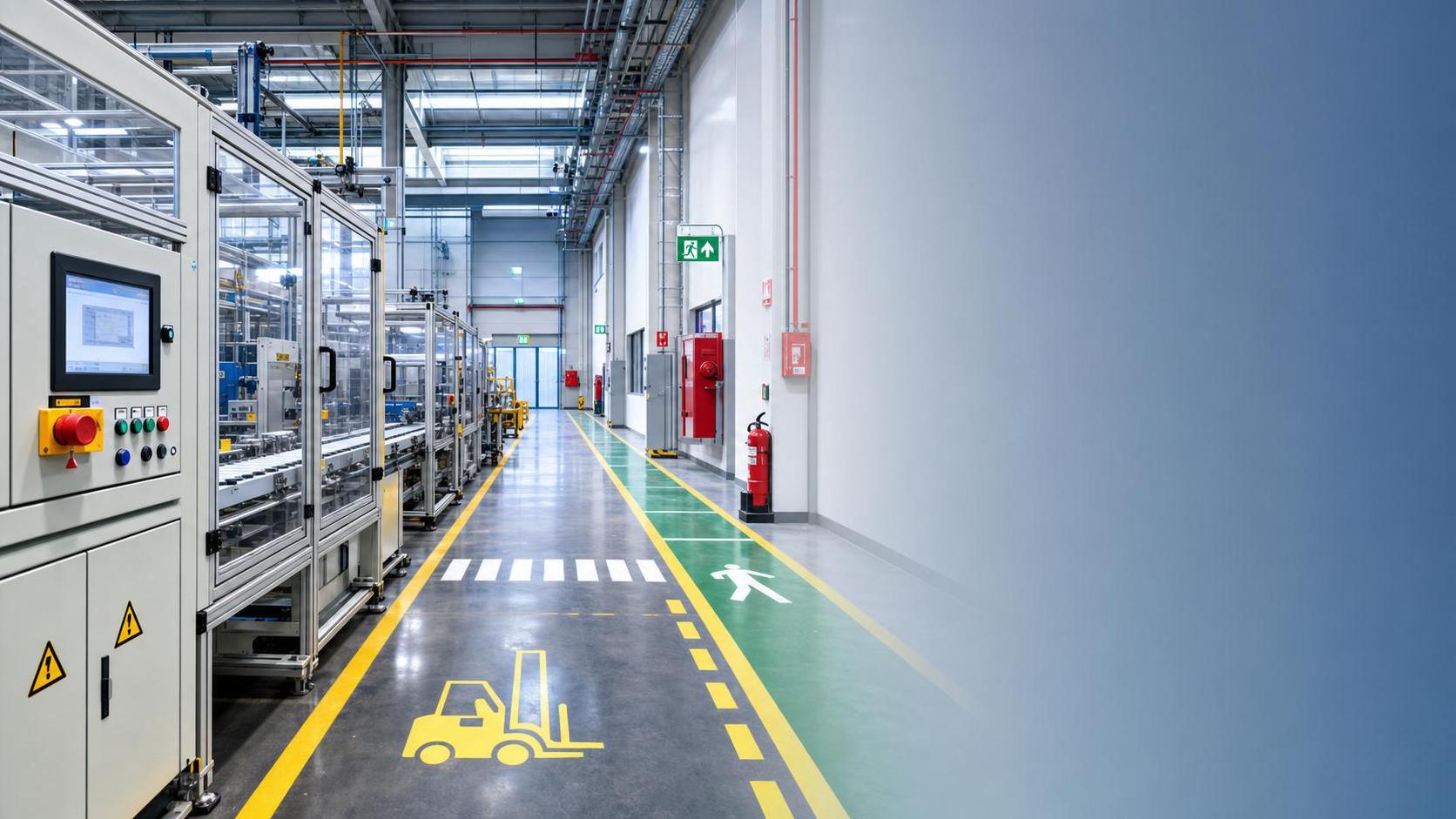
An industrial safety inspection in a manufacturing facility is not just a scheduled compliance task. It is a practical review of how people, machines, materials, and procedures interact on the factory floor, and whether those interactions create avoidable risk.
That matters more now because production lines are becoming faster, more automated, and more connected to broader supply chain targets. A missed guard, leaking hydraulic line, blocked exit, or weak lockout practice can quickly turn into injury, downtime, scrap, or delivery disruption.
For factories trying to balance output, quality, and operational stability, understanding what an industrial safety inspection includes is part of sound plant management rather than a separate safety exercise.
What the inspection is really checking
At its core, an industrial safety inspection checks whether the production environment remains safe under real operating conditions. That includes physical hazards, equipment condition, worker protection, emergency readiness, and procedural control.
A good inspection also looks beyond visible problems. It asks whether the system behind daily work is reliable: maintenance records, operator behavior, reporting discipline, signage, training status, and corrective follow-through.
In manufacturing, that broader view is important because incidents rarely come from one single failure. They often result from several small gaps that were tolerated for too long.
The main areas covered in manufacturing facilities
Although plant layouts differ, most industrial safety inspection programs cover a similar set of operating areas. The exact checklist changes by process, but the inspection logic remains consistent.
Equipment and machine safeguards
Inspectors usually begin with production equipment because rotating parts, cutting tools, presses, conveyors, and automated cells create direct exposure risks.
- Machine guards are installed, intact, and not bypassed.
- Emergency stop buttons are visible, accessible, and functional.
- Interlocks, light curtains, and sensors work as intended.
- Hydraulic, pneumatic, and electrical systems show no unsafe wear.
- Maintenance access does not expose operators to uncontrolled energy.
Where factories use automation equipment or robotic cells, the inspection should also verify separation zones, restart controls, and safe programming change procedures.
Electrical safety and energy isolation
Electrical faults are a common hidden risk. Panels may appear closed and orderly while internal components are overheated, unlabeled, or poorly maintained.
An industrial safety inspection often reviews panel access, cable routing, grounding condition, temporary wiring, overload protection, and whether lockout and tagout practices are consistently applied.
This point is especially relevant in plants with frequent changeovers, outsourced maintenance, or older equipment mixed with newer digital control systems.
Workplace conditions and housekeeping
Many serious incidents begin with basic site conditions that seem minor at first. Oil on the floor, unsecured tools, blocked aisles, poor lighting, or unstable storage can create larger failures later.
Housekeeping checks usually cover walking surfaces, drainage, waste control, aisle marking, visibility, ventilation, noise exposure, and the separation of people from moving vehicles or forklift traffic.
In metalworking, fabrication, and machining environments, these checks become even more important because chips, dust, hot surfaces, and heavy material movement increase exposure.
Fire protection and emergency readiness
A manufacturing inspection should confirm that emergency systems are available and usable under pressure, not only present for audit purposes.
Plants with coating lines, fuel systems, battery charging stations, or combustible dust need a more detailed review because emergency risk can escalate quickly.
People, procedures, and daily control
A strong industrial safety inspection does not stop at equipment. It also checks whether the workforce is operating within a controlled process.
That means reviewing personal protective equipment use, training records, shift handover quality, permit systems, incident reporting, and whether operating procedures match current production reality.
This is where many factories find the gap between written rules and actual practice. A procedure may be correct on paper, while operators rely on shortcuts to keep up with cycle time or mixed production demands.
From a quality and factory operations perspective, this overlap is critical. Weak procedural control affects both safety performance and process consistency.
Common procedural points to review
- New operators received task-specific training before independent work.
- Temporary staff and contractors follow the same access and hazard rules.
- Lockout, confined space, hot work, and lifting permits are controlled.
- Near misses are reported, analyzed, and not dismissed as routine events.
- Corrective actions are tracked to closure with clear accountability.
Why the topic matters across the industrial chain
Industrial safety is no longer an isolated plant issue. It affects production continuity, supplier credibility, export readiness, insurance exposure, and even customer selection decisions.
In global manufacturing networks, buyers increasingly review factory operations through a wider lens. A weak industrial safety inspection process can signal poor maintenance culture, unstable management discipline, or hidden delivery risk.
That is one reason industry information platforms such as Baozhen Industrial Intelligence Portal place safety alongside smart manufacturing, equipment maintenance, compliance, and supply chain resilience. On the ground, these topics are tightly connected.
For example, a line shutdown caused by an avoidable incident does not only affect injury statistics. It can disrupt output planning, increase scrap, delay shipments, and weaken confidence across trading and sourcing relationships.
How to judge whether an inspection is effective
Not every industrial safety inspection delivers useful control. Some are too generic, too infrequent, or too focused on visible housekeeping issues while deeper system risks remain untested.
A more effective inspection has several characteristics.
- It is tied to process risk, not just a universal checklist.
- It distinguishes critical findings from minor observations.
- It includes records, interviews, and live operational checks.
- It links findings to maintenance, training, and management action.
- It measures repeat issues instead of treating each inspection alone.
Usually, the strongest signal is not the number of issues found. It is whether the same issues return month after month, which often points to a weak management response rather than weak inspection effort.
Practical use in different manufacturing settings
The content of an industrial safety inspection should reflect the production model. A heavy fabrication plant, food processor, electronics assembly site, and warehouse-connected packaging line do not carry the same hazard profile.
This risk-based approach makes the inspection more useful for operational decisions, capital planning, and preventive maintenance priorities.
Where to focus next
Factories that want a more effective industrial safety inspection process usually benefit from starting with three questions: which hazards can stop production immediately, which findings repeat most often, and where procedure no longer matches actual work.
From there, inspection results become more than audit records. They can support maintenance scheduling, operator retraining, equipment upgrades, layout adjustment, and better supplier or contractor control.
That practical link between safety, manufacturing discipline, and supply chain reliability is where the topic deserves closer attention. The next useful step is to compare current inspection points with real process risks and decide which gaps require immediate correction, deeper analysis, or long-term investment.
Related Intelligence