
Digital Twin Technology for Smarter Factory Decisions
Digital Twin Technology for Smarter Factory Decisions
As factories face rising cost pressure, volatile demand, and tighter delivery expectations, enterprise leaders need clearer visibility before making operational decisions.
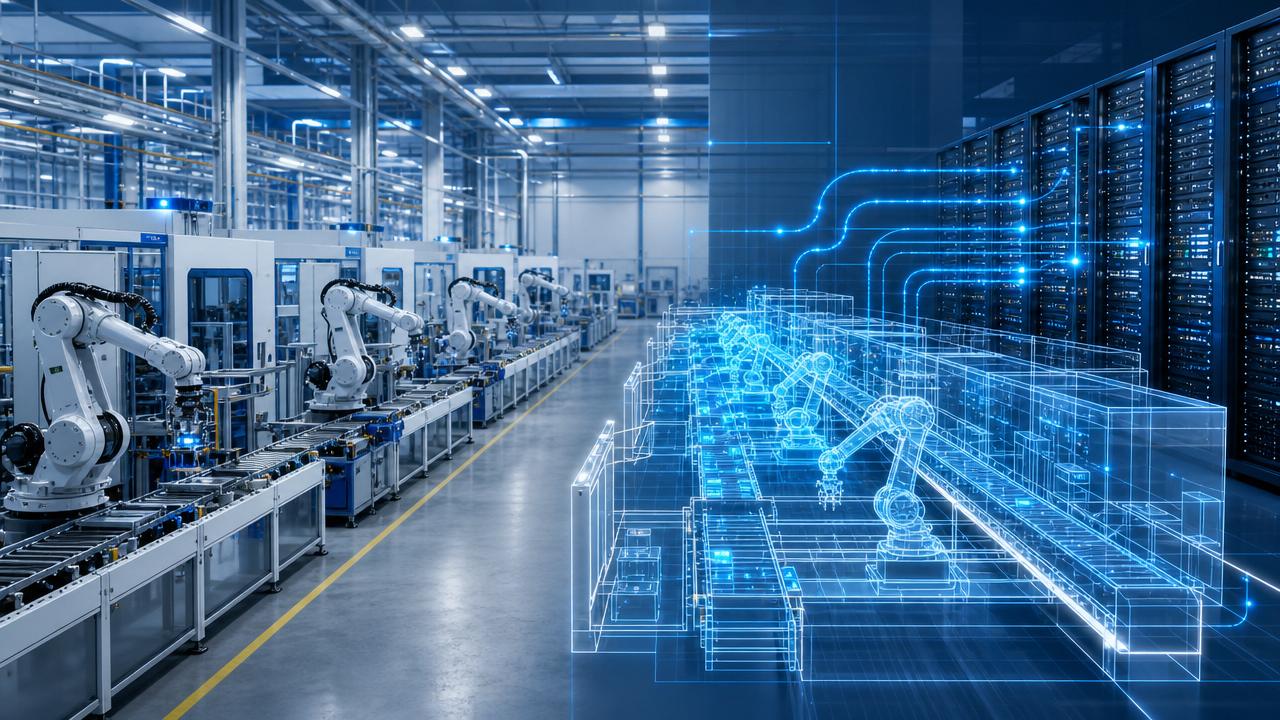
Digital twin technology is becoming a practical way to connect real production assets, process data, and predictive analysis into one decision-making model.
By simulating equipment performance, workflow changes, maintenance risks, and supply chain impacts, manufacturers can reduce uncertainty and improve factory efficiency.
For decision-makers planning smart manufacturing upgrades, understanding how digital twins create measurable business value is now essential.
What Is Digital Twin Technology in a Factory Environment?
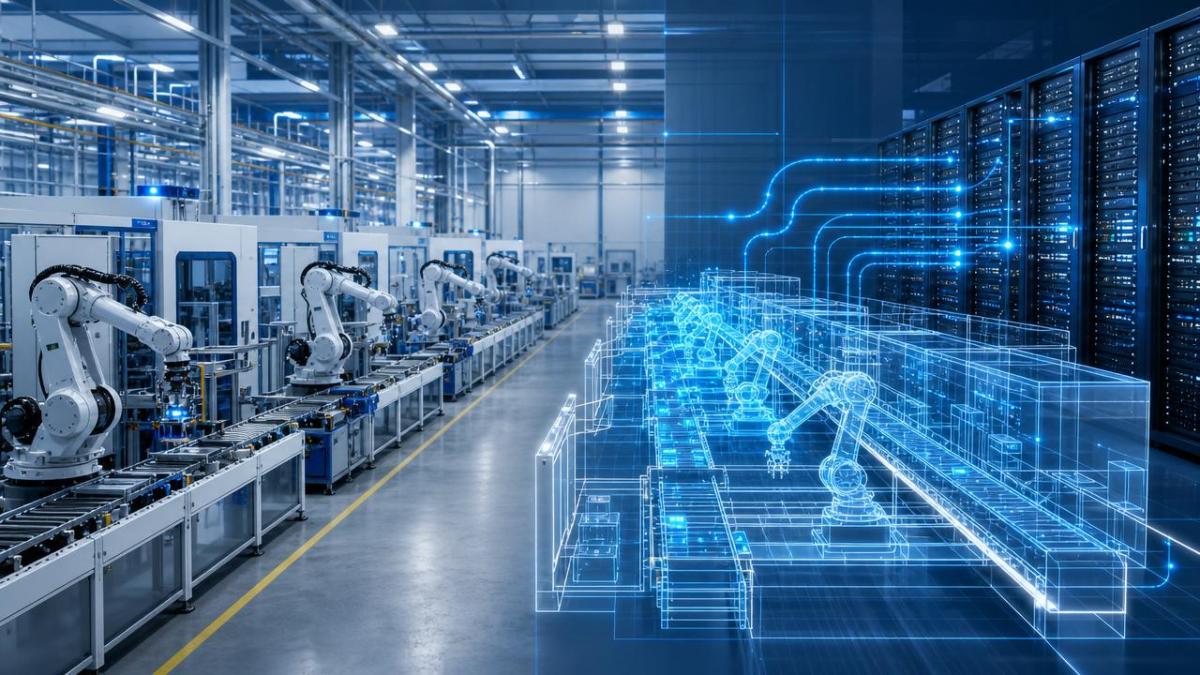
Digital twin technology creates a virtual representation of a physical asset, production line, workshop, or entire factory operation.
It uses sensor data, machine records, process parameters, engineering models, and business rules to mirror real operating conditions.
Unlike a static 3D model, a digital twin changes as the factory changes.
It can show equipment status, production bottlenecks, energy consumption, quality variation, and maintenance risks in near real time.
This makes digital twin technology valuable for operational decisions that require timing, accuracy, and cross-department visibility.
A factory digital twin may focus on one machine, such as a CNC center, press line, furnace, compressor, or robotic workstation.
It may also connect multiple systems, including MES, ERP, WMS, SCADA, PLCs, and quality inspection platforms.
The goal is not only visualization.
The goal is better prediction, faster diagnosis, and stronger decision support across manufacturing, metals processing, logistics, and supply chain operations.
How Is It Different from Traditional Monitoring?
Traditional monitoring tells what is happening now or what happened before.
Digital twin technology helps explain why it is happening and what may happen next.
A dashboard may show rising vibration on a motor.
A digital twin can link that signal with load history, temperature, lubrication, production speed, and failure probability.
This shift supports smarter factory decisions because the analysis connects conditions, causes, and possible actions.
Where Does Digital Twin Technology Create the Most Practical Value?
The strongest use cases appear where decisions are expensive, time-sensitive, or difficult to test physically.
Digital twin technology helps evaluate options before machines stop, materials are wasted, or delivery commitments are missed.
In production planning, a digital twin can simulate order sequencing, capacity limits, changeover time, and labor allocation.
This helps reduce schedule conflicts and improve response to urgent orders.
In equipment maintenance, digital twin technology supports predictive maintenance by identifying early signals of wear, overheating, overload, or abnormal vibration.
Maintenance plans become more data-based, reducing both unplanned downtime and unnecessary part replacement.
In quality control, digital twins can connect process parameters with defect patterns.
For example, welding heat input, rolling pressure, cooling rate, or coating thickness may affect final product quality.
In metals and industrial manufacturing, this connection is especially important because material behavior often changes under different processing conditions.
In energy management, digital twin technology can compare operating scenarios for compressors, furnaces, pumps, conveyors, and HVAC systems.
Factories can identify avoidable energy loss without disrupting normal production.
- Production scheduling under changing demand.
- Predictive maintenance for critical assets.
- Quality improvement through process correlation.
- Energy optimization in high-consumption facilities.
- Warehouse, logistics, and inventory flow simulation.
How Can Digital Twin Technology Improve Decision-Making?
Factory decisions often involve trade-offs between cost, speed, quality, safety, and delivery reliability.
Digital twin technology improves these decisions by making trade-offs visible before action is taken.
A production team can test whether increasing line speed will affect defect rates, energy usage, or maintenance intervals.
A logistics team can simulate whether a new warehouse layout will reduce handling time or create new congestion.
A supply chain team can evaluate how supplier delays may influence factory utilization, inventory buffers, and delivery schedules.
This type of analysis supports decisions based on scenarios, not assumptions.
Digital twin technology also improves communication between engineering, production, procurement, quality, and finance teams.
When each team views the same operating model, decision discussions become more focused and evidence-based.
What Decisions Become Easier?
What Should Be Evaluated Before Choosing a Digital Twin Solution?
A successful project starts with a clear operational problem, not with software selection.
Digital twin technology should be linked to measurable goals such as downtime reduction, yield improvement, or energy savings.
The first evaluation point is data readiness.
Machines, sensors, control systems, and business platforms must provide reliable data at the right frequency.
Poor data quality can turn a digital twin into an attractive but unreliable display.
The second point is model accuracy.
Some digital twins depend mainly on physics-based models, while others rely on statistical learning or AI-driven prediction.
Many industrial applications require a hybrid model that combines engineering knowledge with operating data.
The third point is integration capability.
Digital twin technology should connect with existing systems instead of creating another isolated information layer.
The fourth point is usability.
A model that only specialists understand may not support daily factory decisions.
- Define the operational problem before selecting tools.
- Check data quality, ownership, and update frequency.
- Confirm integration with MES, ERP, SCADA, and sensors.
- Evaluate whether users can act on the output.
- Start with a pilot that has measurable value.
What Risks and Misunderstandings Should Be Avoided?
One common misunderstanding is expecting digital twin technology to solve every factory problem immediately.
A digital twin is powerful, but it depends on correct data, clear scope, and disciplined operational use.
Another risk is overbuilding the first project.
Trying to model the entire factory at once can delay results and increase implementation complexity.
A focused pilot often creates stronger internal confidence.
For example, a predictive maintenance twin for one critical line can prove value faster than a full-site virtual factory.
Data security also requires attention.
Digital twin technology may connect production records, equipment parameters, supplier data, and commercial information.
Access control, data governance, and cybersecurity architecture should be part of the implementation plan.
A further mistake is treating simulation results as automatic decisions.
The model supports judgment, but human review remains important for safety, compliance, and commercial context.
How Should a Factory Start Implementing Digital Twin Technology?
A practical roadmap should move from problem definition to data connection, pilot modeling, validation, and scaled deployment.
The first step is selecting a use case with clear pain points and measurable indicators.
Good starting points include recurring downtime, unstable quality, high energy cost, slow changeovers, or poor inventory visibility.
The second step is mapping required data sources.
This may include machine signals, maintenance logs, inspection results, material batches, operator inputs, and order data.
The third step is building a pilot model that reflects real operating logic.
The model should be tested against historical results before being used for live decisions.
The fourth step is creating decision rules.
A prediction is only useful when it leads to a clear action, escalation, or process adjustment.
The final step is scaling carefully.
Once one use case proves value, digital twin technology can expand to related assets, production lines, warehouses, or supplier interfaces.
FAQ Summary for Digital Twin Technology Decisions
Conclusion: Turning Factory Data into Smarter Action
Digital twin technology is becoming a core tool for smart manufacturing, industrial upgrading, and supply chain resilience.
Its value comes from connecting physical operations with simulation, prediction, and practical decision support.
Factories do not need to begin with a large, complex transformation program.
A better approach is to select one high-impact problem, verify data readiness, and build a measurable pilot.
From production planning to maintenance, quality, energy, logistics, and sourcing, digital twin technology can reduce uncertainty across industrial operations.
The next step is to identify where delayed, inaccurate, or fragmented decisions create the highest cost.
That priority area can become the starting point for a practical digital twin roadmap.
For industrial enterprises pursuing smarter factory decisions, digital twin technology offers a structured path from data visibility to operational advantage.
- Last One:Multimodal Transportation Cost Risks in 2026Jun 03, 2026
- Next Article:No more articles
Related Intelligence