
When Worm Gearboxes Are Better Than Helical Options
When Worm Gearboxes Are Better Than Helical Options
Choosing between worm gearboxes and helical drives is not only a matter of efficiency, but also of application fit, torque behavior, and installation constraints. For technical evaluators comparing transmission solutions, worm gearboxes can offer clear advantages in compact layouts, high reduction ratios, and self-locking performance. The mistake is to treat them as a lower-efficiency version of a helical gearbox and stop there. In real selection work, that shortcut usually leads to either overspecification or the wrong drive architecture.
If you are screening transmission options for conveyors, lifting aids, indexing mechanisms, packaging equipment, gate systems, or compact material handling assemblies, the better question is simple: where does the worm unit solve a problem that a helical unit does not solve as cleanly? That is the checklist worth using.
Start with the layout, not the catalog
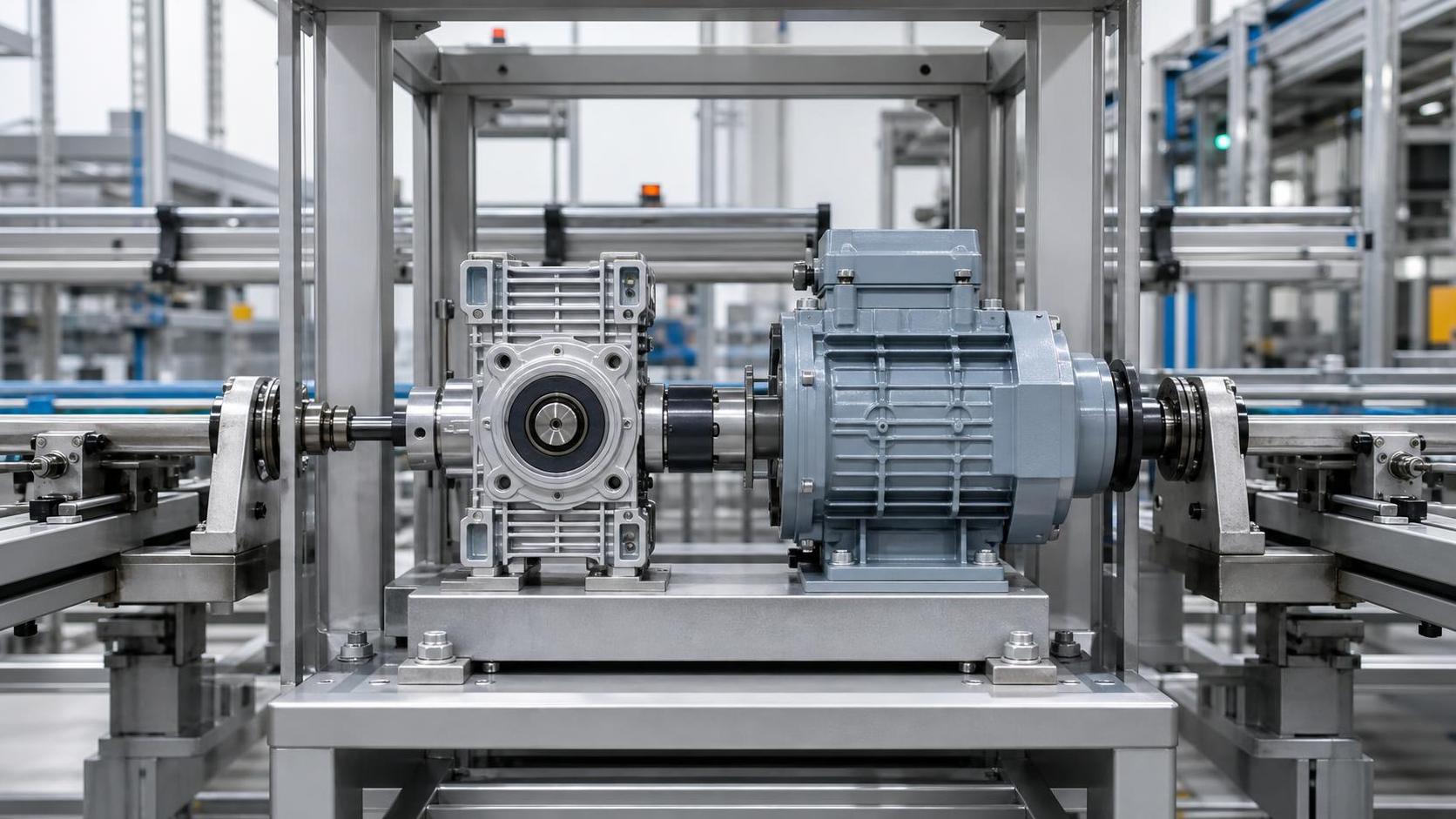
A worm gearbox usually earns its place when the machine envelope is tight and shaft orientation matters. The 90-degree power transmission layout is often the first practical reason teams choose it. On paper, a helical gearbox may still work, especially if you add bevel stages or change motor position. In the actual machine, that may create a longer assembly, more bracket work, harder guarding, and worse access for maintenance.
This is one of the common evaluation misses. Teams compare torque, speed, and efficiency, but ignore the total installed geometry. If the drive has to fit into a side-mounted conveyor frame, a compact transfer module, or a narrow enclosure, worm gearboxes often reduce mechanical compromise. That can matter more than a few points of efficiency if the alternative forces a redesign of the whole driven section.
- Check center distance and overall projection after motor mounting, not gearbox dimensions alone.
- Review service access: oil fill, inspection, output coupling, and seal replacement space.
- Look at guarding and cable routing early. Compact on a datasheet does not always mean easy in an enclosure.
Use worm gearboxes when you need high reduction in a simple package
When the application needs a large speed reduction and modest to moderate output power, worm gearboxes can be a very efficient selection process even if they are not the most energy-efficient drive type in operation. A single worm stage can provide reduction levels that would otherwise push a helical solution toward multiple stages, a more complex housing, or a larger footprint.
That does not mean “high ratio equals automatic worm choice.” It means the tradeoff becomes attractive when simplicity, size, and cost of integration carry real weight. Small positioning devices, feeders, light-duty lifting arrangements, rotating displays, door actuation, and intermittent conveyors are typical examples where technical evaluators keep worm units on the short list for good reason.
Where people get into trouble is assuming the ratio alone decides it. It does not. Duty cycle, thermal load, and backdriving behavior still decide whether the choice holds up after commissioning.
Self-locking can be the deciding feature, but verify it carefully
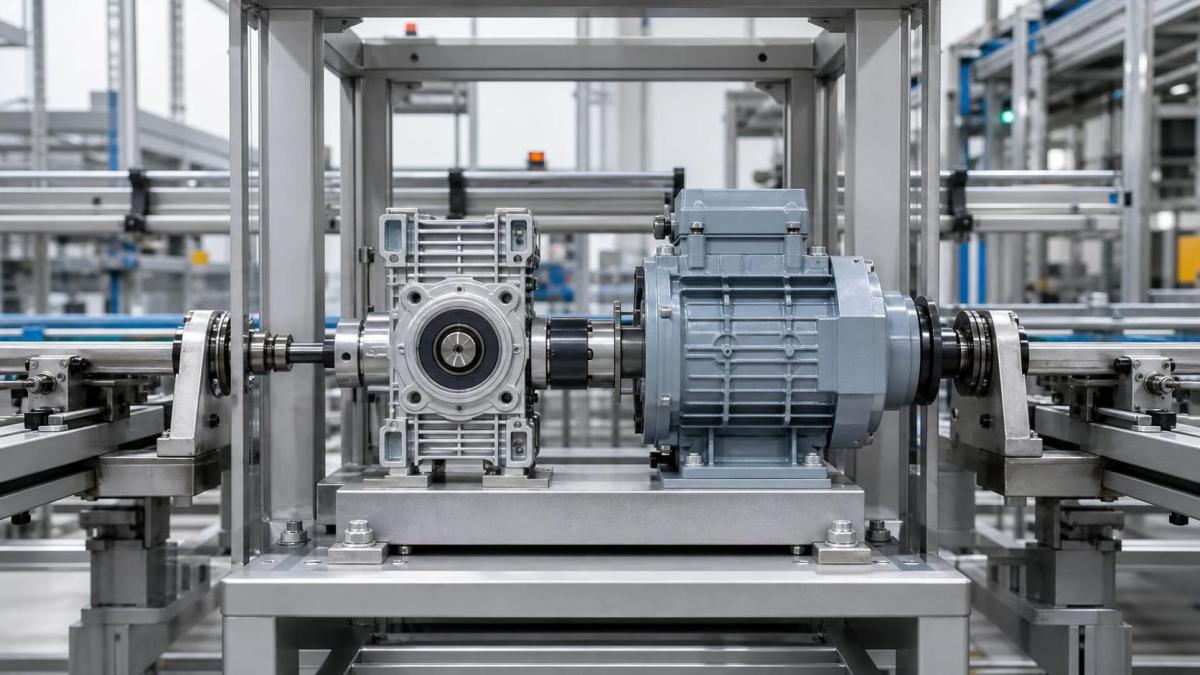
This is the point that usually pulls worm gearboxes ahead of helical options in real machine discussions. In some applications, resistance to backdriving is not just convenient; it changes the safety and control concept. Inclined conveyors, adjustment mechanisms, small hoists, valve actuation, and access systems may benefit from a transmission that resists reverse motion.
But this is where buyers need discipline. “Self-locking” is not a label to accept casually. It depends on lead angle, friction conditions, lubrication state, wear, temperature, and load variation. Some worm gear sets are non-backdrivable in practice under certain conditions, but that does not automatically make them a certified safety holding device. If the application has personnel safety implications, holding brakes and dedicated safety components should be evaluated independently of the gearbox claim. That point should be treated as a design review item, not a sales note.
A practical rule: if reverse motion would create injury risk, dropped load risk, or regulatory exposure, ask for documented backdriving performance under your load case and confirm whether additional braking is required. If the supplier cannot provide clear technical limits, mark it as 【待核实】 and do not assume the worm unit alone is sufficient.
Helical is usually better for efficiency. That does not end the discussion.
Technical teams sometimes reject worm gearboxes too quickly because helical drives are typically more efficient. That is directionally true and often important, especially in continuous-duty systems, high operating hours, or energy-sensitive production lines. Still, if the machine runs intermittently, at low power, or in short movement cycles, the efficiency penalty may be commercially smaller than the cost of a bulkier drivetrain or extra mechanical components.
The right way to check this is boring, but it saves arguments later: estimate the actual duty cycle, motor loading, start-stop frequency, and ambient temperature. Then compare total operating cost, not just nameplate efficiency. In low-utilization industrial equipment, worm gearboxes sometimes remain the better decision because the energy difference is minor while the mechanical packaging advantage is immediate.
Thermal behavior is where weak selections show up
A worm gearbox that looks fine on torque can still fail the application because of heat. This is especially common in enclosed machinery, warm ambient conditions, frequent cycling, or installations with limited airflow. Efficiency losses become heat, and heat affects lubricant life, seal durability, and long-term gear performance.
So add these checks before you approve the selection:
- Compare the real operating cycle with the thermal rating method used by the supplier.
- Confirm ambient temperature assumptions, especially near furnaces, washdown zones, or poorly ventilated cabinets.
- Ask whether mounting position changes lubrication behavior or heat dissipation.
- Verify whether additional cooling or derating is recommended.
If those answers stay vague, keep the risk open. Worm gearboxes are not forgiving when thermal assumptions are guessed.
Do not evaluate torque in isolation
For technical evaluators, output torque is rarely the hard part. The harder part is understanding how the load arrives. Shock loading, frequent reversals, stalled starts, and irregular duty patterns can change the gearbox decision fast. A worm unit may still be the right fit, but only if the service factor and actual load profile support it.
This matters in packaging lines, manually loaded conveyors, roller tables, and batch equipment where operators create uneven loading. If the drive sees repeated impact or abrupt starts, a helical option may have an advantage in some configurations. At minimum, ask for selection support based on real duty conditions instead of nominal motor power alone.
One useful procurement habit is to send suppliers a short load description with start frequency, daily runtime, direction changes, ambient range, and any jam condition you expect. That usually produces a better answer than a simple request for “same ratio, same motor, lower price.”
Look closely at maintenance reality
On many factory floors, the best gearbox is the one the maintenance team can live with. Worm gearboxes can be a sensible choice where replacement simplicity, compact mounting, and straightforward integration matter more than maximum drivetrain efficiency. That said, lubrication type, sealing performance, and service interval expectations should be checked before the PO is issued.
In dusty plants, food-adjacent equipment, humid warehouses, or outdoor gate systems, sealing and lubricant compatibility deserve more attention than they usually get. If the application has washdown exposure, aggressive cleaning chemicals, or unusual contamination risk, ask for exact seal and housing suitability rather than assuming a standard industrial unit will cope.
Procurement checks that save rework later
When worm gearboxes are the likely fit, the cleanest way to avoid selection drift is to lock down a short set of commercial-technical checks:
- Output speed and reduction ratio under actual motor speed, not assumed nominal conditions.
- Mounting position, shaft orientation, flange dimensions, and whether interchangeability with existing equipment is required.
- Duty cycle and thermal rating basis used in the quotation.
- Backdriving or holding behavior if the application depends on it.
- Lubrication specification, service interval, and any restrictions linked to ambient temperature or mounting arrangement.
- Regional compliance or customer-specific documentation needs, if the project is tied to export equipment or regulated end-use markets. Exact requirements vary and should be checked against the destination market and machine category.
That last point matters more in global sourcing than many teams expect. A gearbox that is technically acceptable but poorly documented can create avoidable delays in cross-border projects, especially when the drive is part of a larger machine package under customer audit.
A practical decision line
Worm gearboxes are usually better than helical options when the machine needs a compact right-angle layout, substantial reduction in a small footprint, and some degree of resistance to backdriving, while operating efficiency is not the dominant cost driver. They are often less convincing in high-duty, high-efficiency, heat-sensitive systems where the gearbox runs hard for long periods.
For technical evaluation, that is the real checkpoint: not “which gearbox is better,” but “which gearbox solves this machine constraint with the fewest downstream problems.” If the answer points to packaging limits, ratio simplicity, and controlled reverse motion, worm gearboxes deserve serious consideration. Just make sure the final decision is backed by duty cycle, thermal review, and verified holding behavior rather than a generic product comparison.
Related Intelligence