
Can You Extend Gearbox Lifespan Without Full Replacement?
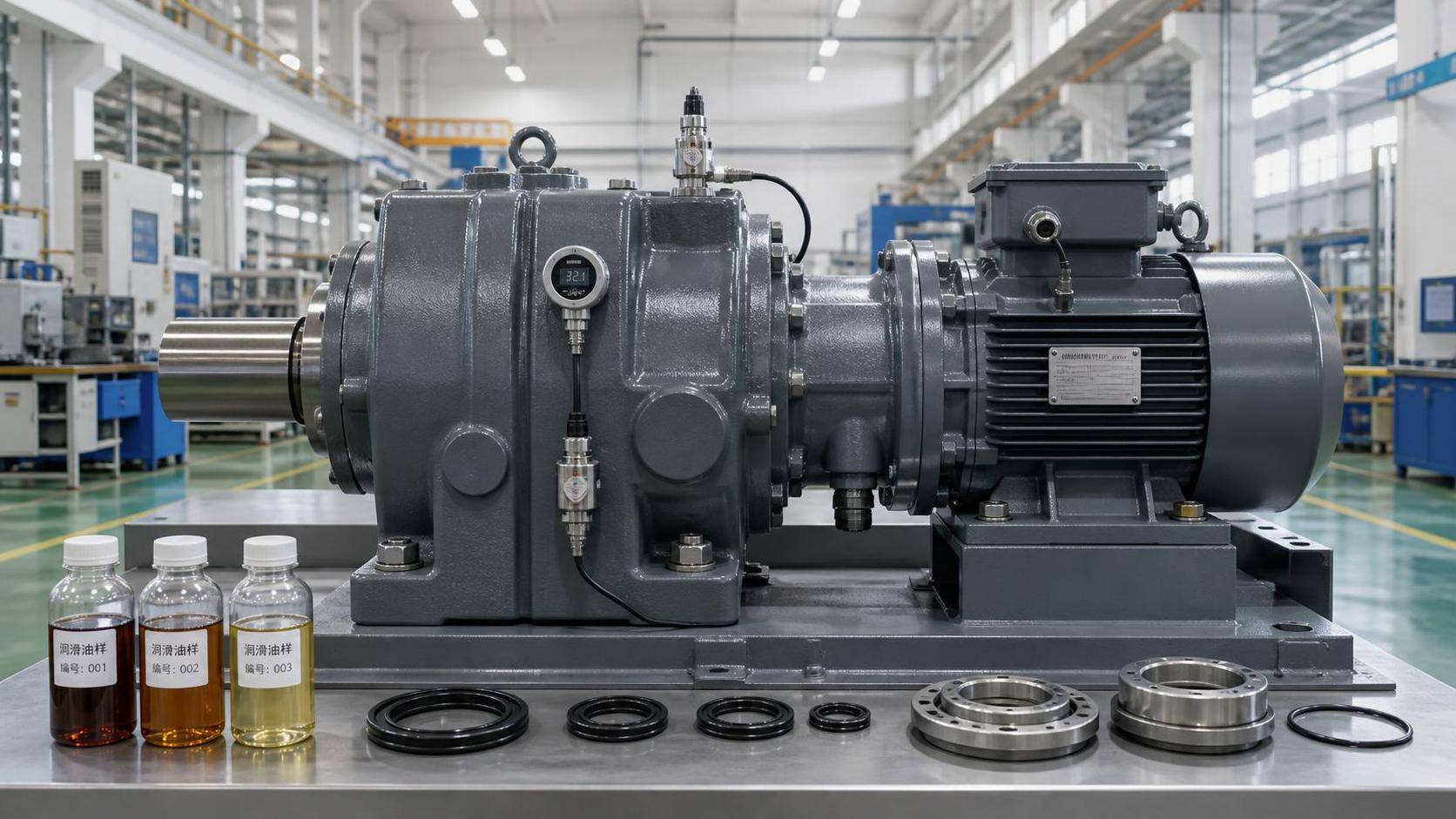
In many industrial applications, the answer is yes: gearbox lifespan can often be extended without a full replacement, provided wear is identified early and maintenance decisions are based on operating conditions, lubrication quality, load patterns, and the actual condition of internal components. A gearbox that becomes noisy, overheats, leaks oil, or shows rising vibration is not automatically beyond repair. In many cases, targeted intervention can restore reliable service while avoiding the cost, lead time, alignment work, and production disruption associated with replacing the complete unit.
The important qualification is that extending service life is not the same as delaying an inevitable failure. A repair strategy works when it addresses the root cause of degradation. If a gearbox has suffered severe housing damage, repeated gear tooth failure, extensive contamination, or a major mismatch between operating duty and design capacity, partial repairs may only postpone another outage. The practical question is therefore not simply, “Can I extend gearbox lifespan without full replacement?” It is whether the remaining structure and critical components justify repair, refurbishment, or a change in operating conditions.
Start with condition evidence, not symptoms alone
Many maintenance decisions are made too late because operators react only when a gearbox becomes visibly problematic. By the time there is a strong burning smell, persistent grinding noise, or a sudden increase in casing temperature, damage may already extend beyond bearings or seals into gears, shafts, and housings.
A more useful approach combines several forms of evidence:
- Vibration trend data: Changes in vibration amplitude or frequency patterns can indicate bearing defects, gear mesh issues, shaft imbalance, misalignment, or looseness before catastrophic damage occurs.
- Lubricant analysis: Oil condition reveals far more than whether there is enough lubricant. Viscosity change, oxidation, water contamination, particle count, and wear-metal trends can point to internal distress.
- Temperature monitoring: A gradual temperature increase under similar load and ambient conditions often signals lubrication degradation, overload, bearing friction, or poor heat dissipation.
- Visual inspection: Oil leaks, blocked breathers, damaged couplings, loose mounting bolts, cracked paint around mounting areas, and abnormal shaft movement should not be treated as minor cosmetic problems.
- Operating history: Frequent starts, reversing duty, shock loading, prolonged low-speed operation, overload events, and changes in driven equipment can explain why a gearbox is aging faster than expected.
No single indicator should determine the decision. For example, a high vibration reading may originate from a motor, coupling, pump, conveyor pulley, or structural resonance rather than the gearbox itself. Likewise, elevated iron in an oil sample can reflect normal break-in wear in a recently rebuilt gearbox, while a sharp upward trend in copper, chromium, or silicon may be more concerning depending on the design and lubricant system.
Condition monitoring becomes valuable when results are compared over time and interpreted against the specific gearbox, not against a generic “normal” number.
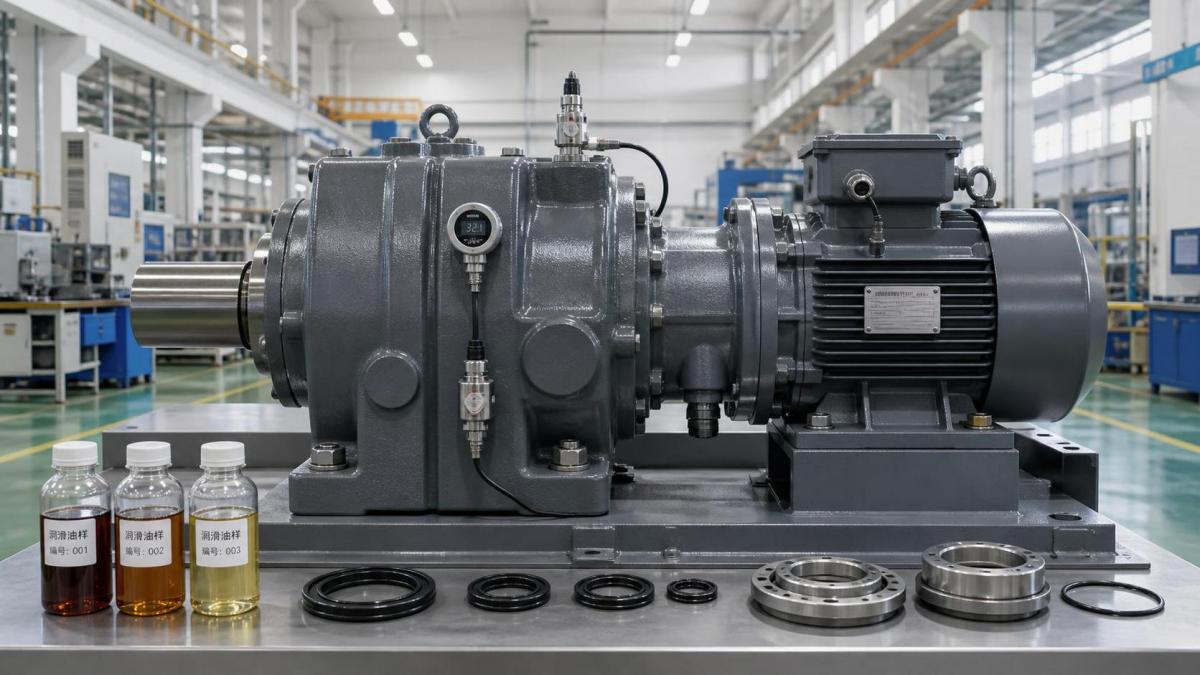
Lubrication is usually the most economical life-extension measure
Lubrication failures are behind a large share of avoidable gearbox damage. The error is not always an obvious lack of oil. Overfilling, using an incorrect viscosity grade, mixing incompatible lubricant types, allowing water ingress, or extending oil-change intervals beyond the actual operating environment can all shorten gear and bearing life.
The correct lubricant must match the gearbox manufacturer’s recommendations, but application conditions also matter. A gearbox in a climate-controlled indoor facility does not face the same risks as one operating near washdown areas, furnaces, coastal air, aggregate handling lines, or outdoor lifting equipment. High ambient temperature may require closer monitoring of oxidation. Cold starts may create circulation problems if viscosity is too high. Dusty environments can overload breathers and introduce abrasive particles through seals.
Useful lubrication controls include:
- maintaining the specified oil level at the correct operating condition;
- using dedicated, clearly labelled transfer containers to prevent cross-contamination;
- installing desiccant breathers or improved filtration where moisture and dust are persistent risks;
- filtering new oil when filling, since “new” does not necessarily mean clean enough for the system;
- checking seals and shaft surfaces for leakage paths;
- sampling oil consistently from a representative point rather than from the bottom of a drain pan.
Changing oil more frequently is not automatically the best practice. If the lubricant is changed without investigating why it degraded early, the underlying issue may remain: excessive temperature, water ingress, incorrect oil selection, or internal wear. Conversely, oil that remains within acceptable condition limits may not require replacement simply because a calendar interval has been reached. Condition-based oil management can reduce waste while improving protection, particularly for high-volume industrial gearboxes using premium lubricants.
Correct external problems before opening the gearbox
Gearbox failures are often treated as internal mechanical failures even when the cause lies outside the reducer. This is a costly mistake. Replacing bearings and seals without correcting alignment, mounting rigidity, coupling condition, or load behavior can lead to a repeat failure shortly after recommissioning.
Alignment deserves particular attention. Misalignment between motor, gearbox, and driven machine introduces radial and axial forces that bearings were not designed to carry continuously. Flexible couplings can tolerate limited movement, but they do not eliminate the need for proper alignment. Soft foot at the motor base, distorted foundations, thermal growth, loose hold-down bolts, and pipe strain in connected systems can all change alignment during operation.
For belt- or chain-driven equipment, excessive tension is another common source of bearing overload. A drive may appear to run normally while imposing a continuous side load on the input or output shaft. In conveyor systems, material buildup, seized idlers, belt tracking problems, or irregular loading can create torque spikes that are transmitted directly into the gearbox.
Before authorizing a rebuild, maintenance teams should verify:
- shaft and coupling alignment under realistic operating conditions;
- foundation integrity and mounting bolt torque;
- motor current and actual load profile;
- belt, chain, or coupling condition and tension;
- adequacy of guards, cooling, and ventilation;
- whether driven equipment has been modified since the gearbox was originally selected.
This review often reveals that the gearbox is being asked to perform beyond its original duty rating. A production increase, heavier product mix, faster line speed, more starts per hour, or a change from steady running to frequent reversing can materially alter required service factors. In such cases, repairing the gearbox may be reasonable, but changing the duty arrangement or upgrading the design may be the better long-term decision.
What can usually be repaired or refurbished?
A full replacement is not always necessary when the housing, core geometry, and major shafts remain serviceable. Typical targeted work may include replacement of bearings, oil seals, gaskets, breathers, fasteners, and worn coupling elements. Shafts can sometimes be repaired by metal restoration and machining where seal journals or bearing seats are damaged, subject to engineering assessment. Damaged threads, keyways, and localized housing features may also be recoverable.
Gear repair requires greater caution. Light polishing of minor surface marks is not equivalent to restoring a damaged tooth profile. Pitting, scuffing, tooth-root cracking, severe wear, plastic deformation, and broken teeth each indicate different failure mechanisms. Reusing a gear with active cracking or substantial profile damage is generally a poor economy, especially in equipment where an unplanned outage affects an entire line.
Reconditioning can be an attractive option when a gearbox has standardized dimensions but a replacement unit has a long lead time. A competent repair process should include inspection records, dimensional checks, bearing fit verification, gear contact assessment where applicable, cleanliness controls during assembly, correct preload or backlash settings, and test running. For critical equipment, ask what checks are performed before release and whether the repairer can document the parts installed, lubricant used, and test conditions.
A rebuild is less persuasive when the housing is cracked in structurally critical areas, bores have lost concentricity, multiple gear stages are heavily damaged, or the original design is obsolete and no reliable parts source exists. Repeated repairs to the same gearbox are also a warning sign. They may reflect a systemic application problem rather than poor repair quality, but either way the economics should be reconsidered.
Use a repair-versus-replacement decision based on risk, not purchase price
The cost of a new gearbox is visible. The cost of an unexpected failure is often spread across lost output, emergency freight, labor, safety exposure, damaged upstream or downstream equipment, and missed delivery commitments. This matters particularly in process lines, ports, mining systems, steel handling, automated warehouses, and export-oriented factories with tight production schedules.
A useful decision compares four options: continue operating with monitoring, conduct minor corrective maintenance, perform a controlled refurbishment, or replace the unit. The right choice depends on criticality and condition.
For a non-critical auxiliary drive, a monitored repair may be entirely rational. For a gearbox that can stop a high-value production line, the acceptable level of uncertainty is much lower. The decision should reflect the consequences of failure, not merely the apparent condition of the unit on the day of inspection.
Plan the work around downtime and supply-chain exposure
Gearbox life extension is also a supply-chain decision. A replacement reducer may require weeks or months if it is a specialized configuration, includes a non-standard ratio, uses a particular flange or shaft arrangement, or must meet site-specific certification requirements. Imported units may also face shipping delays, customs documentation issues, or uncertainty around spare-part availability.
For plants with critical gearboxes, maintaining a structured asset register is often more valuable than holding random spare units. The register should include manufacturer, model, ratio, mounting arrangement, motor details, service history, lubricant specification, shaft dimensions, coupling information, and known interchangeability. This information shortens the response time when repair or replacement becomes necessary.
Where a complete spare gearbox is not justified, organizations may stock high-failure or long-lead components such as seal kits, bearing sets, breathers, filters, or compatible couplings. However, spare parts should be managed carefully. Bearing storage conditions, shelf life of elastomer seals, and the risk of obsolete part revisions all matter. Buying parts without confirming exact serial numbers, design revisions, and fit dimensions can create expensive delays during a shutdown.
When outsourcing repair, clarify responsibility for root-cause diagnosis. A repair vendor can restore a gearbox to specification, but only the site operator can provide the full context of loading, starts, temperature, process changes, and historical failures. The strongest outcomes come from combining workshop inspection findings with plant operating data.
Do not confuse quieter operation with restored reliability
Some short-term interventions reduce noise or vibration without resolving the damage mechanism. Increasing lubricant viscosity to mask noise, tightening a coupling without checking alignment, changing bearings while retaining a damaged shaft seat, or repeatedly topping up oil without stopping the leak may make the gearbox appear improved for a short period. These actions can also make later diagnosis more difficult.
Another common error is assuming that any replacement bearing or seal with similar dimensions is suitable. Material, clearance class, sealing design, temperature capability, fit tolerance, and speed rating can differ significantly. In heavy-duty or hazardous operating environments, substitutions should be assessed against the original equipment requirements and site safety procedures.
Life extension should preserve reliability, not create a hidden maintenance liability. After repair, establish a commissioning baseline for temperature, vibration, noise, and lubricant condition. This creates a reference point for future inspections and helps distinguish normal operating variation from renewed deterioration.
A gearbox lasts longer when the whole drive system is managed
The most effective way to extend gearbox life without full replacement is to treat the gearbox as part of a complete mechanical system. Lubrication discipline, contamination control, alignment, load verification, mounting condition, and condition monitoring often produce more value than waiting for an internal failure and then deciding whether to rebuild.
Targeted repair is usually justified when damage is localized, the housing and gears remain viable, spare parts are reliable, and the causes of wear can be corrected. Replacement becomes the stronger option when structural integrity, design suitability, or future parts support is uncertain. The aim is not to keep every gearbox running indefinitely. It is to make a controlled, evidence-based choice that minimizes lifecycle cost, production risk, and avoidable waste.
Related Intelligence