
MES in Manufacturing: Key Benefits Before You Invest
MES in Manufacturing: Key Benefits Before You Invest
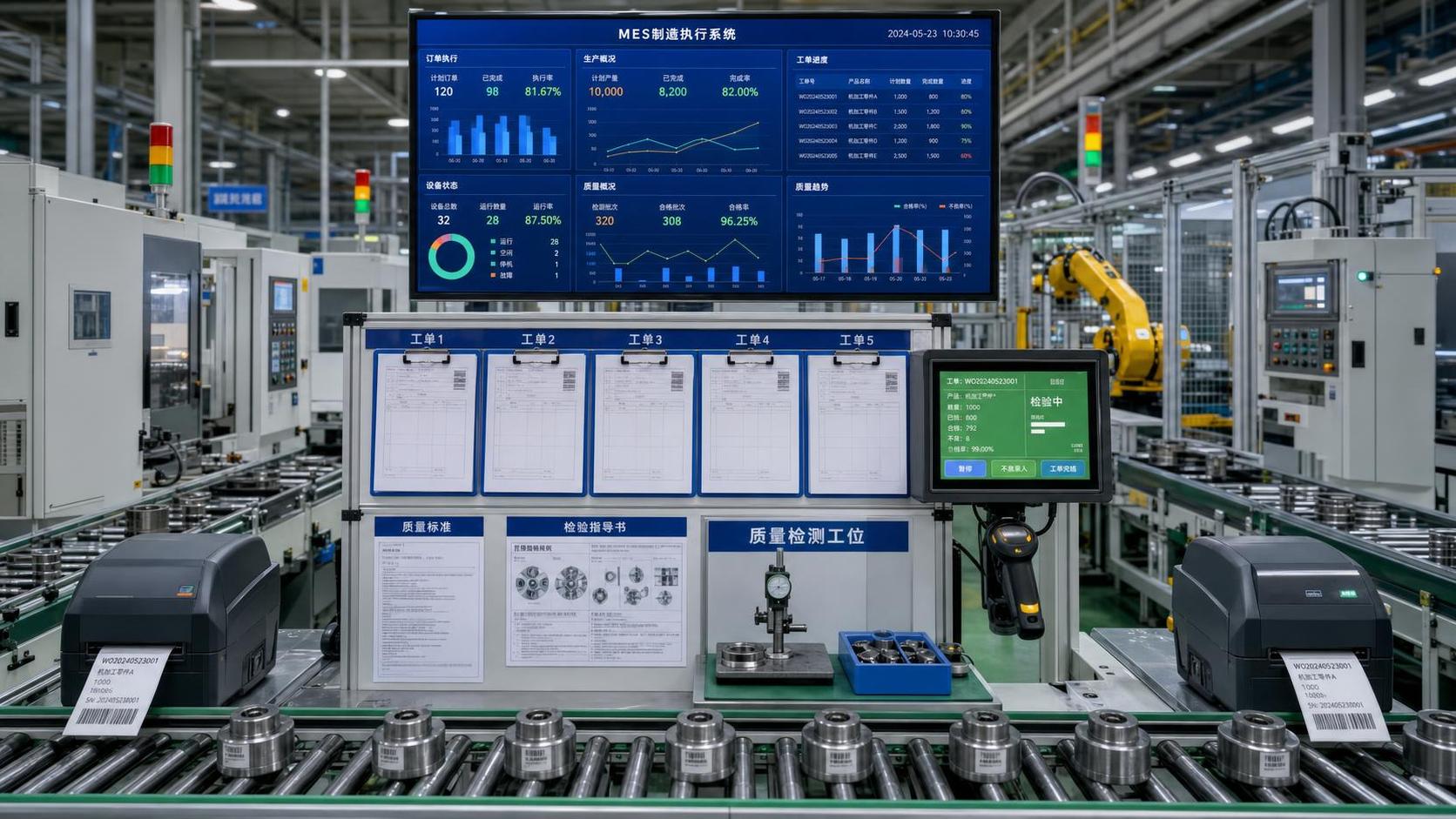
Before allocating budget to factory digitalization, decision-makers need a clear view of how MES in manufacturing affects efficiency, traceability, quality control, and real-time production visibility. This article outlines the key operational and strategic benefits of MES, helping manufacturers and industrial buyers assess whether the investment supports smarter production management, lower risk, and stronger long-term competitiveness.
If you are evaluating MES in manufacturing, the first useful question is not “Which vendor is best?” It is “What operating problem are we actually trying to fix?” A lot of projects go sideways because the software discussion starts too early. The factories that get value from MES usually have one or more visible pain points already: schedule changes that never reach the line in time, paper travelers that disappear, quality records that cannot be traced quickly, too much manual reporting, or managers waiting until the end of shift to learn what went wrong.
That is where a practical checklist helps. Not a glossy feature list. A decision checklist.
Start with the benefit that matters to your plant, not the one vendors lead with
MES can deliver a lot on paper, but the payoff differs by factory type. A discrete manufacturer producing mixed SKUs in short runs usually cares most about work order control, changeover discipline, and traceability. A process manufacturer may care more about batch genealogy, parameter control, and exception handling. An OEM supplier dealing with customer audits may rank electronic records above everything else.
- If late orders are the recurring issue, look at real-time dispatching and production status visibility.
- If scrap, rework, or customer complaints are the problem, inspect quality checkpoints, nonconformance workflows, and lot or serial traceability.
- If supervisors spend half the day chasing spreadsheets, focus on automated data collection and shift-level reporting.
- If audits are painful, prioritize electronic records, user logs, and approval history.
This sounds obvious, but it is where many investment cases become too vague. “We want to digitalize” is not a business case. “We lose line time because machine status, job instructions, and material availability sit in separate systems” is a business case.
Check whether your process is ready to be managed, not just monitored
One of the real benefits of MES in manufacturing is control. Not just dashboards. The system should help enforce the way work is supposed to happen: the right order, the right material, the right routing, the right operator action, and the right quality step.
But there is a catch. If your routing logic changes weekly, BOM accuracy is poor, or standard work is still mostly tribal knowledge, MES will expose that disorder very quickly. That is not a reason to avoid it. It is a reason to assess readiness honestly.
- Are your work centers, routings, and production steps defined clearly enough to digitize?
- Do you have stable item masters, revision control, and operator instructions?
- Can you identify what data should be captured automatically, and what still requires operator input?
- Is there agreement between production, quality, maintenance, and IT on who owns which data?
If the answer is “not yet” on most of those, budget some process cleanup before expecting software to deliver order.
Real-time visibility is valuable, but only if people can act on it
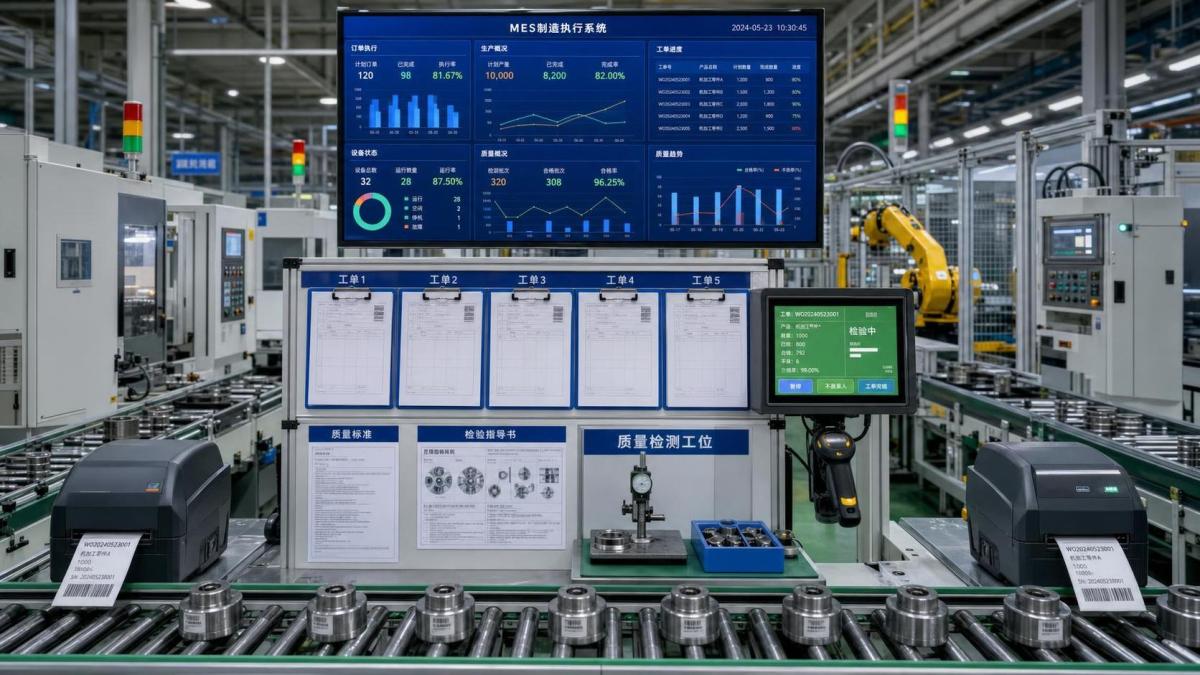
Many MES buying decisions are justified by “real-time production monitoring.” Fair enough. In practice, the real gain comes from shortening response time. Knowing a machine stopped 20 minutes ago is useful only if someone gets the alert, understands the context, and can clear the bottleneck.
Ask vendors to show how exceptions are handled, not just how OEE or output is displayed. Can the system flag a delayed order before the shift ends? Can it distinguish machine downtime from material shortage or waiting for inspection? Can a supervisor see WIP buildup by line or operation without opening five different screens?
This is where poor demos can mislead decision-makers. Large screens with moving charts look impressive. What matters is whether the system helps a plant react earlier, with less manual chasing.
Traceability is often the deciding factor, especially for audited or export-facing manufacturers
For many plants, traceability alone can justify an MES project. If you supply automotive, medical, electronics, aerospace, or regulated industrial customers, being able to reconstruct what happened, when it happened, and which material or operator was involved is not optional. The exact compliance requirement depends on product, market, and customer contract, so any claim about mandatory standards should be verified against your sector-specific obligations【待核实】.
What you want to test during selection is straightforward:
- Can the system track lot, batch, or serial number at the level your customer requires?
- Can it connect material usage, process parameters, inspection results, and operator actions in one record chain?
- How quickly can your team retrieve genealogy data during a complaint, recall, or audit?
- Are record changes and approvals logged with user accountability?
A system that captures partial data but cannot reconstruct a full history may still reduce paperwork, but it will not solve your exposure when a customer asks for proof.
Quality control benefits are real, but they depend on where checks happen
One common mistake is assuming MES improves quality simply because it stores quality data. It does not. The stronger use case is quality enforcement inside the workflow: hold points, first-piece approval, in-process inspections, deviation handling, SPC integration where relevant, and blocked progression when critical steps are missed.
Decision-makers should look for two things. One, whether the system can prevent bad process flow, not just report it after the fact. Two, whether the quality burden placed on operators is realistic. If every job requires too many manual inputs, data quality will decay fast on a busy shop floor.
A useful test during evaluation is to walk through a rework scenario. If a part fails inspection, what happens next? Can the system route it correctly, preserve the history, and separate rework quantity from good output? Those details matter more than a polished dashboard.
Integration risk is usually bigger than license cost
The hardest part of MES in manufacturing is often not the MES itself. It is the data traffic around it. ERP, PLCs, SCADA, QMS, WMS, maintenance systems, barcode devices, label printers, and sometimes older machines with limited connectivity. If your buying team underestimates this, timelines slip and internal confidence drops.
Before approving budget, ask for an integration map with blunt answers:
If a vendor is vague here, treat that as an early warning.
Look closely at operator adoption, because that decides whether the data can be trusted
Decision-makers sometimes evaluate MES like a management tool only. On the floor, it is an execution tool, and operators will either make it usable or quietly work around it. Screens must be simple, transaction steps must fit actual job flow, and terminals or handheld devices must be placed where work happens, not where IT finds convenient.
A practical sign of a stronger system is role-based simplicity. Operators should see what they need for the next action. Supervisors need exception visibility. Quality teams need record depth. Maintenance teams may need machine-state context. One overloaded interface for everyone usually fails in the real world.
It is worth asking to test the system with your own sample work order, your own routing, and one awkward edge case. That reveals much more than a clean demo environment.
Do not approve the project without a boundary on scope
MES can touch scheduling, labor, quality, maintenance, inventory movement, machine connectivity, energy data, and more. That breadth is exactly why projects become bloated. For a first phase, keep the scope tied to the clearest business pain and the fewest critical interfaces.
A tighter first phase might cover work order dispatch, production reporting, downtime capture, and traceability for one plant or one line family. That is usually easier to govern than trying to digitize the whole shop floor at once. After the first phase proves stable, broader functions can be added with less internal resistance.
There is no universal rule for rollout size. Product complexity, plant maturity, and interface burden vary too much. But if the implementation plan seems to solve every factory problem in a single wave, the risk is probably understated.
The investment case should be operational, not theoretical
When buyers ask about ROI, vendors often respond with broad percentages. Be careful. Unless those figures come from a documented project in a comparable environment, they are not decision-grade evidence. Build your case from plant-level facts you can verify.
- How many labor hours are spent daily on manual production reporting?
- How long does it take to investigate a quality incident or customer complaint?
- How often do schedule changes create line confusion or missed priorities?
- What is the cost of missing or incomplete traceability records during audits?
- Where do you lose time today because information arrives late?
That kind of baseline is more useful than generic claims about smart factory transformation.
A final decision check before you sign
If the main benefits of MES in manufacturing are clear in your situation, the next step is simple: verify fit, not marketing. Make sure the project addresses a live operating problem, your process data is structured enough to support execution, integration work is understood, and the first phase is narrow enough to manage. Insist on seeing exception handling, traceability depth, and user workflow with your own production scenarios.
The manufacturers that usually get the best results are not the ones that buy the longest feature list. They are the ones that know exactly where visibility is missing, where control breaks down, and what decision they expect the system to improve on day one.
If that picture is still blurry, pause the purchase and tighten the operating requirements first. That is often the more disciplined decision.
Related Intelligence