
Smart Industrial Electrification: Planning Factory Retrofits to Minimize Downtime
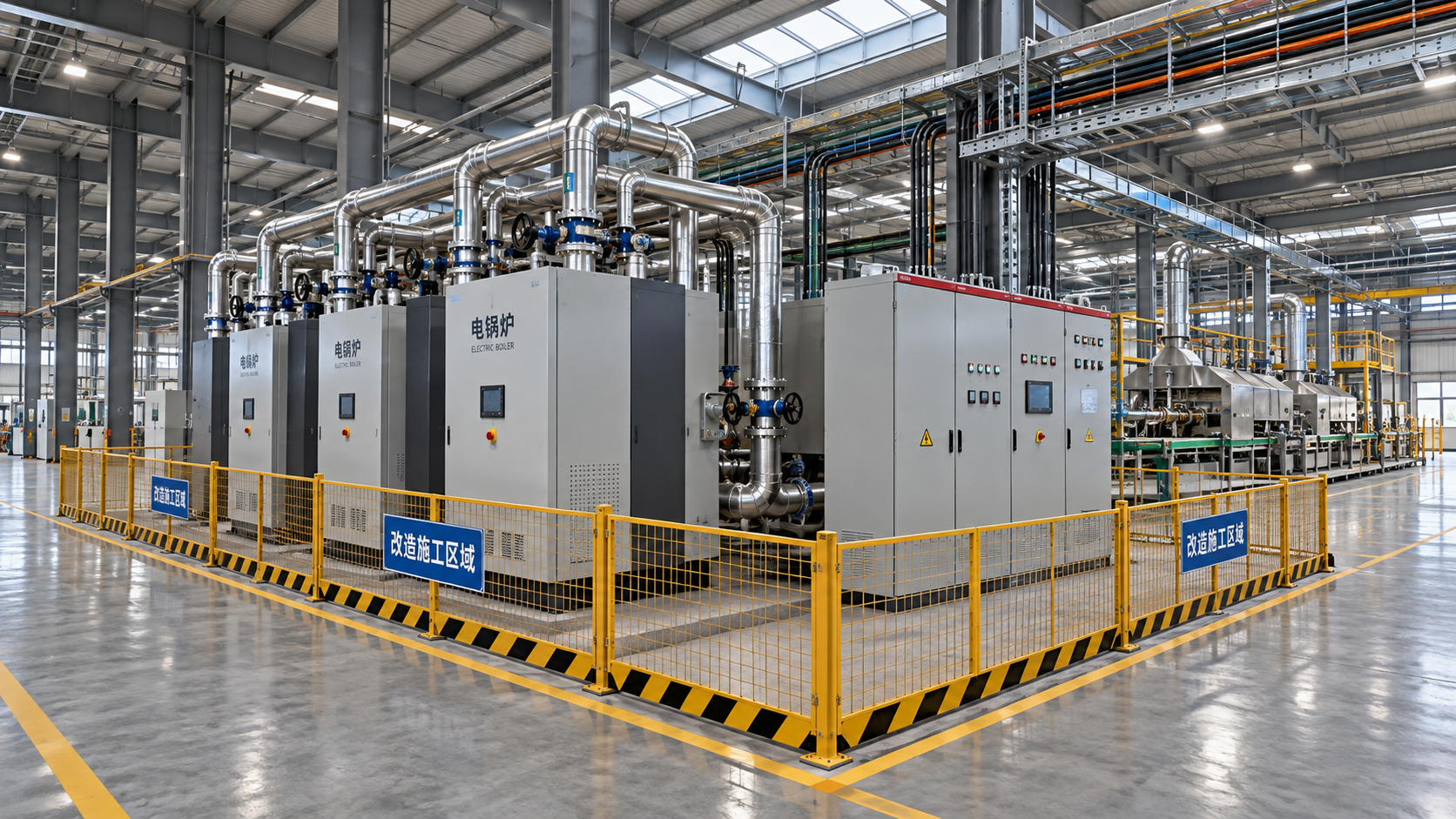
A factory’s electrification project often reaches its most vulnerable moment before the new equipment produces anything: the old system is disconnected, the shutdown clock is running, and a controls fault prevents restart. Avoiding that situation requires more than selecting the right electric boiler, heat pump, drive, or furnace. It requires a retrofit plan that treats production continuity as a design requirement.
Smart industrial electrification combines electrical infrastructure, process equipment, automation, and operating data to replace selected fuel-based processes or improve existing electrical operations. For project managers and engineering leads, the practical challenge is sequencing those changes without creating unacceptable production risk. The starting point is not an equipment quotation. It is a clear understanding of what the plant cannot afford to lose—and for how long.
Define the production boundary before the project boundary
A retrofit scope might describe one heating system or production line, but its shutdown impact can extend across the factory. Shared cooling water, compressed air, ventilation, control networks, and electrical distribution can turn an apparently isolated installation into a site-wide interruption.
Walk the proposed scope with operations, maintenance, process engineering, electrical engineering, and safety personnel. Identify the equipment being replaced, its upstream and downstream dependencies, and any shared services affected by isolation. Include quality teams where temperature stability, humidity, cleanliness, or restart conditions influence product acceptance.
For each affected operation, document three different time limits:
- Maximum interruption: how long the process can stop before material, equipment, or delivery commitments are compromised.
- Recovery duration: the time needed for reheating, stabilization, cleaning, calibration, and operator checks.
- Qualified production restart: when the line can produce acceptable output—not merely when electrical power returns.
This distinction prevents a common scheduling error: treating electrical energization as the end of downtime. A furnace may have power available while the production line remains unavailable for thermal stabilization and first-off inspection.
Audit the electrical system against real operating conditions
Existing drawings are a starting point, not proof of available capacity. Verify the single-line diagram against field conditions, identify undocumented modifications, and inspect the condition of switchgear, transformers, cables, protective devices, and grounding arrangements. Qualified personnel should perform assessments under applicable electrical safety requirements.
Use interval metering to understand normal demand, production peaks, seasonal variation, and coincident loads. Supplement utility data with equipment-level measurements where necessary; billing intervals can conceal short-duration starting events or process fluctuations.
The engineering review should address more than installed kilowatts:
Electrification changes both energy use and the shape of demand. Replacing combustion equipment may reduce purchased energy while increasing electrical peak demand substantially. Evaluate demand charges, time-of-use tariffs, production schedules, and load-management options before assuming that lower energy consumption guarantees lower operating cost.
Choose a retrofit architecture that leaves room to recover
The lowest equipment price does not necessarily produce the lowest-risk project. Where production exposure is high, installing new equipment beside the existing system can allow more construction and testing before the final changeover. The trade-off is additional space, connections, and potentially higher initial cost.
Three approaches deserve comparison:
- Direct replacement: suitable where the affected process can tolerate a defined outage and installation interfaces are well understood.
- Parallel installation: useful when the existing system can remain operational while the replacement is built and tested.
- Phased or hybrid conversion: appropriate when selected loads can be electrified first, or an existing heat source can temporarily support peaks and contingency operation.
Retaining legacy equipment is only a genuine fallback if its utilities, controls, isolation arrangements, permits, and operators remain available. A boiler left physically in place but disconnected from its fuel supply is not a usable recovery strategy.
Also confirm process suitability. Heat pumps depend on source and delivery temperatures; electric boilers require adequate supply capacity; induction heating depends on material properties and component geometry. Equipment should be evaluated against required throughput, temperature uniformity, control response, and product quality—not energy performance alone.
Build the shutdown plan backward from acceptable output
Start with the required production restart and work backward through qualification, process stabilization, commissioning, energization, installation, and isolation. This exposes activities that cannot fit inside the available window and therefore need to move into pre-shutdown preparation.
A practical sequence separates work into three zones: tasks completed while production continues, tasks requiring controlled local isolation, and tasks requiring the main outage.
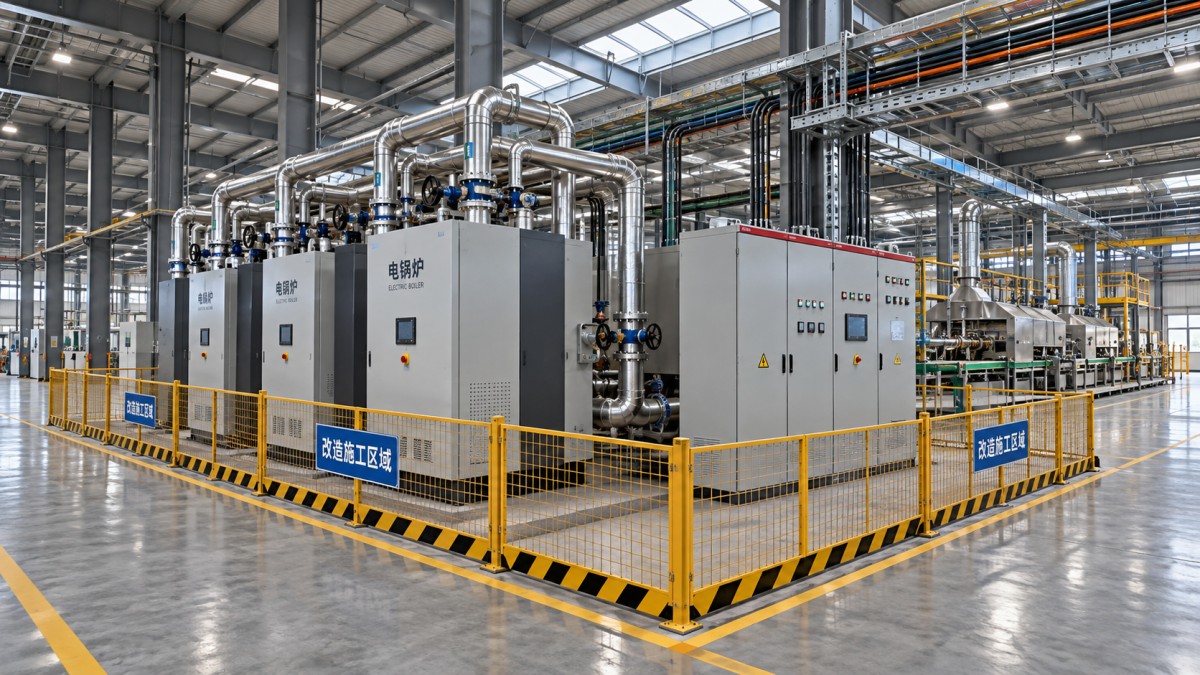
Before the shutdown, teams can often complete foundations, equipment positioning, segregated cable routes, control-panel fabrication, software preparation, and selected inspections. The precise boundary depends on electrical safety, access, and process hazards; proximity to operating equipment does not make work safe by default.
Reserve the outage for work that genuinely needs it: final disconnection, tie-ins, protection implementation, essential testing, and controlled energization. Use prefabricated assemblies where interface dimensions have been verified. Tag cables and connection points consistently across drawings, field labels, and test records.
The shutdown schedule should name the responsible person, required resources, prerequisites, and acceptance evidence for each critical activity. Include shift handovers, permit availability, specialist attendance, and decision deadlines. A tightly compressed schedule without contingency is not an efficient schedule; it simply transfers uncertainty to the production team.
Set a rollback deadline before work starts
Identify the last point at which the plant can safely return to its previous operating arrangement. Estimate the time required to restore it, including inspection and restart. If a critical test fails before that deadline, the project manager needs a predefined escalation route and an authorized decision-maker—not an improvised debate beside an open switchboard.
Manage utility and supplier interfaces as schedule-critical work
Long-lead electrical equipment can determine the project timeline well before construction begins. Transformers, switchgear, specialized process heaters, power electronics, and utility connection works deserve early attention. Obtain supplier-specific delivery commitments rather than relying on general market expectations.
Procurement packages should define interface responsibilities clearly. Specify who provides protection settings, communication gateways, cable terminations, process sensors, cooling connections, software licenses, and commissioning support. Confirm compatibility with local supply frequency, voltage, electrical requirements, and environmental conditions.
For internationally sourced equipment, include shipping, customs clearance, documentation review, and site delivery access in the schedule. A machine at the port is not a machine ready for installation.
Factory acceptance testing can reduce site uncertainty. Where practical, test representative operating sequences, alarms, permissives, communication failures, and restart logic before shipment. Record unresolved items and classify which must be closed before dispatch, installation, or energization.
Use temporary power selectively—and engineer the transfer
Temporary power can preserve critical services, but it should not be treated as a universal substitute for a constrained permanent supply. Large electric heating loads may require impractical generator capacity, fuel logistics, space, or emissions permissions.
Prioritize loads by operational consequence. Control systems, network equipment, lubrication, cooling, ventilation, and safe shutdown functions may need continuity even when production equipment stops. An uninterruptible power supply can bridge selected controls through short interruptions; it does not automatically support the wider process.
Temporary arrangements require engineered load calculations, starting-duty checks, grounding and protection design, safe transfer provisions, and testing. Prevent unintended backfeeding, and involve the utility where connection arrangements require approval. Establish cable protection, access controls, weather protection, and inspection responsibilities before deployment.
Sometimes the better continuity measure is operational rather than electrical: build an agreed inventory buffer, shift production to another line, or move maintenance into the same shutdown. Compare these options against temporary-power cost and the risk of introducing another unfamiliar system.
Make controls integration part of smart industrial electrification
New electrical capacity delivers limited value if automation cannot coordinate it. A plant may have enough supply for normal operation but not for every heater, compressor, and motor to restart simultaneously after an outage.
Define load priorities and staged restart sequences. Where suitable, use demand management to limit coincident peaks without violating process requirements. Temperature-sensitive operations, safety functions, and product-quality constraints must take precedence over an arbitrary electrical demand target.
The controls scope should cover PLC and supervisory-system interfaces, alarm ownership, historian tags, meter data, time synchronization, and loss-of-communication behavior. Keep safety functions appropriately independent of routine optimization logic. Review remote access, network segmentation, user permissions, and software backup arrangements before vendor connections are enabled.
Operators need understandable control screens and clear recovery instructions. If a new system trips at night, the shift team should know what happened, what remains energized, and which restart actions are permitted.
Release production through commissioning gates, not optimism
Commissioning should progress through documented hold points, with acceptance criteria agreed before the outage:
- Installation readiness: confirm mechanical completion, labeling, clearances, terminations, and required inspection records.
- Electrical readiness: complete applicable tests, verify grounding and protection, and authorize energization through the responsible personnel.
- Functional readiness: demonstrate interlocks, emergency stops, alarms, controlled shutdowns, and relevant failure responses.
- Process readiness: introduce load progressively and verify temperature, pressure, throughput, stability, and product quality against agreed requirements.
- Operational handover: provide as-built documentation, backups, spare-parts information, training, maintenance tasks, and outstanding-item ownership.
Do not use live production as the first test of essential failure behavior. Simulate faults where safe and appropriate, and agree test methods with equipment suppliers and site safety personnel.
After restart, monitor performance across representative production conditions. Track downtime, nuisance trips, peak demand, energy per acceptable unit, and maintenance issues. Normalize comparisons for changes in output, product mix, and other relevant operating conditions.
A successful factory electrification retrofit is not simply one that starts on schedule. It is one that returns the plant to dependable production with understood limits, trained operators, and evidence that the new system performs as intended. Building that outcome into scope, procurement, shutdown planning, and commissioning is what makes electrification genuinely smart.
Related Intelligence