
Are Transformer Efficiency Standards Stricter in 2026?
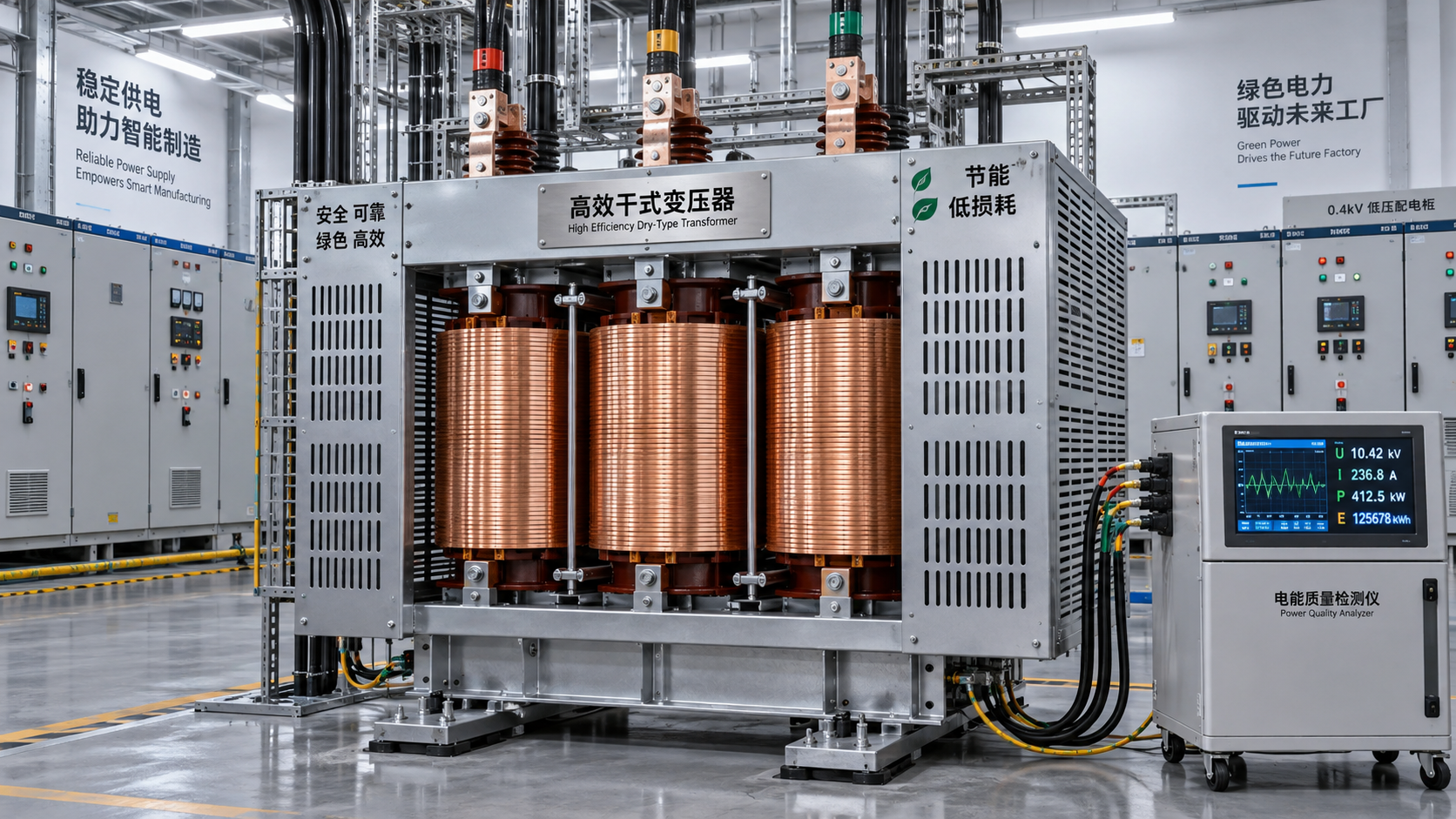
A factory expansion can turn a transformer purchase into an uncomfortable timing question: buy equipment that meets today’s rules, or pay more for a design intended to meet tomorrow’s? Add import duties, copper prices, and uncertain delivery dates, and the lowest quotation may no longer be the safest choice.
Are transformer efficiency standards stricter in 2026? Not universally. Requirements depend on the destination market, transformer category, and applicable compliance date. Some markets already enforce higher efficiency thresholds introduced before 2026. In the United States, the major distribution-transformer standards adopted in 2024 have a compliance deadline in 2029—not a blanket 2026 deadline.
For manufacturers, factory managers, and international sourcing teams, another question sits alongside efficiency: How will new tariffs affect manufacturing procurement costs in 2026? The answer requires separating equipment regulations from trade measures, then putting both into a realistic total-cost calculation.
What does “stricter in 2026” actually mean?
A standard can be announced, legally effective, and mandatory for newly manufactured equipment on three different dates. Confusing those dates is a common procurement mistake.
An effective rule establishes the legal framework. Its compliance date determines when covered products must meet the new requirements, subject to the rule’s specific provisions. A proposal, meanwhile, is not automatically a purchasing obligation.
For transformer buyers, “stricter” can also describe several different changes:
- A higher minimum efficiency at a specified loading point.
- Lower permitted no-load or load losses.
- New documentation, testing, or market-surveillance obligations.
- A customer specification that exceeds the legal minimum.
These changes are not interchangeable. A tender requiring lower losses may be commercially binding even when national regulations have not changed. Conversely, a supplier’s “2026-compliant” label tells you little unless it identifies the jurisdiction, product scope, test method, and applicable threshold.
Which regional requirements should buyers check?
There is no single global transformer-efficiency standard. Start with where the transformer will be placed on the market or used, then establish whether it falls within the relevant regulation.
The practical conclusion: 2026 is not a worldwide step-change date. An EU buyer may already be purchasing against requirements introduced years earlier, while a US buyer is planning for a future transition.
For primary-source checks, consult US distribution-transformer regulations in 10 CFR Part 431, Subpart K and EU Regulation 548/2014, including its amendments and consolidated text. Recheck current rules before contract award; a supplier brochure is not a substitute for the governing regulation.
Do the rules cover every transformer used in a factory?
No. “Transformer” is too broad a description to establish compliance. Distribution transformers, large power transformers, instrument transformers, and equipment designed for special applications can fall under different requirements or exclusions.
Even within a covered category, liquid-immersed and dry-type units may have different efficiency tables. Rated capacity, voltage, phase configuration, and other technical characteristics can change the applicable requirement.
A useful purchase specification should identify:
- Rated capacity, primary and secondary voltages, frequency, and phase configuration.
- Liquid-immersed or dry-type construction and installation environment.
- Expected loading profile, including substantial harmonic loads.
- Destination market and applicable efficiency regulation.
- Guaranteed no-load losses, load losses, and the relevant test conditions.
Do not confuse an efficiency requirement with electrical safety, insulation performance, or short-circuit withstand capability. A transformer can satisfy one set of requirements without satisfying the others. Factory acceptance needs to address the full specification, not just a headline efficiency percentage.
Should a US buyer specify 2029 efficiency levels in a 2026 order?
Sometimes—but not simply because the newer rule exists.
A transformer scheduled for manufacture and installation well before the future compliance deadline may not need to satisfy the amended levels. However, a multi-year framework agreement, delayed construction project, or phased factory rollout can cross into a different regulatory period.
Ask the supplier to distinguish between a unit meeting current mandatory requirements and a unit designed to meet the applicable future requirements. Have that distinction written into the quotation, together with the supporting test basis.
The commercial case for buying ahead depends on energy savings, price premium, availability, installation constraints, and the consequences of schedule slippage. Higher efficiency may be attractive without being mandatory. Equally, paying for a future-compliant design provides little value if its dimensions, impedance, or delivery schedule do not fit the project.
For longer agreements, consider provisions covering regulatory changes, approved design substitutions, updated documentation, and responsibility for compliance when delivery or manufacturing dates move.
Does higher transformer efficiency always reduce operating costs?
It reduces losses under the conditions used to measure it, but the financial benefit depends on how the transformer operates.
No-load losses occur while the transformer is energized, even when little power is being delivered. Load losses increase approximately with the square of current under comparable conditions. Temperature, harmonics, and operating conditions can complicate the real-world result.
A continuously energized transformer serving a lightly loaded warehouse may benefit greatly from lower no-load losses. A heavily loaded production facility may place greater value on reducing load losses. Two units with similar quoted efficiency at a regulatory reference load can perform differently across an actual factory’s operating profile.
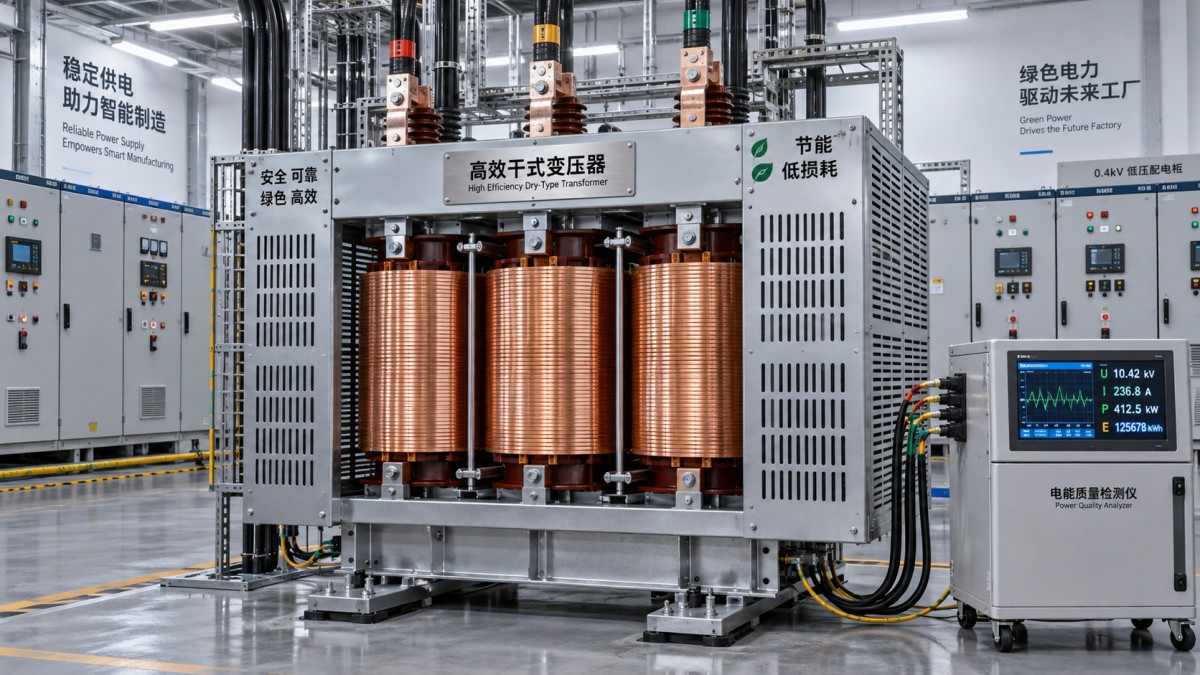
Request an annual loss estimate using the site’s load-duration profile rather than assuming constant full-load operation. Where interval data are available, use them.
For illustration only, suppose a proposed design reduces average losses by 2 kW throughout a year. At 8,760 operating hours and an electricity price of $0.10 per kWh, the annual energy saving would be:
2 × 8,760 × $0.10 = $1,752.
That is not a market benchmark or a guaranteed saving. A shutdown schedule, lower utilization, different electricity price, or changing load profile would alter the result. Demand charges and cooling effects may also matter, but should be modeled separately rather than casually added to the estimate.
How will new tariffs affect manufacturing procurement costs in 2026?
New tariffs can raise landed equipment costs directly and influence component prices indirectly. However, there is no reliable universal percentage increase for transformer procurement in 2026. Exposure depends on the importing country, tariff classification, origin, entry date, and applicable trade measures.
For a finished transformer, buyers should examine ordinary customs duties, any additional country-specific measures, and potential antidumping or countervailing duties. The interaction between these charges requires transaction-specific verification; they should not be assumed to apply uniformly or simply add together.
Component sourcing creates another layer. A locally assembled transformer may still rely on imported electrical steel, copper or aluminum conductors, bushings, insulation, or other parts. Tariffs affecting those inputs can influence the supplier’s selling price even when the finished unit is purchased domestically.
To isolate the effect, request a quotation that separates:
- Equipment price and any metal-price adjustment formula.
- Freight, insurance, and delivery terms.
- Customs duty assumptions and responsibility for payment.
- Additional trade-remedy exposure, where applicable.
- Commissioning, testing, and installation costs.
As a hypothetical comparison, a customs value of $100,000 would produce $10,000 in duty at 10% and $25,000 at 25%, assuming the same valuation basis and no other charges. The $15,000 difference illustrates sensitivity—not an actual tariff announcement or a forecast.
Country of shipment is not necessarily country of origin. Routing equipment through another market does not automatically change its origin or remove tariff liability. Confirm classification, valuation, and origin with qualified customs support before relying on a supplier’s duty estimate.
Can stricter efficiency requirements and tariffs compound each other?
Yes, although not through a fixed formula. Lower-loss designs may require different core materials, conductor arrangements, or manufacturing processes. The result can affect material consumption, production capacity, price, and delivery time.
Electrical steel quality and core construction influence no-load losses; conductor design influences load losses. Amorphous-metal cores are one option for reducing no-load losses in suitable applications, but efficiency rules generally specify performance rather than making one material universally mandatory.
If a design uses more costly material, tariffs can increase the expense of importing the finished equipment or relevant inputs. A larger unit may also require more expensive transport, revised foundations, or changes to the installation layout.
This is why procurement teams should compare delivered, compliant, installed cost alongside lifetime energy losses. A lower ex-works price can disappear after duties and site modifications. A premium design can also fail to justify its price if the facility’s operating profile produces limited savings.
What evidence should a supplier provide before an order is approved?
Ask for evidence tied to the offered design, not a generic statement that the factory makes efficient transformers.
- A compliance statement: the destination market, applicable regulation, product category, and efficiency requirement.
- Technical guarantees: no-load and load losses, reference conditions, impedance, temperature rise, and relevant tolerances.
- Testing documentation: applicable methods, supporting reports, and the scope of routine, type, or witnessed testing.
- Commercial assumptions: tariff treatment, origin information, quotation validity, and material escalation provisions.
- Delivery commitments: manufacturing lead time, shipment milestones, installation requirements, and acceptance procedures.
Compare quotations on a common technical and commercial basis. Otherwise, one supplier may appear cheaper because its losses, testing scope, shipping obligations, or duty exposure are different.
For critical projects, clarify contractual remedies if guaranteed losses are exceeded. Do not assume that an efficiency claim automatically creates an enforceable performance guarantee.
What is the safest procurement approach for 2026?
Separate the decision into three checks: legal eligibility, operating economics, and sourcing risk. Confirm which rules apply, model losses against the facility’s actual demand, and assess landed cost with documented tariff assumptions.
Then test the purchase against plausible changes: higher electricity prices, different utilization, delayed delivery, or additional import charges. A decision that remains sensible across several scenarios is more robust than one built around a single optimistic quotation.
For industrial buyers, the essential answer is not that every transformer standard becomes stricter in 2026. It is that current requirements, future deadlines, energy performance, and trade costs must be evaluated together. Keeping those distinctions clear turns a confusing regulatory question into a manageable procurement decision.
Related Intelligence