
Is Upgrading to Smart Electrical Switchgear Worth the Cost?
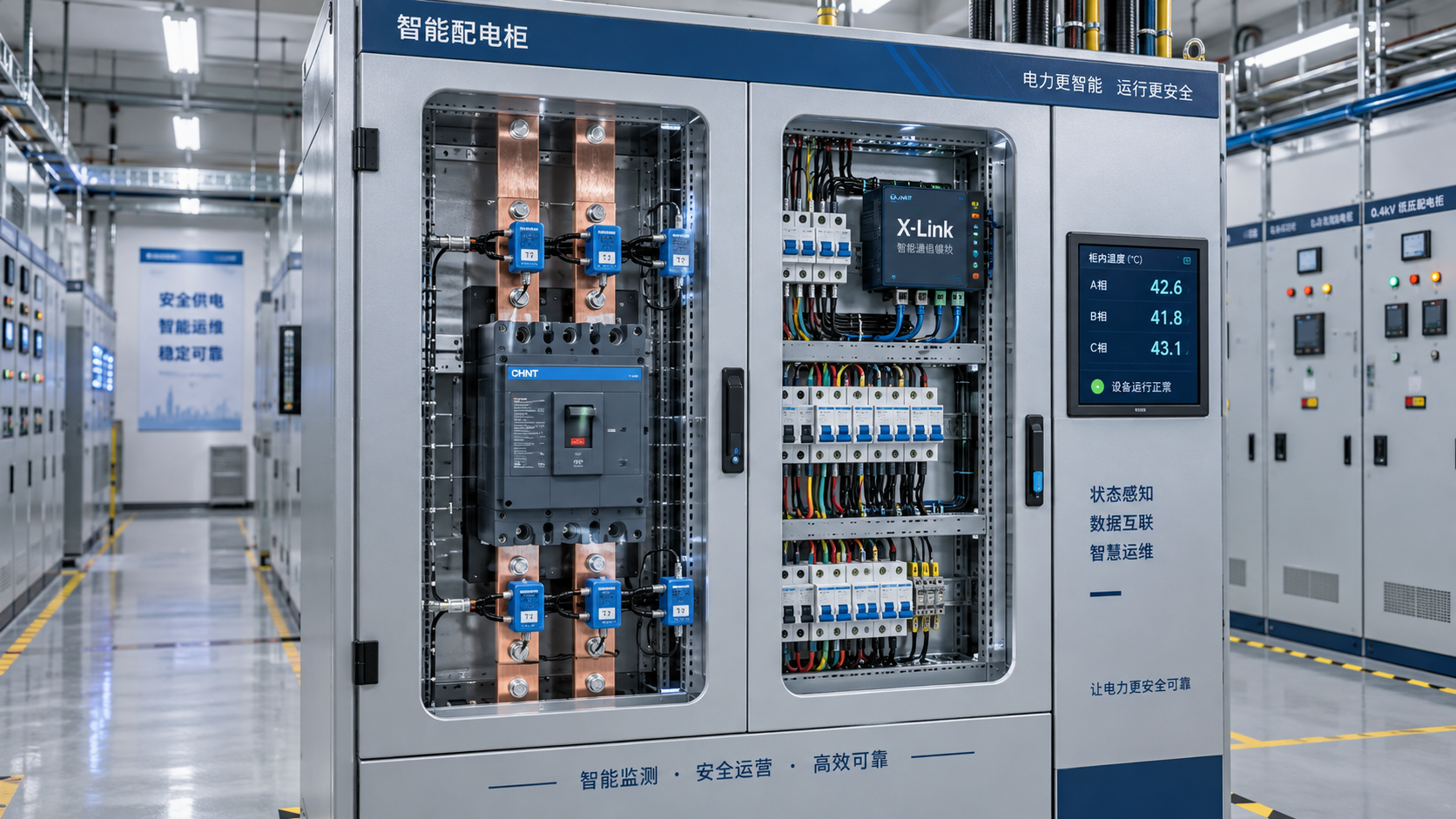
Upgrading to smart electrical switchgear is worth the cost when better monitoring leads to measurable reductions in production disruption, maintenance effort, or electrical operating losses. The strongest business case exists where electrical faults are expensive, equipment condition is difficult to assess, and maintenance can act on early warnings. Where outages have little operational impact and existing equipment remains reliable, a targeted retrofit often offers better value than complete replacement.
The purchase price alone cannot settle the question. Installation downtime, engineering, communications, software subscriptions, cybersecurity, and long-term support all affect the return. Equally, connected equipment delivers limited value if its alarms never reach a maintenance workflow or if the underlying switchgear already needs replacement for physical reasons.
What does the additional investment actually buy?
Smart electrical switchgear combines conventional switching and protection functions with selected sensing, communications, and diagnostic capabilities. Depending on the configuration, these include current and voltage measurements, breaker event records, contact temperature monitoring, operating counters, and remote status reporting. Some packages also support remote control, which introduces separate operating and security requirements.
The word “smart” does not define a consistent specification. A panel with a communicating energy meter offers different value from an assembly that monitors connection temperatures, records protection events, and integrates with maintenance software. Comparing these packages only by panel price hides the difference in what they actually detect.
Each proposed feature needs a clear operational purpose. A temperature alarm could trigger inspection of a deteriorating connection during a planned shutdown. A breaker event log could shorten fault investigation. Load measurements could reveal an overloaded feeder before additional machinery is connected. Features without a defined response contribute little to the investment case.
Where does the financial return come from?
Avoided downtime is often the largest potential benefit, particularly where one electrical failure stops several linked processes. The relevant loss includes interrupted production, restart time, scrapped material, and recovery work. In continuous processing, the consequences can extend beyond the duration of the power interruption itself.
However, monitoring only addresses failures that produce a detectable signal with enough time to respond. A gradually heating termination presents a different opportunity from a sudden external supply fault. Applying the total historical cost of every outage to the expected savings would overstate the return.
Maintenance savings require similar care. Remote measurements can reduce manual data collection and improve the timing of inspections, but physical examination, testing, cleaning, and mechanical servicing still have a role. Breaker operation counts provide useful context; they do not fully describe wear because interrupting a fault differs from switching an ordinary load.
Energy monitoring creates value when it supports an actual intervention. Measurements might reveal poor load distribution, excessive demand peaks, or equipment running unnecessarily. Installing a connected meter alone does not reduce consumption. Any claimed savings should be tied to an operating change and verified against a suitable baseline.
Which costs are easiest to miss?
The installed cost reaches beyond the switchgear assembly. Engineering may include protection coordination, wiring design, network configuration, and integration with existing supervisory systems. Commissioning must verify both the electrical functions and the accuracy of transmitted information.
Shutdown requirements can change the comparison substantially. A lower hardware quote may require a longer interruption if cable positions, enclosure dimensions, or busbar arrangements differ from the existing installation. Temporary power, shutdown labor, and production rescheduling belong in the project budget.
Recurring expenses deserve a separate line in the calculation. Software licenses, cloud services, communications gateways, security maintenance, and replacement sensors can create continuing costs. Clarify whether historical data remains accessible after a subscription ends and whether basic monitoring requires an external service.
Support life also matters. Electrical assemblies can remain in service beyond the support period of their digital components. Replaceable gateways, accessible configuration backups, and exportable data reduce the chance that a discontinued communications module forces a much larger upgrade.
Full replacement, retrofit, or phased modernization?
The physical condition of the existing equipment should determine the starting point. Connectivity cannot restore damaged insulation, correct inadequate fault ratings, or eliminate deteriorated mechanical components. If the assembly already has unresolved electrical deficiencies, adding sensors can leave the main problem untouched.
A retrofit needs engineering review even when the added hardware is small. Sensors, wiring, and power supplies must fit without compromising electrical clearances, insulation, access, or enclosure performance. Breaker replacement requires particular attention to mechanical compatibility and the suitability of the resulting assembly.
Phasing works best when the first stage tests a specific assumption. Monitoring a critical feeder can establish whether useful warnings emerge and whether the maintenance process responds effectively. That evidence provides a stronger basis for expansion than installing limited monitoring everywhere without a defined objective.
How should return on investment be calculated?
Start with a baseline drawn from maintenance records, outage reports, and actual operating conditions. Identify recurring electrical problems and separate those within the proposed monitoring scope from those outside it. Where records are incomplete, use a range of assumptions and make the uncertainty visible.
Simple payback = total installed investment ÷ annual net benefit.
Annual net benefit includes supported savings from reduced outage exposure, maintenance efficiency, and verified energy improvements, less recurring operating costs. Simple payback is useful for initial screening, but it overlooks the timing of cash flows and expenses later in the equipment’s life. A longer-term comparison should include replacements, software costs, and remaining asset life.
Avoided downtime is an expected benefit, not a guaranteed annual saving. Its estimate should reflect the likelihood of a relevant failure, the cost of that failure, and the realistic effect of earlier detection or faster diagnosis. A single severe historical incident should not automatically become an annual savings assumption.
Compare complete options over the same evaluation period. If replacement is already necessary, assess the additional cost of smart features against their additional benefit. Charging the entire replacement project to connectivity would distort that decision. For an otherwise serviceable installation, however, the retrofit’s full installed cost belongs in the comparison.
Test the result under conservative conditions: fewer preventable incidents, delayed maintenance responses, and higher recurring charges. A project that remains attractive under those assumptions has a stronger financial basis than one that requires every projected benefit to materialize.
Can diagnostics reliably predict a failure?
Condition monitoring provides evidence of deterioration; the strength of that evidence depends on what is measured and how it is interpreted. Connection temperature, for example, changes with load and ambient conditions. A rising temperature under comparable operating conditions is more informative than an isolated reading taken during unusually heavy production.
Sensor location matters. Measuring enclosure air temperature does not provide the same visibility as monitoring a specific electrical joint. A proposal described as “thermal monitoring” should identify the monitored locations and explain which fault mechanisms those measurements address.
Trend interpretation also needs context. A warmer phase could reflect unequal loading or a deteriorating connection. Temperature data combined with phase current helps distinguish these possibilities, while inspection establishes the physical cause. Repeated nuisance alarms can weaken response, so thresholds need adjustment using commissioning results and operating experience.
Predictive maintenance claims should specify the measured condition, the failure mechanism, and the intervention it supports. Without that connection, the package provides monitoring rather than a demonstrated prediction capability.
Does connectivity improve electrical safety?
Remote status information and measurements can reduce some occasions for approaching energized equipment. Remote operation, where properly engineered, can also change exposure during switching. These benefits depend on the actual tasks eliminated and the design of the operating arrangement.
Connectivity does not establish that a circuit is safely isolated. A screen showing an open breaker cannot replace the required isolation and verification procedure. Likewise, ordinary monitoring functions should not be treated as substitutes for protective functions.
Remote commands introduce additional considerations: permissions, interlocks, local and remote control selection, and behavior when communications fail. The protection design should retain its required functions if the monitoring network or external service becomes unavailable.
What must be settled before approving the scope?
The integration boundary should be explicit. A communications protocol on a specification sheet does not guarantee useful integration. The available data points, timestamps, event resolution, units, and alarm meanings must match the receiving system. Otherwise, integration work can produce a dashboard that still leaves faults difficult to interpret.
Cybersecurity costs should follow the intended connection. Read-only monitoring on a controlled local network has different requirements from remote switching through an external connection. Network segmentation, account permissions, supported updates, and controlled remote access need to be included in the design and maintenance budget.
The proposal should also establish ownership of event records and measurement history. Data export, documented interfaces, configuration backups, and access to replacement components affect the cost of maintaining or changing the system later.
Acceptance criteria make the purchase reviewable. They should cover the proposed value: whether a monitored condition generates the correct alarm, whether the event arrives with a usable timestamp, and whether records remain available after a communications interruption. Electrical testing and protection verification remain separate requirements.
An upgrade has a credible cost justification when its measurements address real failure modes, its installation scope is understood, and its information leads to funded maintenance actions. If those links remain unclear, narrowing the project to a defined monitoring need is a practical way to establish value before committing to a larger replacement.
Related Intelligence