
Intermodal Freight Delays Often Start at the Handover Point
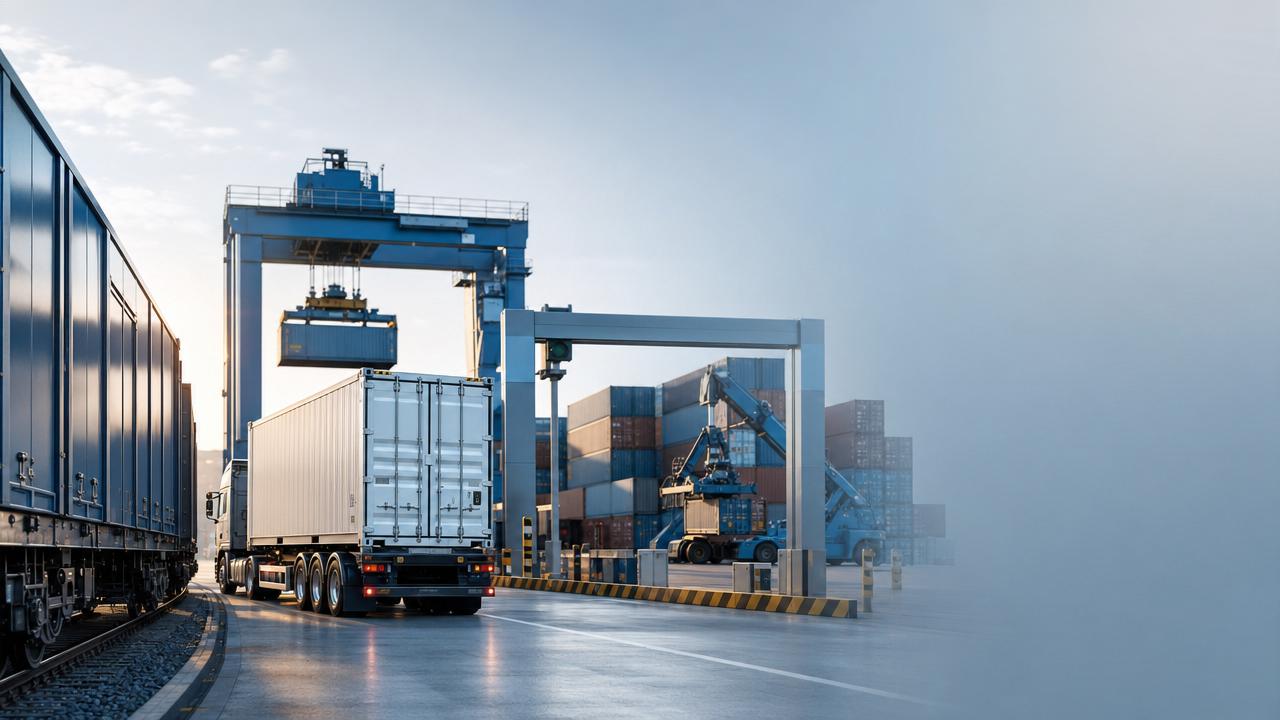
Intermodal Freight delays rarely begin on the long haul—they often start at the handover point, where equipment, data, documentation, and terminal coordination must align without error. For project managers and engineering leads, these transition nodes are where schedule risk, cost escalation, and service disruption quietly accumulate, making handoff performance a critical lever for building more resilient, visible, and efficient freight operations.
What the handover point means in Intermodal Freight
In Intermodal Freight, a handover point is the operational moment when cargo responsibility, equipment control, data visibility, or regulatory accountability shifts from one party or mode to another. This can happen between truck and rail, port terminal and drayage carrier, ocean container yard and inland depot, or warehouse and linehaul operator. On paper, the transfer may look simple. In practice, it is one of the most fragile parts of the network.
For engineering-driven logistics organizations, the handover point is not just a physical exchange. It is a systems interface. Container status, chassis availability, reefer power continuity, gate slot timing, customs release, terminal operating system updates, and carrier instructions must all reconcile at the same time. When one layer fails, the delay is often attributed to congestion or transport capacity later in the route, even though the root cause was created earlier during transition.
That is why Intermodal Freight performance should be assessed as a chain of synchronized nodes rather than as isolated transport legs. A train departure missed by 40 minutes may actually trace back to a documentation mismatch at the terminal gate, an unavailable hostler, or a late API update between systems. For project managers, understanding these dependencies is essential to protecting milestones and service commitments.
Why the industry is paying closer attention now
Several forces are pushing handover reliability to the center of modern freight planning. First, global trade lanes are becoming more volatile. Port rotation changes, tariff shifts, inland capacity constraints, and regional disruption make it harder to absorb small timing errors. A weak handoff that once caused a minor dwell event can now trigger a missed vessel window, rail rollover, or cross-border service failure.
Second, digitalization has increased expectations for visibility, but visibility without execution discipline can be misleading. Many operators can now see an exception in near real time, yet they still lack process control at the transfer node. Intermodal Freight depends not only on tracking data but also on process integrity: who confirms release, who validates seals, who allocates equipment, and who resolves mismatched timestamps across platforms.
Third, decarbonization pressure is changing operating models. Ports, inland hubs, and logistics providers are investing in automated yard systems, electric drayage fleets, hydrogen trucks, and energy-managed reefer zones. These upgrades can improve efficiency, but they also create new integration requirements. If infrastructure, booking logic, and operational rules are not aligned, the handover point becomes slower rather than smarter.
For institutions working across port infrastructure, terminal systems, and multimodal planning, this is where technical intelligence matters most. The value lies in connecting hardware readiness, software interoperability, and governance standards into one operating view.
Where Intermodal Freight delays most often begin
Delays at handover points usually emerge from a combination of physical, digital, and administrative friction. Rarely is there a single cause. More often, multiple small gaps converge into a costly exception.
This pattern explains why Intermodal Freight cannot be managed only through transit time averages. The real vulnerability lies in interface quality. A route can have strong linehaul capacity and still underperform if transfer logic is weak.
Why this matters for project managers and engineering leads
For project-driven cargo programs, handover delays affect more than transport cost. They influence construction sequencing, inventory exposure, labor planning, customer penalties, and capital utilization. If heavy equipment, modular components, temperature-sensitive goods, or high-value inputs arrive late at the next node, downstream teams often absorb the disruption without clear visibility into where the original failure occurred.
Engineering leads should view Intermodal Freight handovers as control points that deserve the same rigor as equipment commissioning or system integration. Every transfer node has design assumptions: available lifting capacity, operating windows, digital event capture, backup routing, and exception ownership. If these assumptions are untested, the logistics plan may appear robust while remaining operationally fragile.
Project managers also need stronger cause-and-effect mapping. A detention charge, demurrage event, or lane underperformance report is often treated as a commercial issue. Yet the underlying driver may be technical: incompatible EDI standards, poor TOS-to-TMS synchronization, lack of geofenced milestone validation, or inadequate yard slot engineering. Better diagnosis leads to better investment decisions.
High-value Intermodal Freight scenarios where handoffs are critical
Not every cargo flow has the same exposure. Some operating environments magnify handover risk because timing, condition control, or regulatory precision are less forgiving.
These categories show that Intermodal Freight reliability is increasingly a multidisciplinary issue. Mechanical assets, software logic, operating rules, and regulatory procedures all shape the outcome.
How stronger handover design improves business performance
When organizations improve handover execution, the benefits extend beyond faster freight movement. First, schedule predictability improves. This matters to project environments where site readiness, labor allocation, and customer delivery commitments depend on narrow windows rather than broad ETA ranges.
Second, cost control becomes more credible. Many hidden logistics costs are generated at transfer nodes: waiting time, redelivery, rebooking, storage, fuel inefficiency, and manual exception handling. Reducing avoidable friction at these points often produces better returns than simply negotiating lower transport rates.
Third, visibility becomes actionable. In mature Intermodal Freight operations, milestone tracking is tied to operational decisions, not just dashboard reporting. That means a gate event can trigger labor rescheduling, a reefer exception can trigger alternate power allocation, and a customs hold can automatically suspend downstream dispatch until release is verified.
Fourth, resilience improves. Networks that manage handovers well recover faster from disruption because roles, fallback paths, and escalation logic are already defined. In a world of volatile corridors and tighter environmental compliance, that readiness is a strategic asset.
Practical recommendations for evaluating handover risk
A useful starting point is to map each handover in the Intermodal Freight chain as a technical and operational interface. Do not treat transfers as generic milestones. Define them in terms of responsible party, event trigger, required data fields, equipment dependency, cut-off logic, and exception owner.
Next, separate visible delay from originating delay. Teams often measure when the problem is discovered rather than when it was created. A missed rail connection may be logged at departure time, but the true origin could be a yard slot conflict two hours earlier. Root-cause discipline is essential if performance programs are to produce meaningful results.
It is also important to verify data interoperability. If TOS, warehouse systems, customs platforms, and transport management systems exchange incomplete or delayed events, handover decisions will be made on inaccurate assumptions. In advanced settings, digital twins, API validation rules, and timestamp governance can improve confidence in event sequencing.
Physical readiness should be reviewed with equal rigor. That includes chassis pools, crane availability, battery charging or hydrogen refueling access for low-emission fleets, reefer plug capacity, and lane design inside terminals or depots. Smart infrastructure only reduces delay when operational capacity matches digital intent.
Finally, establish shared metrics that reflect handover quality directly. Useful measures include first-attempt gate success, release-to-pickup cycle time, container dwell at transfer node, reefer handoff compliance, event data latency, and exception closure time. These indicators give project managers and engineering leads a better basis for intervention than broad on-time delivery percentages alone.
A more resilient view of Intermodal Freight
Intermodal Freight is often discussed in terms of route optimization, mode mix, and transport cost. Those factors matter, but the most consistent source of preventable disruption is frequently the transfer itself. The handover point is where operational complexity becomes visible: physical assets meet digital instructions, regulatory status meets commercial timing, and network design meets real-world execution.
For organizations managing port infrastructure, inland logistics, cold-chain systems, or multimodal project cargo, better handover design is one of the clearest ways to reduce hidden delay. It strengthens schedule certainty, improves data trust, supports decarbonized operations, and turns visibility into practical control.
The most effective next step is not to ask only which carrier or mode is fastest. It is to identify where responsibility changes, where data quality drops, and where infrastructure or governance fails to support the transfer. Once those nodes are made measurable and manageable, Intermodal Freight becomes more predictable, more resilient, and far better aligned with modern project execution needs.
Related Intelligence