Reefer Technology Upgrades That Actually Reduce Claims
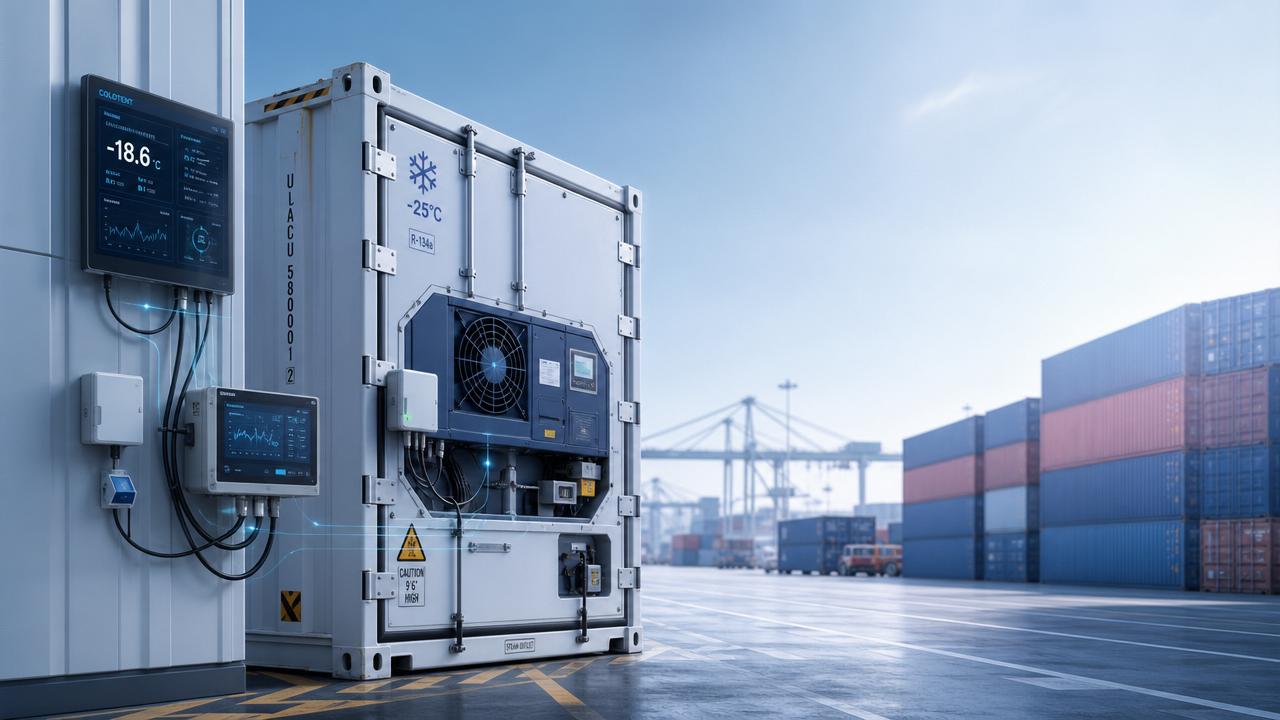
For aftersales maintenance teams, reducing cargo claims starts with understanding which Reefer Technology upgrades deliver measurable reliability—not just more features on a spec sheet. Across ports, depots, intermodal yards, and cross-border cold-chain networks, claim exposure is shifting from obvious mechanical breakdowns to harder-to-detect control, data, and compliance failures. Real-time visibility, better diagnostics, and smarter component monitoring now matter as much as compressor performance. The practical question is no longer whether to modernize, but which Reefer Technology upgrades actually reduce spoilage risk, shorten troubleshooting time, and create defensible records when cargo quality is challenged.
Why claim patterns are changing faster than many reefer programs expect
Cold-chain claims used to center on major failures: total power loss, refrigerant leakage, or complete unit shutdown. Today, many incidents arise from narrow temperature excursions, delayed alarm response, poor door discipline, incorrect setpoint handling, and incomplete event documentation. That shift reflects broader changes in global logistics. Dwell times at ports have become less predictable, cargo handoffs involve more data systems, and compliance scrutiny has increased for food, pharma, and high-value perishables.
At the same time, asset fleets are expected to operate with leaner service intervals and tighter cost controls. In that environment, older reefer units may still cool adequately, yet still generate claims because they cannot prove what happened during a disruption. This is where modern Reefer Technology creates value: not only by protecting cargo, but by turning hidden operational weak points into visible, actionable signals.
The strongest trend signal: upgrades that combine control, sensing, and evidence reduce claim exposure
The most effective Reefer Technology upgrades are rarely isolated hardware swaps. Claims drop when three layers improve together: stable temperature control, earlier fault detection, and time-stamped operational evidence. If only one layer is upgraded, risk remains. A unit may hold temperature but lack data continuity. It may generate alarms but provide poor root-cause clarity. Or it may log events without helping technicians intervene fast enough to save cargo.
This explains why premium features do not always produce lower claims, while targeted mid-cost upgrades often do. The winning pattern is practical integration—controller intelligence, calibrated sensing, power quality awareness, and communication tools that maintenance teams can actually use under field conditions.
Key drivers behind this shift in Reefer Technology priorities
Which Reefer Technology upgrades actually lower claims in real operations
Not every upgrade deserves equal budget priority. The following improvements consistently show the strongest impact on cargo protection, service speed, and documentation quality across integrated logistics environments.
1) Smarter controller diagnostics and fault isolation
Modern controllers that distinguish between sensor drift, airflow restriction, power irregularity, and refrigeration circuit issues help technicians avoid guesswork. Better diagnostics reduce repeat visits, prevent unnecessary part changes, and shorten the time a unit operates in a degraded state. In claim terms, that means fewer undetected excursions and a clearer maintenance record.
2) Real-time temperature visibility with exception alerts
Real-time monitoring is one of the most valuable Reefer Technology upgrades because it converts passive logging into active intervention. Instead of discovering an excursion at destination, teams can respond during transit, at a terminal, or during plugged-in storage. The biggest value comes from exception-based alerts tied to escalation rules, not from raw data streams alone.
3) Door-open, door-seal, and access-event monitoring
Many claims originate outside the refrigeration circuit. Frequent or prolonged door openings, poor resealing, and unauthorized access can destabilize internal conditions quickly. Door-event monitoring provides operational accountability and helps separate handling failures from equipment failures. For mixed custody networks, this is critical evidence.
4) Defrost optimization and evaporator performance tracking
Improper defrost timing can create hidden temperature stress, airflow imbalance, and ice buildup that gradually degrades cargo conditions. Upgraded Reefer Technology that tracks evaporator behavior and adapts defrost cycles helps preserve tighter control while improving energy efficiency. This matters especially for cargoes sensitive to short but repeated thermal swings.
5) Power-quality and plug-state monitoring
Voltage instability, incorrect plug-in practices, and unnoticed disconnections remain common causes of claims at ports and depots. Monitoring the quality and continuity of power supply allows maintenance teams to identify external causes quickly and create a defensible timeline. In many cases, this single capability changes whether a claim is paid, reduced, or successfully contested.
6) Calibrated multi-point sensing and data integrity controls
If sensors are inaccurate, every downstream decision becomes weaker. Upgrades that improve sensor calibration routines, detect drift, and protect data integrity are fundamental. This is less visible than a new interface, but often more important. Reliable Reefer Technology depends on trusted measurements, especially where audits, food safety checks, or insurer reviews are involved.
How these upgrades affect different logistics links
The impact of stronger Reefer Technology is not limited to the reefer unit itself. It changes how multiple business links manage risk. In ports and terminals, power-state visibility and remote alarm review reduce blind spots during stack storage and transshipment delays. In inland depots, diagnostic clarity improves workshop throughput and lowers no-fault part replacement. In intermodal handoffs, door and event data strengthen chain-of-custody confidence. In cross-border trade, complete temperature records support compliance and dispute resolution.
The wider result is operational alignment. Maintenance, operations, quality, and claims administration work from the same event history instead of conflicting snapshots. That is increasingly important in global smart-logistics environments where physical handling and digital evidence are equally important to cargo outcomes.
What deserves the closest attention before budget is committed
- Prioritize upgrades that reduce mean time to detect and mean time to repair, not just those that add more data fields.
- Check whether the Reefer Technology integrates with existing service workflows, alarm routing, and maintenance reporting.
- Assess evidence quality: can the system produce time-stamped, exportable records suitable for claims review?
- Review sensor governance, calibration intervals, and drift detection capability.
- Measure field usability. A technically advanced feature that technicians bypass under pressure will not reduce claims.
- Separate cargo-critical upgrades from convenience upgrades. Interface polish rarely matters as much as event certainty.
A practical way to judge the next phase of Reefer Technology investment
The best future-facing Reefer Technology decisions will likely favor systems that are easier to validate, easier to integrate, and easier to defend in disputes. As logistics infrastructure becomes more connected and regulatory expectations rise, upgrades that produce trusted operational evidence will outperform those that simply advertise smarter hardware.
What to do next if claim reduction is the real objective
Start with claim history, not brochures. Map recent incidents by root cause category: temperature excursion, power interruption, door event, delayed response, sensor error, and incomplete documentation. Then rank candidate Reefer Technology upgrades by their ability to prevent recurrence or strengthen evidence. Pilot in lanes with the highest cargo sensitivity and the most handoff complexity. Measure outcomes through excursion frequency, alarm response time, no-fault maintenance visits, and claim value per move.
In modern cold-chain operations, the most useful Reefer Technology is not the most fashionable. It is the set of upgrades that makes cargo conditions more stable, failures easier to isolate, and disputes easier to resolve. When investment is judged through that lens, claim reduction becomes a practical engineering result rather than a vague operational ambition.
Related Intelligence