
Logistics Robotics Projects That Stall Before Full Deployment
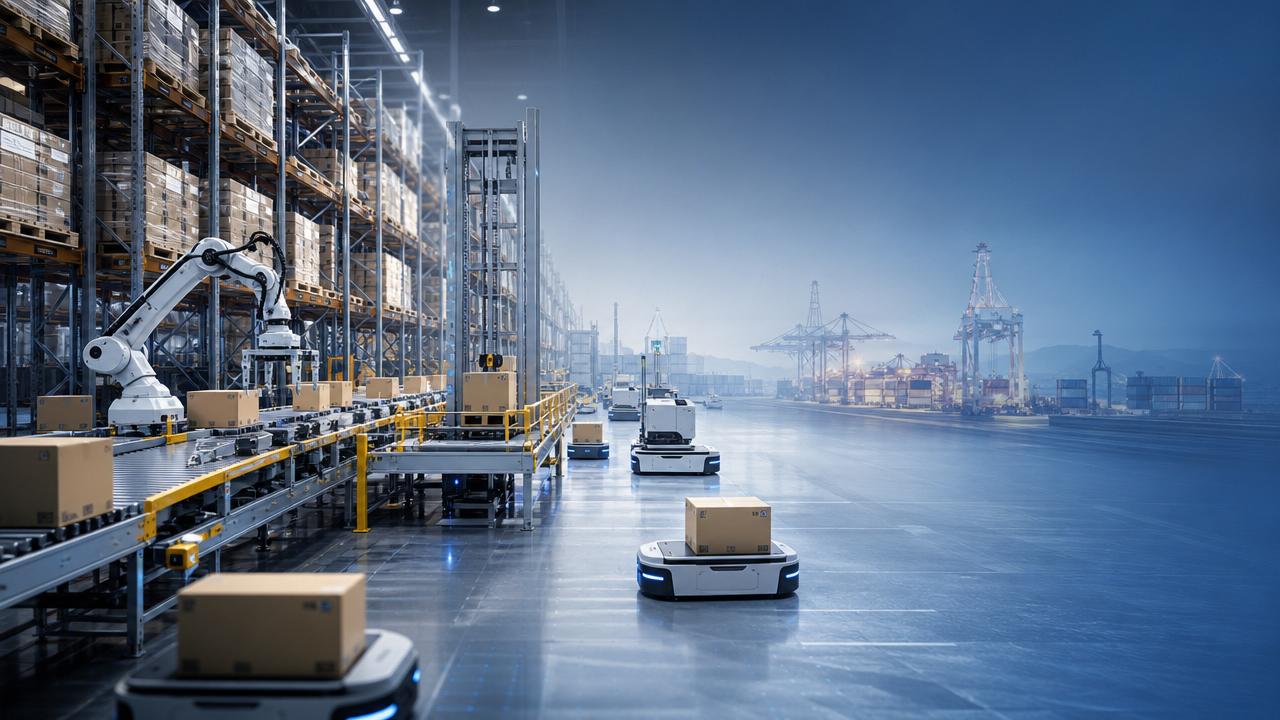
Many Logistics Robotics programs begin with strong pilot results: faster picking, lower manual travel time, improved inventory visibility, or safer yard movements. Yet a large share never reaches full deployment across warehouses, ports, cross-dock nodes, or intermodal facilities. The reason is rarely a single technical failure. More often, projects stall when software integration, site variability, safety validation, operating model redesign, and unclear return on investment converge at the same stage. In complex freight environments, partial success in a controlled test does not automatically translate into scalable performance under real operational pressure.
For infrastructure-intensive supply chains, stalled Logistics Robotics initiatives create more than delayed automation benefits. They can lock capital into underused assets, increase skepticism toward future innovation, and weaken confidence in digital transformation roadmaps. In sectors linked to smart ports, cold chain, autonomous yard operations, and high-throughput distribution, understanding why deployment slows is essential for making robotics programs bankable, safe, and operationally durable.
Definition and deployment reality in Logistics Robotics
Logistics Robotics refers to automated or semi-autonomous systems used to move, pick, sort, transport, inspect, or coordinate goods and equipment across logistics networks. This includes AMRs, AGVs, robotic palletizers, piece-picking arms, autonomous yard trucks, drone-based inspection tools, and software-orchestrated robotic fleets. In principle, these systems address labor volatility, throughput constraints, safety exposure, and the need for more responsive supply chains.
The deployment reality is more demanding. A pilot is often built around a narrow workflow, a limited operating zone, and a dedicated support team. Full deployment requires interoperability with WMS, TMS, ERP, TOS, fleet management systems, machine vision layers, and cybersecurity controls. It also requires stable data, repeatable exception handling, maintenance readiness, and workforce acceptance. That is why many Logistics Robotics projects appear technically viable but still stall before network-wide rollout.
In highly dynamic sites such as ports and multi-client warehouses, the challenge grows further. Mixed traffic, weather exposure, legacy infrastructure, unionized work rules, reefer priorities, and seasonal volume spikes can all undermine robotics assumptions established during the pilot stage. As a result, the difference between “works in test mode” and “works in production at scale” becomes the central deployment gap.
Current industry signals behind stalled deployment
Across the broader logistics sector, several patterns explain why Logistics Robotics remains a high-interest but unevenly deployed category. The issue is not lack of innovation; it is the increasing complexity of proving operational fitness in live networks where uptime, safety, and throughput are non-negotiable.
These signals are especially visible in smart port automation and inland logistics hubs, where robotics must align with terminal operating systems, equipment scheduling, customs workflows, and sustainability targets. In that context, a robotics project is not just a hardware investment. It is a systems integration program with operational and governance consequences.
Why promising Logistics Robotics projects stall
Most stalled Logistics Robotics initiatives can be traced to a cluster of root causes rather than one decisive mistake. The following issues appear repeatedly across warehouse automation, yard autonomy, and robotic handling deployments.
Integration complexity exceeds the pilot design
Pilots often rely on simplified data flows and manual overrides. At scale, robots must respond to live order changes, dock assignments, inventory mismatches, transport exceptions, and equipment priorities. If the integration architecture was not designed for production-grade orchestration, deployment slows as teams try to retrofit interfaces and business logic after procurement.
Safety validation becomes a gating factor
Autonomous movement in shared environments demands more than basic obstacle avoidance. Facilities need validated traffic rules, emergency stop logic, fallback behavior, restricted-zone governance, and auditable incident reporting. In ports and cross-dock sites with heavy equipment, safety reviews can become the longest phase of the rollout if not addressed early.
ROI is measured too narrowly
A business case based only on labor savings often fails under real-world conditions. Full deployment costs include charging infrastructure, network upgrades, spare parts, software subscriptions, integration maintenance, floor layout adaptation, and training. If these costs were omitted during pilot approval, executive confidence weakens as the total cost of ownership becomes visible.
Operational change management is underestimated
Robotics changes workflows, escalation paths, supervision models, and performance metrics. Teams that were comfortable during a pilot can resist when robotics starts to affect shift structure, task sequencing, or accountability. Without a clear operating model, the technology remains present but underutilized.
Edge cases overwhelm the system
Damaged pallets, mixed SKU dimensions, poor labels, uneven floors, rain exposure, container delays, and temporary congestion often account for a disproportionate share of deployment failures. Robotics may handle the standard case well, but logistics performance depends on how fast exceptions are identified, routed, and resolved.
Business value at risk when deployment stalls
When Logistics Robotics does not move beyond pilot status, the cost is not limited to delayed automation. The organization loses strategic momentum. Planned gains in throughput resilience, labor flexibility, damage reduction, and data visibility remain unrealized while support costs continue. In some cases, half-deployed robotics creates parallel processes that are less efficient than either full automation or fully manual operations.
- Capital is tied up in assets that never reach intended utilization.
- Operational teams lose confidence in future digital initiatives.
- Data quality suffers when robots and core systems remain only partially synchronized.
- Safety exposure can increase if temporary workarounds become permanent.
- Network standardization goals are delayed, especially across multi-site logistics estates.
For globally connected trade infrastructure, stalled robotics also affects decarbonization and service reliability goals. Automated orchestration can support energy optimization, lower idle time, and more predictable cargo handling, but only if deployment reaches stable operational scale. That makes execution discipline as important as robotics capability.
Typical scenarios where Logistics Robotics faces deployment friction
These scenarios show that the strongest robotics value tends to appear where workflows are repetitive, data is reliable, and exception governance is mature. The highest deployment risk appears where environment variability, legacy systems, or cross-party coordination dominate daily execution.
Practical measures to improve full deployment success
A more resilient Logistics Robotics strategy begins before vendor selection. Programs that scale successfully usually treat robotics as a phased operational transformation rather than a stand-alone equipment purchase.
- Design for integration first. Map data ownership, interface dependencies, latency tolerance, and manual fallback procedures before finalizing hardware scope.
- Validate site readiness. Assess floor conditions, wireless coverage, power capacity, charging layout, traffic patterns, and environmental constraints in production conditions.
- Build safety cases early. Define human-machine interaction rules, emergency protocols, restricted areas, and audit requirements during design, not after installation.
- Model total cost of ownership. Include software, support, retraining, spare parts, systems maintenance, and process redesign in the ROI framework.
- Use exception-based testing. Do not test only ideal throughput cases; test damaged loads, congested paths, network interruptions, and shift transitions.
- Standardize rollout gates. Move from pilot to expansion only when performance, safety, uptime, and support metrics are objectively met.
It is also useful to separate “technical feasibility” from “deployment readiness.” A robot may perform its assigned task accurately and still be unready for operational scale because support teams, digital infrastructure, or governance controls are incomplete. Making that distinction early prevents avoidable schedule slippage and budget erosion.
Operational next steps for more reliable Logistics Robotics execution
The most effective next step is to run a structured deployment-readiness review across process, technology, safety, and commercial dimensions. For Logistics Robotics in ports, warehouses, and intermodal networks, this review should identify where assumptions from the pilot no longer hold at production scale. That includes integration maturity, exception frequency, cyber resilience, workforce adaptation, and energy infrastructure alignment.
A practical roadmap usually starts with one replicable use case, one measurable business objective, and one governance model that can travel across sites. From there, organizations can prioritize environments with stable workflows, clear data structures, and strong operational sponsorship. This approach reduces the risk that robotics becomes a fragmented showcase rather than a durable capability.
In a market shaped by trade volatility, automation pressure, and decarbonization commitments, Logistics Robotics remains a critical enabler of future-ready logistics. But success depends less on pilot excitement and more on disciplined deployment architecture. The projects that reach full scale are usually the ones that confront integration, safety, ROI, and change management as core design variables from day one.
Related Intelligence