
Manufacturing Automation Technology Explained: Robots, Vision Systems, and PLC Integration
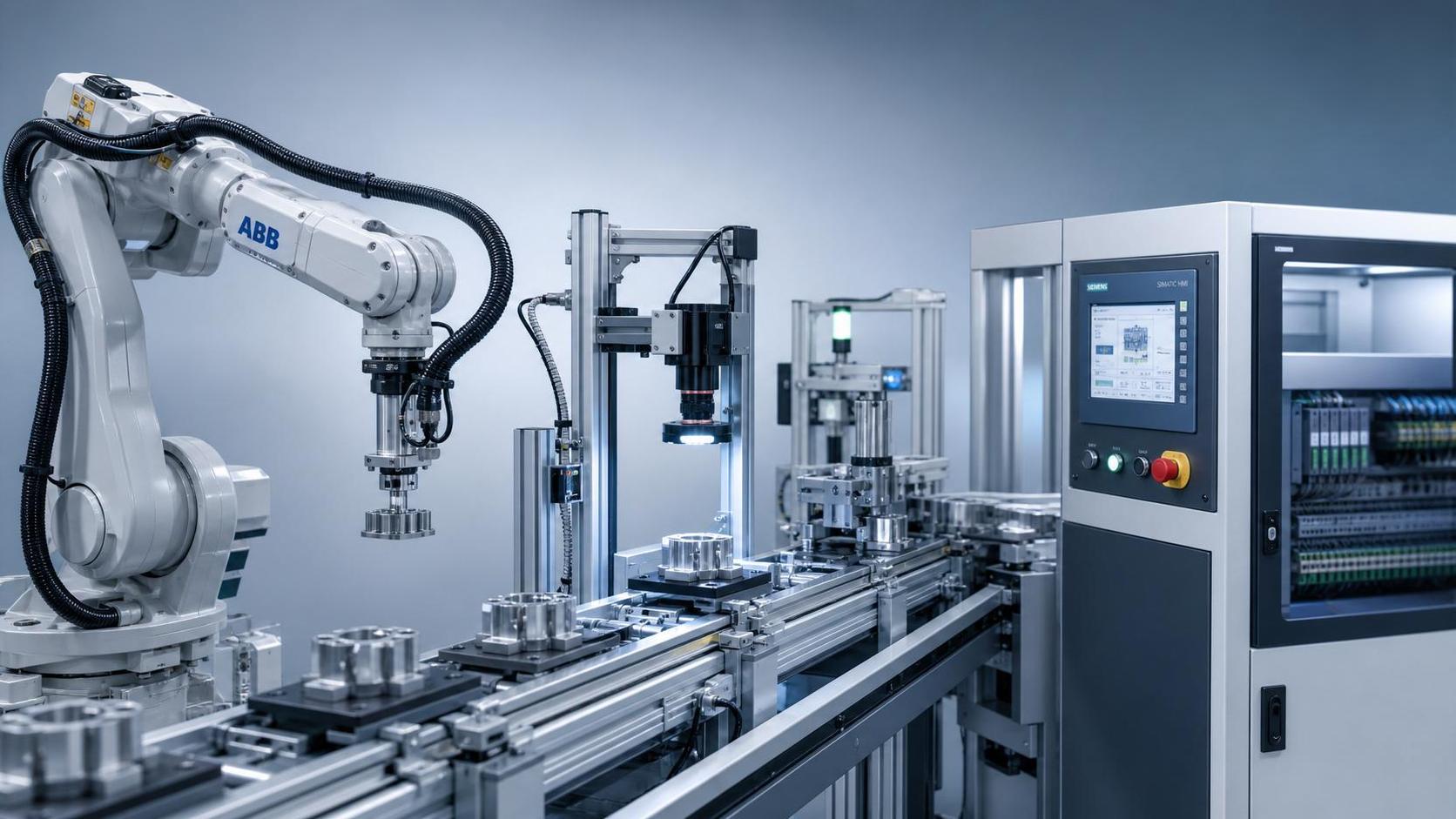
Manufacturing automation technology is no longer limited to high-volume automotive lines. It now shapes metal fabrication, electronics assembly, packaging, warehouse-linked production, and mixed-model factories that need both speed and flexibility.
What makes the topic more important today is not only labor pressure or output targets. It is the growing need to connect machines, inspection, data, and process control into one reliable operating logic.
In practice, robots handle movement, vision systems provide machine perception, and PLC integration keeps timing, signals, and interlocks under control. When these three parts work well together, automated production becomes easier to scale and easier to evaluate.
That combination matters across the industrial economy covered by Baozhen Industrial Intelligence Portal, where factory digitalization, equipment selection, supply chain stability, and operational efficiency are increasingly linked.
Why the market is paying closer attention
Automation investment used to be judged mainly by labor savings. That is still relevant, but current decisions are broader and more technical.
Factories now face shorter product cycles, higher traceability requirements, stricter quality demands, and more variation in upstream material conditions. These pressures make basic standalone equipment less attractive than connected systems.
For example, a metals processor may need robotic loading, vision-based defect checks, and PLC-controlled sequencing to handle changing part sizes without constant manual adjustment.
A similar pattern appears in export-oriented production. Buyers often want stable output, documented inspection, and predictable delivery. Manufacturing automation technology supports those goals when it is engineered around process reality rather than brochure claims.
The core logic behind automated production
At a system level, manufacturing automation technology is the coordinated use of control hardware, sensing, software, and motion to execute production tasks with repeatability.
The most useful way to understand it is through functional roles. One part acts, one part observes, and one part decides when actions are allowed, blocked, or adjusted.
Robots as the physical execution layer
Industrial robots bring consistency to handling, welding, palletizing, dispensing, sorting, and machine tending. Their value is strongest where cycle time discipline and repeated motion directly affect output quality.
However, a robot alone does not make a process intelligent. It can repeat motion accurately, but it still depends on upstream sensing, fixture stability, and control instructions.
Vision systems as the perception layer
Vision systems give machines the ability to identify position, orientation, surface defects, label content, code presence, dimensional variation, and pass or fail conditions.
In many lines, vision has moved from a final inspection tool to an in-process correction tool. That shift matters because catching errors earlier reduces scrap, rework, and unplanned downtime.
PLC integration as the coordination layer
The PLC is often the traffic controller of the automated cell or line. It receives signals, applies logic, manages safety conditions, triggers motion sequences, and communicates with HMIs, drives, sensors, and higher-level systems.
Good PLC integration determines whether a line only runs under ideal conditions or remains stable during shift changes, material variation, and equipment disturbances.
Where integration creates business value
The real value of manufacturing automation technology appears at the integration points. That is where many projects either deliver durable ROI or create ongoing maintenance headaches.
When these checks are done early, project teams can better judge whether the automation concept fits the process or only looks attractive in a demonstration environment.
This is especially relevant in sectors with fluctuating raw material quality, such as steel service centers, aluminum processing, or fabricated component supply. A line designed around fixed assumptions may underperform once material variation appears.
Common industrial scenarios
Manufacturing automation technology is not one uniform solution. Its value depends on product mix, takt time, changeover frequency, quality thresholds, and data needs.
Machine tending and part transfer
Robots load and unload CNC machines, presses, or cutting stations. Vision can confirm part orientation. PLC logic manages machine-ready signals, clamp status, and exception handling.
Inspection-driven quality control
Vision systems inspect dimensions, weld seams, coatings, labels, and surface conditions. PLC integration can then route parts automatically to rework, reject, or downstream packaging.
Packaging and end-of-line automation
At the end of production, robotics and PLC sequencing improve consistency in case packing, palletizing, barcode verification, and warehouse handoff.
This is where manufacturing, logistics, and supply chain efficiency start to overlap. An unstable end-of-line system can delay outbound flow even when upstream production performs well.
What should be evaluated before adoption
A useful evaluation goes beyond the promised cycle time. It should test whether the automation architecture fits real operating conditions.
- Check process variability, not only average conditions.
- Review communication protocols across robot, camera, PLC, drives, and MES.
- Assess fault recovery logic, not just normal production flow.
- Verify spare parts availability and local service capability.
- Measure data usefulness for quality analysis and maintenance planning.
- Compare retooling effort when product dimensions or SKUs change.
These points matter because many automation projects fail quietly. They do not stop completely, but they require so much manual support that the expected productivity gain never fully appears.
The wider impact on sourcing and factory decisions
Automation is also changing how factories are assessed in B2B sourcing. A supplier with integrated robotics, inspection, and control systems may offer more stable lead times, better traceability, and clearer process discipline.
Still, technology presence alone is not enough. What matters is whether the line is matched to product complexity, operator skill, maintenance practice, and production planning.
That is why data-based judgment is increasingly important. Platforms focused on industrial analysis, manufacturing technology, trade conditions, and supply chain resilience help connect equipment capability with broader business decisions.
From that perspective, manufacturing automation technology is not only a factory topic. It affects sourcing confidence, export readiness, cost predictability, and even risk exposure in cross-border operations.
A practical way to move forward
The next step is usually not to compare robot brands in isolation. It is more useful to map the process first, identify failure points, and then judge how robots, vision systems, and PLC integration would interact in that exact environment.
A short evaluation framework can help. Define the target bottleneck, document part variation, confirm quality criteria, and review how control logic will handle nonstandard events.
If the goal is stronger operational decisions, keep the analysis tied to production reality, maintenance burden, supply continuity, and future expansion. That approach turns manufacturing automation technology from a capital expense discussion into a clearer long-term capability assessment.
For ongoing monitoring, it is worth following technical interpretations, sourcing signals, and factory digitalization trends together rather than as separate topics. That is often where the most useful decisions begin.
- factory digitalization
- quality control
- metal fabrication
- industrial intelligence
- manufacturing technology
- supply chain resilience
- industrial robots
- manufacturing
- manufacturing automation
- metals
- steel
- aluminum
- supply chain
- logistics
- industrial economy
- production planning
- manufacturing automation technology
- supply chain efficiency
- process control
Related Intelligence