
Manufacturing Automation Cost Breakdown: Equipment, Integration, Training, and Maintenance
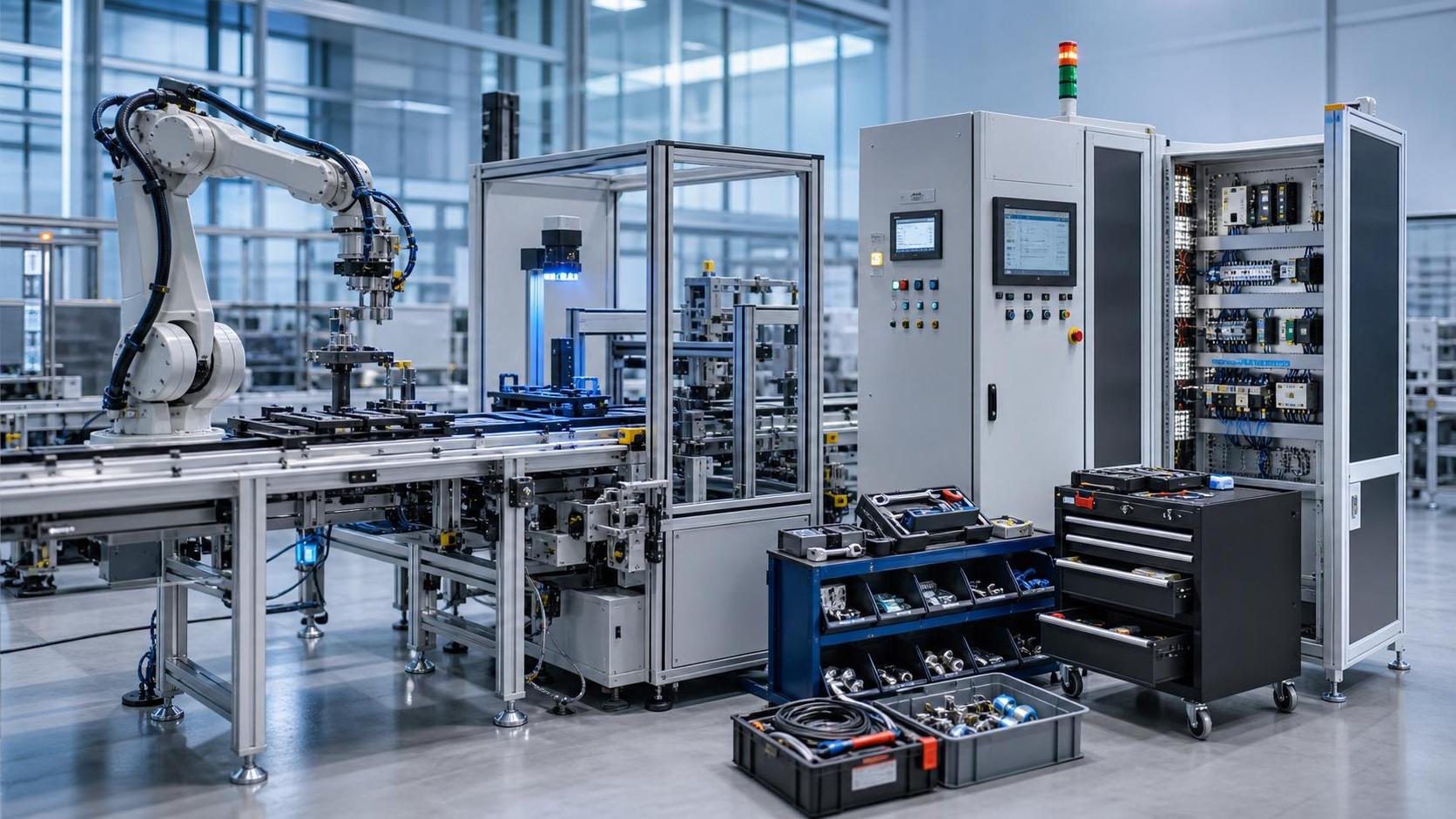
Why does manufacturing automation cost look simple at first, then expand during approval?
Manufacturing automation cost rarely starts with one invoice. It usually begins with a machine quote, then grows into a full project budget.
That is why many internal reviews stall. The visible equipment price is clear, but the hidden spending often sits in engineering, software, testing, and downtime planning.
A better way to read manufacturing automation cost is to separate it into four layers: equipment, integration, training, and maintenance.
This structure makes capital planning more realistic. It also reduces the common mistake of comparing only vendor quotations without comparing implementation depth.
In practical industrial analysis, this broader view matters across sectors, not only in discrete manufacturing.
Metal fabrication lines, packaging plants, warehouse handling systems, and process equipment upgrades all follow similar cost logic.
For platforms that track industry, manufacturing, metals, trade, and supply chain, automation decisions connect directly with sourcing risk, spare parts access, and long-term operating resilience.
What is usually included in manufacturing automation cost?
The short answer is more than hardware. The full manufacturing automation cost includes both direct procurement and the cost of making the system usable.
Equipment spending covers robots, conveyors, sensors, PLCs, drives, vision systems, guarding, control cabinets, and safety components.
Integration spending covers design, programming, electrical work, mechanical fitting, commissioning, and system testing.
Training spending covers operator instruction, maintenance handover, supervisor workflow changes, and documentation support.
Maintenance spending includes preventive service, replacement parts, software updates, calibration, and emergency repair response.
Some projects also require facility upgrades. These may include compressed air, power distribution, network wiring, foundations, cooling, or line layout changes.
When imported equipment is involved, landed cost can change the picture further.
Freight, duties, customs compliance, local certification, and installation support can materially change manufacturing automation cost before production even starts.
A practical cost map helps prevent underbudgeting
This table is useful because it turns a broad automation idea into reviewable budget lines.
How much of manufacturing automation cost comes from equipment, and how much comes from integration?
There is no universal percentage, but equipment alone is rarely the whole story.
In simpler projects, equipment may represent the majority of manufacturing automation cost.
In multi-station lines, retrofit environments, or mixed-brand systems, integration can rise sharply.
A common approval mistake is assuming that a lower equipment quote means a lower total project cost.
In reality, lower-priced hardware may require more custom engineering, more troubleshooting, or more external support after installation.
The opposite can also happen. A higher initial machine price may include tested software libraries, easier integration, and lower commissioning risk.
For that reason, comparing quotes line by line is more useful than comparing only total numbers.
- Check whether controls and safety design are included.
- Confirm if factory acceptance testing is priced separately.
- Review whether site commissioning days are capped.
- Ask if software changes after startup are billable.
These questions often reveal the real manufacturing automation cost faster than headline pricing does.
Training and maintenance seem smaller. Are they really important in the budget?
Yes, because they decide whether the automation asset stays productive after launch.
Training is often treated as a soft item, but weak training creates hard costs.
These costs appear as slower ramp-up, operator workarounds, unnecessary stoppages, and dependence on outside technicians.
A sound training plan should separate daily operation from first-line troubleshooting.
Operators need practical routines. Maintenance staff need fault logic, spare parts knowledge, and reset procedures.
Maintenance deserves the same level of review. The purchase may close in one quarter, but service costs continue for years.
More common problems include proprietary parts, long lead times, unsupported software versions, and weak local service coverage.
This becomes especially relevant in cross-border sourcing, where trade policy shifts or logistics disruption can delay critical parts.
A practical review should ask:
- Which wear parts should be stocked on site?
- What response time is promised for service support?
- Can internal teams handle common faults after training?
- How often are software and control updates needed?
When does manufacturing automation cost deliver value, and when does it disappoint?
Automation delivers value when it solves a clearly measured bottleneck, not when it is purchased as a general modernization symbol.
Strong cases usually involve unstable labor availability, repeatable quality losses, safety exposure, throughput constraints, or expensive material waste.
For example, in metals processing, even small error reduction can matter because scrap value is high.
In packaging or intralogistics, value may come from flow consistency and lower handling delays rather than direct labor replacement alone.
Projects disappoint when baseline data is weak. If current cycle time, downtime, defect rate, and changeover loss are not known, ROI turns into assumption.
Another weak point is over-automation. A complex solution may look impressive but introduce fragile dependencies without proportional gains.
A simple judgment table can help before approval.
Which hidden costs and approval risks should be checked before signing?
The biggest hidden cost is often interruption, not equipment.
Shutdown windows, delayed commissioning, and reduced output during ramp-up can change payback more than a modest quote difference.
Another risk comes from interface complexity.
If the automation system must connect with existing machines, warehouse software, traceability tools, or quality systems, the budget needs room for testing and revisions.
Commercial terms also deserve close attention. A low upfront number may exclude spare parts kits, acceptance thresholds, cybersecurity work, or post-startup support.
The safer review approach is to request a documented scope boundary.
- Define what the supplier includes at delivery.
- Define what must be ready on site before installation.
- Define what counts as successful acceptance.
- Define what support is included after handover.
This is where industrial information sources add value.
Market insight on equipment trends, component lead times, metals price movement, import compliance, and supply chain volatility can materially improve automation budget timing.
What is the most practical way to evaluate manufacturing automation cost before moving forward?
Start with the process problem, not the machine brand.
Document the current loss in measurable terms: output limits, scrap rate, downtime, labor dependency, or compliance risk.
Then build a full manufacturing automation cost view that includes installation, integration, training, maintenance, and startup disruption.
It also helps to compare at least two solution paths.
One may be a lower-capex retrofit. Another may be a more standardized line with higher initial cost but lower support risk.
The useful question is not only “What does it cost?”
It is also “What cost structure will this create over three to five years?”
That is usually where better decisions emerge.
A careful next step is to prepare a comparison sheet covering scope, interfaces, training depth, maintenance terms, spare parts strategy, and expected ramp-up time.
With that structure in place, manufacturing automation cost becomes easier to judge, easier to defend internally, and easier to connect with long-term operational value.
Related Intelligence