
Autonomous Van Sensing Range: Lidar vs Radar in Real Roads
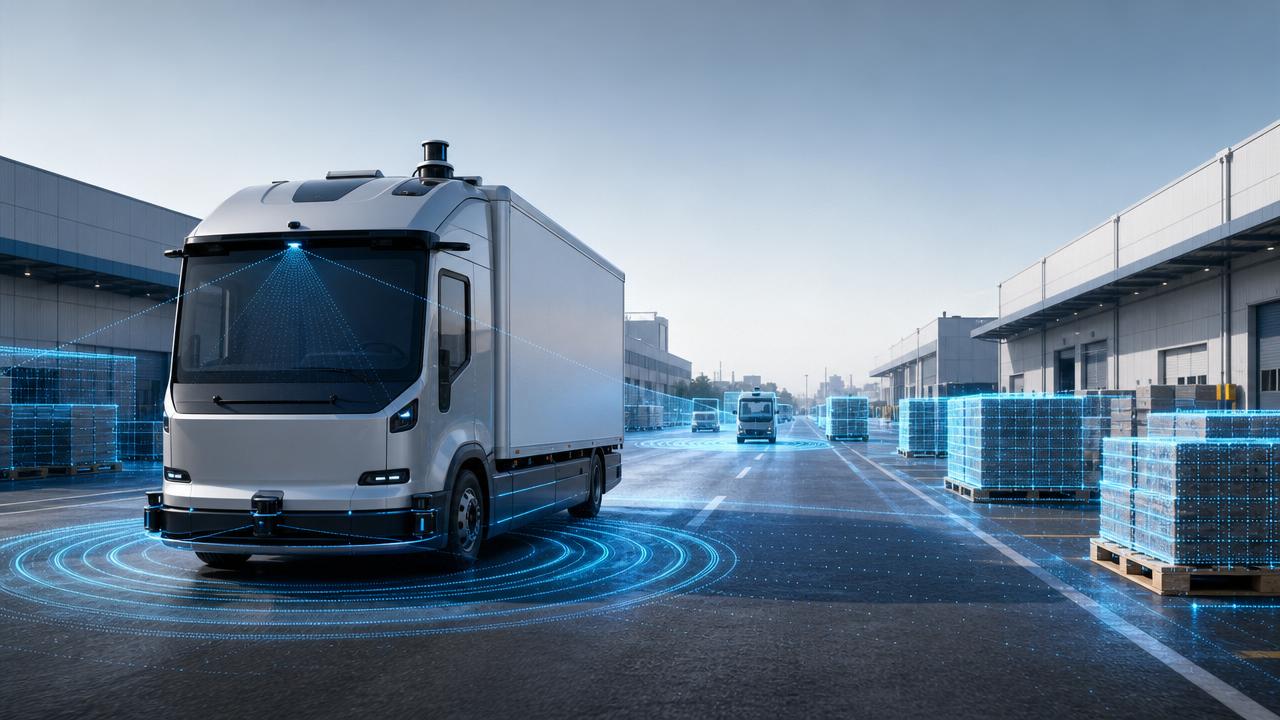
For technical evaluators comparing perception systems, autonomous van sensing range (lidar/radar) is not just a specification on a datasheet—it determines how reliably a vehicle can detect obstacles, interpret traffic behavior, and react in complex real-road conditions. Lidar offers high-resolution spatial detail, while radar provides longer-range resilience in rain, fog, dust, and glare. Understanding how both technologies perform across urban streets, highways, loading zones, and industrial logistics routes is essential for selecting safer, more scalable autonomous van platforms.
Why sensing range matters in autonomous van evaluation
Autonomous vans operate between passenger mobility and industrial logistics. They face pedestrians, forklifts, delivery bays, reflective metal doors, stacked pallets, and fast highway traffic.
For technical evaluators, autonomous van sensing range (lidar/radar) should be reviewed as an operational safety envelope, not as an isolated hardware number.
- Stopping distance depends on speed, road friction, payload weight, braking system response, and perception latency.
- Object classification affects whether the van slows for debris, yields to pedestrians, or ignores harmless roadside clutter.
- Sensor redundancy becomes critical when one technology is weakened by rain, glare, dust, vibration, or occlusion.
- Fleet deployment costs increase when sensing range requires extra cleaning systems, calibration labor, and protective mounting.
A procurement team should therefore test detection range, usable range, classification range, and decision range separately. These four numbers rarely match.
Lidar vs radar: what range really means on real roads
The following comparison helps evaluators connect autonomous van sensing range (lidar/radar) with actual road behavior, maintenance demand, and procurement risk.
The key decision is not lidar or radar alone. Most credible autonomous van platforms use sensor fusion to balance geometry, distance, velocity, and environmental resilience.
Detection range is not the same as usable range
A sensor may detect an object at a long distance but classify it too late for safe planning. This distinction matters in procurement reviews.
For autonomous van sensing range (lidar/radar), evaluators should ask suppliers to separate raw detection, tracking stability, classification confidence, and actuation timing.
Real-road scenarios where range requirements change
The same van may move through factory gates, suburban roads, port areas, and highways. Each route changes the sensing range requirement.
This table summarizes practical autonomous van sensing range (lidar/radar) priorities across common B2B operating environments.
Scenario analysis prevents overbuying expensive sensors for simple routes and underbuying perception capability for complex logistics corridors.
Technical parameters evaluators should request from suppliers
Datasheets often present ideal values. Technical evaluators should request measured performance under route-relevant speed, payload, weather, and mounting conditions.
A practical parameter checklist
- Ask for range at defined object reflectivity, including dark vehicles, pedestrians, cones, pallets, and low-profile debris.
- Confirm horizontal and vertical field of view after installation, not only the sensor’s laboratory specification.
- Review latency from sensing to planning output, because delayed recognition reduces usable autonomous van sensing range (lidar/radar).
- Check protection design for vibration, water spray, road salt, dust, cleaning cycles, and minor impact exposure.
- Require scenario-based logs showing false positives, missed detections, ghost targets, and track stability.
The strongest proposal is not necessarily the one with the longest advertised range. It is the one with consistent perception across realistic conditions.
Procurement decision matrix for lidar and radar packages
When budgets are limited and delivery schedules are tight, evaluators need a repeatable method for comparing autonomous van sensing range (lidar/radar) options.
Use this decision matrix during supplier interviews, pilot-route design, and internal approval discussions.
This matrix turns technology comparison into a commercial decision. It also helps procurement, engineering, safety, and operations teams use the same criteria.
Compliance, safety, and documentation considerations
Autonomous van programs may involve functional safety, cybersecurity, homologation, data governance, and workplace safety depending on market and deployment model.
Standards and references to discuss
- ISO 26262 is commonly discussed for road vehicle functional safety processes and safety lifecycle evidence.
- ISO 21448, often called SOTIF, relates to performance limitations and reasonably foreseeable misuse in automated driving functions.
- ISO/SAE 21434 is relevant when evaluating cybersecurity risks in connected perception and control systems.
- Regional road testing rules, fleet insurance requirements, and workplace safety policies may affect deployment approval.
These references do not prove one sensor is safer than another. They help buyers judge whether suppliers can document risk controls and validation logic.
Common mistakes when judging autonomous van sensing range (lidar/radar)
Many projects lose time because evaluation teams compare headline range numbers before defining operating conditions and decision thresholds.
Mistake 1: treating maximum range as safety range
Maximum range usually describes favorable detection. Safety range must include classification, prediction, planning, braking, and the van’s payload-dependent stopping behavior.
Mistake 2: ignoring sensor placement
Roof-mounted lidar may improve field of view, while bumper radar may improve forward tracking. Both can suffer from dirt, impact, and occlusion.
Mistake 3: underestimating maintenance conditions
A distribution fleet may run through rain, dust, road grime, and loading dock impacts daily. Cleaning design can affect real sensing reliability.
FAQ for technical evaluators
How should we define a minimum autonomous van sensing range (lidar/radar)?
Start with maximum speed, payload, road friction, reaction latency, and braking distance. Then add margin for classification uncertainty and weather degradation.
Is lidar more suitable for warehouses than radar?
Lidar is strong for geometry-rich near-field perception, such as dock edges and pallets. Radar remains useful for resilience and moving-object tracking.
Can radar replace lidar in autonomous van platforms?
In some constrained applications, radar-heavy designs may work. For complex urban or industrial routes, fusion usually provides better operational confidence.
What proof should suppliers provide before a pilot?
Request route-based validation data, sensor mounting drawings, calibration workflow, failure handling logic, maintenance requirements, and compliance documentation.
Why choose Baozhen Industrial Intelligence Portal for evaluation support
Baozhen Industrial Intelligence Portal connects manufacturing, logistics, global trade, supply chain, and industrial technology topics into practical decision guidance.
For autonomous van sensing range (lidar/radar), our value is not selling a single sensor. It is helping business users ask better technical and procurement questions.
- Consult on parameter confirmation, including detection range, classification range, latency, field of view, and operating design domain.
- Support product selection discussions across lidar, radar, camera fusion, mapping, computing, and vehicle integration constraints.
- Help structure supplier comparison, pilot-route requirements, delivery schedule checks, documentation requests, and budget trade-offs.
- Clarify certification and compliance concerns related to functional safety, cybersecurity, road testing, and industrial site operation.
- Provide sourcing and market insight for manufacturers, fleet operators, factory managers, and supply chain decision-makers.
Contact Baozhen Industrial Intelligence Portal when your team needs a structured sensing-range review, supplier question list, custom comparison framework, or procurement briefing.
A well-designed autonomous van program begins with measurable requirements. The right autonomous van sensing range (lidar/radar) strategy reduces technical uncertainty before deployment scales.
Related Intelligence