
Autonomous Delivery in 2026: Where It Works Best
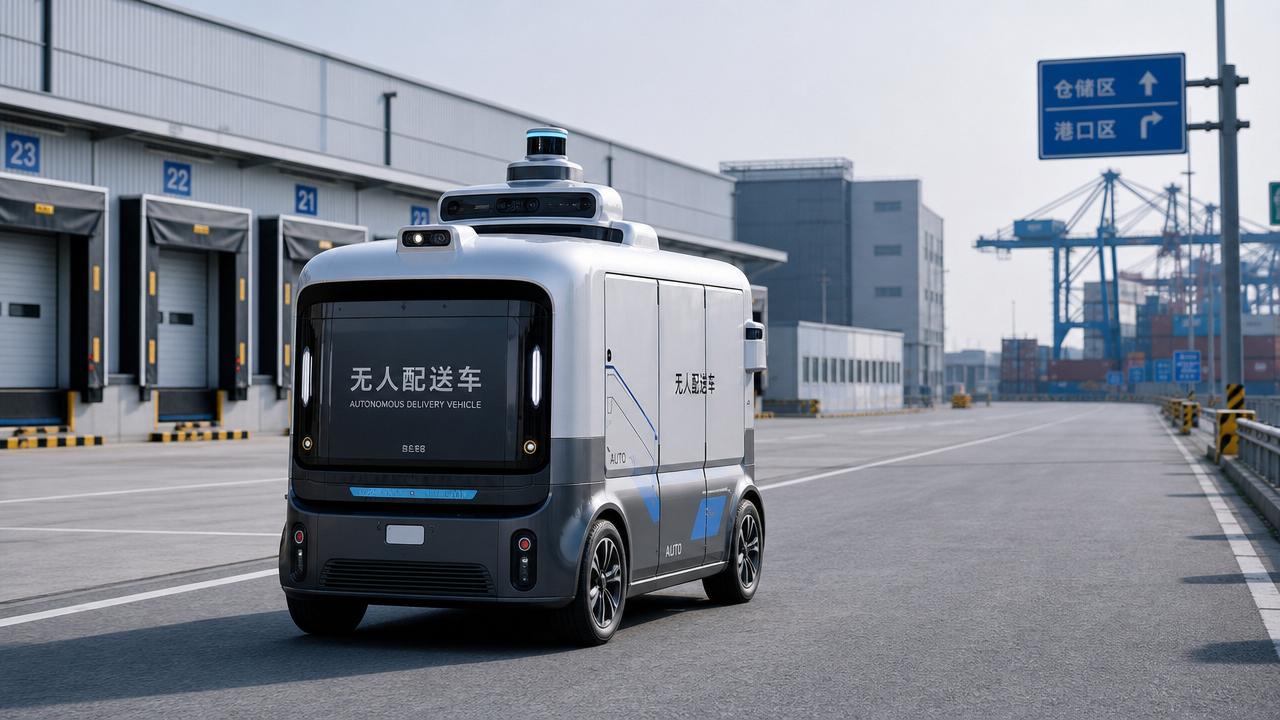
Autonomous Delivery in 2026 Works Best Where Movement Is Predictable
Autonomous Delivery is no longer judged by demos alone. In 2026, the strongest results come from routes with stable traffic logic, repeatable tasks, and clear operating boundaries.
That matters across industry, manufacturing, metals, trade, and supply chain operations. The question is not whether autonomous delivery is impressive. The real question is where it performs reliably enough to justify deployment.
In practical planning, the best-fit environments are usually closed or semi-controlled. These include industrial parks, warehouse campuses, port support roads, and short last-mile corridors.
Where route conditions change every hour, the economics look different. More sensing power, more remote intervention, and more compliance work can quickly weaken the business case.
For an industrial intelligence platform, Autonomous Delivery is not just a mobility topic. It connects factory operations, warehouse flow, labor structure, infrastructure upgrades, and supply chain resilience.
Why the Same Autonomous Delivery Model Does Not Fit Every Site
Autonomous Delivery succeeds when the transport task is narrow enough to automate, yet frequent enough to repay the system cost. That balance changes sharply from one site to another.
A warehouse campus values route repetition and dock timing. A metals yard cares more about surface quality, payload stability, and mixed traffic around forklifts and heavy vehicles.
Cross-border logistics hubs add another layer. Gate access, customs zones, identification procedures, and operating responsibility can delay projects even when the vehicles themselves are ready.
This is why data-based judgment matters. Baozhen Industrial Intelligence Portal often frames technology adoption through operational context, not abstract trend language, and Autonomous Delivery should be evaluated the same way.
The first filter is operational structure
Before comparing vendors or navigation stacks, check whether the movement pattern is fixed, scheduled, and measurable. If the route has no stable rhythm, automation usually struggles.
- Repeated point-to-point transfer favors Autonomous Delivery.
- Frequent path changes raise mapping and supervision costs.
- Mixed pedestrian traffic increases safety validation time.
- Low daily volume often weakens return on investment.
Industrial parks are often the clearest starting point
Industrial parks remain one of the strongest Autonomous Delivery environments for 2026. Roads are limited, destinations are known, and operating windows are easier to coordinate.
In these settings, autonomous delivery can handle document transfer, spare parts movement, canteen supply runs, maintenance tools, and short-distance parcel distribution between buildings.
The biggest advantage is not speed. It is consistency. A slow but dependable vehicle on a controlled route can reduce interruptions and create better visibility for internal logistics planning.
Still, not every park is equally suitable. Parks with frequent contractor traffic, temporary construction zones, or weak digital mapping discipline often face avoidable delays during rollout.
What to confirm before deployment
- Road width and turning space near loading points.
- Access rules for gates, elevators, and security checkpoints.
- Weather exposure, slope, drainage, and night visibility.
- Who handles remote intervention during exceptions.
Warehouse campuses benefit when Autonomous Delivery closes short gaps
Warehouse operations often lose efficiency in the spaces between systems. Goods may be automated inside the building, then rely on manual shuttling between buildings, docks, and overflow yards.
This is where Autonomous Delivery can create measurable value. Short transfers between storage areas, packaging zones, charging points, and dispatch areas are repetitive and easier to model.
The key judgment is integration, not vehicle capability alone. If warehouse software, dock scheduling, and yard management remain disconnected, autonomous delivery may simply move the bottleneck elsewhere.
In practice, better projects start with one friction point. For example, moving urgent replenishment totes across a campus. Broad multi-route ambitions usually come later.
Ports and logistics compounds look attractive, but governance is heavier
Autonomous Delivery also fits some port-side and logistics compound operations. Repeated document transfer, sample movement, equipment parts delivery, and short shuttle tasks can be highly structured.
Yet these locations are rarely simple. Traffic includes trucks, contractors, inspection teams, and restricted areas. The route may be short, but the governance framework is much more demanding.
That makes site management more important than promotional performance claims. A technically capable robot can still fail operationally if right-of-way rules are vague or incident ownership is unclear.
For global trade and compliance-focused operations, this point is especially relevant. Autonomous Delivery must align with security procedures, documentation control, and local infrastructure policy, not just fleet utilization targets.
Urban last-mile delivery is visible, but not always the best early use case
Public-road last-mile delivery attracts attention because it is easy to see. It is also where Autonomous Delivery faces the highest exception density.
Pedestrians, pets, parked vehicles, curb changes, weather, and local regulation all create variation. In many cities, the operational edge still depends on very specific corridors rather than citywide freedom.
The better 2026 opportunities are usually semi-structured zones. University districts, business campuses, medical clusters, and residential projects with managed pathways are more realistic than open urban sprawl.
Even then, the value case should be built around service reliability and route density. Replacing labor headlines may look attractive, but they often oversimplify maintenance, supervision, and customer handoff costs.
Where misjudgment happens most often
- Comparing payload specs without studying route obstacles.
- Focusing on purchase price instead of operating support.
- Treating similar sites as identical deployment conditions.
- Ignoring mapping updates after layout changes.
- Assuming pilot labor savings continue at scale.
Different environments change the Autonomous Delivery checklist
Across sectors, the strongest evaluations use a practical checklist instead of a technology-first narrative. The core questions are operational, environmental, financial, and regulatory at the same time.
In manufacturing and metals-related facilities, floor transitions, outdoor dust, vibration, and heavy equipment interaction deserve more attention than brochure-level autonomy claims.
In supply chain settings, dispatch timing, load handoff, and visibility into delays often matter more than peak vehicle speed. Delivery that cannot plug into reporting systems quickly becomes hard to manage.
A useful decision framework usually includes the following checks.
- Is the route stable for at least six to twelve months?
- Can loading and unloading be standardized?
- Does the site support charging, mapping, and supervision?
- Are safety rules documented for mixed traffic?
- Can the task volume support full lifecycle cost recovery?
A practical path forward starts with bounded scale
Autonomous Delivery in 2026 works best when deployment begins with a narrow transport problem and a measurable operating boundary. This is true in factories, parks, logistics compounds, and selected last-mile corridors.
The strongest projects rarely start by asking how advanced the vehicle is. They start by asking which repeated movement creates cost, delay, or safety friction today.
From there, the next step is clear. Map one real route, compare traffic conditions, define intervention rules, and calculate total operating cost instead of equipment cost alone.
For teams tracking industrial automation, warehouse efficiency, trade infrastructure, and supply chain risk, Autonomous Delivery deserves attention where site discipline and business logic already support scale.
That is usually where autonomous delivery stops being a pilot story and becomes an operating tool.
Related Intelligence