
AI Reshaping Supply Chains Becomes Summit Consensus
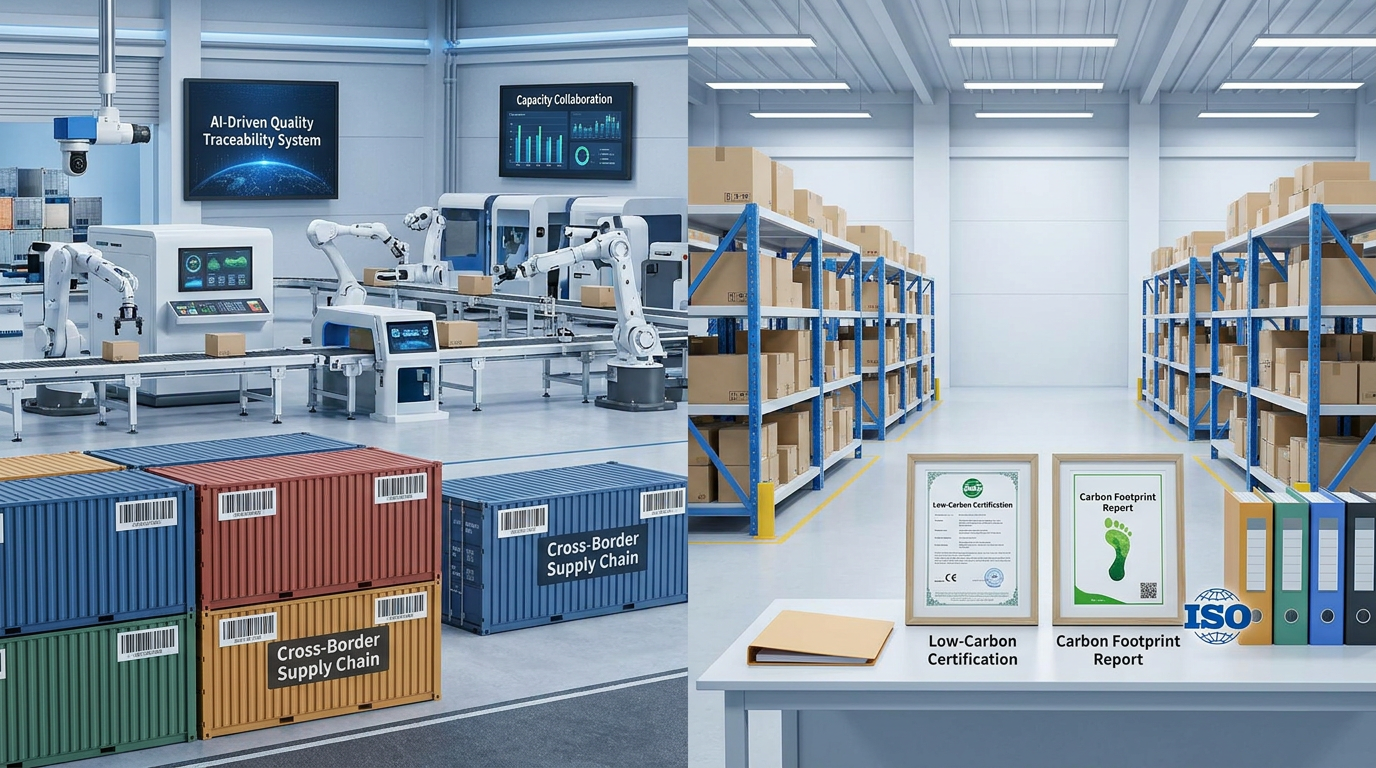
On May 18, the 2026 Global Trade and Investment Promotion Summit held in Beijing put the focus on new productive forces and AI-enabled global economic and trade cooperation. The key point for the market was not only that AI was discussed, but that delegates from the United States, Germany, and Morocco highlighted concrete trade and supply-chain functions already being reshaped, including cross-border order response, quality traceability, capacity coordination, and low-carbon certification workflows. For exporters, manufacturers, buyers, and supply-chain service providers, this is worth watching because it suggests that AI is moving closer to practical procurement and delivery requirements rather than remaining a general technology theme.
What the summit made clear
According to the event summary, the summit took place in Beijing on May 18, 2026, and centered on new productive forces and the use of AI in global trade cooperation. Representatives from the United States, Germany, and Morocco emphasized that AI is reshaping several operational links in international trade and supply chains, specifically cross-border order response, quality traceability, capacity coordination, and low-carbon certification processes.
The same summary also indicates that Chinese domestic solutions in AI-based quality inspection, digital twin factories, and carbon footprint SaaS tools are becoming new areas of interest in procurement cooperation. These are the confirmed facts disclosed in the provided event information.
Where the impact may be felt first
Procurement is shifting toward process visibility
From an industry perspective, buyers and sourcing teams may be among the first groups affected because the functions mentioned at the summit are closely tied to supplier selection and order execution. If procurement cooperation is increasingly paying attention to AI quality inspection, digital factory coordination, and carbon-related software tools, then supplier evaluation may place more weight on response speed, traceability records, and certification readiness.
Manufacturing operations face higher coordination expectations
Analysis shows that manufacturers could feel the impact in production planning, quality control, and delivery coordination. The summit discussion linked AI not only to factory efficiency but also to capacity collaboration and traceability. That means the issue is no longer limited to internal automation; it may increasingly relate to whether production data and process records can support cross-border business requirements.
Supply-chain service providers may need to connect data and compliance steps
For supply-chain service providers, the relevant change may lie in how trade execution connects with documentation, coordination, and low-carbon process support. Because low-carbon certification and order response were both highlighted, service providers may need to pay closer attention to how operational data, proof materials, and workflow timing interact across different trade stages.
Tool providers are moving closer to real purchasing scenarios
Observably, the tools named in the event summary are not abstract AI categories but applications tied to inspection, factory simulation, and carbon accounting. This suggests that the market attention around such tools may increasingly depend on whether they can support real sourcing, fulfillment, and audit-related tasks rather than only technical demonstrations.
What companies should watch now
Separate summit signals from immediate commercial requirements
What deserves closer attention is the difference between a broad summit consensus and a confirmed rule change in day-to-day business. Companies should not assume that all customers or markets will immediately apply the same standards, but they should note that AI-linked capabilities are being discussed in direct relation to trade workflows.
Review the business links mentioned most clearly
Based on the event summary, firms should pay particular attention to the four areas that were explicitly highlighted: order response, quality traceability, capacity coordination, and low-carbon certification. These are the parts of the workflow most directly connected to the summit discussion and therefore the most practical points for internal review.
Check whether supplier materials and process records are usable
For companies working with overseas buyers or multi-party supply chains, it is worth examining whether quality records, production coordination information, and carbon-related documentation can be provided in a clear and consistent way. Analysis shows that the issue is not simply whether a company uses AI, but whether its outputs can support procurement communication and delivery confidence.
Follow where procurement interest is forming
The event summary specifically notes that Chinese domestic AI quality inspection, digital twin factory systems, and carbon footprint SaaS tools are becoming emerging procurement cooperation hotspots. Companies in related segments should watch whether this interest translates into more detailed customer questions, qualification requirements, or process comparisons in actual negotiations.
Why this looks more like a direction than a final outcome
Observably, this summit message is best read as a strong industry signal rather than a completed market transition. The event shows a growing cross-country consensus that AI is relevant to practical supply-chain restructuring, but the provided information does not establish unified standards, mandatory rules, or confirmed procurement results across markets.
Analysis shows that the significance lies in the framing: AI is being discussed alongside trade execution, quality assurance, production coordination, and low-carbon compliance. That makes this more than a general innovation narrative. At the same time, it remains necessary to keep watching how this consensus translates into specific buyer requirements, workflow adjustments, and supplier screening practices.
How to read this development at this stage
At this stage, it is more appropriate to understand the summit outcome as a medium- to long-term industry signal with near-term operational implications. The confirmed facts do not prove an immediate restructuring of all trade flows, but they do indicate that AI-related capabilities are being connected more directly to procurement cooperation and supply-chain credibility. For market participants, the practical takeaway is to monitor where these expectations begin to appear in real orders, supplier assessments, and certification-related processes.
Basis of this article and what still needs verification
This article is based on the user-provided news title, event date, and event summary regarding the 2026 Global Trade and Investment Promotion Summit held on May 18, 2026. The specific official source link was not provided in the input, so further verification is still needed.
For this type of industry update, commonly relevant source categories may include official summit releases, trade promotion institutions, company disclosures, industry association information, authoritative media coverage, and standard or certification-related documents. The parts that still warrant continued observation include whether follow-up official wording becomes more specific, whether procurement cooperation hotspots develop into clearer business requirements, and whether the AI-related workflows named at the summit appear more frequently in practical trade execution.
Related Intelligence