
CBP Tightens Automation Import Filings From Aug. 1
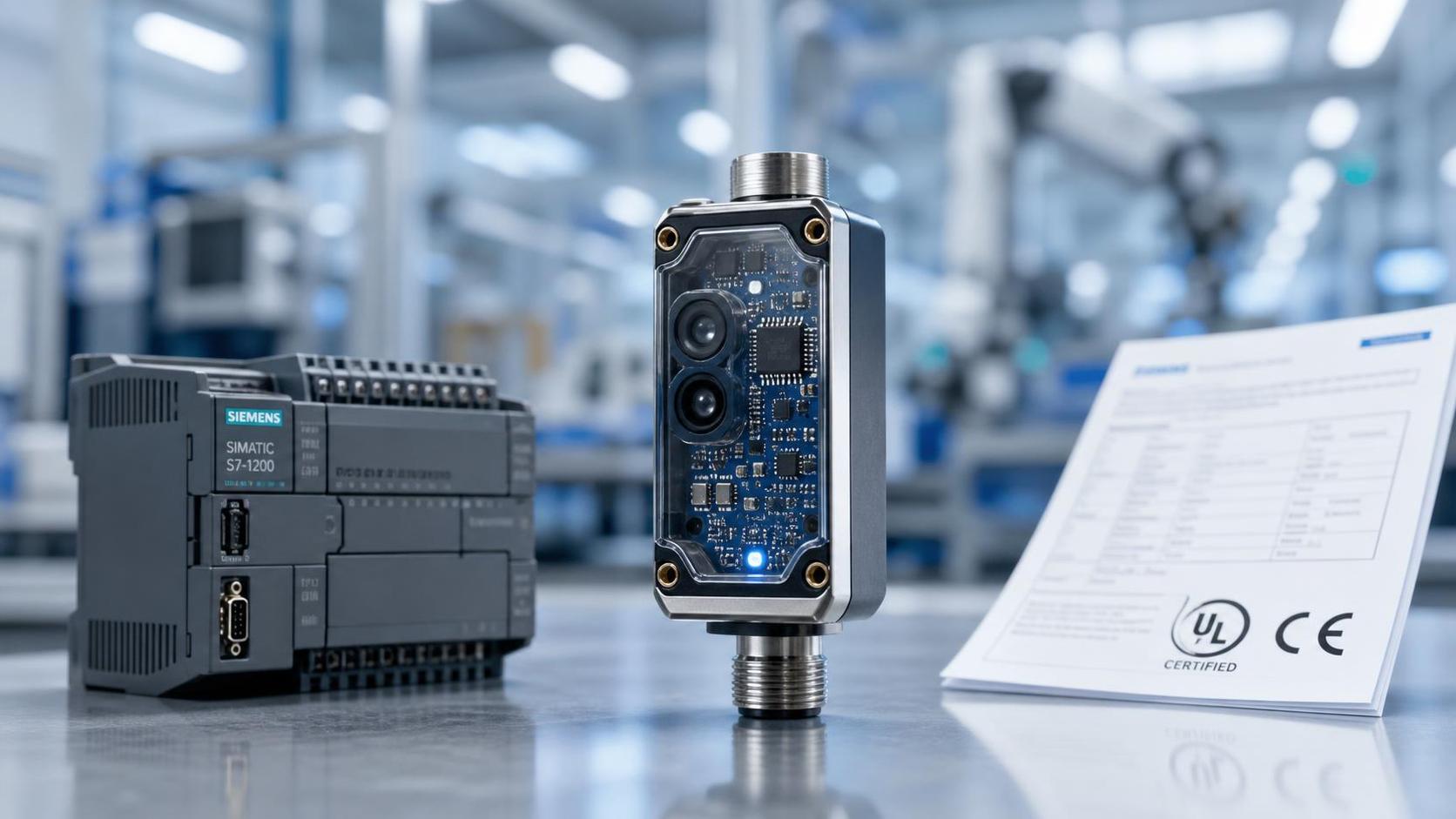
Effective August 1, 2026, a new CBP filing requirement brings industrial automation imports under tighter document and traceability review. For products declared under HS codes 8537, 8479, and 8543, including industrial control equipment, PLCs, HMIs, and smart sensors, the change matters because compliance documentation and upstream supplier data must move into the customs submission process itself. For exporters, OEM/ODM manufacturers, import coordinators, certification-related parties, and supply chain teams serving the U.S. market, this is worth close attention because it can affect shipment readiness and customs clearance timing rather than remaining a back-end paperwork issue.
What the new filing requirement changes
According to the provided event information, U.S. Customs and Border Protection issued an emergency notice on July 18, 2026, identified as CBP Directive 26-07. The notice requires that, from August 1, all imported industrial automation control equipment, PLCs, HMIs, and smart sensors declared under HS codes 8537, 8479, and 8543 must have an electronic UL/CE declaration of conformity uploaded in the ACE system, with the document bearing the seal of a certification body.
The same notice also requires import filings to include third-tier supplier traceability information. The required traceability scope includes the names and countries of origin of PCB, chip, and firmware suppliers. Based on the provided summary, the policy directly affects the export delivery process and customs clearance timeliness of Chinese OEM and ODM manufacturers shipping to the United States.
Where pressure is likely to appear in the transaction chain
Export preparation moves closer to customs compliance
From an industry perspective, exporters of covered automation products are likely to feel the impact first because the required UL/CE declaration and supplier traceability data must be ready in sync with the customs filing. The practical effect is that document collection, internal review, and shipment release preparation may need to happen earlier in the export cycle than before.
OEM and ODM production programs face deeper upstream disclosure demands
Analysis shows that OEM and ODM manufacturers may be affected not only by product-level compliance review but also by the need to organize third-tier sourcing information tied to PCB, chips, and firmware. For businesses relying on multi-layer supply arrangements, the relevant change is that supplier transparency becomes part of the trade execution process, not merely an internal quality or procurement record.
Import operations and customs coordination may become more document-sensitive
Import coordinators, brokers, and supply chain service providers are also likely to be affected because filing quality in ACE now depends on both certification-related documents and traceability fields. What deserves closer attention is whether shipment files are complete at the time of entry submission, since the rule directly connects document readiness to customs processing efficiency.
Certification and testing-related workflows gain a stronger operational role
Observably, certification-related parties and document control teams may see a more immediate role in shipment execution. The requirement is not framed only around holding a conformity document, but around uploading an electronic declaration carrying certification-body endorsement. That makes document format, availability, and coordination timing more relevant to delivery planning.
What companies should watch now
Check whether covered products are mapped correctly to the listed HS codes
Companies trading industrial automation equipment should first pay attention to whether the products they export to the United States fall under HS codes 8537, 8479, or 8543 as described in the provided event summary. This matters because the new requirement is tied to the declared tariff category, and classification review may become a front-end compliance checkpoint.
Review whether UL/CE declarations are filing-ready, not just archive-ready
Analysis shows that holding compliance records may no longer be enough if those records are not prepared in the form required for ACE submission. Businesses should therefore pay close attention to whether existing UL/CE declarations are complete, current, and capable of being uploaded with certification-body sealing as stated in the notice summary.
Reassess supplier data collection below the direct vendor level
What deserves closer attention is the traceability requirement reaching the third-tier supplier level for PCB, chip, and firmware sources. For procurement, compliance, and supplier management teams, this means the immediate issue is not general supply chain visibility in the abstract, but whether the required supplier names and countries can be assembled consistently for each covered shipment.
Build more time into shipment and clearance planning
Because the provided information states that the policy directly affects export delivery procedures and customs clearance timeliness for Chinese OEM/ODM suppliers, companies should closely monitor how document assembly and traceability checks affect lead time. The available information does not provide detailed enforcement outcomes, so it would be premature to state how customs handling will evolve in practice; however, timing risk is clearly a point to monitor.
Why this looks like an execution signal, not just a policy headline
In analytical terms, this development is more appropriately understood as an operational compliance signal than as a general policy statement. The reason is that the requirement is tied to ACE filing behavior, named HS codes, specific product categories, and defined traceability fields. That combination indicates a rule change with immediate process consequences for cross-border execution.
At the same time, it should also be treated as a rule dynamic that still warrants observation. The provided information confirms the filing obligations and the August 1 effective date, but it does not supply detailed enforcement interpretations, exception handling, or market feedback. For that reason, companies should avoid assuming a fully settled implementation picture before more execution experience becomes visible.
How this development is best understood at this stage
At this stage, the CBP change should be read as a landed compliance requirement with near-term implications for documentation, supplier traceability, and shipment readiness in the industrial automation trade. It does not merely add another reference point for certification teams; it pushes compliance evidence and upstream supplier disclosure into the customs submission path itself.
A neutral reading is that the rule is already concrete enough to require process attention, while the exact execution rhythm still deserves monitoring. For affected companies, the practical question is less whether the rule matters and more where internal gaps exist between certification records, supplier data, and customs filing readiness.
Basis of this article and points that still need verification
This article is based on the user-provided news title, event date, and event summary. For events of this type, relevant source categories usually include official notices, regulator releases, customs or trade authority publications, industry association updates, standards-related documents, and reporting by established trade or industry media.
No specific official source link was provided in the input, so the official publication link and any subsequent interpretive materials still need to be verified on an ongoing basis. It is also necessary to continue watching for further policy detail, certification enforcement interpretation, possible changes in tender or procurement documentation, market feedback, and how affected companies implement the requirement in actual export and clearance workflows.
Related Intelligence