
Manufacturing Automation Technology Selection: PLC, Vision, and Robotics Compared
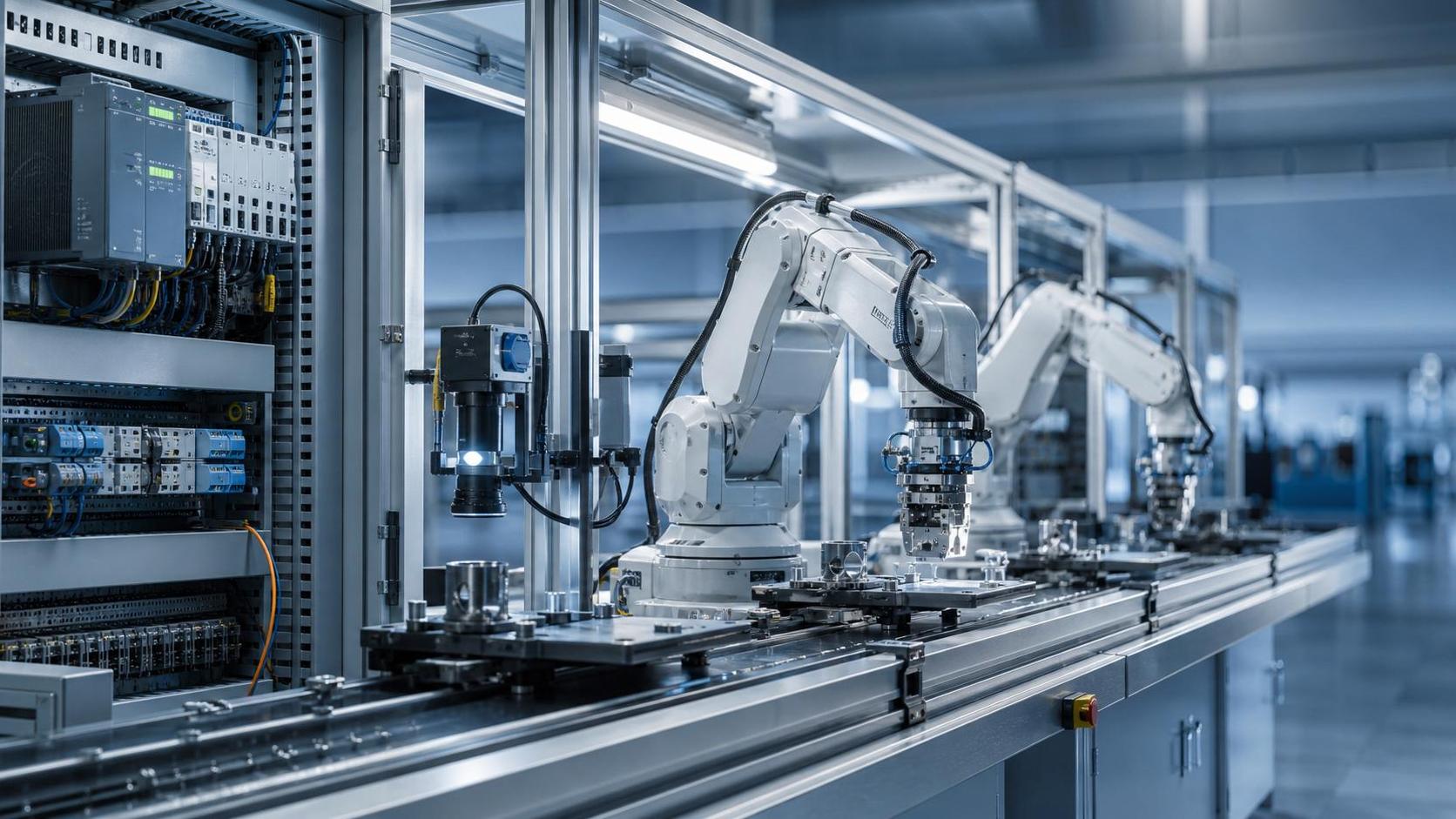
Manufacturing Automation Technology Selection: PLC, Vision, and Robotics Compared
Choosing the right manufacturing automation technology can shape project cost, output stability, and long-term flexibility.
For many factories, the real challenge is not buying automation.
It is choosing the right level of automation for the process, the budget, and the business target.
That is why manufacturing automation technology selection needs a practical comparison of PLC systems, machine vision, and robotics.
Each technology solves a different problem.
Each also creates different demands in engineering, maintenance, training, and integration.
In actual projects, selection mistakes often come from treating them as interchangeable upgrades.
They are not.
This guide explains where each option fits, what risks to watch, and how to make a sound manufacturing automation technology decision.
Why Manufacturing Automation Technology Selection Has Become More Complex
A few years ago, many automation projects focused mainly on labor reduction.
Now the decision is broader.
Factories must balance throughput, traceability, quality consistency, energy use, and supply chain uncertainty.
Shorter product cycles also push lines to handle more model changes.
That shift makes manufacturing automation technology selection less about a single machine and more about system fit.
A PLC may control timing and sequence very well.
A vision system may protect quality and data capture.
A robot may remove unstable manual handling.
But the best choice depends on the bottleneck you are solving.
PLC: The Core Choice for Stable Process Control
PLC systems remain the foundation of industrial control.
In manufacturing automation technology planning, they are usually the first layer to evaluate.
A PLC is strongest when a process follows clear logic, defined inputs, and repeatable timing.
Typical use cases include conveyor control, filling, packaging, interlocking, batching, and safety coordination.
The value of a PLC is reliability.
It handles deterministic control with low latency and clear troubleshooting paths.
It also integrates well with HMIs, SCADA, sensors, and plant networks.
That matters when uptime is more important than advanced flexibility.
When PLC Selection Makes Sense
- The process is rule-based and highly repeatable.
- Cycle time must stay consistent.
- Operators need straightforward maintenance routines.
- The project needs lower implementation risk.
- Expansion will happen through added I/O or linked stations.
The limitation is just as important.
A PLC does not see product variation by itself.
It also does not replace dexterous handling.
If the main production risk is visual inspection or complex motion, PLC-only design will likely fall short.
Machine Vision: Best for Inspection, Identification, and Data-Based Quality
Machine vision is often misunderstood as a general automation upgrade.
In reality, it is a targeted tool.
It becomes powerful when the key problem is inspection accuracy, positioning, code reading, or defect detection.
For manufacturing automation technology selection, vision is usually justified by quality cost, not just labor cost.
Applications include surface defect inspection, label verification, dimensional checks, presence detection, and traceability capture.
This is especially relevant in electronics, metal fabrication, packaging, automotive parts, and medical manufacturing.
The strongest signal for vision adoption is when manual inspection is inconsistent.
Another signal is when customer complaints come from missed defects or traceability gaps.
Where Vision Projects Often Fail
- Lighting conditions were not engineered carefully.
- The defect standard was not clearly defined.
- Product variation was larger than expected.
- The false reject rate was ignored during planning.
- Maintenance staff were not trained to recalibrate the system.
This is why manufacturing automation technology evaluation must include sample testing, image validation, and acceptance criteria early in the project.
Robotics: Flexible Motion for Handling, Assembly, and Repetitive Labor
Robotics enters the picture when movement is the bottleneck.
That may be pick-and-place, palletizing, welding, screwdriving, machine tending, or repetitive assembly.
Compared with fixed automation, robots offer greater flexibility across part changes and layout adjustments.
That flexibility makes robotics attractive in mixed production environments.
Still, robotics is not automatically the best manufacturing automation technology for every line.
Robots require end-of-arm tooling, safety design, programming logic, and sometimes vision guidance.
If the process is simple and fixed, dedicated mechanical automation may cost less and run faster.
When Robotics Delivers Strong Return
- Manual handling causes ergonomic or safety risk.
- Labor availability is unstable.
- Product mix changes often.
- Output growth requires scalable cell design.
- The process needs repeatable motion under controlled tolerances.
The key risk is underestimating integration complexity.
A robot rarely works as a stand-alone answer.
It usually depends on feeders, fixtures, PLC coordination, and quality confirmation.
PLC vs Vision vs Robotics: A Practical Comparison
In many real projects, the answer is not one against the others.
The better answer is combination.
A PLC runs the sequence.
A vision system verifies the result.
A robot performs the physical action.
That layered approach is common in advanced manufacturing automation technology deployment.
How to Choose the Right Manufacturing Automation Technology
A good selection process starts with the bottleneck, not the equipment catalog.
Ask what is failing today.
Is it inconsistent control, poor inspection, labor shortage, safety exposure, or changeover speed?
Then match the failure mode to the technology.
- Define the production constraint in measurable terms.
- Estimate expected gains in cycle time, scrap, labor, or uptime.
- Check integration needs with existing machines and data systems.
- Review maintenance capability inside the plant.
- Run sample tests before final vendor commitment.
- Set acceptance criteria for output, quality, and changeover.
This process reduces the chance of buying a technically impressive system that does not solve the business problem.
Cost, Scalability, and Risk Factors to Review Before Approval
Capital cost is only one part of manufacturing automation technology selection.
Operating cost, downtime risk, spare parts access, and programming support matter just as much.
A lower-cost PLC project may expand easily with moderate engineering effort.
A vision project may save major warranty cost if defect escape is expensive.
A robotic cell may justify itself when labor turnover keeps disrupting output.
Review these points before approval:
- Can the solution scale across more lines or plants?
- Does the vendor support local service and spare parts?
- How long is commissioning likely to take?
- What happens when product specifications change?
- Will operators and technicians adopt it smoothly?
These questions often reveal more than a headline ROI number.
Final Decision Logic for Automation Projects
The best manufacturing automation technology is the one that fits the process constraint, the plant capability, and the growth plan.
Choose PLC when control stability is the priority.
Choose vision when quality verification or traceability is the gap.
Choose robotics when flexible motion and labor replacement drive the business case.
In many factories, the strongest result comes from combining all three with clear roles.
That is the practical direction of modern manufacturing automation technology strategy.
Before making the final call, map the current bottleneck, define the target state, and test the solution against real production conditions.
That approach leads to better automation decisions, stronger delivery outcomes, and fewer expensive surprises after launch.
Related Intelligence