
Automated Freight Technologies in Warehousing: Which Systems Improve Throughput?
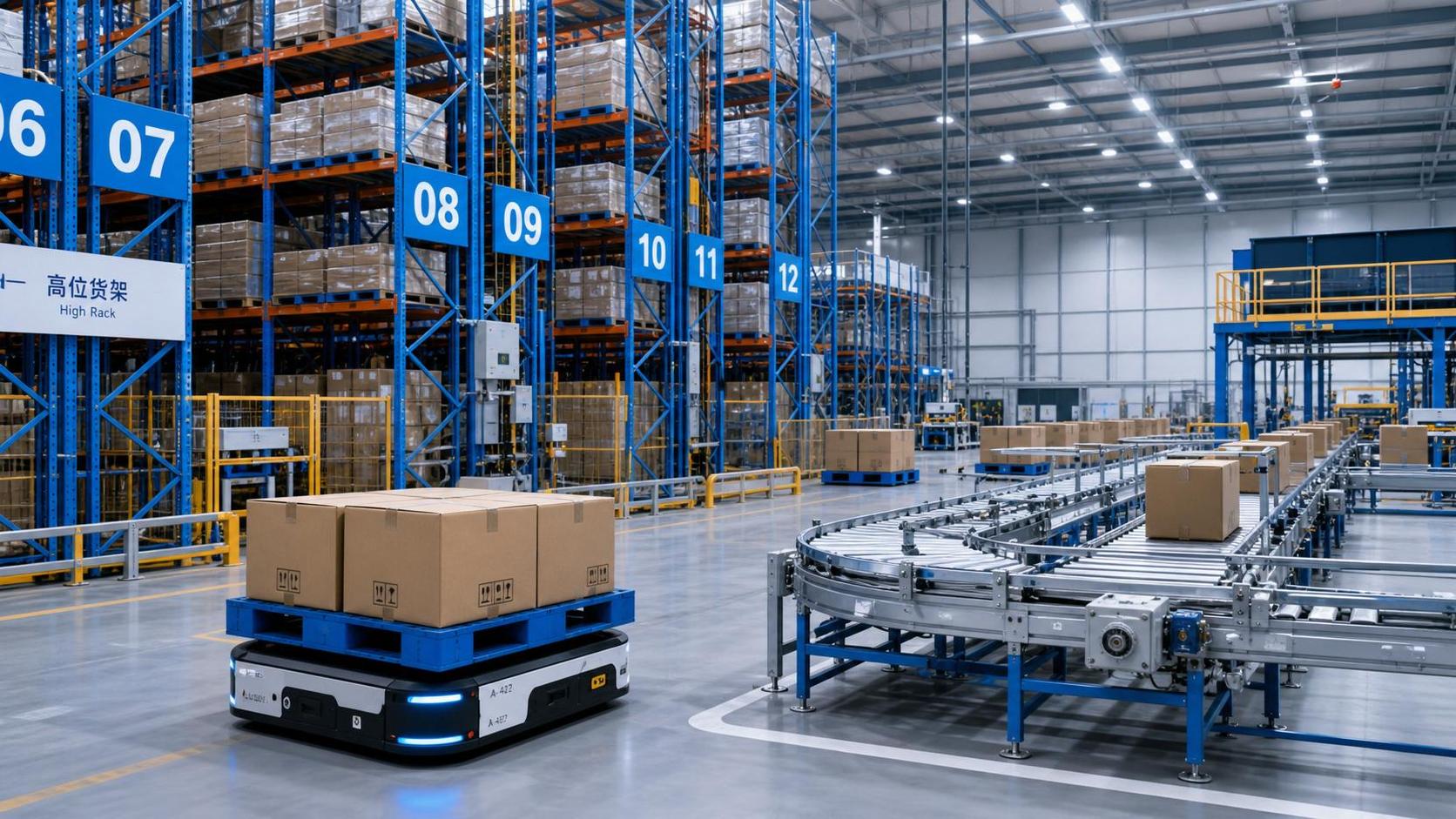
Automated Freight Technologies matter when throughput pressure becomes structural
Warehouse automation is no longer judged by novelty. It is judged by how fast freight moves, how reliably it is staged, and how well labor pressure is absorbed.
That is why Automated Freight Technologies now sit at the center of warehouse planning across manufacturing, metals, trade, and supply chain operations.
In practice, the right system depends less on headline speed and more on freight profile, order rhythm, aisle constraints, and interface quality with upstream production or downstream dispatch.
A facility handling mixed cartons for export consolidation faces a different problem from a metals warehouse moving coils, bundles, or long products.
For that reason, throughput gains from Automated Freight Technologies are highly scenario-dependent. Some systems remove travel time. Others reduce congestion, touches, or decision delays.
Across topics often covered by Baozhen Industrial Intelligence Portal, the more useful question is not which technology is most advanced. It is which technology removes the real bottleneck.
Actual performance starts with how warehouse scenarios differ
Automated Freight Technologies perform differently because throughput is shaped by more than travel distance. Pallet stability, SKU variety, shift pattern, and replenishment frequency all change the result.
In high-volume inbound operations, unloading and buffer transfer often limit flow first. In e-commerce or spare parts environments, order fragmentation and picking density become the real constraint.
Industrial sites tied to production lines usually care about continuity. Distribution hubs often care more about wave release timing, dock balancing, and cut-off compliance.
Cold chain sites add another layer. Travel efficiency matters, but door openings, battery behavior, and reduced tolerance for manual delay can change which automated freight system is practical.
This is where many automation projects drift off track. A system may look strong on paper, yet miss the operating pattern that actually controls throughput.
A quick comparison of where the bottleneck usually sits
The table makes one point clear. Throughput improves when Automated Freight Technologies are matched to the dominant source of delay, not simply to automation budget.
For pallet flow, travel reduction usually delivers the fastest gains
Where freight moves mainly as full pallets, travel time is often the largest waste. Operators spend hours moving loads between receiving, storage, staging, and shipping.
Here, Automated Freight Technologies such as pallet AGVs, pallet AMRs, and conveyor-fed transfer lanes usually create measurable throughput gains quickly.
The strongest fit appears in facilities with repeatable paths, stable load dimensions, and predictable dock patterns. Under those conditions, automation removes non-value-added movement with little process ambiguity.
However, not every pallet warehouse should begin with storage automation. Sometimes the bigger issue is waiting time at the dock, not rack density.
A common misread is to invest in AS/RS first while manual handoff points remain unmanaged. If pallets still queue at receiving or dispatch, storage speed alone will not lift total throughput.
The better sequence is often to map transfer frequency, queue length, and forklift crossings. That reveals whether mobile automation or storage automation will return value sooner.
In case and carton handling, flow orchestration matters more than raw machine speed
Mixed-SKU environments behave differently. Throughput suffers less from heavy transport and more from fragmented tasks, uneven order waves, and short-cycle decisions.
In these operations, Automated Freight Technologies such as conveyor sortation, shuttle systems, and goods-to-person AMRs often outperform simpler transport automation.
The reason is straightforward. Walking time, sequencing delay, and sort accuracy combine to cap outbound volume long before forklift efficiency becomes relevant.
More importantly, throughput in carton fulfillment depends on system coordination. WMS logic, slotting strategy, and wave release rules can determine whether automation stays balanced or creates new choke points.
That is why a smaller automated freight system with strong software orchestration can outperform a larger mechanical installation with weak execution logic.
A useful judgment method is to compare picker travel share, order line variability, and cut-off spikes. If those indicators dominate, orchestration technologies deserve priority.
Production-linked warehouses need continuity, not just storage efficiency
Warehousing attached to manufacturing lines presents a different test for Automated Freight Technologies. Here, throughput means uninterrupted material availability at the point of use.
Missed resupply can stop production, even if warehouse picking productivity appears acceptable. The cost of delay is therefore much higher than in general storage.
Tugger AMRs, line-feeding AGVs, and sensor-linked replenishment systems tend to work best when route frequency is high and material demand is repetitive.
This is common in automotive components, appliance assembly, electronics, and structured OEM environments where lean flow and takt stability matter.
The key judgment is not vehicle speed. It is whether the automated freight system can synchronize with production consumption, exception handling, and line priority rules.
If manual workarounds remain frequent, highly automated transport may still leave shortages unresolved. Integration discipline matters as much as machine capability.
Heavy materials and metals require a stricter view of suitability
Automated Freight Technologies become more specialized when the load is heavy, long, or irregular. Metals warehouses are a clear example.
Steel coils, aluminum bundles, stainless sheets, and fabricated components create load stability issues that general-purpose mobile robots cannot always handle.
In these settings, crane automation, rail-guided transfer, or reinforced AS/RS designs often improve throughput more reliably than flexible mobile fleets.
The operational gain usually comes from controlled movement, reduced damage risk, and more predictable staging near cutting, packing, or outbound loading zones.
There is also a compliance dimension. Load documentation, traceability, and batch separation can be just as important as movement speed in internationally traded metal products.
For operations tied to export workflows, the best Automated Freight Technologies are often those that support traceable handling and fewer manual identity errors.
Where decisions usually go wrong before implementation
Several recurring mistakes weaken automation results even when the selected technology is technically sound.
- Choosing Automated Freight Technologies by peak-hour promises without checking average utilization and exception frequency.
- Comparing purchase price, while ignoring software integration, battery management, spare parts, and commissioning disruption.
- Treating similar warehouses as identical, even though SKU velocity, packaging quality, and dock discipline differ sharply.
- Assuming automation can fix poor master data, weak slotting, or unstable replenishment rules.
- Overlooking future trade and sourcing shifts that may change load mix, throughput seasonality, or compliance steps.
These issues matter because throughput is a system outcome. Automated Freight Technologies improve movement, but they cannot compensate for unmanaged process variation forever.
A practical way to match technology with warehouse reality
A grounded evaluation starts with flow mapping rather than vendor comparison. The first task is to identify where freight loses time, touches, or visibility.
Next, separate volume growth from complexity growth. Higher throughput caused by more pallets needs a different response from higher throughput caused by more order lines.
Then review five operating conditions before selecting Automated Freight Technologies.
- Load consistency: dimensions, weight distribution, packaging integrity, and barcode readability.
- Path stability: fixed routes, crossing density, floor quality, and dock interface design.
- System integration: WMS, ERP, MES, and dispatch signal compatibility.
- Exception handling: damaged loads, urgent orders, rework loops, and manual override frequency.
- Lifecycle economics: uptime support, maintenance intervals, software upgrades, and operator adaptation.
This approach aligns with the kind of data-based industrial judgment increasingly needed across supply chain, manufacturing, and global trade operations.
The next step is to define throughput by scenario, not by slogan
The most effective Automated Freight Technologies are rarely the most universal. They are the ones that fit the freight profile, handling rhythm, and control logic of the site.
For pallet warehouses, travel automation may unlock the first major gain. For carton fulfillment, orchestration often matters more. For metals and heavy materials, controlled handling can outweigh flexibility.
A practical next move is to define throughput targets by scenario, measure current delay sources, and test whether the constraint sits in transport, storage, sequencing, or data flow.
From there, build an adaptation standard that covers load conditions, software interfaces, maintenance burden, and implementation risk before committing capital.
That produces a far stronger basis for automation decisions than generic efficiency claims, especially in industrial environments where warehouse performance affects sourcing, production, and delivery at the same time.
Related Intelligence