
How Can Metal Recycling Operations Meet Environmental Regulations?
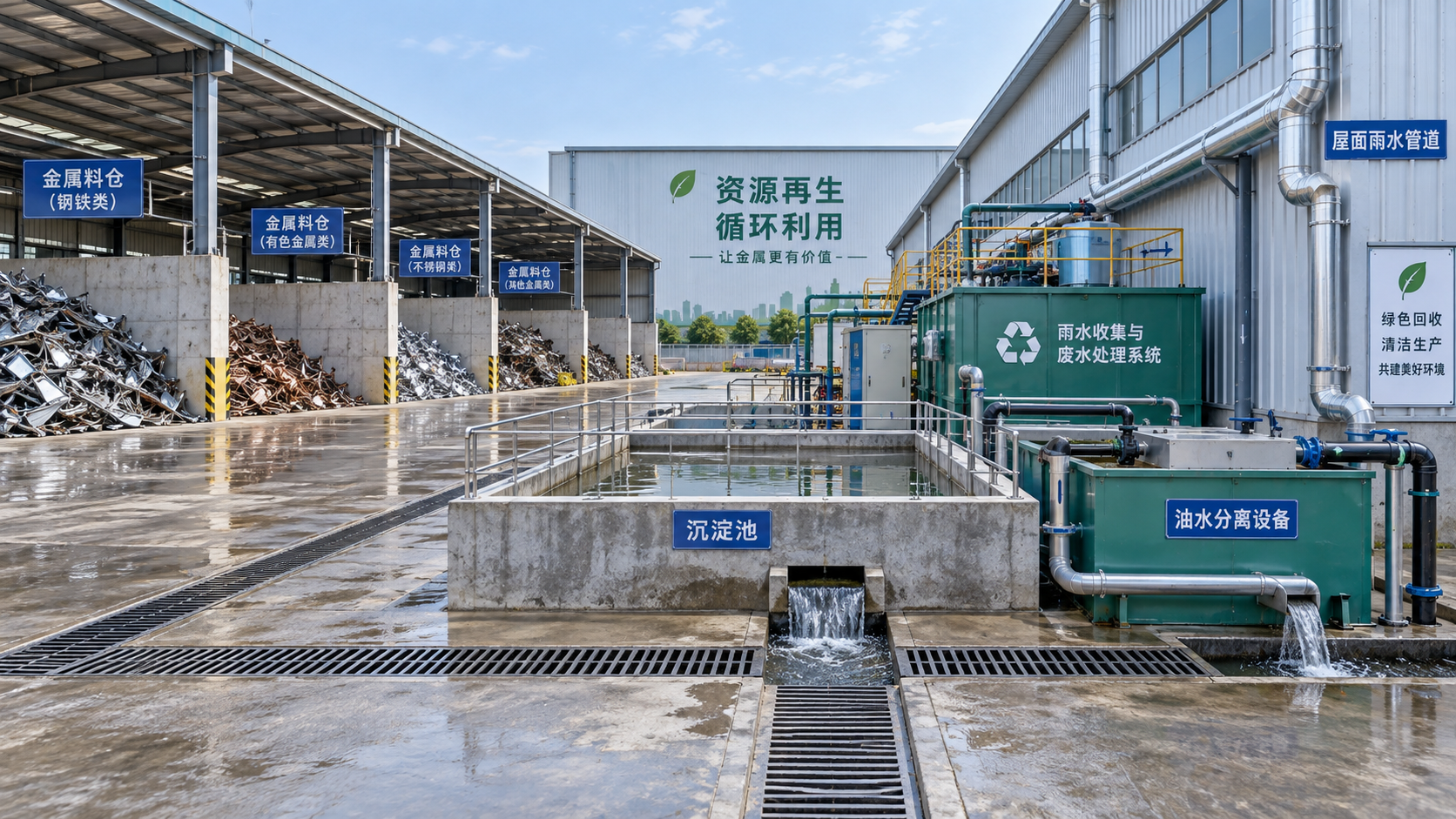
Metal recycling operations meet environmental regulations by matching their permits to the activities actually performed, controlling releases from scrap handling and processing, and keeping evidence that those controls work. Compliance starts at the receiving gate and continues through storage, cutting, shredding, melting, wastewater management, and residue disposal. A valid permit alone does not establish compliance if incoming materials, equipment, or discharge routes have changed.
The most useful starting point is a site-specific register linking each environmental requirement to a process, an operating limit, a monitoring task, and a record. This makes gaps visible: an uncovered scrap pile draining toward a stormwater outlet, a cutting station outside the approved extraction system, or filter dust leaving without a documented waste classification.
Which requirements apply to a metal recycling facility?
Identify the jurisdiction, the legal status of incoming materials, and the full processing sequence before selecting permits. A yard that sorts clean metal offcuts has a different environmental profile from a facility receiving end-of-life vehicles, shredding mixed scrap, or melting coated aluminum. Material descriptions such as “recyclable metal” are too broad to determine the applicable controls.
Build the regulatory register from current permits, relevant environmental authority guidance, and the rules governing waste, air emissions, water discharges, and site operations. For every requirement, record its trigger, responsible function, deadline, and required evidence. Where permit wording leaves a material or process outside a clear category, resolve the interpretation with the issuing authority before accepting that material or starting that process.
Also distinguish planning approval from environmental authorization. Permission to occupy an industrial site does not automatically authorize every waste activity or discharge. Permit exemptions, where available, require evidence that their conditions remain satisfied; they should appear in the register alongside permits.
How should incoming scrap be screened?
Define acceptance criteria around contamination and processing compatibility. Clean steel punchings, oily machining chips, painted structural steel, and mixed appliance scrap should not enter the same route merely because each contains recoverable metal. Oil, coatings, batteries, refrigerants, sealed containers, and nonmetal attachments change the emissions and residues generated during processing.
Obtain material descriptions before delivery, then compare them with the actual load. Receiving records should identify the source, declared material, observed condition, acceptance decision, and any segregation or treatment required. Photographs support disputed loads, but they do not replace sampling where composition or contamination cannot be established visually.
- Unknown liquids or sealed vessels: isolate the load from routine processing until its contents and a suitable treatment route are established.
- Battery-containing scrap needs segregation before shredding. Damaged lithium batteries present a fire risk, while lead-acid batteries introduce acid and lead contamination.
- Oily swarf: use contained storage and manage drained liquids through an authorized route. Mixing it with dry scrap spreads contamination.
- Equipment containing refrigerants requires recovery arrangements appropriate to the applicable rules before destructive processing.
A supplier declaration is useful evidence, but recurring discrepancies require stronger verification. Repeatedly finding undeclared batteries or oil should change the acceptance conditions for that source. Keep rejected and quarantined loads physically identifiable so they cannot accidentally re-enter production.
Controlling dust requires attention to where it escapes
Dust control should follow the material through unloading, stockpiling, conveying, cutting, shredding, and residue handling. A filter attached to a shredder does little for emissions released at an uncovered transfer point. Enclosures and extraction must capture contaminants where they are generated, with doors, hoods, and ductwork maintained in their intended operating condition.
The control method must fit the contaminant. Water suppression is useful for some yard dust, but it creates runoff that needs management. Wetting combustible metal fines can create additional hazards for reactive materials such as finely divided aluminum or magnesium. Thermal cutting of coated or contaminated scrap produces fumes that require appropriate capture and treatment; ordinary housekeeping cannot control that source.
Record operating indicators that demonstrate control performance, such as extraction airflow, filter differential pressure, maintenance findings, and required emission test results. Interpret these together. A sudden pressure drop across a filter can indicate a damaged element or bypass, while a gradual rise can signal loading or ineffective cleaning. Neither reading independently proves that emissions meet a limit.
Set response actions for abnormal readings, visible emissions, and extraction failure. Processes that depend on extraction should have a defined restriction or shutdown response when capture is unavailable. Noise controls also need operating checks: damaged enclosures, open doors, and changed loading practices can undermine the assumptions behind an approved noise assessment.
Where does contaminated water leave the site?
Trace every drain to its destination. Separate clean roof water from runoff exposed to scrap, vehicle movements, oily materials, or process residues. Stormwater, process wastewater, and sanitary wastewater can have different discharge conditions, even when their pipes eventually reach the same receiving system.
Inspect paved surfaces, joints, sumps, drainage channels, and containment areas. A cracked slab beneath oily scrap provides a path into the ground; a blocked channel can divert polluted water around the treatment system. Covering high-risk materials reduces contact with rain, but a roof does not solve leaks from equipment or poor drainage beneath stored scrap.
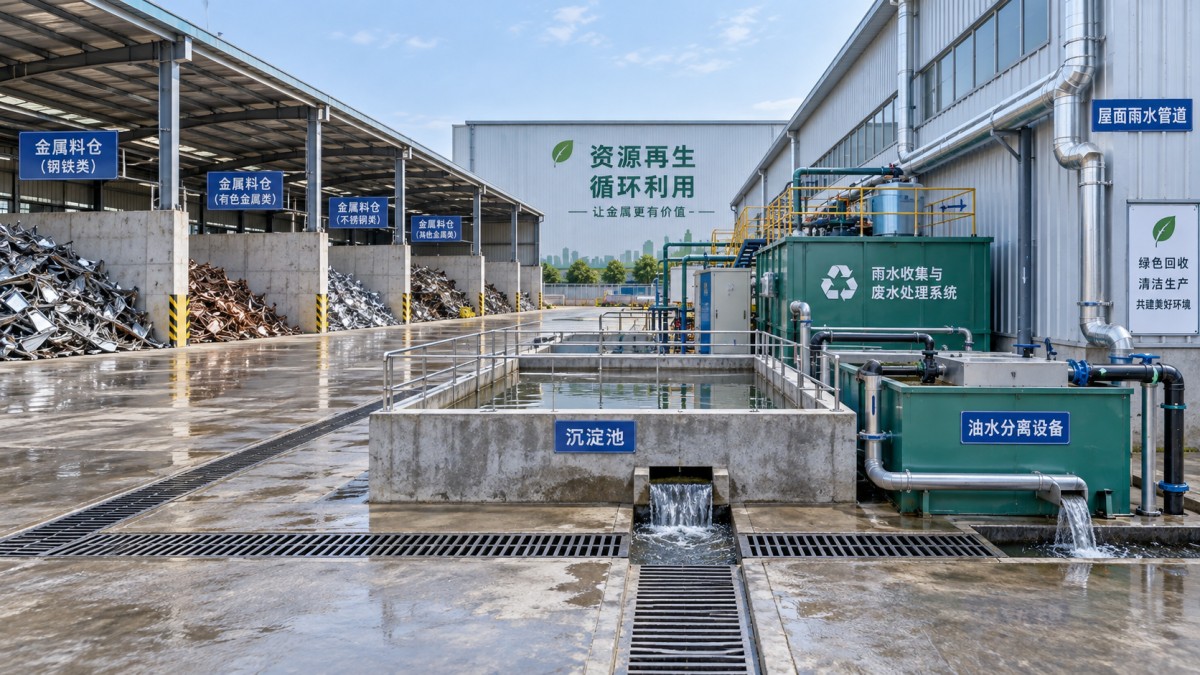
Treatment must address the form of contamination present. Settlement removes settleable solids. An oil separator targets separable oil under suitable operating conditions. Neither automatically removes dissolved metals or emulsified oil. Select sampling parameters from the scrap composition, site activities, and permit requirements rather than relying on a generic water-quality panel.
Take samples at the specified location and under the required conditions. Water collected upstream of a treatment unit answers a different question from a final-discharge sample. Where a permit specifies rainfall events or sampling intervals, routine dry-weather results cannot substitute for those conditions. Maintain records of rainfall, flow, treatment status, and unusual activities needed to interpret results.
Are dust, sludge, and slag automatically recyclable?
No. Recoverable metal content does not determine whether a residue is hazardous, whether it remains waste, or which destinations can legally accept it. Filter dust, shredder fines, wastewater sludge, spent absorbents, and furnace residues need separate classification based on their origin and relevant properties.
Use process knowledge to design representative sampling where testing is needed. A sample taken from one accessible corner of a mixed residue pile can miss concentrated contamination elsewhere. Changes in feedstock or treatment chemistry can also invalidate an earlier characterization. Keep materially different residue streams separate until their classification and destination are established.
Store residues in compatible, clearly identified containers or contained areas that prevent dust release, leakage, and rain contact. Record the quantity generated, storage location, classification basis, transporter, destination, and transfer documentation. Confirm that the receiving facility is authorized for the specific material and activity; a general recycling description does not establish that scope.
The same distinction applies to recovered metal sold as a commodity. A commercial specification demonstrates product quality, but legal waste status depends on the applicable criteria. Avoid assuming that payment for a shipment automatically removes waste-management obligations.
What records demonstrate continuing compliance?
Records should connect requirements to actual operating conditions. Keep current permits accessible, retain required historical versions, and link monitoring results to the equipment and process running at the time. A laboratory report without the sampling point, date, method, or relevant operating context is difficult to interpret during an inspection.
A useful record system connects incoming loads, processing batches where applicable, recovered metal shipments, and residue movements. Reconcile material quantities at a level appropriate to the operation. Unexplained differences can reveal unrecorded transfers, accumulated residues, moisture changes, or weighing errors. A material balance supports investigation; it does not independently prove legal compliance.
Maintenance and incident records need more than a completion tick. Record the defect, immediate containment, repair, verification, and any reporting required by the permit. If a failed extraction duct caused visible dust, the repair record should show when processing stopped and how capture performance was confirmed before restart.
Environmental training should address actual decisions: recognizing prohibited loads, isolating a leaking container, responding to a blocked drain, and reporting abnormal extraction readings. Keep evidence of instruction and competence checks linked to the tasks involved.
When should changes trigger a compliance review?
Review environmental requirements before introducing a new scrap stream, increasing capacity, relocating equipment, changing fuel, modifying drainage, or adding a treatment chemical. A change that appears small in production terms can alter an emission source, waste classification, or permitted operating boundary.
For example, replacing clean aluminum offcuts with painted scrap changes the furnace input and potential exhaust contaminants. Moving a scrap pile closer to an outlet changes the runoff pathway. Adding a shredder increases the importance of battery removal, fines management, and dust capture. Record the assessment and obtain any required permit amendment before implementation.
Temporary arrangements deserve the same attention. Mobile equipment, overflow storage, and rented treatment units still need to operate within the site's authorized conditions. Assign expiry dates to temporary controls so they do not become undocumented permanent practices.
How can inspections reveal problems before enforcement does?
Walk the site using its actual material and drainage routes. Compare permit conditions with visible operations, then trace selected loads and residue shipments through their records. Include less obvious areas such as the rear of stockpiles, filter-dust collection points, disused drains, and storage near site boundaries.
Prioritize findings by consequence and urgency. An active discharge bypass needs immediate containment; a missing record needs retrieval or corrective documentation without inventing historical evidence. Where notification is required, use the applicable reporting procedure and timeframe. Record each finding with an owner, completion date, and evidence that the correction worked.
Close findings only after verification. An empty spill kit has been corrected when suitable supplies are restored; a recurring leak has been corrected when its source is repaired and the affected area is cleaned. Repeated defects call for changes to maintenance, storage, or acceptance practices so the same release pathway does not reopen.
Related Intelligence