
Smart Logistics in Warehousing: Where Automation Improves Speed and Accuracy
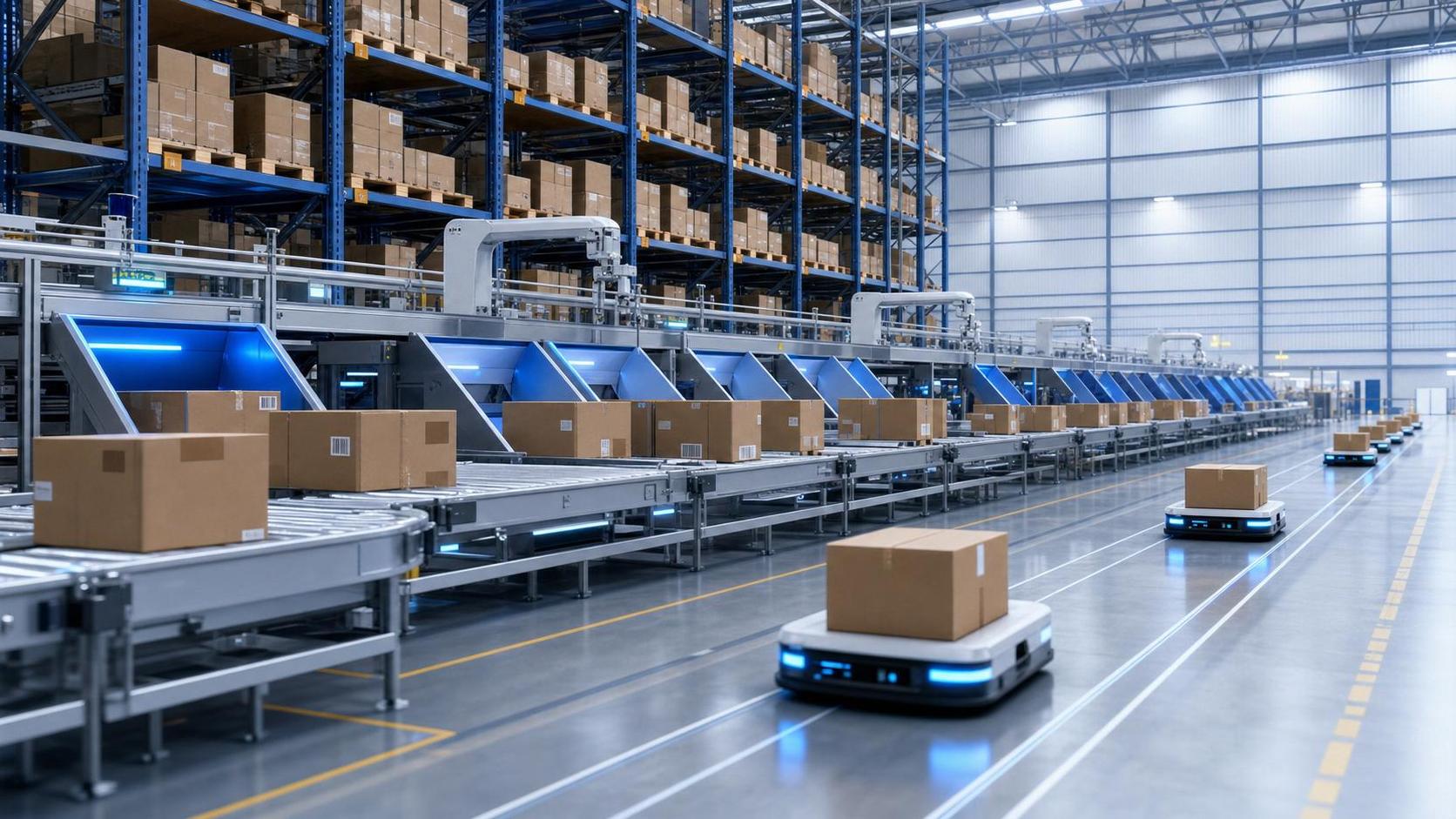
Smart Logistics starts with the warehouse problem, not the tool
Smart Logistics changes warehousing in a very practical way: it reduces the distance between demand and action. When orders arrive faster, item mixes become more complex, and stock turns more frequently, a warehouse can no longer rely on manual memory or isolated software records. Automation becomes valuable only when it solves a real operational mismatch between speed, accuracy, and visibility.
In a B2B supply chain, that mismatch often appears differently. A spare-parts warehouse may care most about pick accuracy and traceability. A distribution center may focus on throughput and dock scheduling. A manufacturing buffer warehouse may need stable replenishment and line-side availability. Smart Logistics works best when those differences are recognized early, because the same automation tool can either improve workflow or create friction if the scene is misread.
Where automation delivers the clearest gains
The strongest Smart Logistics use cases usually appear in operations that combine repetition, time pressure, and error sensitivity. These are the places where warehouse automation can do more than save labor. It can stabilize the entire flow from inbound to outbound.
- Inbound receiving benefits from barcode scanning, dimensioning, and guided put-away, especially when cartons vary in size or arrival quality.
- High-frequency picking benefits from pick-to-light, voice guidance, and mobile task allocation when order volume changes by hour.
- Inventory counting benefits from RFID, cycle-count workflows, and real-time system updates where stock accuracy affects production or service levels.
- Dispatch staging benefits from automated sorting and load sequencing when transport windows are tight and misloads are costly.
The common thread is not “more technology.” It is the need for a warehouse to make fewer judgment calls under pressure. Smart Logistics helps when the process must stay consistent even as order patterns shift.
Different warehouses judge speed in different ways
A fast-moving e-commerce facility usually measures speed by order cut-off time and pick completion rate. An industrial warehouse often measures it by line-feeding stability and dock readiness. A bonded or cross-border warehouse may judge speed through compliance steps, document matching, and release timing. For that reason, Smart Logistics should not be evaluated only by robot count or system response time.
In practice, the better question is whether automation removes bottlenecks that repeat every day. If the delay comes from walking distance, task handoff, or search time, automation can be highly effective. If the delay comes from poor upstream planning, weak master data, or unstable supply, the warehouse tool alone will not fix it.
What accuracy really means in daily operations
Accuracy in Smart Logistics is wider than “fewer mistakes.” It includes the right item, the right batch, the right location, the right quantity, and the right timing. A warehouse can appear efficient while still carrying hidden errors that surface later as returns, rework, missed production, or delayed customs clearance.
This is why automation is often most valuable in environments with strict item control. Metals warehouses need clear identification by grade, size, and lot. Manufacturing support stores need reliable issue records for components. Cold chain storage needs temperature-linked traceability. In each case, Smart Logistics improves accuracy by reducing manual interpretation and forcing each step into a verifiable sequence.
Why some automation projects look good but underperform
One common mistake is treating Smart Logistics as a hardware upgrade alone. If the layout is crowded, master data is inconsistent, or slotting rules are outdated, automation can only accelerate confusion. Another mistake is copying a model from another warehouse without checking product mix, turnover rate, or labor skills.
A high-volume distribution center may justify conveyor sorting and AMR-assisted transport. A smaller factory warehouse may get better results from handheld scanning, WMS integration, and simple guided replenishment. The right decision is often less about maximum automation and more about matching automation depth to process stability.
Maintenance is another overlooked factor. When uptime depends on one system, spare parts, operator training, and troubleshooting speed become part of the business case. Smart Logistics should be judged by total operating resilience, not only by installation success.
Practical ways to fit the right warehouse scenario
A useful starting point is to map the warehouse by task type, not by department. Repetitive movement, decision-heavy picking, compliance-sensitive handling, and time-critical staging usually deserve different automation choices. That approach keeps Smart Logistics grounded in workflow reality.
- Use automation first where the same error repeats and creates downstream cost.
- Check whether existing data is clean enough to support real-time visibility.
- Confirm aisle width, load weight, and floor conditions before choosing equipment.
- Test exception handling, not only standard process flow.
- Include maintenance cycle and operator training in the evaluation.
For industrial groups that track logistics, warehousing, metals, manufacturing, and trade risk together, this broader view matters even more. A warehouse is not only a storage site. It is a control point that affects sourcing, production timing, export compliance, and customer delivery.
A better way to judge Smart Logistics investment
The most reliable judgment is simple: identify where time is lost, where errors travel downstream, and where inventory visibility breaks down. If automation directly reduces those three problems, Smart Logistics is likely to create measurable value. If it only modernizes the appearance of the warehouse, the impact will be limited.
Before planning any upgrade, it helps to compare current workflow data, peak-load patterns, and exception frequency. That makes it easier to decide whether the next step should be better scanning, smarter task allocation, more connected inventory systems, or deeper automation. In warehousing, the best automation is the one that fits the scene with the least friction and the clearest operational gain.
Related Intelligence