
Multimodal Logistics vs Single-Mode Shipping: When Each Option Fits
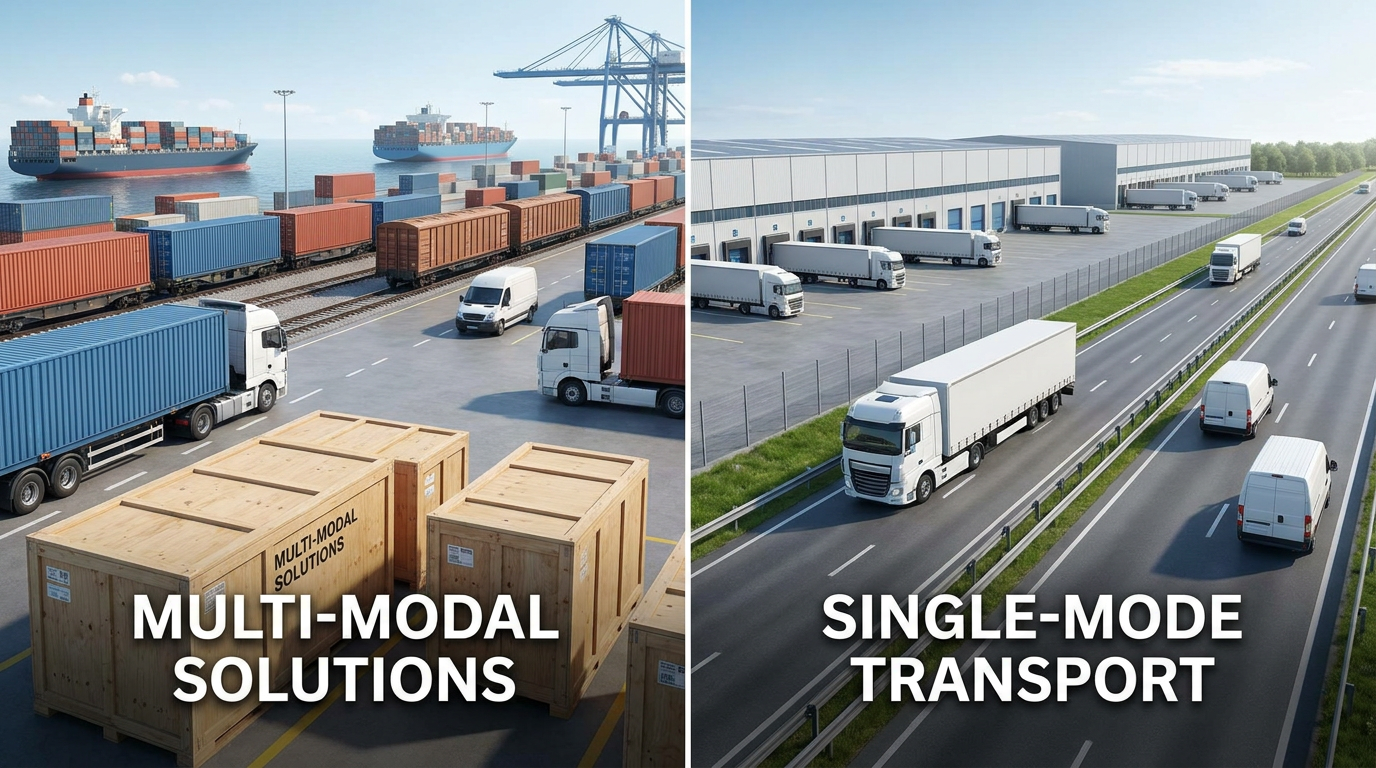
For project managers and engineering leads, the choice between multimodal logistics and single-mode shipping can directly affect delivery schedules, cost control, risk exposure, and site execution.
Large equipment, metal materials, prefabricated components, and time-sensitive industrial goods often move across complex routes where one transport method may not be enough.
This article explains when multimodal logistics creates value through flexibility and resilience, and when single-mode shipping remains the simpler, more predictable option for specific project requirements.
Why Multimodal Logistics Needs a Checklist-Based Decision
Shipping decisions often fail when transport is treated as a quotation exercise only. The real question is how goods move across ports, borders, warehouses, roads, and final sites.
Multimodal logistics combines two or more transport modes under one coordinated route. It may include ocean, rail, truck, barge, or air freight.
Single-mode shipping uses one dominant transport method from origin to destination. It works best when routes are direct, cargo is standard, and timing is stable.
A checklist reduces guesswork. It connects cargo characteristics, route constraints, customs requirements, cost exposure, and delivery risk before contracts are signed.
For industrial shipments, the wrong mode can delay installation, increase demurrage, damage materials, or disrupt production commissioning.
Core Checklist: When Multimodal Logistics Fits Better
- Map every route segment before booking, including inland pickup, port transfer, customs clearance, destination trucking, and site unloading capacity.
- Use multimodal logistics when the origin or destination lacks direct access to seaports, airports, rail terminals, or heavy-haul corridors.
- Compare total landed cost, not freight rate alone, including terminal handling, storage, insurance, documentation, detention, and last-mile delivery.
- Check whether cargo size, weight, lifting points, packaging strength, and stacking limits require specialized transfer planning.
- Choose multimodal logistics when schedule resilience matters and alternative routing can protect against port congestion, weather disruption, or border delays.
- Confirm who controls carrier coordination, milestone reporting, exception handling, and claims support across each transport handover.
- Verify customs documents early when shipments cross multiple jurisdictions, especially for machinery, metals, spare parts, or controlled components.
- Assess carbon, fuel, and capacity impacts, since rail or sea segments may reduce emissions compared with long-distance trucking.
This checklist makes multimodal logistics measurable. It turns route complexity into defined control points, instead of leaving performance to separate carriers.
Core Checklist: When Single-Mode Shipping Fits Better
- Select single-mode shipping when cargo moves through a direct lane with proven capacity, short transit time, and limited transfer risk.
- Use direct trucking when distance is manageable, loading points are inland, and delivery requires precise site arrival control.
- Use ocean-only planning when cargo is port-to-port, packaging is export-ready, and inland movement is handled separately.
- Use air freight when shipment value, downtime cost, or emergency replacement demand outweighs premium transport charges.
- Avoid unnecessary mode changes when goods are fragile, sensitive to vibration, or vulnerable during repeated loading operations.
- Keep single-mode shipping when documentation, carrier liability, and delivery accountability must remain simple and easy to audit.
Single-mode shipping is not outdated. It is often the best option when the route is simple and operational control is more valuable than routing flexibility.
The decision should not favor multimodal logistics automatically. It should favor the method that protects the project’s cost, time, and handling requirements.
Scenario 1: Heavy Equipment and Oversized Industrial Cargo
Heavy equipment often needs route engineering. Bridge limits, road permits, terminal cranes, escort vehicles, and lifting plans can decide feasibility.
Multimodal logistics fits when cargo must travel by truck to a port, ocean vessel to another region, then barge or heavy-haul truck to the site.
It also helps when port selection depends on crane availability, berth depth, breakbulk handling, or access to specialized transport corridors.
Single-mode shipping may still work for regional equipment delivery. Direct heavy-haul trucking can reduce transfers and simplify damage responsibility.
Scenario 2: Metals, Raw Materials, and Standard Industrial Goods
Steel coils, aluminum profiles, copper products, and bulk raw materials require attention to moisture, corrosion, bundling, weight distribution, and warehouse handling.
Multimodal logistics is useful when materials move from mills to inland factories across long distances. Rail plus truck can balance cost and predictability.
For export metal shipments, ocean plus inland transport is common. The value depends on packaging integrity and clean handover records.
Single-mode trucking can be better for short regional deliveries, especially when just-in-time production needs direct dock scheduling.
Scenario 3: Cross-Border Trade and Distributed Manufacturing
Cross-border industrial trade often involves suppliers, consolidators, ports, bonded zones, customs brokers, and final assembly locations.
Multimodal logistics can improve control when goods from several suppliers must be consolidated before export or redistributed after import.
It also supports contingency planning. If one port becomes congested, a route using rail, barge, or another gateway may remain available.
Single-mode shipping works when customs processes are routine, the lane is stable, and all parties use consistent documentation standards.
Scenario 4: Time-Sensitive Spare Parts and Production Recovery
Urgent spare parts require a different calculation. Downtime cost can exceed transport cost within hours, especially in automated production lines.
Air freight as a single mode may be the fastest option when parts are compact, high-value, and needed for immediate repair.
However, multimodal logistics may still fit emergency planning. Air plus express trucking can secure final delivery beyond airport terminals.
The key is defining the recovery point. Transport speed is only useful if customs release and site receipt are also aligned.
Commonly Overlooked Risks in Mode Selection
Unclear responsibility at handover points
Multimodal logistics involves transfers between carriers, terminals, or storage yards. Damage inspection and photo records must be completed at each handover.
Incomplete landed cost calculation
A low freight quote may hide storage, demurrage, terminal congestion, customs inspection, port security, or container repositioning charges.
Packaging not designed for transfers
Single-mode shipping may need lighter packaging. Multimodal logistics usually requires stronger pallets, bracing, waterproofing, labels, and lifting instructions.
Route assumptions not tested against reality
Road restrictions, holiday traffic, port cut-off times, rail schedules, and weather patterns can change the actual route performance.
Insurance gaps across transport modes
Coverage terms may differ by mode, carrier, and jurisdiction. Confirm liability limits before relying on standard freight insurance.
Execution Guide for a Practical Shipping Decision
- Define cargo facts first, including dimensions, weight, value, fragility, storage limits, and any compliance restrictions.
- Build two routing models: one for multimodal logistics and one for the strongest single-mode shipping option.
- Compare transit time by milestone, not only door-to-door estimates, and identify the weakest route segment.
- Request itemized quotations that separate freight, handling, documentation, insurance, warehousing, and accessorial charges.
- Check carrier performance data, terminal capability, customs experience, and previous shipment references for similar cargo.
- Prepare a disruption plan that names alternate ports, backup trucks, substitute warehouses, and escalation contacts.
- Align Incoterms, delivery milestones, inspection duties, and payment triggers with the selected shipping structure.
A good comparison should expose trade-offs. Multimodal logistics may reduce long-haul cost but require stronger coordination and documentation discipline.
Single-mode shipping may simplify control but lose flexibility when capacity tightens or a lane becomes disrupted.
Decision Matrix: Quick Comparison
Final Guidance: Turn Transport Choice into Operational Control
The best shipping method is not always the cheapest or fastest option. It is the option that protects the full industrial workflow.
Use multimodal logistics when shipments need route flexibility, cost balancing, cross-border coordination, or access to remote sites.
Use single-mode shipping when direct movement, simple responsibility, reduced handling, or urgent speed creates greater operational value.
Before final booking, document cargo conditions, compare route models, test risk assumptions, and confirm who manages each milestone.
For industrial supply chains, multimodal logistics should be treated as a managed system, not a collection of separate transport quotations.
A disciplined checklist helps convert shipping selection into better delivery performance, stronger cost visibility, and fewer project surprises.
Related Intelligence