
Air Freight Cost Factors: Weight, Volume, Routes, and Surcharges
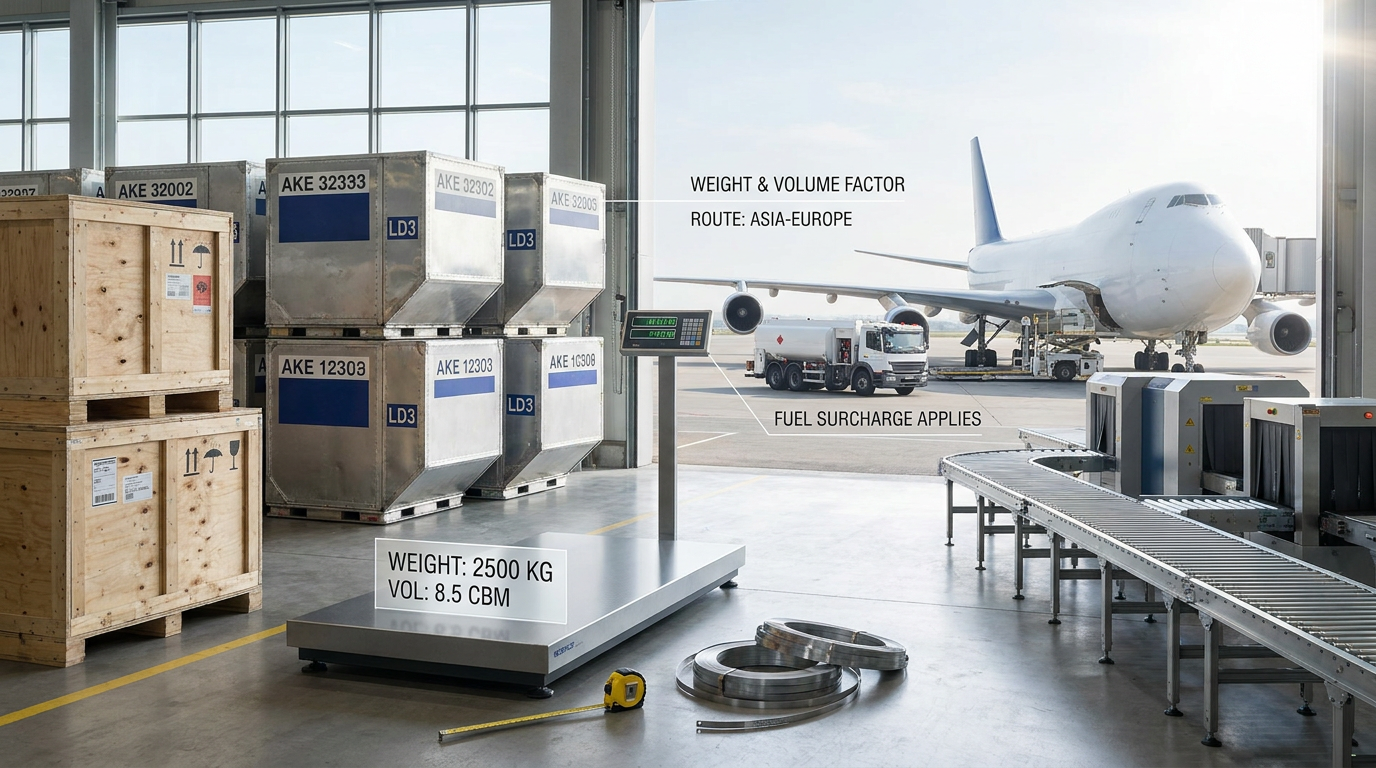
Air Freight Cost Factors: Weight, Volume, Routes, and Surcharges
Air freight is rarely just a transport line item.
It is a cost decision shaped by chargeable weight, cargo volume, route availability, fuel adjustments, security fees, and peak-season surcharges.
Understanding these factors helps companies evaluate quotations, control logistics budgets, and avoid unexpected cost escalation in international procurement.
For urgent supply chain operations, air freight can protect production continuity, customer delivery, and inventory stability.
When Air Freight Becomes a Scenario-Based Cost Decision
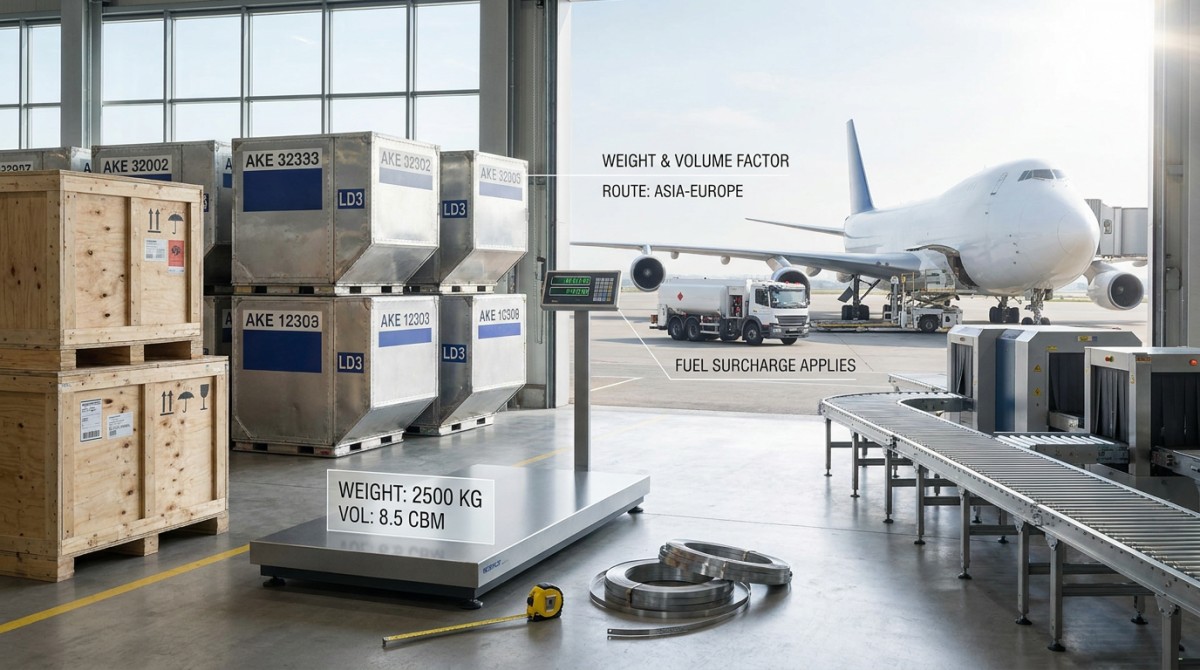
Air freight is usually selected when time has higher value than transport savings.
This happens in production recovery, urgent spare parts delivery, high-value exports, medical goods, electronics, and seasonal retail launches.
The same shipment weight may generate very different air freight costs under different routes, airports, and capacity conditions.
A quotation should therefore be reviewed as a scenario package, not only as a price per kilogram.
The first judgment is whether the shipment is physically heavy, volumetrically large, or commercially urgent.
The second judgment is whether the chosen lane has stable capacity or depends on tight passenger belly space.
The third judgment is whether surcharges may change before cargo departure.
Scenario 1: Heavy Cargo and the Real Impact of Chargeable Weight
In air freight, chargeable weight is the pricing basis used by airlines and forwarders.
It is normally the greater value between actual gross weight and volumetric weight.
Heavy industrial parts, metal components, machinery modules, and dense tools are often charged by gross weight.
For these shipments, cost control depends on accurate weighing, clear packaging records, and reliable booking data.
A small measurement error can change the air freight quotation, especially for shipments near a pricing breakpoint.
Common breakpoints may include 45 kg, 100 kg, 300 kg, 500 kg, and 1,000 kg.
Larger chargeable weight sometimes receives a lower unit rate, but the total invoice still rises.
Core judgment points for heavy cargo
- Confirm whether the shipment is gross-weight dominant.
- Check if packaging adds unnecessary kilograms.
- Compare rate breaks before approving air freight.
- Verify pallet weight, carton count, and declared dimensions.
For metal goods or equipment parts, packaging strength cannot be reduced blindly.
The better approach is to remove excess fillers while maintaining cargo protection and handling safety.
Scenario 2: Bulky Cargo and Why Volume Can Override Weight
Bulky cargo often creates higher air freight costs than expected.
Light but large items consume aircraft space, so airlines convert volume into chargeable weight.
The standard air freight formula usually divides cubic centimeters by 6,000.
Some markets may apply different conversion factors, so quotations should clearly state the formula.
Bulky products include plastic parts, foam packaging, displays, garments, electronics accessories, and assembled lightweight components.
In these cases, carton design may influence air freight cost more than product weight.
Reducing empty space inside cartons can directly reduce chargeable volume.
Practical packaging checks
- Measure each carton after final packing.
- Avoid estimating from product drawings only.
- Compare standard cartons with compact export cartons.
- Review whether partial disassembly can reduce volume.
A shipment may appear affordable at factory level but become expensive after dimensional calculation.
This is why air freight planning should start before final packaging approval.
Scenario 3: Route Choice and Airport Availability Change the Final Rate
Air freight rates are strongly influenced by route structure.
Direct flights, transshipment hubs, freighter services, and passenger belly capacity all create different cost patterns.
A direct route can reduce transit risk, but it may have higher base rates during tight capacity periods.
A transshipment route may be cheaper, but it can increase handling exposure and delivery uncertainty.
Industrial shipments often move from manufacturing clusters to gateway airports before international departure.
The domestic trucking leg, terminal handling, and airport congestion can affect total air freight cost.
Route selection should consider cargo value, delivery deadline, customs complexity, and the reliability of connecting flights.
Route-based decision signals
- Use direct air freight for critical production recovery.
- Use hub routes when deadline flexibility exists.
- Check airport embargoes for batteries or special cargo.
- Compare airport-to-airport and door-to-door quotations.
The cheapest airport-to-airport rate may not be the cheapest delivered solution.
Local charges, customs handling, and onward delivery can change the commercial result.
Scenario 4: Surcharges That Turn a Low Base Rate into a Higher Invoice
Air freight quotations often separate base freight from surcharges.
This structure makes quotation comparison more complex but also more transparent when reviewed carefully.
Fuel surcharge is one of the most visible cost additions.
It reflects aviation fuel movement and may be updated frequently by airlines.
Security surcharge covers screening, regulatory compliance, and aviation safety procedures.
Peak-season surcharge appears when space demand exceeds available capacity.
Other charges may include terminal handling, documentation, dangerous goods processing, and remote delivery fees.
For air freight approval, the key question is whether the quote is all-inclusive or charge-separated.
Surcharge review checklist
- Ask whether fuel surcharge is fixed or floating.
- Confirm security and screening fees by origin airport.
- Check if peak surcharge applies before departure.
- Separate airline charges from forwarder service charges.
- Request validity period for the air freight quotation.
A low base rate with unstable surcharges may be riskier than a slightly higher fixed offer.
Different Shipment Scenarios Require Different Cost Priorities
This comparison shows why air freight cannot be judged by base rate alone.
Each scenario has a different risk center, even when the shipment destination is identical.
Scenario Adaptation: How to Review an Air Freight Quotation
A practical quotation review should begin with shipment facts.
These include gross weight, carton dimensions, cargo type, origin airport, destination airport, and required arrival date.
The next step is to compare service scope.
Airport-to-airport, door-to-airport, airport-to-door, and door-to-door offers are not equivalent.
A strong air freight review also checks customs responsibility and delivery handover points.
Recommended review actions
- Request chargeable weight calculation in writing.
- Ask for base freight and surcharges separately.
- Confirm quotation validity and space availability.
- Check flight schedule and estimated transit time.
- Review local charges at origin and destination.
- Confirm whether insurance is included or separate.
These actions help convert air freight approval from price acceptance into controlled decision-making.
Common Misjudgments That Increase Air Freight Cost
One frequent mistake is using product weight instead of packed gross weight.
Airlines charge the shipment as tendered, including cartons, pallets, crates, and protective materials.
Another mistake is ignoring volumetric weight until the cargo reaches the warehouse.
At that point, packaging redesign may be too late to influence air freight cost.
A third mistake is comparing quotations with different scopes.
One offer may include terminal handling, while another excludes destination fees.
A fourth mistake is assuming capacity remains available after quotation.
Air freight space can change quickly during holidays, trade shows, port disruptions, or product launch seasons.
A fifth mistake is overlooking compliance requirements for batteries, chemicals, magnets, samples, or dual-use goods.
Compliance delays can create storage costs, missed flights, and urgent rebooking expenses.
Budget Control Actions Before Approving Air Freight
Air freight works best when urgency, shipment data, and commercial risk are aligned.
Before approval, define why air transport is required and what delay would cost.
If delay cost is lower than the premium, partial air shipment may be better.
This approach sends critical items by air while moving the balance by ocean or rail.
For recurring shipments, build a historical air freight database.
Track chargeable weight, route, carrier, surcharges, transit time, and final invoice variance.
This information supports better forecasting and stronger supplier negotiation.
Next steps for practical execution
- Standardize packed weight and dimension reporting.
- Create an air freight quotation comparison sheet.
- Separate emergency shipments from planned premium shipments.
- Negotiate surcharge transparency with logistics partners.
- Review packaging efficiency with suppliers before booking.
Air freight should not be treated as a last-minute reaction only.
With better scenario planning, it becomes a controlled tool for supply chain resilience.
The strongest decisions connect cost factors with business consequences.
Weight, volume, routes, and surcharges together explain why air freight prices move.
A clear review process helps protect budgets, delivery commitments, and global trade performance.
Related Intelligence