
Forging Process Defects and How to Prevent Them
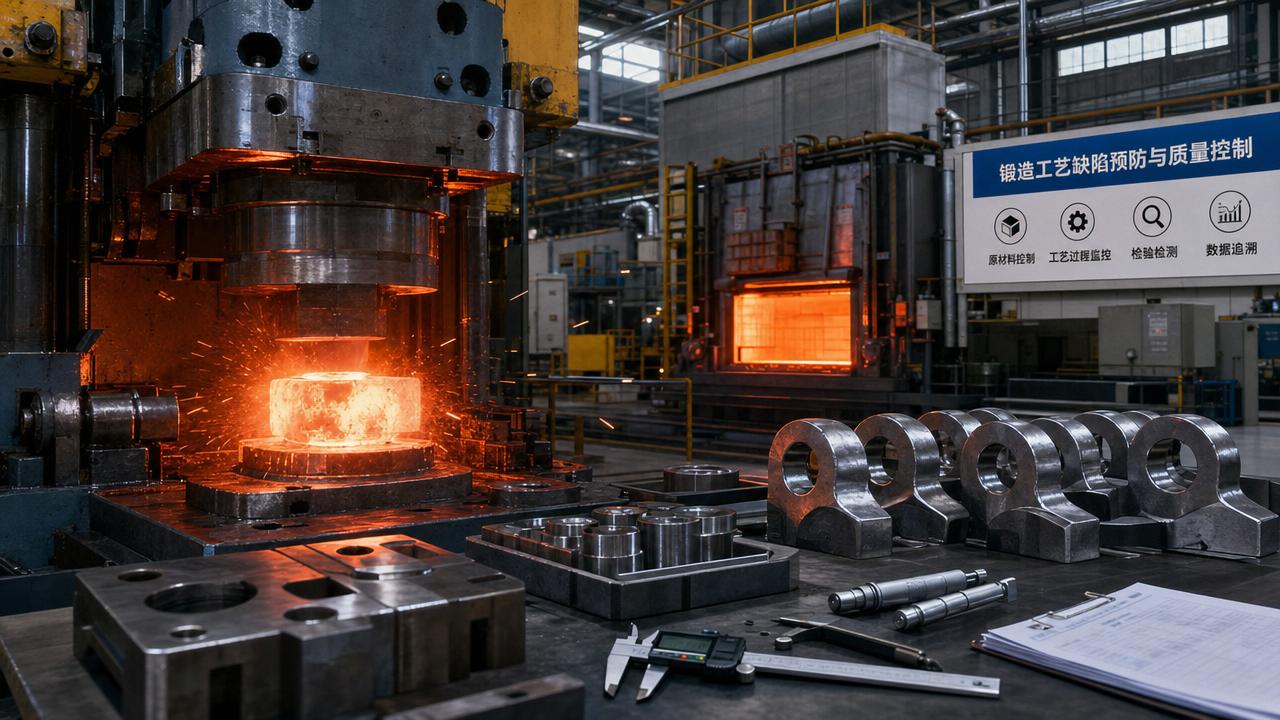
In the forging process, small changes in temperature, die condition, material quality, lubrication, or handling can create cracks, laps, underfilling, scale pits, and hidden structural risks.
These defects reduce product strength, increase scrap, interrupt production, and may create safety hazards around presses, hammers, furnaces, and handling equipment.
A clear defect prevention checklist helps stabilize the forging process, improve inspection consistency, and support more reliable industrial operations.
Why the Forging Process Needs a Defect Prevention Checklist
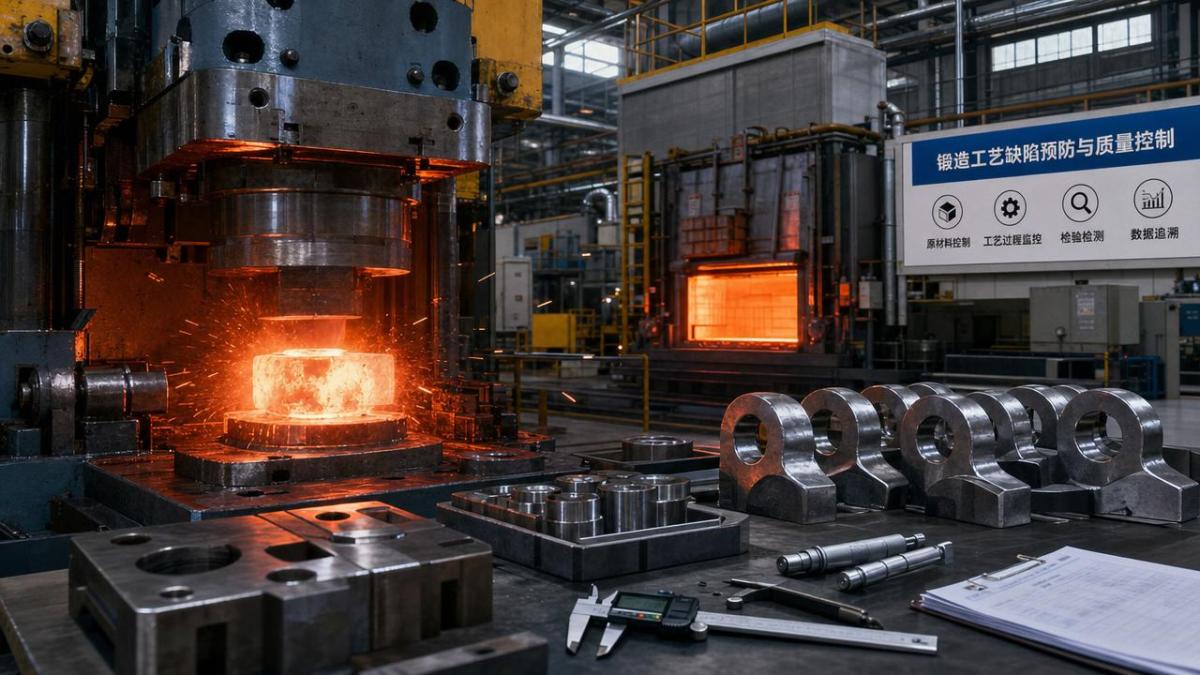
The forging process combines high pressure, high temperature, material flow, tooling contact, and rapid operational decisions.
A defect may begin as a small deviation, then expand into dimensional failure, internal cracking, or premature service damage.
Checklist-based control turns experience into repeatable actions. It also helps connect shop-floor inspection with engineering, maintenance, sourcing, and supplier evaluation.
For industrial operations, the benefit is not only lower rejection. It also improves traceability, equipment protection, and delivery reliability.
Common Forging Process Defects and Root Causes
Cracks and internal fractures
Cracks are among the most serious forging process defects because they directly affect fatigue resistance and load-bearing performance.
They may appear on the surface or remain inside the part until machining, testing, or service failure reveals them.
- Check billet temperature before deformation, because low heat reduces ductility and increases cracking during heavy reduction.
- Control reduction ratio carefully, because excessive deformation in one pass can overload weak zones and create internal fractures.
- Inspect raw material cleanliness, because inclusions, segregation, or porosity may open during the forging process.
Laps, folds, and cold shuts
Laps and folds occur when metal surfaces overlap without proper bonding. Cold shuts form when two flow fronts meet poorly.
These defects are often linked to poor die design, incorrect preform shape, insufficient heat, or unstable material flow.
- Review preform geometry, because uneven volume distribution forces metal to fold instead of filling the die smoothly.
- Maintain correct die temperature, because cold tooling can chill the surface and block proper bonding.
- Verify flash design, because poor flash control restricts flow and increases laps near edges or ribs.
Underfilling and incomplete die filling
Underfilling happens when metal does not completely fill the die cavity. It causes missing features, weak corners, and machining allowance problems.
In the forging process, this defect usually reflects insufficient material volume, low temperature, low press energy, or blocked flow channels.
- Confirm billet weight before loading, because insufficient stock volume creates predictable underfilling in thin sections.
- Increase forming energy only after checking temperature, die wear, lubrication, and material placement.
- Monitor corners and ribs first, because these areas reveal filling problems earlier than broad flat zones.
Scale pits, oxidation, and surface damage
Scale forms when hot metal reacts with oxygen. If scale is pressed into the surface, pits and dents remain after forging.
Surface defects increase machining loss and may weaken components used in shafts, gears, flanges, valves, and structural parts.
- Reduce furnace holding time, because extended exposure increases scale thickness and surface loss.
- Use effective descaling before deformation, especially when precision forging or tight surface allowances are required.
- Keep die surfaces clean, because embedded scale transfers pits across multiple parts in the forging process.
Die mismatch and dimensional errors
Die mismatch causes offset parting lines, uneven walls, and machining difficulties. It can also indicate press alignment problems.
Dimensional errors may come from tool wear, thermal expansion, poor locating, or inconsistent trimming after the forging process.
- Check die alignment at scheduled intervals, not only after defects appear on finished parts.
- Track tool wear by cavity position, because local wear may affect one feature before others.
- Measure critical dimensions after cooling, because hot inspection can hide shrinkage-related deviations.
Core Forging Process Prevention Checklist
The following checklist supports daily control, root cause analysis, supplier audits, and continuous improvement in the forging process.
- Verify raw material certificates, heat numbers, chemical composition, and ultrasonic test records before releasing billets to production.
- Confirm billet cutting accuracy, because length variation changes volume and directly affects filling, flash, and trimming results.
- Measure furnace temperature at multiple zones, because display temperature may not represent actual billet core temperature.
- Control heating rate according to alloy grade, because rapid heating may create thermal stress and internal cracking.
- Set maximum holding time limits, because overheating can cause grain coarsening, oxidation, and reduced mechanical performance.
- Inspect die cavity surfaces before each run, because cracks, dents, or scale buildup transfer defects to forgings.
- Apply lubricant evenly, because excessive or insufficient lubrication changes friction, filling behavior, and surface finish.
- Place billets consistently in the die, because poor positioning creates uneven flow and local underfilling.
- Record press load trends, because abnormal load increases may signal die blockage, temperature loss, or material variation.
- Inspect first-piece samples with dimensional, surface, and visual checks before allowing continuous production.
- Separate suspect parts immediately, because mixing nonconforming pieces reduces traceability and increases downstream inspection cost.
- Review defect data by heat batch, die cavity, shift, and equipment to identify repeatable patterns.
Scenario-Based Control in the Forging Process
Open-die forging
Open-die forging gives flexibility for large shafts, rings, blocks, and custom industrial parts.
The main risks are uneven deformation, internal void retention, poor reduction planning, and inconsistent operator control.
A stable forging process requires correct drawing schedules, frequent temperature checks, and sufficient reduction to close internal defects.
Closed-die forging
Closed-die forging produces high-volume parts with better shape control, but tooling quality becomes more critical.
Laps, underfilling, mismatch, and excessive flash often indicate poor preform design or die wear.
Process simulation, die maintenance, and first-piece approval should be part of routine forging process management.
Cold forging and warm forging
Cold forging improves surface finish and dimensional precision, but it demands excellent material preparation.
Cracking, tool overload, and poor flow may result from hard material, inadequate annealing, or coating failure.
Warm forging reduces forming force while keeping better accuracy than hot forging, but temperature stability remains essential.
Often Ignored Risks in Forging Process Defect Control
Material variation between batches
Even when material meets the same standard, chemistry, cleanliness, grain size, and prior rolling quality may differ.
A forging process that works for one batch may fail when another batch has lower ductility or higher inclusion content.
Tooling fatigue hidden under normal output
Dies may appear usable while small thermal cracks, softened areas, or worn edges begin affecting part quality.
Ignoring early tooling fatigue allows defects to spread gradually across production without a clear single failure moment.
Improper cooling after forging
Cooling is part of the forging process, not a separate afterthought.
Uneven cooling may create residual stress, distortion, hardness variation, or delayed cracking in alloy steel forgings.
Weak feedback from inspection to production
Inspection data has limited value if it only separates accepted and rejected parts.
Defect photos, location maps, load curves, and batch records should return to process review quickly.
Practical Execution Advice for More Stable Forging Results
Start with the defects that cause the highest cost or safety exposure. Do not try to redesign every control point at once.
Build a simple defect library using photos, part numbers, material grades, die numbers, and suspected causes.
Link each defect to one or more measurable variables, such as billet temperature, furnace time, press load, die life, or lubrication method.
- Standardize inspection timing, including incoming material, preheating, first piece, in-process sampling, and final dimensional checks.
- Use stop rules for repeated cracks, severe underfilling, die mismatch, abnormal loads, or uncontrolled temperature deviation.
- Compare defect rates across shifts and machines, because repeated differences often reveal training or equipment issues.
- Review forging process parameters after material supplier changes, new tooling, furnace maintenance, or production transfer.
For digital factories, sensor data can strengthen judgment. Temperature monitoring, load tracking, and visual inspection systems help detect drift earlier.
However, digital tools cannot replace disciplined process basics. Clean dies, correct heat, proper placement, and clear traceability remain essential.
Conclusion and Action Guide
Defect prevention in the forging process depends on controlling material, heat, tooling, deformation, inspection, and feedback as one connected system.
Cracks, laps, underfilling, scale pits, mismatch, and dimensional errors usually have traceable causes when records are complete.
Begin with a practical checklist, verify high-risk variables daily, and review defect trends by batch, die, machine, and production condition.
A controlled forging process reduces scrap, protects equipment, improves delivery reliability, and supports stronger industrial quality decisions.
Related Intelligence