China Sets AI Upgrade Subsidy Rules for Factories
On June 5, 2026, China’s Ministry of Industry and Information Technology released trial funding rules for industrial AI demonstration projects, putting clearer policy support behind factory-side AI deployment in sectors such as metal processing and equipment manufacturing. The update matters not only to OEM and ODM manufacturers seeking subsidy access, but also to overseas customers, supply chain partners, and industrial service providers, because the rules tie financial support to both certified manufacturing capability and API-based data collaboration for international clients.
What the policy explicitly covers
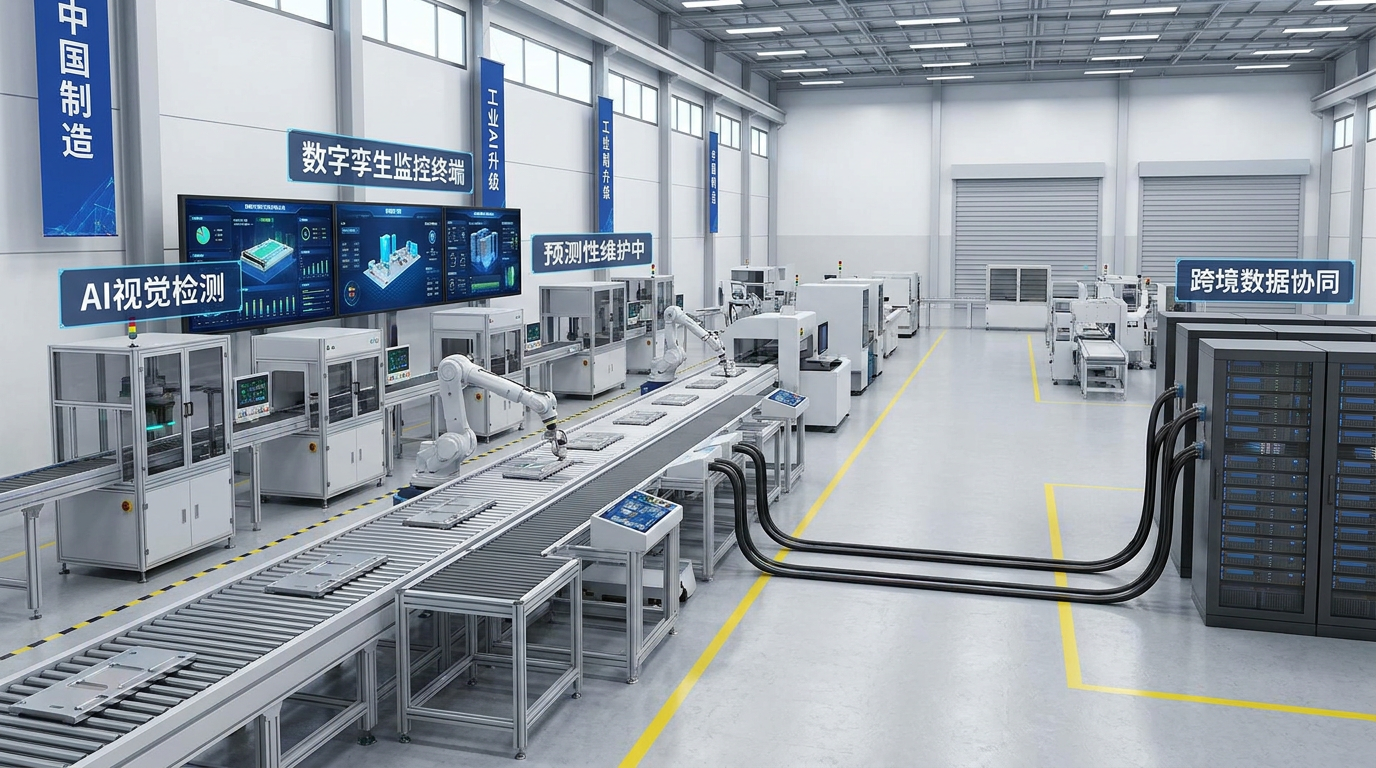
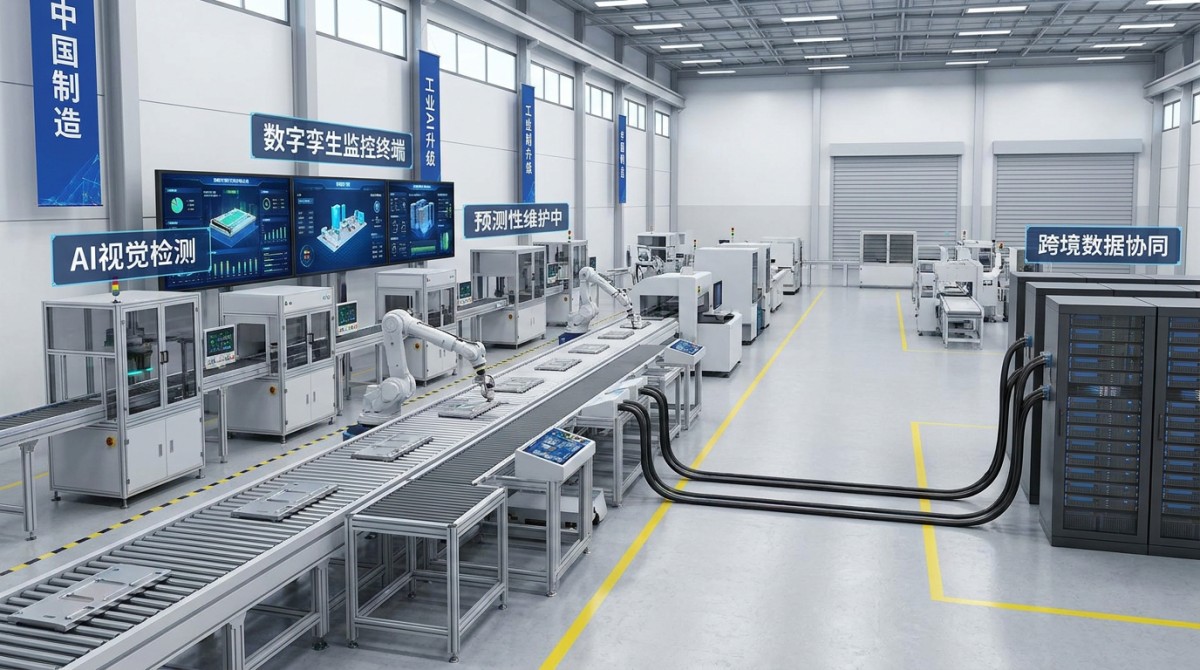
According to the information provided, the Ministry issued the Administrative Measures for Special Funds for Industrial Artificial Intelligence Application Demonstration Projects (Trial) on June 5, 2026. The measures specify subsidies of up to RMB 30 million for projects including AI visual inspection, predictive maintenance, and digital twin production lines aimed at industries such as metal processing and equipment manufacturing.
The stated applicant requirement is also clear: the applying entity must be an OEM or ODM manufacturer holding ISO 9001 and IECQ QC080000 certifications. In addition, the project must include a data collaboration module with open API interfaces for overseas customers. The policy information provided states that this is intended to strengthen the smart delivery capability of Chinese factories and their level of international coordination.
Where the impact is likely to be felt first
Factory operators moving from pilot AI to funded implementation
From an industry perspective, manufacturers in metal processing and equipment manufacturing are the most directly affected because the subsidy scope is linked to specific production uses rather than broad digital transformation language. The business impact is likely to center on quality inspection, maintenance planning, and line-level coordination, where AI visual inspection, predictive maintenance, and digital twins are explicitly named in the policy summary.
Certified OEM and ODM suppliers facing a higher entry threshold
Analysis shows that this is not a general incentive open to all industrial participants. The certification requirement means eligibility is tied to suppliers that already meet formal quality and hazardous substance process standards through ISO 9001 and IECQ QC080000. For manufacturers, the immediate issue is not only whether they have AI plans, but whether their compliance documentation and project structure align with the application conditions.
Overseas customers and cross-border collaboration teams
What deserves closer attention is the requirement for an API-based data collaboration module open to overseas customers. This suggests that, within the scope of the provided information, industrial AI support is being connected not just to internal efficiency but also to external coordination in delivery and data exchange. For customer-facing teams, this could affect how project transparency, production visibility, and technical integration are discussed with international buyers.
Industrial solution and service providers around production lines
Observably, providers involved in machine vision, maintenance systems, digital twin implementation, and manufacturing data connectivity may also be affected indirectly. The reason is practical: if eligible manufacturers adjust projects to meet subsidy conditions, service demand may increasingly focus on solutions that can be deployed in certified factories and can support open API collaboration with overseas clients.
What companies should review now
Check whether project scope matches the named use cases
Companies should first distinguish between general automation or software upgrades and the specific industrial AI project types named in the policy summary. The practical issue is whether a planned project can be clearly described as AI visual inspection, predictive maintenance, or a digital twin production line, rather than as a broad modernization effort.
Reconfirm certification readiness before discussing applications
For OEM and ODM manufacturers, the certification requirement should be treated as a front-end filter. Before moving into budgeting or partner selection, companies should verify whether ISO 9001 and IECQ QC080000 status is current and whether the relevant project entity matches the application requirement stated in the policy information.
Prepare for customer-facing data coordination questions
The open API requirement means technical planning cannot remain limited to internal factory systems. Companies likely need to pay closer attention to how overseas customers will access or coordinate data through the required module, and whether internal teams in IT, production, delivery, and customer communication are aligned around that requirement.
Separate policy signal from implementation detail
Analysis shows that the policy sends a clear direction, but companies should avoid assuming that every AI upgrade project will automatically fit the funding framework. What deserves closer attention is how later official wording, application procedures, and project interpretation may define the practical boundary between eligible industrial AI transformation and ordinary production system improvement.
Why this looks like more than a short-term funding notice
As an editorial observation, this development is more appropriate to understand as a policy signal with operational implications rather than as a completed market outcome. The combination of three elements—named industrial AI use cases, certification-based applicant screening, and an overseas-facing API collaboration requirement—suggests that the policy emphasis is not only on adopting AI inside factories, but on making that adoption measurable in quality systems and usable in international delivery coordination.
At the same time, it would be premature to treat this as proof of immediate large-scale transformation across manufacturing. The confirmed facts show a defined support framework and applicant conditions, but not yet the pace, breadth, or project-level results of implementation. Continued observation is therefore still necessary.
How to read the signal at this stage
In summary, the June 5 policy update is significant because it links industrial AI funding to concrete production scenarios and to cross-border data collaboration requirements. For manufacturers, the message is practical: subsidy access appears tied not only to technology ambition, but also to certification status, project design, and customer-facing integration capability.
From a neutral industry reading, this is best understood as a meaningful directional move in support of AI integration with the real economy, especially in factory modernization and international coordination. Whether it becomes a broad operational shift will depend on subsequent implementation details and how eligible manufacturers structure their projects.
Basis of this article and points for further verification
This article is based on the user-provided news title, event date, and event summary. The analysis references only the provided information about the Ministry’s June 5, 2026 release of the trial funding measures, the subsidy ceiling, the named project categories, the OEM/ODM certification requirements, and the open API data collaboration condition for overseas customers.
For this type of industry update, source types typically relevant for continued verification include official government notices, company disclosures, industry association updates, authoritative media reporting, and standard-related documents. A specific official source link was not provided in the input, so the exact publication text and any follow-up implementation details still need to be continuously verified. Key follow-up points include any later official clarification on application procedures, project interpretation, and execution requirements.
Related Intelligence