
Casting Defects: Causes, Inspection Methods, and Prevention Tips
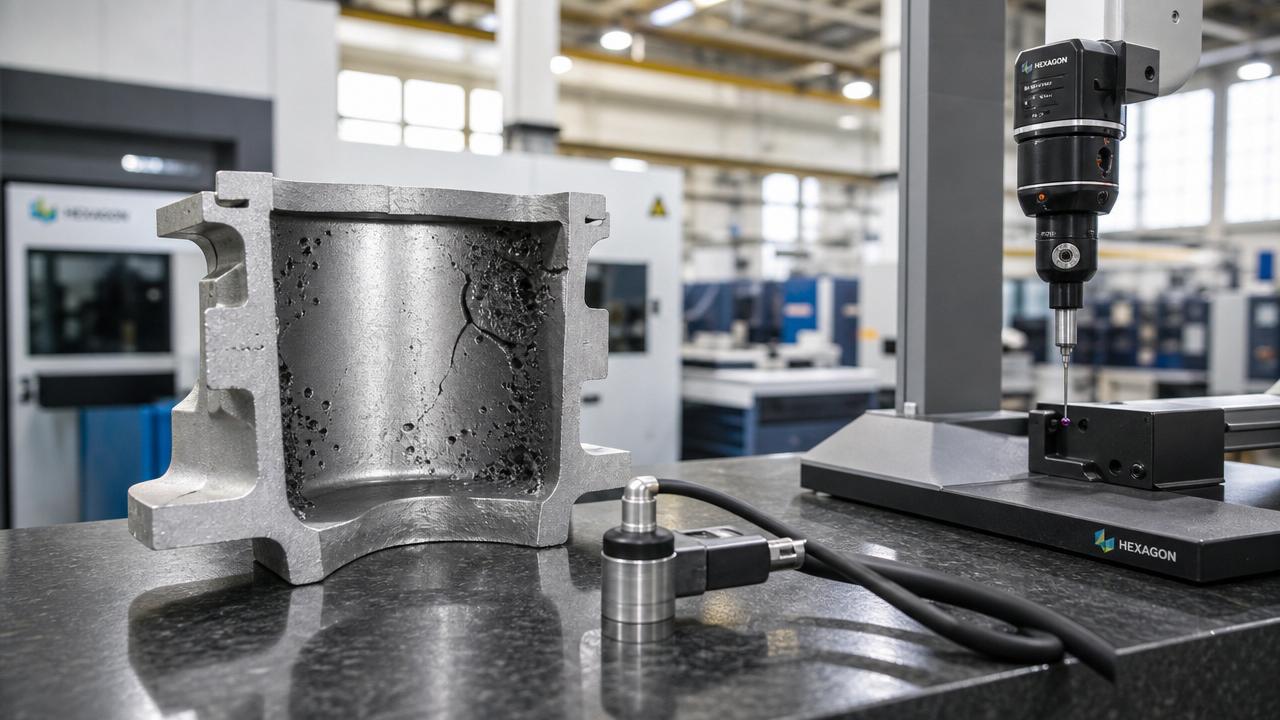
Casting defects can compromise product strength, dimensional accuracy, production efficiency, and workplace safety if they are not identified and controlled early.
Understanding causes, inspection methods, and prevention actions helps casting operations reduce scrap, stabilize delivery, and improve confidence in industrial supply chains.
Casting Defects in Real Production Scenarios
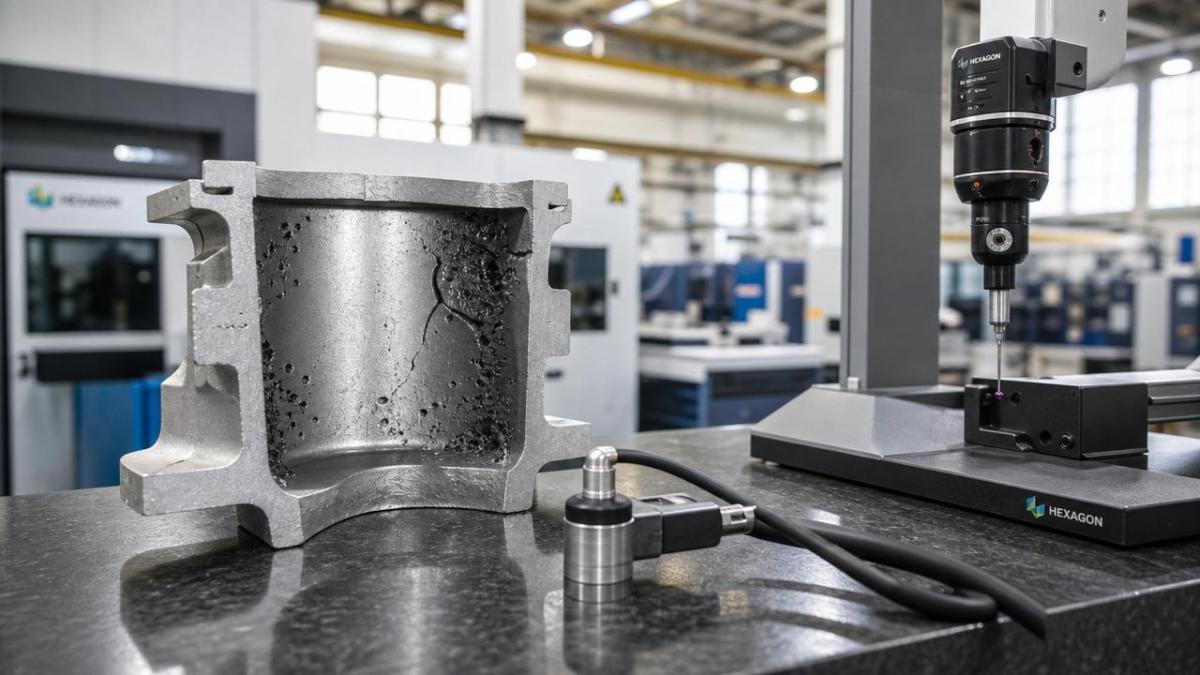
Casting defects rarely appear as isolated events. They usually reflect mismatches among material behavior, mold design, melting control, pouring practice, and cooling conditions.
In heavy machinery, casting defects may reduce load-bearing capacity. In precision parts, the same issue may cause assembly failure or leakage.
A useful defect control plan starts with the operating scene, not only the defect name. Each scene has different risks and inspection priorities.
For industrial decision-making, casting defects should be evaluated through three questions: where they occur, why they occur, and what failure they may trigger.
Scene Background: Why Defect Priorities Differ
Different casting applications tolerate different levels of porosity, inclusions, shrinkage, deformation, or surface discontinuity.
A non-critical cover may accept minor surface marks. A pressure housing cannot accept internal casting defects that threaten sealing performance.
High-volume production emphasizes repeatability and fast detection. Low-volume customized casting emphasizes process validation and risk review before shipment.
Metal type also changes the judgment. Steel, aluminum, copper alloy, and iron respond differently to gas absorption, solidification, and thermal stress.
That is why casting defects must be interpreted through part function, alloy behavior, process route, and customer acceptance criteria.
Scenario One: Structural Castings Under Heavy Load
Structural castings used in equipment frames, machine bases, brackets, and housings require stable strength and predictable fatigue performance.
Common casting defects in this scene include shrinkage cavities, hot tears, cold shuts, and slag inclusions.
Shrinkage defects often occur when feeding is insufficient during solidification. Thick sections and isolated hot spots increase this risk.
Hot tears appear when contraction is restricted by mold geometry or poor riser layout. They reduce reliability under repeated loading.
Inspection should combine visual checks, magnetic particle testing for ferrous parts, ultrasonic testing, and section-specific dimensional verification.
Prevention depends on solidification simulation, proper riser design, controlled pouring temperature, and consistent mold strength.
Scenario Two: Pressure, Pump, and Valve Components
Pressure-related castings require tight sealing, sound internal structure, and stable wall thickness. Small casting defects may become serious leakage paths.
Porosity, pinholes, cracks, misruns, and internal shrinkage are the main concerns in this scene.
Gas porosity may result from moisture, poor degassing, turbulent pouring, or excessive gas pickup during melting.
Misruns appear when molten metal loses fluidity before filling the cavity. Thin walls and low pouring temperature make this worse.
Inspection should include pressure testing, radiographic testing, dye penetrant testing, and targeted machining checks at sealing surfaces.
Prevention should focus on melt cleanliness, venting, gating balance, mold preheating, and verified filling speed.
Scenario Three: Precision Castings Requiring Tight Dimensions
Precision casting applications often involve small tolerances, thin sections, fine surfaces, and direct assembly requirements.
In this scene, casting defects include warpage, dimensional deviation, surface roughness, fins, flash, and incomplete filling.
Warpage is usually linked to uneven cooling, poor fixture support, or thermal stress after shakeout.
Flash and fins may indicate mold mismatch, insufficient clamping, damaged tooling, or improper core positioning.
Inspection should include coordinate measurement, 3D scanning, surface roughness testing, and fixture-based functional verification.
Prevention requires tooling maintenance, controlled cooling, verified shrinkage allowance, stable wax or pattern quality, and repeatable mold assembly.
Scenario Four: Metal Parts for Harsh Service Environments
Some castings work in corrosive, high-temperature, abrasive, or impact-heavy conditions. Defect tolerance becomes much lower in these environments.
Casting defects such as inclusions, microcracks, segregation, and surface cracks can accelerate corrosion, wear, or thermal fatigue.
Inclusions may come from slag, refractory erosion, oxide films, or poor ladle practice.
Segregation occurs when alloying elements distribute unevenly during solidification. It may reduce local corrosion resistance or hardness consistency.
Inspection should include chemical analysis, hardness mapping, metallographic examination, ultrasonic testing, and surface crack detection.
Prevention requires clean melting, controlled alloy addition, suitable heat treatment, stable cooling rates, and strict slag control.
Different Scenario Requirements for Casting Defects
This comparison shows why one universal inspection plan cannot cover all casting defects effectively.
The inspection level should match the part’s service risk, failure consequence, and process stability history.
Inspection Methods That Match Defect Types
Visual inspection is the first layer. It detects cracks, sand adhesion, rough surfaces, flash, cold shuts, and visible deformation.
Dye penetrant testing works well for open surface cracks on non-porous metals. It is useful for non-ferrous castings.
Magnetic particle testing detects surface and near-surface discontinuities in ferromagnetic castings.
Radiographic testing reveals internal porosity, shrinkage, inclusions, and wall thickness concerns. It is valuable for critical casting defects.
Ultrasonic testing is suitable for larger sections. It detects internal discontinuities without cutting the casting.
Dimensional inspection confirms whether casting defects have caused distortion, mismatch, machining allowance loss, or assembly deviation.
Metallographic analysis identifies microstructure problems, segregation, grain issues, inclusions, and heat-treatment deviations.
Practical Prevention Tips by Process Stage
Before melting
- Verify raw material chemistry and return material cleanliness.
- Remove moisture from charge materials, tools, and ladles.
- Review drawings for hot spots, thin walls, and feeding difficulty.
During melting and pouring
- Control melting temperature, holding time, and alloy additions.
- Use degassing, filtration, or slag removal when required.
- Avoid turbulence that traps gas and oxide films.
- Confirm pouring temperature against section thickness and alloy fluidity.
During mold, core, and cooling control
- Maintain mold strength, permeability, and accurate assembly.
- Design vents to support stable gas escape.
- Use risers, chills, and sleeves to guide solidification.
- Control cooling to reduce warpage, cracks, and residual stress.
These actions reduce casting defects by addressing root causes instead of relying only on final rejection.
Common Misjudgments That Increase Casting Defects
One common mistake is treating all porosity as the same problem. Gas porosity and shrinkage porosity require different corrective actions.
Another mistake is focusing only on appearance. Internal casting defects may remain hidden until machining, pressure testing, or service failure.
A third mistake is increasing inspection without improving process control. Detection alone does not prevent recurring casting defects.
Ignoring pattern wear, core shift, and mold mismatch also creates dimensional problems that are difficult to correct later.
Poor traceability is another overlooked risk. Without heat numbers, process records, and inspection data, root-cause analysis becomes weak.
Scenario-Based Action Guide for Better Control
A reliable control plan should connect defect type, inspection method, and process adjustment in one closed loop.
- Classify the casting by service risk and failure consequence.
- List likely casting defects based on alloy, geometry, and process route.
- Select inspection methods that reveal both surface and internal risks.
- Record defect location, frequency, batch, and process parameters.
- Correct the root cause through design, melting, gating, feeding, or cooling changes.
- Confirm improvement through repeat inspection and production stability data.
This approach is especially useful across industrial sourcing, manufacturing quality control, metals processing, and supply chain risk assessment.
When casting defects are managed early, operations reduce rework, improve shipment reliability, and protect downstream assembly schedules.
The next practical step is to map each casting family against its highest-risk defects, inspection route, and preventive process controls.
A scenario-based checklist helps convert casting defects from uncertain production losses into measurable, preventable, and continuously improved quality indicators.
Related Intelligence