
Private Label Pet Shampoo: Compliance and Formula Basics
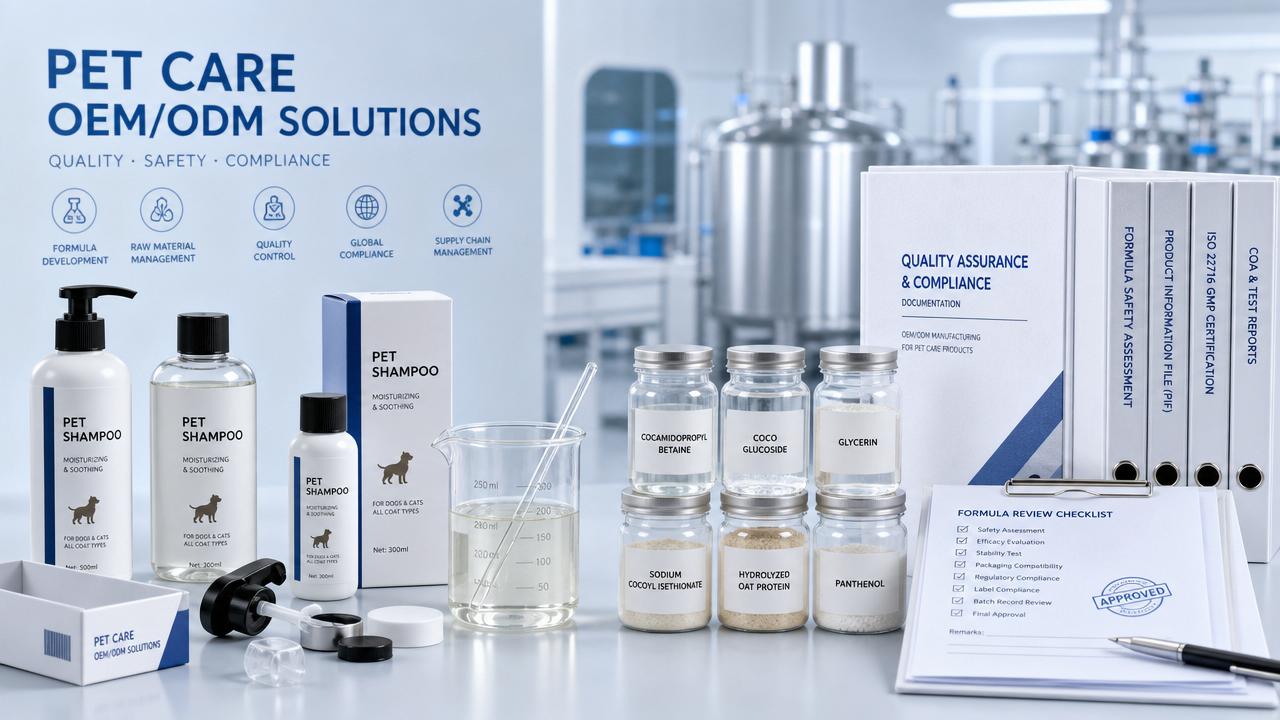
Private label pet shampoo is often treated as a light consumer item, yet the sourcing reality is more technical. A viable project depends on safe ingredients, correct claims, stable manufacturing, and export-ready documentation, not just scent, color, or packaging style.
That is why this category deserves closer attention across manufacturing, global trade, and supply chain review. For business decisions, the key question is not whether a formula looks attractive, but whether it can pass compliance checks and remain commercially reliable across markets.
Why private label pet shampoo has become a more serious sourcing category
Pet care has moved beyond simple grooming. In many markets, buyers now expect gentler formulas, cleaner labels, and product positioning linked to skin sensitivity, odor control, or coat maintenance.
At the same time, cross-border e-commerce and contract manufacturing have lowered entry barriers. More brands can launch a private label pet shampoo line without building their own factory.
This convenience creates a second challenge. More suppliers can offer similar products, but not all of them manage formulation discipline, batch consistency, or labeling compliance at the same level.
From an industrial information perspective, the topic sits at the intersection of OEM production, quality management, import and export compliance, and supplier risk control. That makes it relevant well beyond the pet care shelf.
The core understanding: cosmetic-style product, animal-use risk profile
A private label pet shampoo is usually positioned as a cleansing and grooming product for external use. It is not automatically a therapeutic item, even when marketing language sounds functional.
That distinction matters. Once claims move toward treatment, cure, parasite control, or medical outcomes, regulatory expectations can change sharply from one market to another.
In practical terms, formula review should start with intended use. Is the product for routine bathing, deodorizing, coat brightening, puppy care, hypoallergenic positioning, or waterless cleaning?
Each direction affects ingredient selection, label language, test requirements, and customer complaint risk. A routine cleanser and a medicated-looking product should not be evaluated with the same checklist.
Compliance starts with claims, not only with paperwork
Many sourcing problems begin with marketing drafts rather than production defects. A label that says “kills mites,” “heals skin,” or “treats infection” may create regulatory exposure before the first shipment leaves the factory.
Usually, a safer path is to keep claims within grooming language. Terms such as “cleans,” “helps reduce odor,” or “supports coat softness” are often easier to defend than medical-style promises.
For imported products, the review should cover more than the front label. Ingredient listing format, caution statements, batch coding, net content expression, country-of-origin marking, and responsible company details all matter.
Different destinations may also require safety data support, microbial standards, restricted substance review, or language adaptation. This is where trade compliance and product compliance begin to overlap.
Common compliance checkpoints before supplier confirmation
- Verify whether product claims stay within cosmetic or grooming boundaries.
- Request a full ingredient list with INCI-style or equivalent naming where relevant.
- Check preservative use, allergen exposure, fragrance disclosure, and color additive legality.
- Confirm manufacturing records, batch traceability, and retention sample procedures.
- Review export documents, labeling artwork controls, and destination-market restrictions.
Formula basics that shape product performance and risk
A strong private label pet shampoo formula is not defined by the length of its ingredient deck. It is defined by balance: cleansing efficiency, skin tolerance, rinse behavior, odor profile, and storage stability.
Surfactants are the functional core. They determine how well the shampoo removes dirt, grease, and odor residues. Harsh surfactant systems may clean fast, but they can also increase irritation risk.
Conditioning agents help reduce roughness after washing. Humectants and soothing components are often added for sensitive-skin positioning, though they should not be used as unsupported medical signals.
Preservation is another critical point. Pet shampoo often faces variable storage environments during shipping and warehousing. Weak preservative systems can turn a good-looking sample into a field complaint later.
Fragrance also deserves caution. A pleasant scent may help retail acceptance, but strong perfume loading can raise sensitivity concerns. In many cases, a mild and clean odor profile is the lower-risk option.
Basic formula elements and what they signal
Manufacturing quality often decides whether the formula survives commercialization
Sample approval is only one step. The bigger question is whether the same private label pet shampoo can be reproduced at scale without drift in viscosity, color, fragrance strength, or microbial performance.
A capable OEM or ODM partner should provide structured batch control, incoming material verification, mixing procedures, cleaning validation, and packaging compatibility checks.
Packaging matters more than it first appears. Pumps, caps, bottles, and liners can affect leakage risk, filling efficiency, and formula stability during transport, especially in hot or humid routes.
This is where broader manufacturing analysis becomes useful. Factory automation level, quality discipline, and document control are often stronger indicators than promotional catalog language.
Signals worth checking during factory assessment
- Whether raw materials are linked to approved supplier lists.
- Whether change control exists for formula and packaging updates.
- Whether microbial testing is routine or only done on request.
- Whether filling lines match the bottle and viscosity range.
- Whether complaint handling feeds back into corrective action records.
Market positioning should align with formula reality
Many private label pet shampoo projects fail because market positioning is broader than the formula can support. A “premium sensitive skin” concept needs more than soft packaging colors and botanical language.
Positioning usually works best when it stays specific. Examples include daily wash, deodorizing, puppy-safe cleansing, oatmeal-style comfort positioning, whitening support, or waterless convenience.
Each segment brings different sourcing questions. Whitening claims may raise color and residue concerns. Waterless products may need different preservation logic. Puppy-focused formulas may require extra mildness scrutiny.
From a B2B evaluation angle, the best option is often the product with the clearest fit between claims, ingredients, target market, and manufacturing repeatability.
Cross-border trade and supply chain issues should be reviewed early
A private label pet shampoo program may look stable on paper, then face delays in shipment, customs review, or relabeling costs. Early supply chain review reduces those avoidable disruptions.
Raw material volatility can affect lead time, especially for specialty surfactants, fragrances, and packaging components. If the supplier relies on narrow sourcing channels, replenishment risk becomes higher.
Documentation flow also matters. Formula confidentiality agreements, specification sheets, test reports, and final artwork approval should move in sequence, not in parallel confusion shortly before shipment.
This is consistent with the wider industrial logic seen across global sourcing: product quality, trade compliance, and supply continuity are not separate topics. They reinforce or weaken each other.
A practical way to compare options
When reviewing several suppliers, it helps to build a simple matrix rather than relying on sample feel alone. Commercial attractiveness should be balanced against risk exposure.
A disciplined review usually reveals which private label pet shampoo option is genuinely scalable, and which one only performs well in a presentation sample.
What to do next before moving into final selection
Start by narrowing the intended market and claim boundary. That single step helps define formula expectations, label language, and likely compliance workload.
Then compare suppliers using the same checklist: formula composition, preservative logic, batch control, packaging compatibility, and export documentation readiness.
If the project will cross borders, align product review with logistics and trade planning early. It is far easier to adjust artwork or claims before production than after goods are packed.
For any private label pet shampoo program, the strongest decision usually comes from linking product detail with manufacturing reality and supply chain discipline. That is where lower-risk sourcing becomes more achievable.
Related Intelligence