
How Can a Small Manufacturing Plant Start Continuous Improvement?
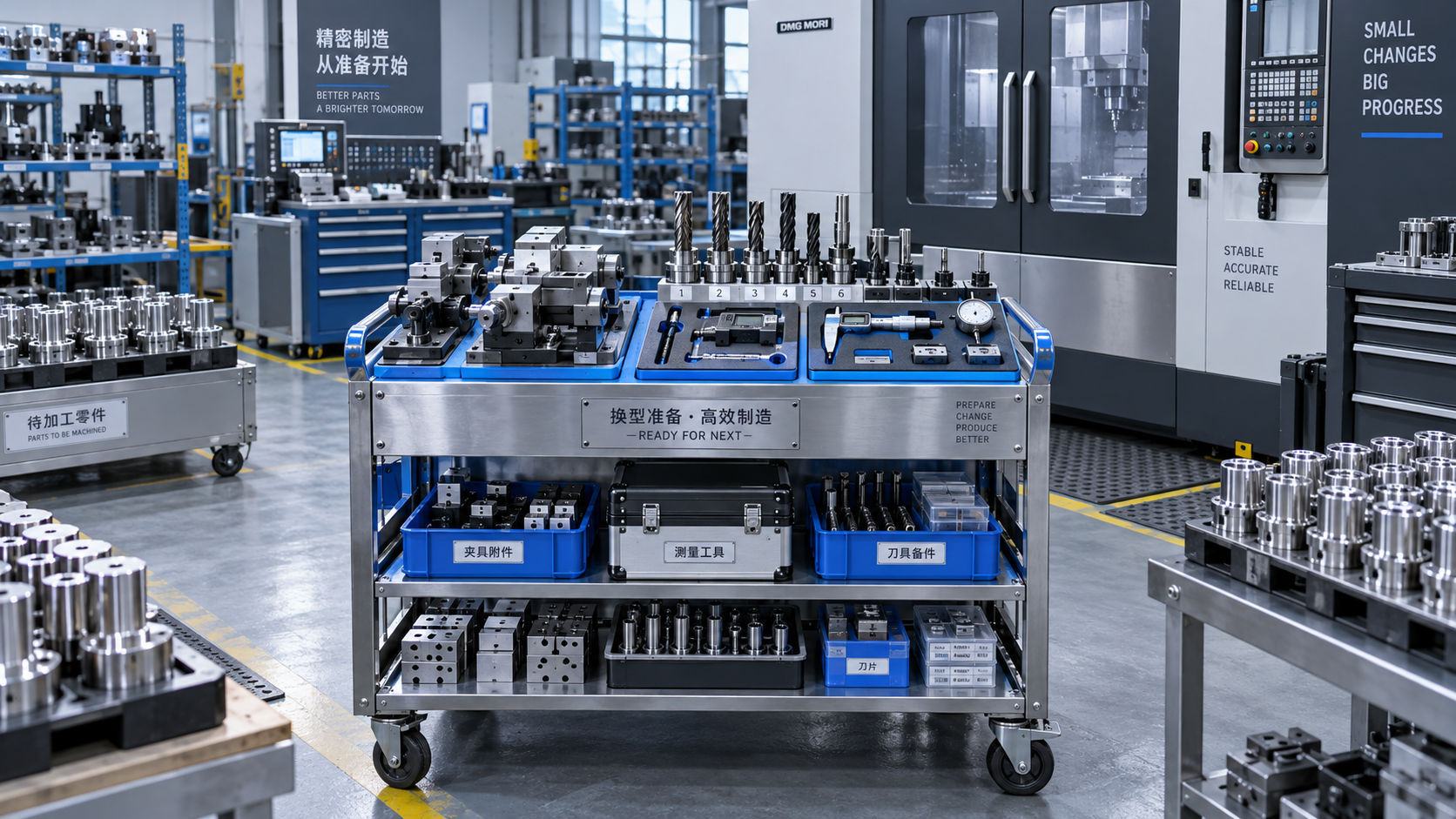
To start continuous improvement in a small manufacturing plant, choose one recurring production problem, measure it consistently, and test a manageable change with the people doing the work. A useful first project might reduce time spent finding fixtures, prevent a repeated machining defect, or make material available before a job begins. The starting point is a clear problem and a reliable way to tell whether it improves.
Keep the initial scope narrow enough to manage alongside normal production. Assign someone to coordinate the work, protect a small amount of time for observation and review, and decide what evidence would justify keeping the change. Continuous improvement becomes sustainable when this cycle fits into daily operations.
Which problem should the plant tackle first?
Choose a problem that happens repeatedly, affects a meaningful production outcome, and sits largely within the team’s control. Missing setup tools, inconsistent first-piece checks, and unclear material identification are often more manageable starting points than a plant-wide scheduling overhaul.
Look at both impact and feasibility. A frequent inconvenience may be easy to fix but have little effect on delivery or cost. A major bottleneck may deserve attention, yet require engineering work or capital approval before anything can change. A good pilot provides a useful result without depending on too many unresolved issues.
Walk through the process with operators before selecting the project. Watch where work waits, where people repeat tasks, and where information becomes unclear. Ask what regularly prevents a job from moving forward. Production reports show outcomes; observation helps explain how those outcomes occur.
Write a problem statement that names the process and the loss. “Improve efficiency” gives little direction. “The press waits during changeovers because the next die and setup documents are not ready” identifies something the team can investigate. An immediate safety hazard needs prompt corrective action rather than placement in an improvement backlog.
What should be measured before making changes?
Establish a baseline using the simplest measure that accurately describes the problem. Record enough normal operating cycles to understand variation, including relevant differences between shifts, products, or materials. One unusually good or bad day is a weak basis for comparison.
A paper sheet or shared spreadsheet can capture the event, its duration or quantity, and a short reason code. Define the measure before collecting data so everyone records the same thing.
Compare similar operating conditions. A changeover improvement cannot be judged fairly if the baseline involved complex tooling and the trial involved a simple repeat job. Record product family, batch size, and other factors that materially affect performance.
Track a protective measure alongside the main metric. If the goal is faster setup, monitor first-piece quality. If the goal is fewer shortages, watch inventory accumulation. This prevents an apparent improvement from shifting cost or risk elsewhere.
Who should take responsibility when everyone already has a full workload?
Give the pilot one coordinator and involve the people whose work it changes. The coordinator keeps the problem visible, arranges trials, and follows up on decisions. Operators contribute practical knowledge; maintenance, quality, or planning joins when the problem touches their responsibilities.
Management needs to make time available and remove obstacles. Asking for improvement while leaving no opportunity to observe, test, or discuss the process turns the initiative into extra unpaid effort or unfinished work. Keep meetings brief and connect them to an existing shift handover or production review where practical.
Make reporting problems safe and useful. If downtime records become a way to blame individuals, the data will become less reliable. Ask what conditions made the interruption possible: unavailable tools, unclear instructions, worn components, or conflicting priorities. Also explain what happened to suggestions, including why some are deferred. Silence discourages participation.
Which lean manufacturing tools are useful at the beginning?
Select a tool because it fits the problem. There is little value in launching several lean manufacturing methods before the team understands the loss it wants to reduce.
- 5S: Useful when searching, clutter, or poor storage causes delays. Organize necessary items around actual use, identify their locations, and assign upkeep. Cosmetic tidiness alone does not establish better flow.
- Pareto analysis: Group defects or stoppages by cause to see where losses concentrate. Consider total time or cost as well as frequency; a rare breakdown can outweigh many short interruptions.
- Five Whys: Explore the causes of a specific event. Support each explanation with observation or records, and allow multiple causes when the evidence points that way.
- Standard work: Document a proven task sequence and its critical checks. It is especially useful when different methods produce inconsistent results.
- PDCA: Use Plan–Do–Check–Act to define a change, try it, examine the result, and decide whether to adopt, adjust, or stop it.
A full value-stream map can help when delays span purchasing, production, and shipping. For a local problem, a simple sketch showing the work sequence, waiting points, and handoffs may provide enough insight.
How can the team test a change without disrupting production?
Describe the proposed change and why it should help before trying it. For example, if a machine waits while the next fixture is located, preparing and checking that fixture before the current job finishes may shorten the interruption. That is a testable explanation, rather than a general instruction to work faster.
Set a clear trial boundary: one machine, one product family, or one defined set of changeovers. Name the person responsible, record the outcome, and agree on conditions that would stop the trial. Changes affecting guarding, lifting, process settings, or inspection require appropriate technical review before implementation.
Consider a hypothetical fabrication shop testing a setup cart. The cart holds the approved tooling, current job documents, and required measuring equipment. The team measures changeover time and first-piece acceptance, then checks whether preparing the cart creates delays at another workstation.
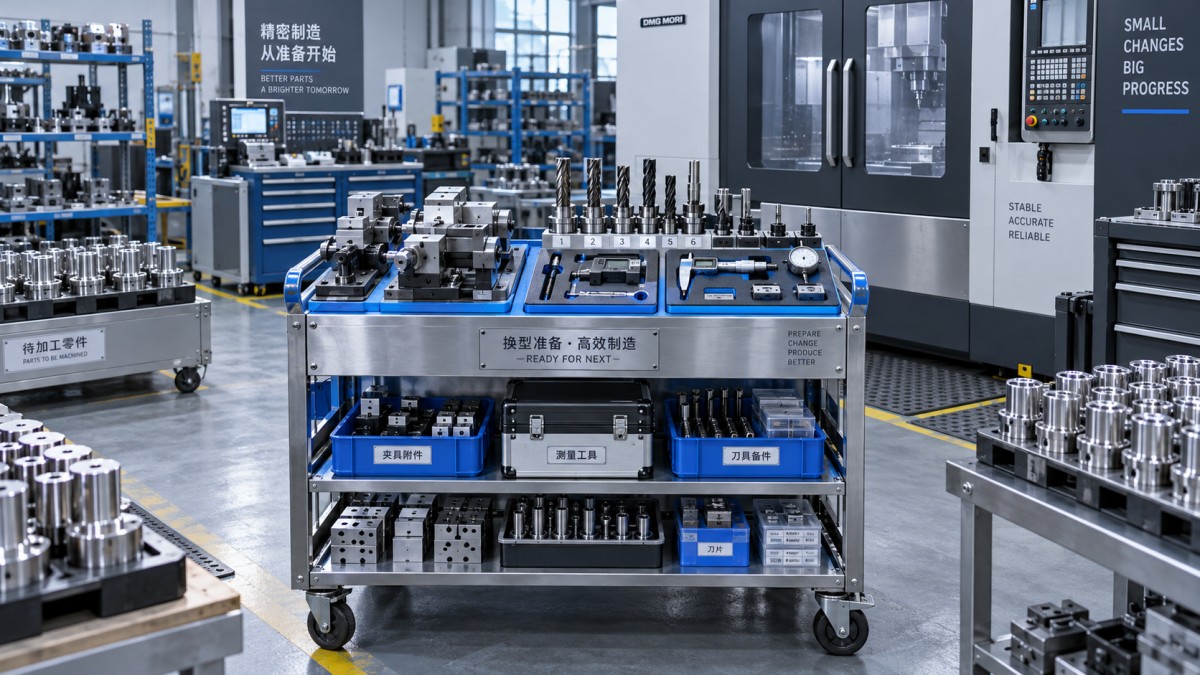
The trial should reveal whether the change removes a cause of delay. If the fixture still arrives late because preparation starts too late, adding a cart has not solved the coordination problem. If setup becomes faster but operators use incorrect document revisions, the method needs revision before wider use.
A disappointing trial is still useful when it shows that an assumption was wrong. Keep the evidence, revise the explanation, and test the next reasonable change.
How do you know whether an improvement is real?
Look for repeatable results across comparable work. Review the main measure, quality outcomes, safety conditions, and the effect on nearby processes. Ask operators whether the new method remains practical during a busy shift, not just during a supervised trial.
Distinguish reduced loss from financial savings. Saving machine time creates capacity, but it does not automatically reduce payroll or increase sales. The benefit depends on how the released capacity is used—for example, avoiding overtime, completing delayed orders, or reducing pressure on a bottleneck.
Local efficiency can also be misleading. Producing more parts at an upstream machine may simply enlarge the queue before a slower downstream operation. Evaluate whether the change improves flow toward shipment.
Where production volumes vary, use an appropriate rate as well as a total. Fewer rejected parts may reflect lower output rather than better quality. For mixed products, compare within relevant families instead of combining jobs with very different processing requirements.
What makes an improvement stick across shifts?
Once a trial succeeds, turn the method into a usable standard. Show the sequence, required materials, critical quality checks, and what to do when conditions differ. A short visual instruction near the task often serves better than a long document stored elsewhere.
Train each affected shift and confirm that people can follow the method in actual production. Include temporary coverage and less experienced operators. If success depends on one person remembering an unwritten detail, the process remains fragile.
Assign responsibility for maintaining the standard and checking the result. A setup cart needs replenishment; a labeling system needs consistent use; a maintenance check needs a response when an abnormal condition appears. These follow-through tasks belong in normal work.
Allow standards to evolve. When the method stops working, investigate whether materials, equipment, scheduling, or task requirements have changed. Repeated deviation may reveal a poor standard or a missing resource, rather than a lack of discipline.
Does the plant need software, automation, or an outside consultant?
Manual tracking is often sufficient for an initial pilot if records are timely, consistent, and easy to review. Consider software when manual collection becomes burdensome, information must connect across departments, or short equipment stops are difficult to capture reliably.
Before buying, define the decision the system should support. Downtime data is useful when someone can interpret the causes and act on them. A dashboard does little if stop categories are unclear or no one owns corrective actions. Equipment connectivity, training, support, and recurring costs also affect the choice.
Automation deserves consideration when a stable process contains repetitive work or a clearly defined technical constraint. Resolve unclear procedures and uncontrolled variation before designing equipment around them. Specialist help can be valuable for complex process capability issues, maintenance problems, or changes requiring expertise the plant lacks.
What should happen during the first month?
Treat the first month as a manageable learning cycle, with timing adjusted to production frequency. A low-volume operation may need longer to collect comparable results.
- Choose and observe: Define one recurring loss, identify the affected work, and assign a coordinator.
- Measure and investigate: Establish recording rules, collect a baseline, and examine likely causes with operators.
- Run a controlled trial: Test one change, record outcomes, and watch for effects on quality and other processes.
- Review and decide: Adopt a workable improvement, adjust an incomplete solution, or stop a change that fails to help.
Expand when the first method is stable enough to maintain. Similar equipment may offer a useful next location, but check differences in tooling, materials, staffing, and demand before copying the solution.
At the next production review, select one recurring interruption and agree on how to record it. Give the team a specific question to investigate and a date to review the evidence. That creates the first repeatable improvement cycle—and something concrete to build on.
Related Intelligence