
RCEP Safety Equipment Recognition Takes Effect
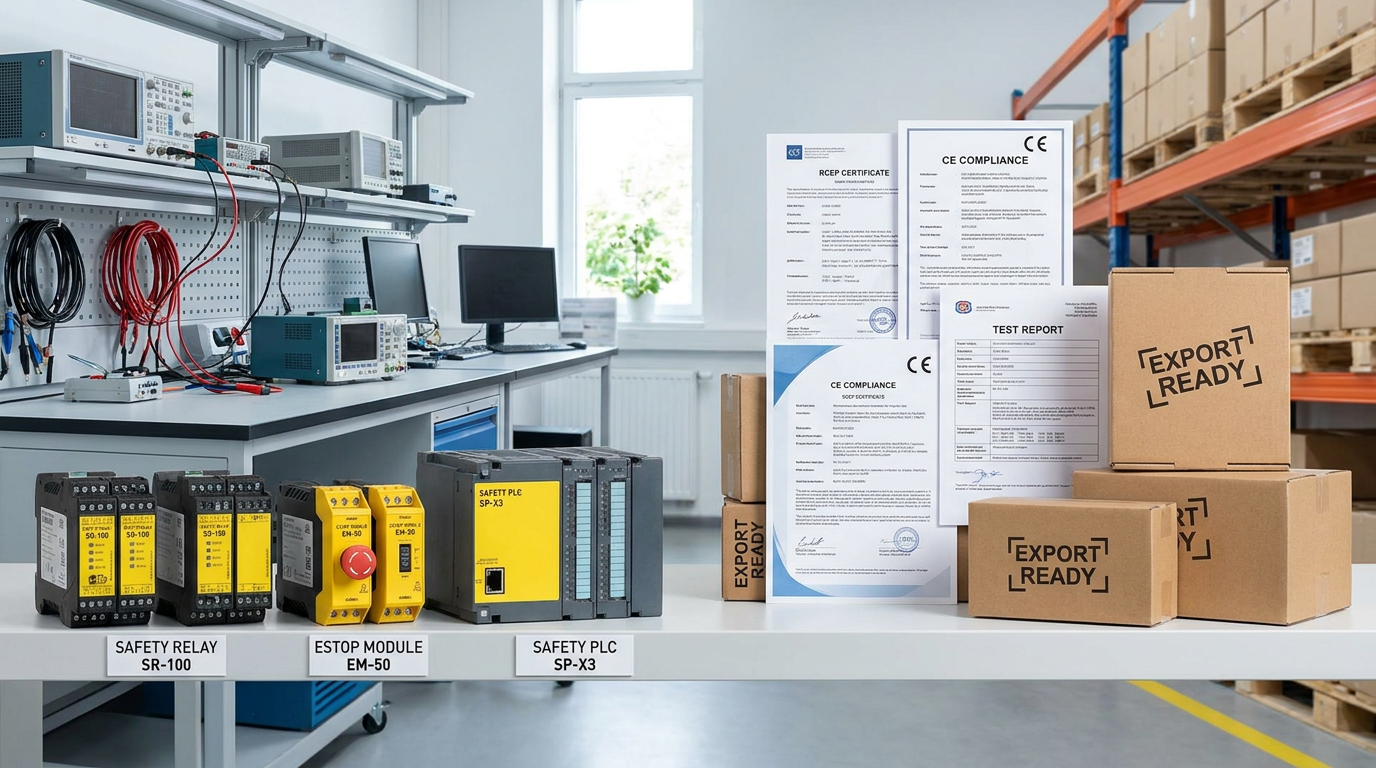
On June 5, 2026, the RCEP Joint Secretariat announced that the implementation guide for mutual recognition of conformity assessment in electromechanical and industrial safety equipment had officially taken effect. For China’s industrial safety equipment exporters, the immediate point of attention is practical rather than symbolic: certification reports issued by CNAS-accredited laboratories for IEC 61508 SIL2 and ISO 13849-1 PL e can now be directly accepted by regulators in 10 RCEP member countries including Japan, South Korea, Australia, Vietnam, and Malaysia. This matters most to OEMs, testing and certification participants, procurement teams, and cross-border delivery functions involved in industrial safety relays, emergency stop modules, and safety PLCs, because it changes how quickly products may move from test completion to market delivery.
What has formally entered into force
The confirmed development is the formal entry into force of the Implementation Guide for Mutual Recognition of Conformity Assessment for RCEP Electromechanical and Industrial Safety Equipment, as announced by the RCEP Joint Secretariat on June 5, 2026.
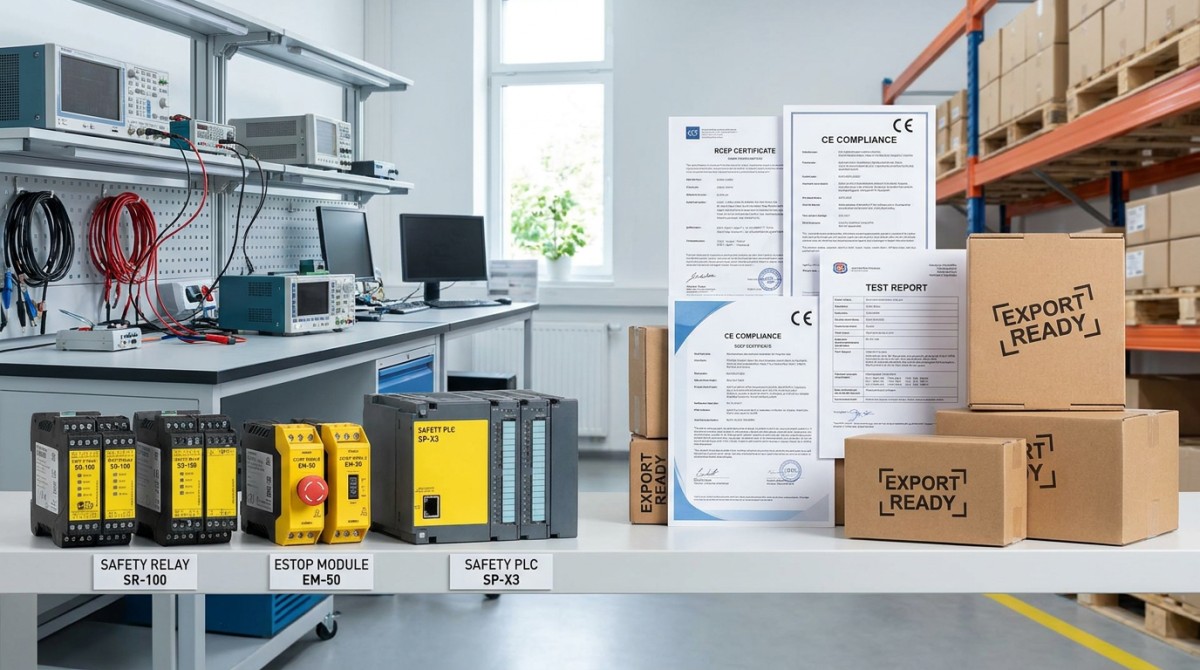
According to the information provided, certification reports issued by CNAS-accredited laboratories in China for IEC 61508 SIL2 and ISO 13849-1 PL e will be directly recognized by regulatory authorities in 10 RCEP member countries, including Japan, South Korea, Australia, Vietnam, and Malaysia.
The same information states that this recognition removes the need for repeated testing and local registration in those markets. The products specifically referenced include industrial safety relays, emergency stop modules, and safety PLCs. The stated result is a significant shortening of delivery cycles for Chinese OEM manufacturers shipping these products into RCEP markets.
Where the impact may be felt first
Export-oriented OEMs may see the clearest operational change
From an industry perspective, Chinese OEM manufacturers of industrial safety relays, emergency stop modules, and safety PLCs are the most directly affected group because the new arrangement concerns the acceptance of their certification results. The business impact is likely to appear in market-entry preparation, delivery scheduling, and product compliance documentation. What deserves closer attention is whether companies have already aligned their certification paths with CNAS-accredited laboratories and the specified standards covered by the recognition mechanism.
Testing, certification, and compliance teams move closer to the front line
For laboratories, certification teams, and regulatory affairs personnel, the change is not simply administrative. It raises the importance of report validity, scope control, and document readiness in export transactions. Analysis shows that once repeated testing and local registration are removed for eligible cases, the quality and completeness of the original certification package become more central to shipment planning and customer acceptance.
Distributors and procurement functions may adjust timing expectations
Channel partners, import-side buyers, and procurement teams in RCEP markets may also be affected because delivery timelines are tied to approval and registration procedures. Observably, if duplicated compliance steps are reduced, quotation cycles, stocking decisions, and project procurement windows could shift earlier. Their main concern will be whether products presented by suppliers clearly fall within the recognized certification scope.
Supply chain and delivery coordination gain new importance
Supply chain service providers and export operations teams may need to revisit the sequence between testing completion, customs preparation, and customer delivery commitments. The information provided points to shorter delivery cycles, which means the pressure may move from repeated testing to documentation handover, order coordination, and customer-side verification of accepted reports.
What companies should watch in actual execution
Check whether product categories and certification levels match the recognized scope
Companies should first focus on whether their products are covered in practice by the mutual recognition arrangement described in the announcement. The confirmed information refers to IEC 61508 SIL2 and ISO 13849-1 PL e reports issued by CNAS-accredited laboratories, so firms need to verify that their existing reports, product definitions, and export declarations are fully consistent with that scope.
Separate policy language from transaction-level implementation
What deserves closer attention is the difference between a rule taking effect and every transaction immediately becoming frictionless. Even where repeated testing and local registration are waived, exporters and buyers may still need clear communication on document formats, report applicability, and acceptance procedures in specific deals. Companies should therefore prepare customer-facing explanations and internal review steps rather than assume uniform execution across all orders from day one.
Reorganize compliance files around faster delivery promises
If delivery cycles are expected to shorten, the supporting documentation process must keep pace. Exporters should pay attention to report traceability, certificate management, technical file consistency, and the handoff between certification, sales, and logistics teams. In practice, the benefit of recognition may depend on whether documents can be presented quickly and accurately when customers or regulators request them.
Monitor follow-up wording and operational clarifications
Analysis shows that the most practical next step for affected companies is continued monitoring of official wording, implementation clarifications, and any market-specific instructions connected to the new guide. Even with the effective date confirmed, businesses still need to track how acceptance is handled in routine execution, especially for products entering multiple RCEP destinations at the same time.
Why this looks like more than a one-day policy update
This section is an observation rather than a statement of fact. It is more appropriate to understand this development as a concrete trade-facilitation signal within industrial safety equipment, not merely a procedural notice. The reason is that the change directly connects certification output in China with regulatory acceptance across multiple RCEP markets, and that link affects time-to-delivery, not just paperwork.
At the same time, it would be premature to treat this as a fully settled end state for all exporters and all product situations. Observably, the business value of mutual recognition depends on how consistently it is applied in transaction workflows, customer qualification checks, and cross-border compliance handoffs. For that reason, the industry still has reason to keep watching implementation details, not just the headline announcement.
How this news is best understood now
At this stage, the clearest industry meaning is that recognized testing and certification may now play a more direct role in shortening export delivery cycles for eligible Chinese industrial safety equipment entering RCEP markets. That is a material operational change for OEMs and their partners, especially where repeated testing and local registration were previously part of the process.
A neutral reading, however, is still necessary. It is more appropriate to understand this as an effective and actionable policy development with immediate relevance, while also recognizing that its full commercial effect will depend on how companies align certification scope, documentation readiness, and customer communication in actual export business.
Basis of this article and points for further verification
This article is based on the user-provided news title, event date, and event summary concerning the entry into force of the RCEP mutual recognition implementation guide for electromechanical and industrial safety equipment on June 5, 2026.
For developments of this kind, commonly relevant source types include official announcements, industry association releases, company disclosures, authoritative media coverage, and standards-related documents. No specific official source link was provided in the input, so the exact official publication path remains subject to further verification.
Areas that warrant continued follow-up include any additional official clarification on implementation, product-level applicability, and the practical handling of report acceptance in different RCEP member markets.
Related Intelligence