
Industrial Engineering Services: What to Review Before Hiring
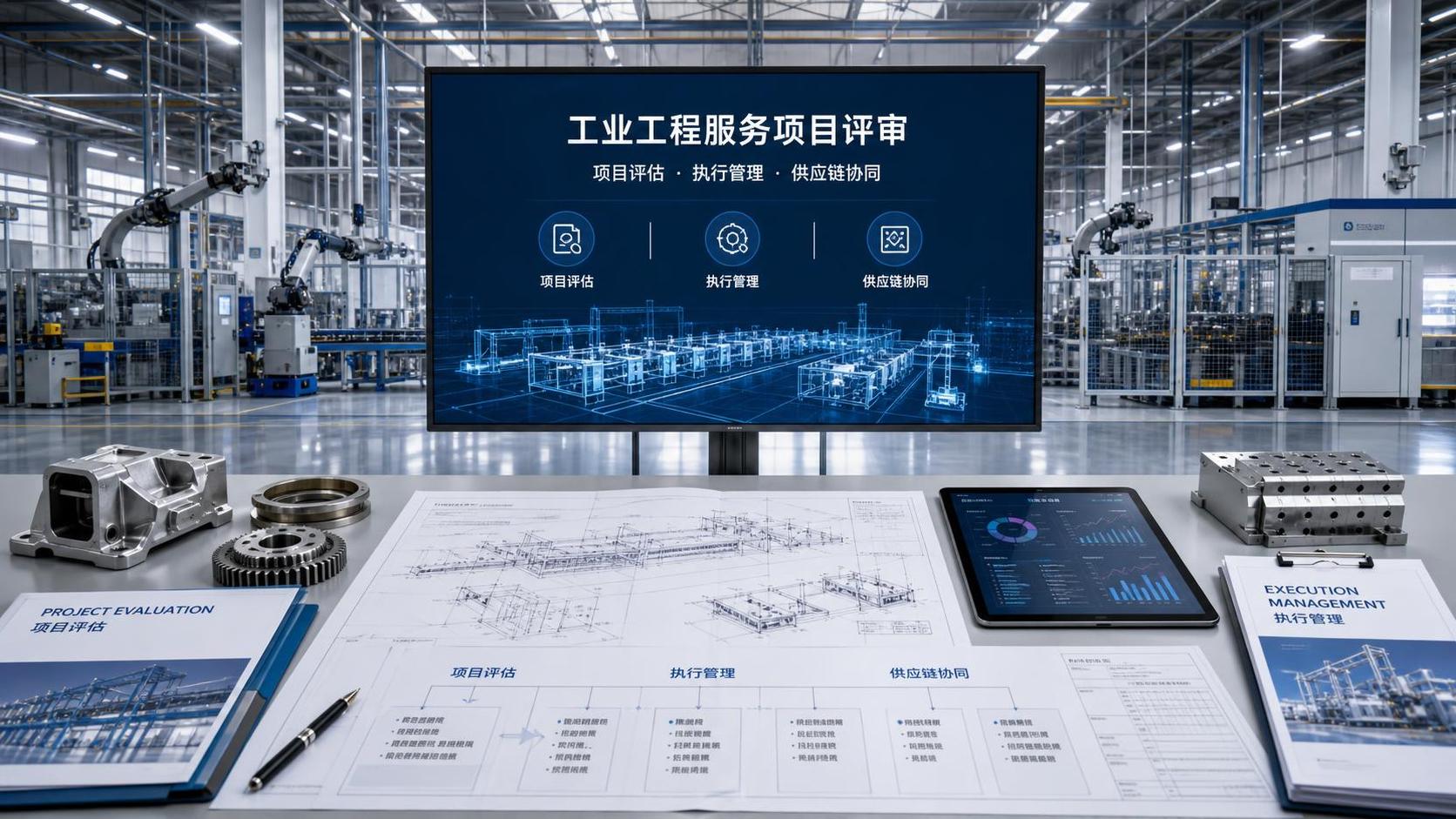
Industrial Engineering Services: What to Review Before Hiring
Choosing the right industrial engineering services partner can directly affect project timelines, cost control, operational efficiency, and long-term plant performance. For project managers and engineering leaders, the review process should go beyond technical claims to include execution capability, industry experience, compliance awareness, communication efficiency, and supply chain coordination. This guide outlines the key factors to assess before hiring, helping decision-makers reduce risk and select a partner that supports practical, scalable industrial outcomes.
If you are evaluating industrial engineering services, the biggest mistake is treating all providers as if they do the same kind of work. They do not. Some are strong in layout and process optimization but weak in field execution. Some can design a system but rely heavily on subcontractors for installation, commissioning, or controls integration. Others look convincing in proposals and slide decks, then struggle when they have to coordinate utilities, production constraints, safety requirements, and supplier lead times in a live factory environment.
That is where a practical review checklist matters. Not a generic vendor scorecard. A real one built around how industrial projects actually go off track.
Start with scope clarity, not credentials
Before comparing vendors, pin down what you are actually buying. “Industrial engineering services” can mean plant layout planning, automation integration, utility system design, production line balancing, energy optimization, maintenance planning, EHS support, or full EPC-adjacent coordination depending on the market. If your internal scope is fuzzy, every bidder will define it differently, and price comparisons become meaningless.
A useful early check is simple: ask each provider to restate your project scope in their own words and list what is excluded. Read that page carefully. The exclusions usually tell you more than the sales pitch. If commissioning support, operator training, control logic validation, spare parts planning, or documentation handover are missing, they will show up later as variation orders or internal headaches.
For project managers, this is also where decision quality improves fast. Once scope boundaries are visible, you can separate technical fit from commercial noise.
Check whether their experience matches your process reality
A firm may have broad manufacturing experience and still be the wrong choice for your plant. A metals processing line, food-grade packaging area, hazardous materials facility, and warehouse automation project all carry very different engineering risks. You are not just hiring technical capacity. You are hiring judgment under conditions similar to yours.
Ask for project references by application, not just by industry label. “Automotive,” “general manufacturing,” or “industrial plant” is too broad to be useful. What you want to know is whether they have handled comparable production constraints, uptime requirements, safety categories, utility loads, cleanliness standards, and retrofit complexity.
- Have they worked on brownfield upgrades, or mainly greenfield sites?
- Have they integrated with legacy equipment and existing PLC environments?
- Have they designed around production continuity, weekend shutdowns, or phased cutovers?
- Do they understand your material flow, scrap points, bottlenecks, and quality hold risks?
A provider that has lived through these conditions usually asks sharper questions early. That is often a better signal than a polished capability brochure.
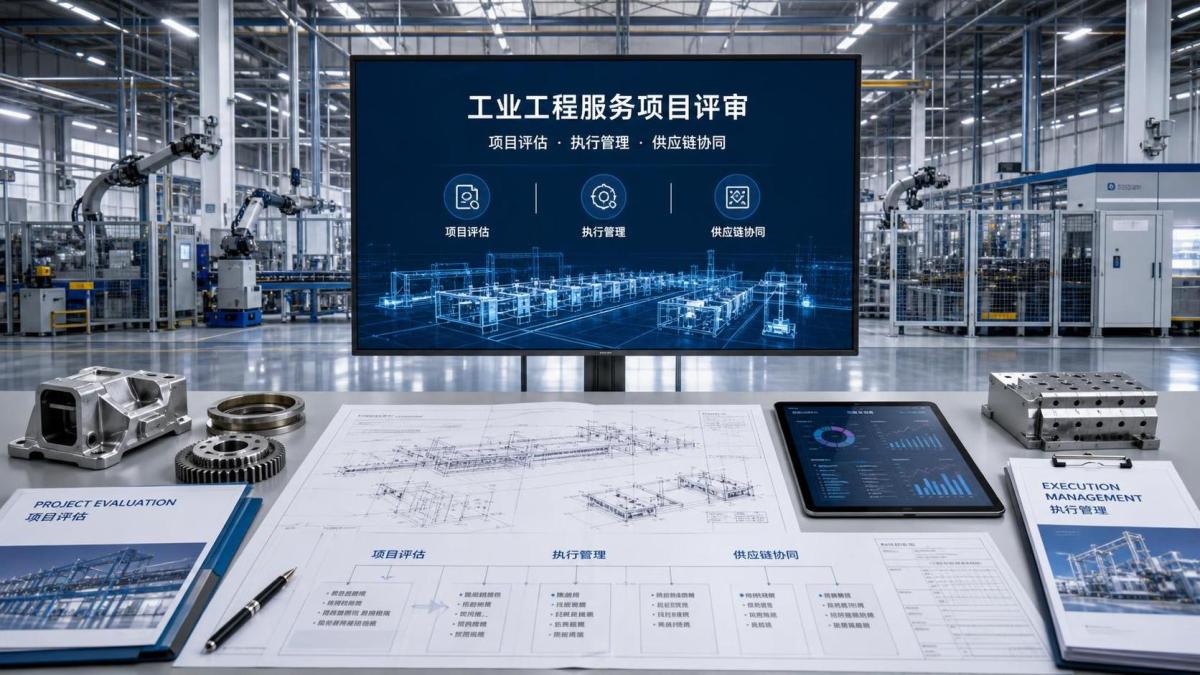
Look past design capability and test execution discipline
A surprising number of industrial engineering services providers are strong on concept design and weak on execution control. That gap becomes expensive during procurement, installation, and startup.
Ask how they manage the path from design package to operating line. You are looking for evidence of method, not buzzwords. Who reviews vendor drawings? Who tracks deviations between approved design and site conditions? Who owns interface points between civil, mechanical, electrical, instrumentation, and controls? How are punch lists closed? What is their standard process for FAT, SAT, commissioning, and performance verification?
If the answers stay vague, expect friction later. In industrial projects, handoff failures usually happen between disciplines, between vendors, or between engineering and operations. A capable firm already knows this and has a clear coordination routine.
Do not skip the compliance conversation
Compliance is where many buyer reviews stay too shallow. Providers will often mention safety and standards in general terms, but project teams need to ask which standards actually apply to the job and who is responsible for meeting them.
The right checklist here depends on region and application. For machinery, electrical systems, pressure systems, lifting equipment, hazardous areas, emissions, and worker safety, the relevant obligations can differ significantly by market. In the EU, CE-related responsibilities may matter for certain equipment and system integration contexts. In the US, OSHA, NFPA, UL, or local code requirements may come into the review depending on the project scope. For exports, import compliance and technical documentation requirements may also affect equipment acceptance. Exact applicability should be verified case by case, especially on mixed-origin equipment or retrofit projects.
A serious provider should be able to say, with reasonable precision, what they will design to, what they will document, what third-party review may be needed, and what remains the owner’s responsibility. If they avoid that conversation until contract award, treat that as a risk flag.
Review the team that will actually do the work
This sounds obvious, but it gets missed all the time. The team you meet during the bid process may not be the team that runs the project. Ask for a proposed project org chart with named roles where possible: project manager, lead process engineer, mechanical lead, E&I lead, controls specialist, site supervisor, and commissioning lead if applicable.
Then ask two practical questions. How much of the work is in-house, and what is subcontracted? Also, how stable is that team’s availability during your project window? A good proposal can still fail if the key engineer is split across too many active jobs or if critical field work depends on outside parties with loose coordination.
Project leaders usually care about one thing here: when there is a problem at site, who picks up the phone and owns the fix. Make that visible before you sign.
Pressure-test their planning assumptions
Timeline promises are easy to make when the assumptions are hidden. Ask the provider to show the basis of schedule: design freeze dates, approval cycles, procurement lead times, factory shutdown windows, utility tie-in timing, access restrictions, and dependency on customer decisions.
This is especially important in cross-border projects, where imported components, customs clearance, local installation permits, or travel restrictions can affect delivery. A provider working in global trade and supply chain-heavy environments should already factor in long-lead equipment, alternate sourcing paths, and logistics contingency. If they do not mention any of that, they may be pricing for the best-case scenario only.
One practical move: ask them to identify the three biggest schedule risks in writing. The quality of that answer tells you how real their project thinking is.
Compare proposals on lifecycle value, not headline price
Lowest bid logic causes more trouble in industrial engineering than most teams want to admit. A cheaper provider may leave out validation work, commissioning depth, training hours, spares strategy, or documentation quality. You save at award and pay during startup.
When reviewing industrial engineering services, ask what happens after practical completion. Some of the most expensive problems only appear under sustained production load, not during a short acceptance test.
See how they handle factory data and operating inputs
Any firm can say it supports smart manufacturing, digitalization, or process optimization. That language is common now. What matters is how they turn plant data into engineering decisions. Do they ask for actual throughput history, downtime causes, maintenance records, material specs, reject data, utility consumption, and shift patterns? Or do they jump straight to a preferred solution?
Experienced providers usually resist rushing into equipment selection before they understand the current state. That is a good sign. It means they know layout changes, automation upgrades, or line balancing efforts can fail if the baseline is weak or the production data is incomplete.
If your project involves factory digitalization, MES interfaces, traceability, or dashboarding, ask where their responsibility ends. Integration boundaries with ERP, SCADA, historians, and cybersecurity controls need to be clarified early, especially if third-party software vendors are involved.
Communication quality is not a soft factor
For engineering project leaders, communication failures are usually schedule failures in disguise. You want to know how decisions are documented, how RFIs are tracked, how design revisions are issued, and how site issues are escalated.
This matters even more when teams are spread across countries, time zones, and supplier networks. A provider may be technically sound but still hard to work with if updates are inconsistent or responsibility lines are blurred. During the selection phase, watch how they answer clarification questions. Are they precise? Do they flag uncertainties? Do they challenge assumptions when needed? Those habits usually carry into delivery.
Ask for risk ownership in plain language
One of the most useful review questions is also one of the simplest: what are the failure points in this project, and who owns each one? Not at a high level. In plain language.
You want clear ownership around existing condition verification, utility adequacy, foundation or structural constraints, third-party equipment interfaces, software compatibility, performance guarantees, operator training, spare parts availability, and shutdown coordination. If the provider cannot map these responsibilities cleanly, there is a good chance the project will drift into blame-sharing later.
That is usually where experienced buyers gain leverage: they push ambiguity out of the contract before it becomes a live issue on site.
A practical short list before award
- Confirm the exact scope, exclusions, deliverables, and acceptance criteria.
- Validate relevant experience against your process type, not just your industry label.
- Review who will execute the project and what work is subcontracted.
- Test schedule assumptions against procurement, installation, and startup realities.
- Clarify compliance responsibilities and documentation requirements for your market.
- Compare lifecycle cost exposure, not just bid price.
- Require clear communication routines and issue escalation paths.
- Get risk ownership written down before contract signature.
A good industrial engineering services partner does more than produce drawings or coordinate contractors. They reduce uncertainty. They spot weak assumptions early, understand how supply chain and site conditions affect engineering decisions, and stay useful when the project moves from planning into the messy parts of execution.
For teams making procurement decisions in manufacturing, industrial operations, metals processing, global sourcing, or supply chain-linked plant upgrades, that is usually the difference between a smooth handover and a long list of avoidable corrections. Use the review process to expose how a provider really works. That is where the hiring decision becomes much clearer.
- smart manufacturing
- factory digitalization
- global trade
- import compliance
- industrial engineering
- manufacturing
- production line
- metals
- customs clearance
- global sourcing
- supply chain
- logistics
- procurement
- warehouse automation
- industrial operations
- production line balancing
- industrial engineering services
Related Intelligence