
Procurement USA: Key Sourcing Differences Between Local and Overseas Suppliers
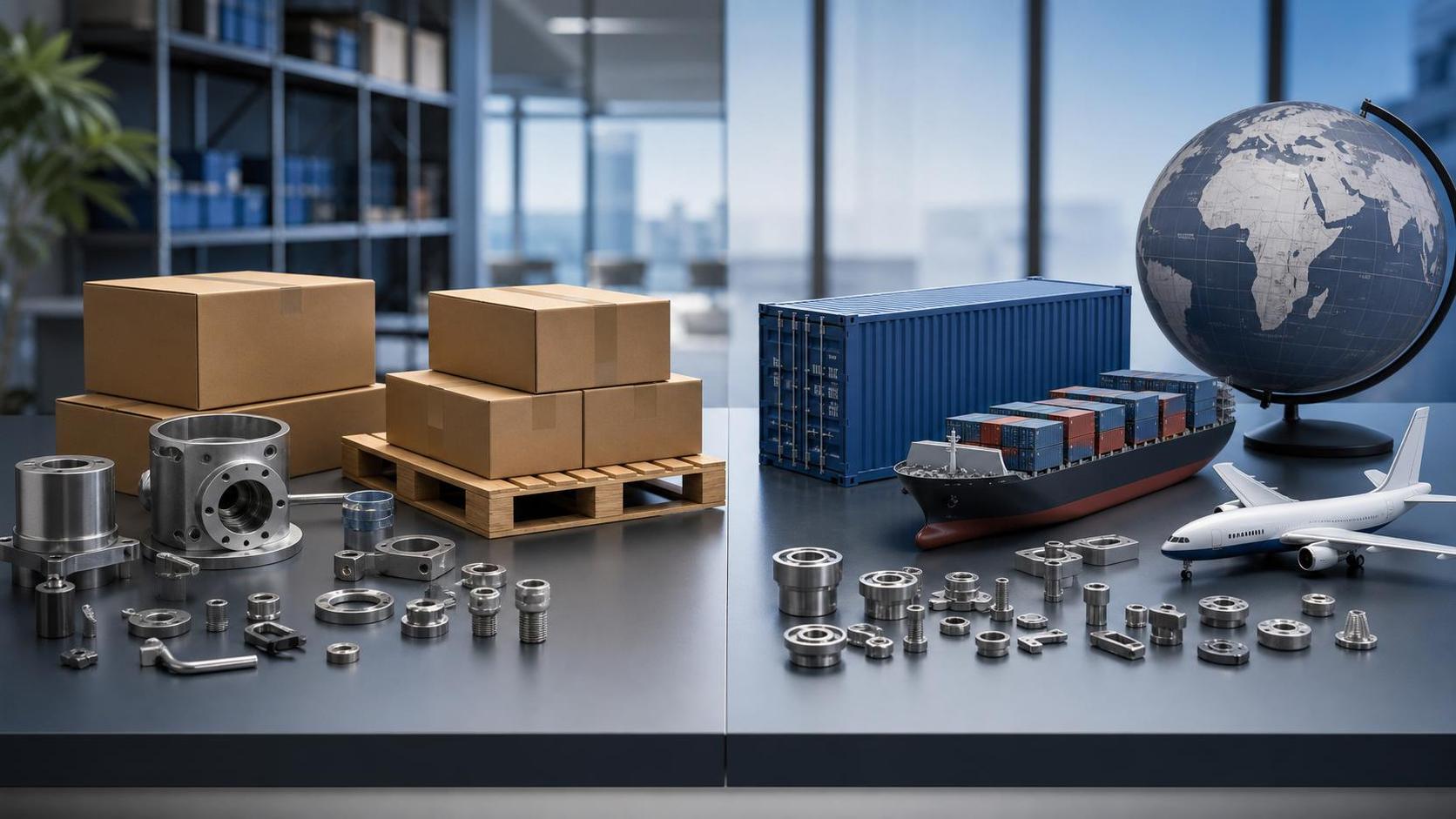
Why does procurement USA treat local and overseas sourcing so differently now?
In procurement USA, supplier selection now sits between cost control and operational resilience.
A low unit price can still become an expensive decision.
Long transit times, tariff shifts, customs delays, and inconsistent quality often change the real landed cost.
Local sourcing solves some of those problems, but it can raise pricing pressure and capacity limits.
That is why procurement USA decisions are no longer based on price sheets alone.
The better question is whether a supplier can support continuity, compliance, and usable lead time.
In practical terms, local suppliers usually offer faster response, easier plant visits, and simpler issue resolution.
Overseas suppliers often provide broader production options, stronger cost leverage, and access to specialized materials or processes.
For industrial buyers tracking metals, manufacturing, and trade policy, this comparison has become even more dynamic.
Platforms such as Baozhen Industrial Intelligence Portal reflect this shift by connecting sourcing choices with manufacturing capability, logistics risk, and market signals.
When does a local supplier make more sense in procurement USA?
Local sourcing is usually the safer option when time, coordination, and change control matter more than headline price.
This is common in custom parts, engineering revisions, urgent replenishment, and products with strict inspection requirements.
If drawings change frequently, a nearby supplier reduces communication lag and revision risk.
If incoming quality problems must be addressed within days, local access becomes a real advantage.
More importantly, procurement USA teams often use local suppliers to protect production schedules.
Shorter freight routes mean fewer transfer points and fewer chances for disruption.
This matters in industrial components, fabricated metals, maintenance supplies, and replacement parts.
- Rush orders require delivery in days, not weeks.
- Product validation needs frequent sample adjustments.
- Compliance documents must align with domestic standards quickly.
- Warranty claims need on-site support or rapid corrective action.
The trade-off is clear.
Local suppliers may offer less pricing flexibility, and some categories have narrower manufacturing depth.
That is especially true in high-volume commodity items and labor-intensive production.
Why do overseas suppliers still play a major role?
Overseas sourcing remains essential because global supply markets still hold major advantages in scale, specialization, and cost structure.
In procurement USA, many categories simply cannot be evaluated fairly without considering offshore options.
This includes metal fabrication, private label production, castings, assemblies, OEM parts, and selected packaging materials.
The value is not only lower ex-factory pricing.
It can also include process maturity, deeper supplier ecosystems, and easier access to subcomponents.
A strong overseas supplier may deliver consistent quality for years if qualification is done carefully.
Still, overseas purchasing asks for stronger planning discipline.
Buyers need to confirm Incoterms, tooling ownership, packaging standards, inspection checkpoints, and customs documentation before issuing volume orders.
The more common mistake is assuming savings at quotation stage will survive the full chain.
In reality, freight volatility, duties, port congestion, and exchange rate movement can erode savings fast.
A quick comparison used in real sourcing reviews
A side-by-side view usually reveals where each model works best.
How should procurement USA compare total cost instead of quoted price?
The most reliable method is to build a total cost view before comparing suppliers.
Quoted price is only one line.
Actual procurement USA performance depends on what happens after the order is placed.
A local supplier with a higher piece price may still win if it reduces safety stock, scrap, and downtime.
An overseas supplier may still be the better choice if demand is stable and freight can be planned in batches.
A useful cost review should include more than finance data.
- Landed cost after duty, brokerage, inland freight, and insurance.
- Inventory carrying cost caused by longer replenishment cycles.
- Quality loss from defects, rework, sorting, and delayed claims.
- Administrative cost for documentation, audits, and supplier coordination.
- Business risk linked to single-source exposure or geopolitical disruption.
This is where industrial intelligence becomes useful.
Market updates on metals, trade policy, logistics, and manufacturing conditions help explain why costs move.
Baozhen Industrial Intelligence Portal is relevant here because sourcing decisions rarely stand alone.
They are connected to raw material pricing, export compliance, factory capability, and supply chain visibility.
What risks are often missed when choosing between local and overseas suppliers?
The biggest mistake in procurement USA is treating local as safe and overseas as risky by default.
Both options carry risk, but the risk types are different.
Local suppliers can create hidden dependence if there are few qualified alternatives nearby.
Overseas suppliers can look efficient until policy changes or shipping disruptions hit without warning.
Need to watch quality drift as well.
Early samples may pass, yet mass production can change once sub-suppliers, raw materials, or tooling maintenance shifts.
That is why supplier audits should examine process control, not just final inspection results.
Another overlooked issue is communication structure.
If technical clarification depends on too many handoffs, simple changes can take days and create error risk.
A practical review checklist helps prevent weak assumptions.
So how should a final sourcing decision be made?
The strongest procurement USA decisions usually avoid extreme positions.
Not every item belongs in a local program.
Not every cost-sensitive item should move offshore either.
A category-based approach works better.
Critical parts, high-change items, and emergency demand often fit local sourcing.
Stable volume items, mature specifications, and process-intensive components may fit overseas sourcing better.
In many cases, the practical answer is a hybrid model.
Use one source for resilience and another for cost leverage or surge capacity.
Before awarding business, confirm five things clearly.
- Demand stability over the next two or three buying cycles.
- Tolerance for long lead times and shipment variability.
- Quality control method during pilot and mass production.
- Exposure to tariff, policy, and raw material fluctuation.
- Backup plan if the first supplier misses delivery or quality targets.
The useful next step is to map each purchased item by risk, cost, and supply sensitivity.
Then compare local and overseas suppliers against the same decision standard.
That approach keeps procurement USA grounded in evidence, not assumptions.
When market data, factory capability, trade policy, and logistics signals are reviewed together, sourcing becomes more stable and easier to defend.
Related Intelligence