
Supplier Qualification Requirements: What Documents and Audits Matter Most?
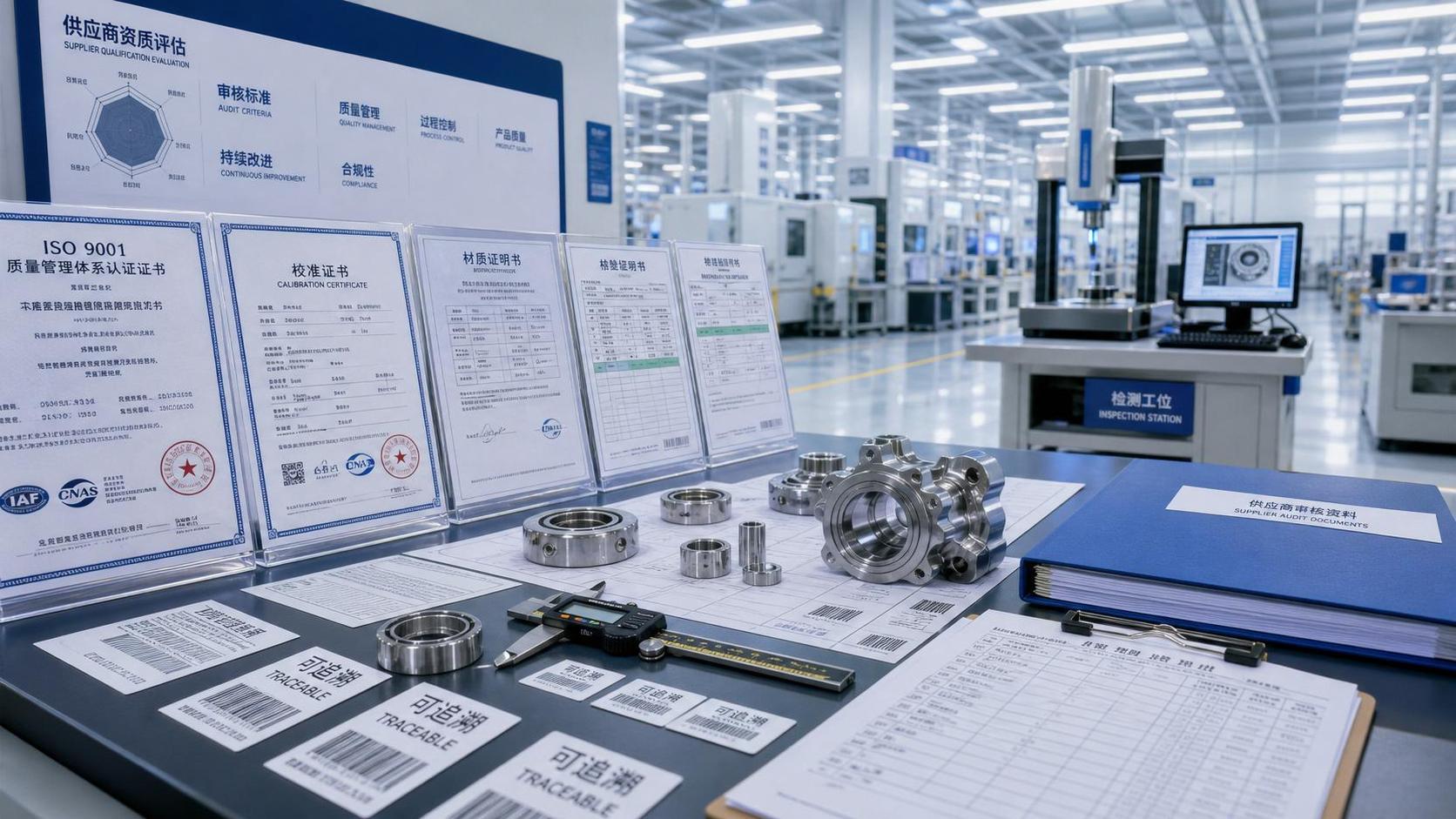
Why do supplier qualification requirements carry so much weight?
Supplier qualification requirements are not just paperwork gates. They are early warning tools for quality failure, compliance gaps, and hidden operating risk.
In industrial sourcing, a missing certificate may be fixable. A weak process, poor traceability, or unsafe production environment is usually more serious.
That is why document review and audit review should work together. One shows declared capability. The other shows whether the capability actually exists.
This matters across manufacturing, metals, automation equipment, industrial materials, and cross-border trade. Requirements often differ by product risk, market, and regulatory destination.
A practical qualification process helps reduce shipment disputes, incoming defects, rework, recall exposure, and customs or certification delays.
In practice, the best supplier qualification requirements are risk-based. They do not ask every supplier for the same depth of evidence.
Baozhen Industrial Intelligence Portal often follows this same logic in its sourcing and compliance coverage: connect market context with operational verification, not just surface claims.
Which documents matter most before any audit starts?
A useful starting question is simple: can the supplier legally operate, technically produce, and consistently control what it promises to supply?
The first layer is legal identity. This usually includes business registration, tax registration where relevant, export license status, and authorized company details.
The second layer is management system evidence. Common examples include ISO 9001, ISO 14001, and ISO 45001, depending on product and operational risk.
The third layer is product and process control documentation. This is often where supplier qualification requirements become more meaningful.
- Quality manual or process map
- Inspection standards and test records
- Calibration certificates for critical equipment
- Material traceability records
- Nonconformance and corrective action logs
- Key operator qualification or training records
For metal products or regulated industrial goods, supporting files may also include mill test certificates, RoHS or REACH statements, safety data sheets, and country-specific declarations.
A common mistake is treating certificates as final proof. Certificates help, but expired scopes, outsourced steps, and inconsistent site practices can still create major gaps.
A quick document check table
Before investing time in a factory visit, a short screening table can reveal whether the supplier qualification requirements are being met at a basic level.
When is a document review enough, and when is an on-site audit necessary?
Not every supplier needs the same audit depth. The better question is how much risk sits behind the product, process, and delivery chain.
Document review may be enough for low-risk, standardized items with stable quality history and limited regulatory exposure.
An on-site audit becomes much more important when the item is safety-critical, custom-built, heavily regulated, or dependent on special process control.
Welding, heat treatment, coating, precision machining, electronics assembly, and pressure-related components often need direct verification.
The same is true when lead times are long, subcontracting is common, or raw material volatility can affect consistency.
In global trade, audits also help confirm export readiness. A supplier may look qualified on paper but still lack packaging control, labeling discipline, or customs documentation accuracy.
More mature teams classify suppliers by risk tier. High-tier suppliers receive full audits. Medium-tier suppliers get remote review plus selected verification. Low-tier suppliers stay under lighter control.
What should a factory audit actually check?
A good audit goes beyond tidy meeting rooms and prepared files. It checks whether the site can repeatedly make conforming product under normal operating conditions.
Start with process ownership. Who controls incoming materials, work instructions, in-process checks, final release, and nonconforming stock?
Then look at production flow. Bottlenecks, uncontrolled work-in-progress, and unclear segregation areas often predict future quality escapes.
Safety and environmental control also matter. Weak chemical storage, poor machine guarding, or uncontrolled emissions can turn into supply interruption risk.
For many supplier qualification requirements, the most revealing checks are operational, not administrative.
- Can batches be traced from raw material to shipment?
- Are special processes validated and monitored?
- Do operators follow current instructions at the workstation?
- Is measuring equipment controlled and correctly used?
- Are corrective actions closed with evidence, not promises?
Needle-moving audits also test escalation ability. When a defect appears, how fast can the site isolate stock, identify root cause, and stop recurrence?
This is especially relevant in sectors covered by Baozhen Industrial Intelligence Portal, where smart manufacturing, supply chain visibility, and compliance discipline increasingly overlap.
Which red flags usually mean the supplier qualification requirements are not truly met?
Some warning signs appear early. Others only show up when answers become inconsistent across sales, production, and quality staff.
One red flag is document mismatch. The legal entity on licenses, certificates, bank records, and factory signage should align.
Another is certification without process depth. A supplier may show ISO certification but fail to explain control plans, sampling rules, or defect containment.
Unclear subcontracting is another common problem. If critical production steps are outsourced, supplier qualification requirements should extend to those sites as well.
Pay attention to traceability gaps, handwritten backfilled records, expired calibration labels, and unusually clean samples that do not match live production.
For export-facing supply chains, weak control of labeling, packaging specifications, origin declarations, or restricted substance files also deserves attention.
A supplier is not automatically disqualified by every finding. What matters is whether the issue is isolated, systemic, or hidden.
A practical red-flag comparison
How often should qualification be renewed, and what changes require a fresh review?
Supplier qualification requirements should not end after approval. Ongoing surveillance matters because factories, markets, and regulations change.
Annual document refresh is common for licenses, certifications, insurance, and compliance declarations. High-risk suppliers often need more frequent monitoring.
A fresh review is usually justified after a major process relocation, ownership change, new production line, serious quality escape, or safety incident.
The same applies when product scope expands into different materials, tighter tolerances, or new export markets with stricter rules.
In metal and industrial supply chains, raw material substitution is another trigger. A process that worked for one grade may not behave the same for another.
Digital tools can help here. Supplier scorecards, audit histories, and nonconformance trends make qualification maintenance more objective.
That approach fits the broader direction of industrial decision support platforms, where practical data interpretation is more useful than static checklists alone.
What is the most practical way to build a stronger qualification process?
The strongest supplier qualification requirements are clear, tiered, and tied to actual risk. They are not the longest forms in the system.
Start by separating suppliers into categories such as indirect goods, standard industrial items, custom engineered parts, and safety-critical components.
Then define minimum document sets, audit triggers, and renewal cycles for each category. This makes review faster and more defensible.
It also helps to align quality, safety, compliance, and logistics checks in one framework. Many supplier failures start outside the quality department.
If the current process feels inconsistent, begin with a gap review. Check where approvals rely on certificates only, where audit criteria are vague, and where follow-up lacks deadlines.
A more reliable system usually comes from a few disciplined steps: standardize evidence, audit what matters, and refresh approval when conditions change.
For teams tracking industrial operations, manufacturing capability, metals compliance, and cross-border supply risks, that discipline creates better sourcing decisions with fewer surprises.
The next move is practical: map your current supplier base by risk, define must-have records, and decide which audit findings actually block approval.
Once those rules are visible, supplier qualification requirements become a working control system instead of a document archive.
- smart manufacturing
- automation equipment
- global trade
- industrial intelligence
- cross-border trade
- supply chain visibility
- manufacturing
- production line
- metals
- metal products
- supply chain
- logistics
- heat treatment
- industrial operations
- industrial materials
- industrial sourcing
- process control
- supplier qualification
- factory audit
- inspection standards
- supplier qualification requirements
- raw material volatility
Related Intelligence