
Hex Dumbbells Bulk Buying: Cost, MOQ, and Quality Risks
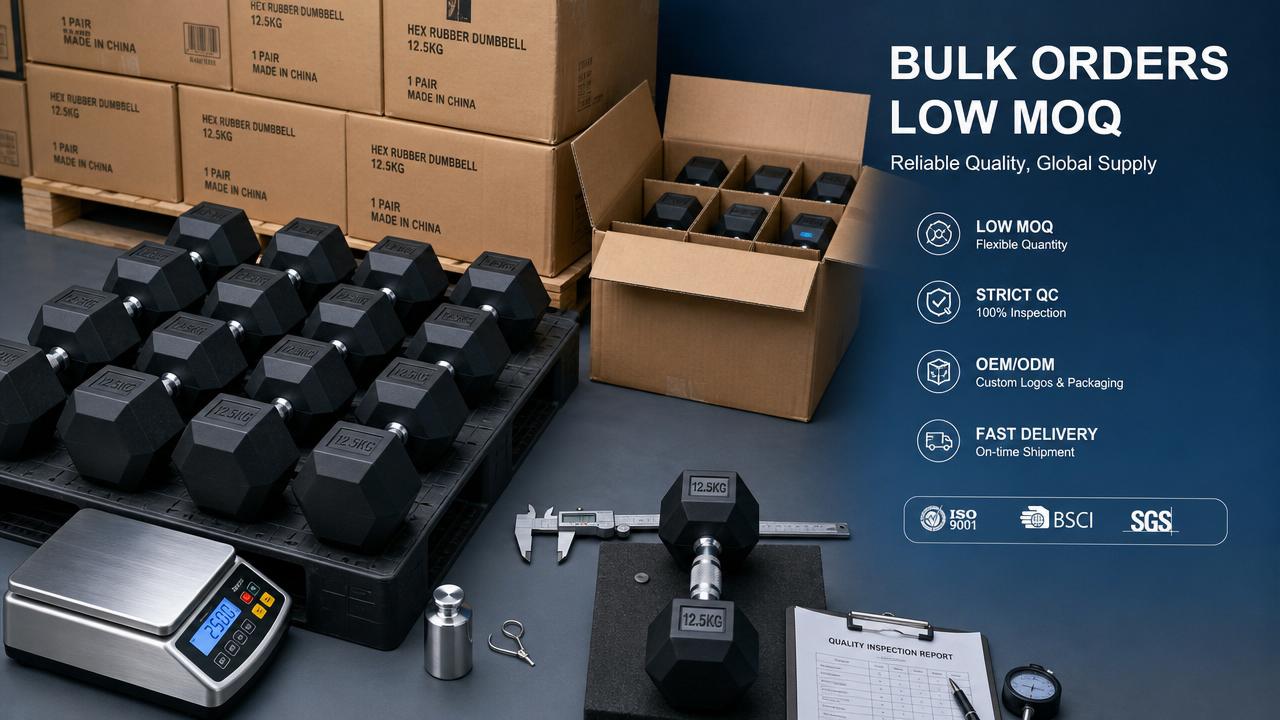
Hex dumbbells bulk: why the cheapest quote is rarely the safest choice
Hex dumbbells bulk buying looks simple at first glance. A weight is a weight, and price per kilogram seems easy to compare.
In practice, the real decision is broader. MOQ, rubber formula, handle finish, carton strength, and export readiness all shape the final landed cost.
That is why industrial sourcing platforms often frame fitness equipment as a supply chain issue, not only a product issue.
A useful reading method is to treat hex dumbbells bulk offers like any other industrial purchase. Check material stability, production discipline, logistics risk, and compliance documents together.
The questions below follow that logic. They move from price structure to MOQ, then to factory quality risks and final order control.
What actually drives cost in hex dumbbells bulk orders?
Unit price usually starts with raw materials. Cast iron quality, steel handle specification, and rubber coverage all matter.
Yet the quote changes even more when packaging and shipping are added. Heavy products punish weak packaging and inefficient container loading.
A low ex-works price can become expensive after damage claims, repacking, or delayed delivery.
More common cost drivers include the following:
- Weight range mix, because 2.5 kg to 25 kg sets use different production balances.
- Rubber type, including virgin rubber, recycled blends, and odor-controlled formulas.
- Handle processing, such as straight knurling, chrome finish, and corrosion resistance.
- Packaging method, from standard export cartons to pallets and corner protection.
- Inspection requirements, especially third-party checks and weight tolerance testing.
When comparing hex dumbbells bulk quotes, ask for cost breakdown by material, packaging, and trade term. This reveals where a supplier is cutting corners.
A quick cost-check table before shortlisting
A short comparison table often exposes more than a long sales sheet. The points below are especially useful during early supplier screening.
How should MOQ be judged beyond the number on the quote?
MOQ is often presented as a simple threshold. In reality, it can hide production planning limits and packaging inefficiencies.
For hex dumbbells bulk orders, one factory may quote MOQ by total tons. Another may require MOQ per weight size or per logo design.
That difference matters when the order mix is uneven. A balanced gym set and a retail starter range do not consume factory capacity the same way.
A workable MOQ review usually asks three questions:
- Is MOQ based on total order weight, each SKU, or each packaging format?
- Does customization change MOQ, including color rings, logo marks, or carton print?
- Can the supplier combine different dumbbell sizes in one production batch?
Smaller MOQ is not always better. Sometimes it signals low utilization, unstable scheduling, or extra setup cost hidden elsewhere.
A more reliable approach is to compare MOQ against loading efficiency. If the supplier’s MOQ produces a poor container fill rate, freight cost per unit rises quickly.
Where do quality risks usually appear in hex dumbbells bulk production?
Most quality disputes do not begin with obvious breakage. They begin with inconsistency.
One batch may have clean handle knurling, while the next feels slippery. The shape may stay hexagonal, but corner rubber thickness varies.
For indoor commercial use, rubber odor is another common complaint. Recycled content can lower cost, but poor formulation creates a strong smell that lingers.
The main risk points in hex dumbbells bulk projects are usually these:
- Weight deviation beyond the accepted tolerance range.
- Loose bonding between cast core and rubber coating.
- Handle rust after sea transit or warehouse exposure.
- Sharp flashing lines or uneven end faces.
- Carton collapse caused by under-specified board strength.
These are manufacturing control issues, not only cosmetic defects. They reveal whether the supplier manages process discipline from casting to packing.
This is where broader industrial analysis becomes useful. Strong sourcing decisions usually connect metal quality, factory execution, and shipping risk into one checklist.
What should be tested before mass production?
Pre-production sampling should go beyond appearance. A sample that looks good on video may still fail after storage or transport.
- Verify actual weight on calibrated scales.
- Check handle grip consistency across several pieces.
- Open packaging after several days to assess odor level.
- Inspect chrome or coating for salt-air vulnerability.
- Review carton drop resistance for export handling.
Can two similar suppliers still create very different landed costs?
Yes, and this is one of the most overlooked parts of hex dumbbells bulk sourcing.
Two suppliers may quote nearly the same FOB price. One packs efficiently, loads tightly, and documents shipments cleanly. The other does none of that.
The final difference appears later through port delays, damaged cartons, relabeling work, or customs questions on materials and markings.
In cross-border trade, heavy sporting goods behave like industrial cargo. Freight planning and compliance accuracy deserve the same attention as surface finish.
A practical comparison should include:
- Container loading ratio by mixed weight range.
- Pallet or non-pallet packing choice for destination handling.
- Barcode, label, and carton mark accuracy.
- Lead time stability during peak shipping periods.
- Response speed when inspection issues appear.
This broader view matches how industrial information portals interpret sourcing decisions. Price, manufacturing, metals input, and supply chain execution are linked, not separate topics.
How do you reduce risk before confirming a large hex dumbbells bulk order?
The safest move is not endless negotiation. It is a tighter approval process.
When a supplier knows the order will be checked against clear standards, quality drift becomes less likely.
A short execution checklist usually works better than a long generic contract.
If the order is large, a pre-shipment inspection is usually cheaper than handling claims after arrival.
It also helps to keep one benchmark sample sealed. That piece becomes the reference if a later batch differs.
So what is the best way to compare hex dumbbells bulk offers today?
Start with the obvious numbers, but do not stop there. A valid comparison should combine quote level, MOQ structure, quality controls, and shipment readiness.
The strongest decision usually comes from a simple rule: compare total risk-adjusted cost, not only the listed unit price.
For hex dumbbells bulk sourcing, that means checking whether the supplier can deliver consistent weight, acceptable odor, durable packing, and reliable documentation at scale.
It is also worth following broader market signals. Metal input shifts, factory load changes, and freight volatility can all influence timing and negotiating room.
If the next step is supplier evaluation, prepare one scorecard covering cost terms, MOQ rules, sample results, packaging strength, and lead time reliability.
That approach keeps the buying process practical, traceable, and much less vulnerable to avoidable surprises.
Related Intelligence