
Where Logistics Robotics Delivers ROI Faster Than Expected
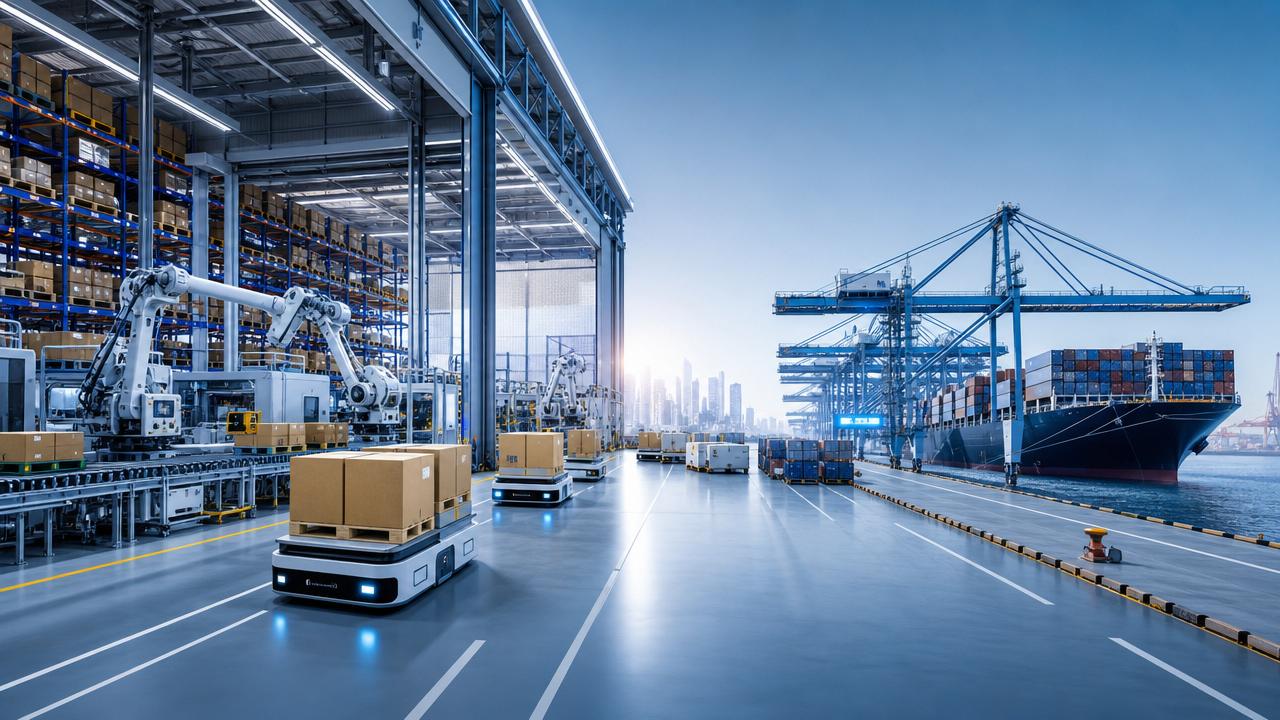
For project leaders under pressure to justify automation budgets, Logistics Robotics is no longer a long-horizon bet. In ports, warehouses, and intermodal hubs, the right robotic systems can shorten payback timelines through labor efficiency, uptime gains, safer operations, and better data visibility. This article explores where ROI appears faster than expected and what engineering, integration, and deployment factors make the difference.
Why Logistics Robotics ROI changes by operating scenario
Logistics Robotics does not produce the same return in every facility. ROI depends on flow stability, labor intensity, safety exposure, and the cost of service disruption.
A robotic palletizer in a stable warehouse can pay back faster than an autonomous yard system in a mixed-traffic terminal. The reason is not technology quality alone.
The fastest wins usually appear where repetitive motion, congestion, manual scanning, and ergonomic strain already create measurable cost. That is where Logistics Robotics converts pain into savings quickly.
In integrated trade infrastructure, ROI should be measured beyond labor replacement. It also comes from reduced claims, better slot utilization, shorter dwell time, and cleaner operational data.
Scenario 1: Warehouses with repeatable flows often see the fastest Logistics Robotics payoff
High-volume fulfillment centers are usually the most favorable starting point. Order profiles are structured, routes are predictable, and process events are easier to digitize.
Autonomous mobile robots, robotic picking cells, and automated sortation can reduce walking time, improve pick consistency, and support longer operating windows without proportional labor growth.
Core signals that ROI may arrive earlier than expected
- More than one shift depends on temporary labor.
- Travel time exceeds value-added handling time.
- Returns processing creates daily bottlenecks.
- Inventory accuracy suffers from manual confirmations.
- Throughput peaks are frequent but short.
In these conditions, Logistics Robotics improves both speed and data granularity. Better event capture supports slotting decisions, replenishment timing, and labor balancing.
Scenario 2: Ports and terminals gain ROI when robotics reduces friction, not only headcount
In port environments, full autonomy can require heavy capital and long validation cycles. However, selective Logistics Robotics can still unlock faster returns.
Examples include automated inspection robots, autonomous straddle support functions, robotic lashing assistance, and machine vision for container identification and damage detection.
Here, ROI often comes from reduced vessel turnaround delays, fewer rehandles, lower incident exposure, and stronger data integrity between equipment, TOS, and gate systems.
What makes port robotics economically attractive
The value is highest where manual checks interrupt flow. Every pause at quay, yard, or gate multiplies downstream cost across trucks, cranes, and berths.
Logistics Robotics works best when integrated into decision loops already supported by TOS, digital twins, and equipment telemetry. Isolated robots rarely capture full terminal value.
Scenario 3: Cold-chain operations justify Logistics Robotics through quality protection
Cold-chain facilities face a different economics model. Labor savings matter, but product integrity and temperature exposure often matter more.
Robotic case handling, automated storage and retrieval, and autonomous movement in low-temperature zones reduce door-open time and limit handling errors.
That means Logistics Robotics can prevent spoilage, lower compliance risk, and improve traceability. In pharmaceutical and perishable sectors, those gains can outweigh wage-related savings.
Fast-payback indicators in temperature-controlled sites
- Frequent door cycling increases energy loss.
- SKU handling errors trigger write-offs.
- Labor turnover is high in freezer environments.
- Audit trails are difficult to reconstruct manually.
Scenario 4: Intermodal yards benefit when Logistics Robotics targets handoff delays
Intermodal operations suffer when cargo changes mode without synchronized data. Yard congestion, trailer hunting, and manual exceptions create expensive idle time.
Logistics Robotics can help through autonomous yard trucks, robotic gate capture, and unmanned inventory verification across containers, chassis, and trailers.
The return appears faster when the site already has strong operational discipline. Robotics amplifies process quality; it does not automatically repair broken yard logic.
How scenario needs differ across Logistics Robotics deployments
How to choose the right Logistics Robotics use case first
A fast start usually comes from narrow, measurable use cases. The best candidate is not always the most advanced robot.
Prioritize a process with high repetition, clear exception rules, stable volumes, and a direct link to service-level performance. That combination improves deployment confidence.
Practical selection checklist
- Map the exact labor, delay, and quality losses.
- Confirm data availability from current systems.
- Test exception frequency before automation.
- Evaluate uptime support and spare parts access.
- Model ROI using both direct and indirect gains.
For G-WLP-aligned infrastructure strategies, standards matter as much as machinery. ISO, IMO, and safety compliance shape deployment design and long-term economics.
Common misjudgments that delay Logistics Robotics returns
One common error is assuming all savings come from labor removal. In reality, the strongest cases often come from avoided disruption and improved process control.
Another mistake is automating before process normalization. If location rules, task priorities, or asset identities are unreliable, Logistics Robotics inherits operational confusion.
A third issue is weak integration planning. Robots need accurate task dispatch, status feedback, and exception handling across WMS, YMS, TOS, ERP, and maintenance platforms.
There is also a tendency to overlook cyber and governance requirements. As Logistics Robotics becomes part of critical infrastructure, data trust becomes part of ROI.
What to do next when Logistics Robotics looks promising
Start with a scenario-based diagnostic, not a generic technology shortlist. Compare warehouse, port, cold-chain, or intermodal pain points using the same financial logic.
Build a pilot around one constrained workflow, one integration boundary, and one success dashboard. Measure throughput, error rates, downtime, safety events, and data completeness.
If the pilot confirms repeatability, scale in adjacent processes with shared data architecture. That is where Logistics Robotics shifts from isolated automation to strategic infrastructure value.
In global trade systems facing labor pressure, decarbonization mandates, and tighter service expectations, Logistics Robotics is most valuable where it removes friction first. The fastest ROI rarely comes from the biggest robot. It comes from the best scenario fit.
Related Intelligence