
Reefer Technology Choices That Affect Temperature Stability
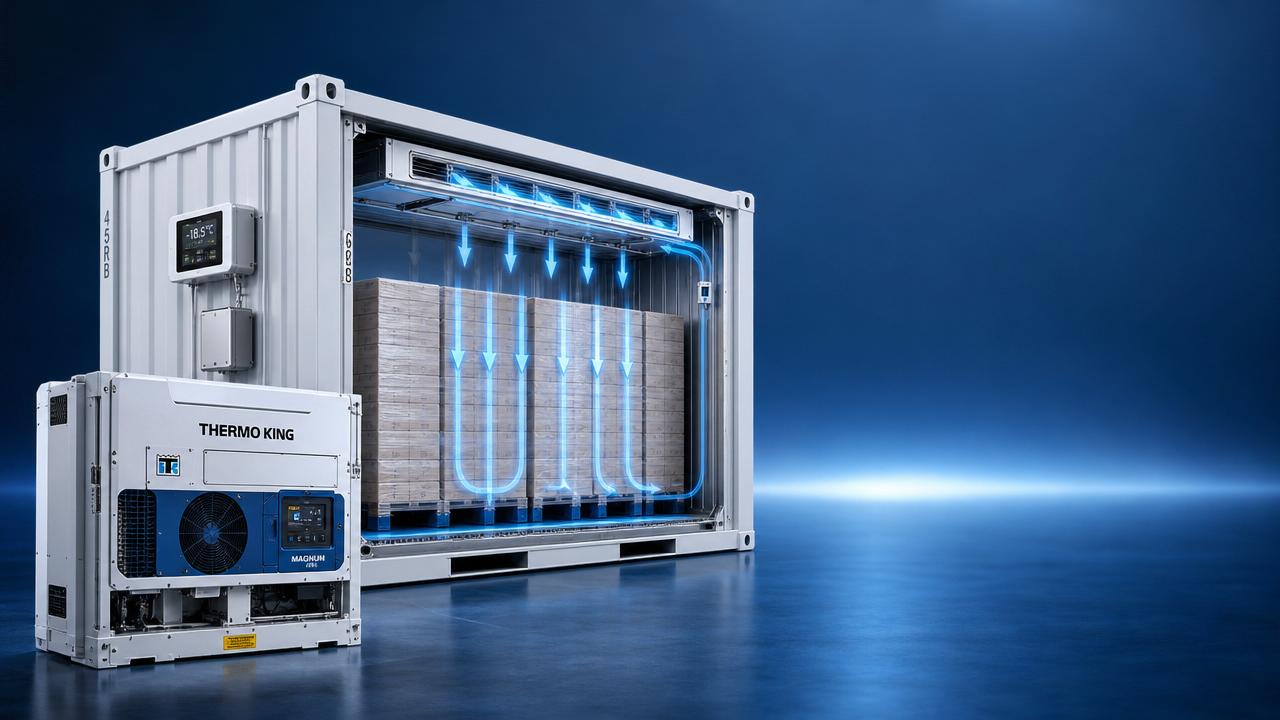
For technical evaluators in cold-chain logistics, Reefer Technology is no longer just about refrigeration capacity—it is a decisive factor in temperature stability, cargo integrity, and compliance risk. From airflow design and sensor accuracy to control algorithms and power resilience, each technology choice can directly affect performance across ports, intermodal transfers, and long-haul transport. Understanding these variables is essential for making reliable, future-ready infrastructure decisions.
The core question behind most searches for Reefer Technology is practical: which technical choices actually improve temperature stability, and which only look good on a specification sheet. For evaluators, the answer is clear. Stability depends less on peak cooling power alone and more on how the reefer system senses, controls, distributes, protects, and records temperature under real operating stress.
That distinction matters because temperature excursions often happen during loading delays, door openings, power transitions, poor stacking, or sensor drift—not during steady laboratory conditions. A reefer unit may meet nominal cooling requirements yet still perform inconsistently in live logistics networks. The best evaluation framework therefore looks at system behavior across variable environments, not isolated component ratings.
This article focuses on the technology choices that most directly affect temperature stability in refrigerated containers, trailers, and cold-chain assets. Rather than repeating generic refrigeration theory, it highlights the design features, risk points, and decision criteria that help technical teams compare equipment with confidence.
Why temperature stability is the real performance metric in Reefer Technology
In cold-chain operations, the target is not simply to reach a setpoint. The real target is to maintain product-safe conditions continuously across the shipment lifecycle. Temperature stability means minimizing fluctuation amplitude, recovery time, hot spots, sensor error, and control lag while preserving uniform conditions throughout the cargo space.
For technical evaluators, this is more important than raw cooling capacity because many cargoes are sensitive to short deviations rather than average temperature. Pharmaceuticals, fresh produce, seafood, dairy, and specialty chemicals can all suffer quality loss or compliance failure from brief instability that never appears in a broad average reading.
Stable reefer performance also supports broader business outcomes. It reduces claims, shrinkage, spoilage investigations, and regulatory disputes. It improves predictability at ports and terminals where dwell times vary. It also strengthens data defensibility when customers, insurers, or auditors require evidence that a shipment stayed within defined tolerances.
When comparing Reefer Technology options, evaluators should therefore ask a simple question first: under real loading patterns and real transport interruptions, how consistently does this system keep the cargo environment within specification?
Airflow engineering often matters more than nominal refrigeration power
One of the most underestimated factors in temperature stability is airflow design. A reefer unit can have strong refrigeration capacity yet still produce uneven cargo temperatures if air circulation is poorly engineered. In many cases, instability is caused by distribution failure rather than insufficient cooling generation.
Technical assessment should look at supply air path, return air path, fan performance, floor duct configuration, and the ability to maintain uniform circulation when the container or trailer is partially loaded, densely packed, or exposed to external heat loads. Poor airflow creates hot zones, cold spots, and slower recovery after door openings.
High-quality Reefer Technology typically includes fan systems optimized for static pressure, not just airflow volume. This matters because cargo resistance changes with packaging density, pallet placement, liner use, and stacking patterns. A system that holds performance under higher pressure conditions is usually more stable in real-world service.
Evaluators should also examine how the unit performs with mixed load patterns. Reefer systems may behave differently when handling full-block loads versus pallet gaps, ventilated packaging, or products requiring fresh-air exchange. Uniformity mapping under different cargo arrangements is often more revealing than a standard brochure claim.
Another practical issue is return air sensing integrity. If airflow bypasses the cargo or short-circuits back to the evaporator, the reefer controller may read acceptable conditions while product temperature drifts. That is why airflow validation and cargo-loading compatibility should be part of any technical review.
Sensor accuracy and sensor placement directly shape control quality
Temperature stability is only as good as the data feeding the control system. Even advanced reefer controllers cannot maintain tight conditions if sensors are inaccurate, slow to respond, poorly positioned, or insufficiently calibrated. In technical terms, control quality begins with measurement quality.
Evaluators should review sensor type, tolerance range, drift behavior, calibration interval, environmental protection, and fault-detection logic. A small accuracy gap may appear minor on paper, but in narrow-tolerance applications it can determine whether the cargo remains compliant or repeatedly approaches excursion thresholds.
Placement is equally critical. Supply air sensors, return air sensors, evaporator sensors, ambient sensors, and cargo probes each tell a different story. Reefer Technology that relies too heavily on one measurement point may respond well to machine conditions while missing actual cargo conditions deeper in the load.
Multi-sensor architectures provide a stronger basis for stable control, especially in variable climates and multimodal transport. They allow the controller to detect gradients, abnormal recovery rates, and developing faults earlier. For high-value or regulated cargoes, this can materially reduce risk during long transit windows.
Technical teams should also verify how sensor data is validated. Does the system flag implausible readings. Can it identify drift trends. Does it switch to fallback logic when a sensor fails. Robust sensing is not just about precision; it is about confidence in the measurement chain over time.
Control algorithms are a major differentiator in modern Reefer Technology
Many procurement comparisons still focus heavily on hardware, yet software logic increasingly determines thermal performance. Two reefer units with similar compressors, evaporators, and insulation may deliver very different stability profiles because their control algorithms manage temperature transitions differently.
Key areas to assess include deadband strategy, compressor cycling logic, fan modulation, defrost scheduling, pull-down behavior, and adaptive response to changing ambient conditions. Poorly tuned control logic can cause overshoot, excessive cycling, delayed recovery, or unstable oscillation around the setpoint.
Advanced Reefer Technology often uses adaptive or model-based control rather than fixed-response logic. These systems can adjust output according to load condition, ambient heat gain, door events, and product thermal inertia. The result is often tighter control with lower energy use and less mechanical stress.
For evaluators, one useful question is whether the system controls for air temperature only or whether it is designed to protect product temperature behavior. Cargo does not cool or warm at the same rate as air. A unit that aggressively chases air setpoint can create avoidable fluctuations at the product level.
Alarm logic should also be reviewed. Better systems distinguish between transient variance and meaningful risk. Excessively sensitive alarms create noise and operator fatigue, while weak alarm logic delays intervention. Good control architecture supports both stable temperature and actionable exception management.
Defrost strategy can make or break stability during long-haul operation
Defrost is a necessary function, but it is also a common source of temperature disturbance. Ice accumulation reduces heat transfer and airflow, yet defrost cycles interrupt cooling behavior and can create short-term warming. The technical challenge is to balance coil efficiency with cargo temperature protection.
Evaluators should compare time-based, temperature-based, and demand-based defrost strategies. Fixed-interval approaches are simpler, but they may trigger unnecessary defrost events under light moisture conditions or miss performance deterioration under high humidity environments. Demand-based logic is usually more efficient and more stable.
The method of defrost also matters. Systems that better manage airflow, heater control, and restart sequencing generally recover faster after the cycle ends. A reefer unit with poor post-defrost recovery can expose cargo to repeated micro-excursions, particularly in humid ports and tropical shipping lanes.
Inspection should include data on evaporator icing behavior, recovery time after defrost, and temperature deviation during the cycle. These metrics are especially important for frozen cargo, high-humidity fresh produce, and equipment operating in routes with frequent ambient changes.
Power resilience across ports, transfers, and disruptions is essential
In theory, a reefer performs under continuous power. In practice, cold-chain assets face plug changes, vessel operations, terminal congestion, generator transitions, and occasional outages. This makes power resilience one of the most important but least glamorous parts of Reefer Technology evaluation.
Technical teams should assess startup characteristics, tolerance to voltage variation, restart behavior after interruption, generator compatibility, and protection against control resets or component stress. A reefer that restarts poorly or loses control integrity after power events may show acceptable laboratory performance but fail in intermodal reality.
Battery-backed memory, event logging retention, and communication continuity also matter. If the unit loses alarm history or temperature records during a disruption, the operator may face traceability gaps even when the cargo itself remains safe. For regulated supply chains, that can become a compliance problem.
Some advanced systems offer better ride-through capability, smarter restart sequencing, or remote alerting during power anomalies. These features may not change basic cooling output, but they significantly improve thermal risk management across ports, inland depots, and last-mile handoffs.
Insulation, door design, and structural integrity influence thermal variance
Reefer performance is often discussed as if the refrigeration unit alone determines stability. In reality, the insulated box, door assembly, seals, floor, and wall construction are inseparable from overall thermal performance. Heat ingress sets the baseline load the machine must continuously overcome.
Evaluators should look beyond insulation thickness and review thermal bridges, panel aging, door gasket durability, floor wear, and structural deformation over service life. Even a strong reefer unit becomes less stable when enclosure integrity declines and infiltration increases during repetitive handling cycles.
Door design is especially important in high-turnover operations. Frequent openings create rapid thermal loss and moisture entry. Systems with better sealing performance, faster recovery coordination, and less leakage under wear conditions usually maintain tighter internal stability over time.
For technical due diligence, heat-leak performance under realistic use is often more informative than factory-fresh ratings. Aging profiles, repairability, and inspection access should therefore be included in lifecycle evaluation, especially for fleets operating under heavy intermodal stress.
Telematics and data logging turn temperature control into verifiable control
Modern Reefer Technology is not only about maintaining temperature but also about proving that it was maintained. For technical evaluators, telemetry quality is increasingly part of the thermal stability decision because data visibility enables earlier intervention and stronger post-shipment validation.
Important criteria include logging interval, timestamp accuracy, sensor-source transparency, alarm hierarchy, communication reliability, and integration with fleet or terminal systems. A coarse logging interval may hide short excursions, while ambiguous data architecture can make root-cause analysis difficult after a claim.
Remote monitoring can improve stability indirectly by reducing response time. If operators can detect temperature drift, power loss, airflow restriction, or abnormal recovery patterns early, corrective action becomes possible before the cargo reaches a damaging threshold. That operational advantage has real financial value.
For institutional buyers and infrastructure operators, interoperability also matters. Reefer data should connect cleanly with TOS, yard monitoring platforms, maintenance systems, and compliance workflows. The more seamlessly a unit fits the digital cold-chain environment, the more effectively stability can be managed at scale.
How technical evaluators should compare Reefer Technology options
To make a sound selection, evaluators should avoid judging reefer systems by headline capacity alone. A better approach is a weighted assessment model centered on temperature stability under actual operating conditions. This produces decisions that are more resilient, auditable, and aligned with cargo risk.
Start with the cargo profile. Define tolerance band, acceptable fluctuation range, humidity sensitivity, airflow needs, transit duration, and regulatory exposure. Then match these requirements against the reefer system’s sensing architecture, control logic, airflow design, defrost behavior, and data capabilities.
Next, test performance through scenarios rather than static specifications. Review pull-down under warm loading, recovery after door opening, behavior during ambient spikes, response to power interruption, and stability after defrost cycles. Scenario-based evaluation reveals weaknesses that standard datasheets rarely show.
Lifecycle considerations should also be included. Ask about calibration burden, spare parts availability, software updates, fault diagnostics, maintenance accessibility, and performance consistency as assets age. The best Reefer Technology is not simply the most advanced on day one; it is the most dependable over years of operation.
Finally, request evidence. Preference should go to suppliers that can provide mapped temperature uniformity data, validated sensor specifications, logged field performance, and transparent alarm logic. In cold-chain infrastructure, verifiable performance is more valuable than marketing language.
Common mistakes that lead to poor reefer selection decisions
One common mistake is overvaluing compressor size or cooling speed while ignoring control precision and airflow quality. Fast pull-down may look impressive, but if the system cycles aggressively or distributes air unevenly, the cargo may still experience instability over the full route.
Another mistake is assuming all sensors and alarms are equivalent. Differences in calibration stability, placement strategy, and failure handling can have a major effect on both actual temperature control and the credibility of shipment records.
Buyers also sometimes evaluate units in ideal ambient conditions rather than route-specific stress conditions. Equipment that performs well in stable climates may behave differently in humid ports, hot inland corridors, or facilities with frequent power transitions. Real route context is essential.
A final error is separating the reefer machine from the wider logistics system. Temperature stability depends on packaging, loading method, terminal handling, power access, telemetry workflows, and maintenance discipline. The best equipment still requires operational alignment to deliver consistent outcomes.
Conclusion: the best Reefer Technology is the one that stays stable when operations do not
For technical evaluators, the central lesson is straightforward. Temperature stability is driven by a combination of airflow engineering, sensor integrity, control logic, defrost management, power resilience, enclosure quality, and data transparency. No single specification can represent all of that risk.
When comparing Reefer Technology, the most useful question is not which unit cools hardest, but which system keeps cargo conditions most stable across imperfect real-world conditions. That is the standard that protects product quality, supports compliance, and reduces lifecycle exposure.
In a cold-chain environment shaped by tighter regulation, digital traceability, and intermodal complexity, stable reefer performance is both a technical requirement and a strategic advantage. Evaluators who focus on measurable stability drivers will make stronger infrastructure decisions and build more reliable cold-chain operations.
Related Intelligence