
Logistics Robotics Selection Issues That Show Up After Deployment
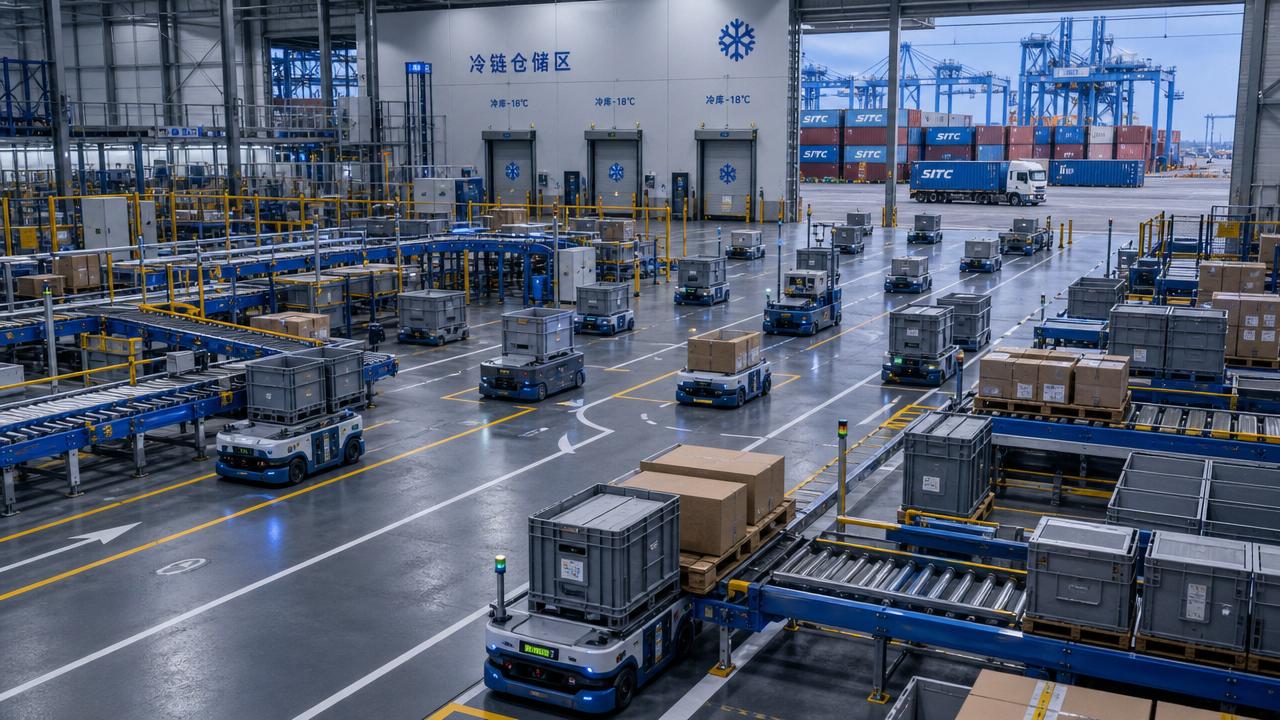
Selecting Logistics Robotics on paper is rarely the same as operating them at scale. Many failures appear only after go-live, when real traffic, variable loads, and software dependencies reshape expected performance.
This matters across warehouses, cross-border hubs, cold-chain sites, and ports. In these environments, Logistics Robotics must deliver uptime, safety, traceability, and measurable throughput under changing operational conditions.
Post-deployment issues are not minor technical inconveniences. They often become cost drivers that affect labor models, equipment utilization, service levels, and compliance readiness across integrated logistics networks.
What Logistics Robotics Selection Really Means
Logistics Robotics includes AMRs, AGVs, robotic picking arms, pallet movers, automated sorting units, yard vehicles, and supporting control software. Selection should evaluate the full operating system, not only the machine.
A strong selection process links robotics hardware with WMS, TMS, TOS, IoT sensors, charging infrastructure, fleet orchestration, and cybersecurity controls. Without this systems view, deployment risk rises quickly.
In many projects, the winning bid is based on speed, payload, and acquisition cost. Yet long-term value depends more on software stability, exception handling, maintainability, and operational fit.
Core evaluation dimensions
- Navigation reliability in mixed traffic
- Integration depth with enterprise systems
- Safety logic under human-machine interaction
- Battery, charging, and energy management
- Spare parts, service response, and lifecycle support
Why Post-Deployment Problems Emerge Across the Industry
The broader logistics sector is becoming more digital, more automated, and more regulated. That creates pressure to adopt Logistics Robotics quickly, sometimes before operating assumptions are fully tested.
Port terminals face yard congestion and vessel schedule volatility. Warehouses face SKU proliferation, labor fluctuations, and peak season compression. Cold-chain facilities add temperature constraints and hygiene requirements.
These realities expose weaknesses that pilot projects may hide. A robot that performs well in a controlled demo may struggle in multi-shift, high-density, continuously changing operations.
The Most Common Logistics Robotics Issues After Deployment
Workflow mismatch
A frequent issue is poor alignment between robotics logic and actual process variation. Exception-heavy operations often overwhelm workflows that looked efficient in standardized design documents.
Examples include irregular pallet quality, mixed case dimensions, urgent order insertion, and dock door changes. These conditions force manual intervention and reduce expected automation gains.
Software integration fragility
Logistics Robotics depends on clean, timely, structured data. If the WMS, ERP, TMS, or TOS sends delayed or inconsistent events, fleet decisions degrade and recovery logic becomes unstable.
Many deployments underestimate API version control, master data quality, and fallback logic. The result is not always system failure. Often it is silent underperformance that lasts for months.
Traffic congestion and deadlock
Fleet scale changes behavior. Ten robots may move efficiently, while fifty create intersection conflicts, blocked aisles, and charging queues. Simulation assumptions often underrepresent these nonlinear effects.
Safety rules reducing throughput
Real environments require conservative speed settings, sensor margins, and access control. Once safety validation is complete, the planned cycle time may no longer be achievable.
Maintenance and parts dependency
Downtime rarely comes from one dramatic failure. It often comes from battery degradation, wheel wear, sensor drift, firmware conflicts, and slow replacement parts availability.
Business Value of Identifying These Risks Early
Understanding post-deployment issues improves the economic case for Logistics Robotics. It shifts analysis from purchase price to total operational performance and protects long-term automation credibility.
Early risk recognition supports better capacity planning, stronger vendor contracts, and more realistic ROI timelines. It also reduces disruption when robotics expands from one site to a network model.
- Fewer hidden integration costs
- Higher fleet uptime and asset utilization
- Better safety-performance balance
- More accurate labor and throughput forecasts
- Stronger resilience during scaling and peak demand
Typical Deployment Contexts Where Selection Gaps Appear
Not all Logistics Robotics failures look the same. The gap depends on the environment, load variability, and digital maturity of the surrounding operation.
Practical Selection and Validation Recommendations
The best way to select Logistics Robotics is to validate operational behavior before full rollout. That means testing exceptions, congestion, downtime scenarios, and integration failures deliberately.
Key practices
- Define success with throughput, uptime, and recovery metrics.
- Model mixed traffic, not empty demo paths.
- Stress-test APIs, data timing, and exception logic.
- Verify spare parts lead times and local service capability.
- Assess energy demand, charging windows, and power redundancy.
- Plan change management for operators and maintenance teams.
Vendor comparison should include software roadmap stability, documentation quality, cybersecurity posture, and openness for future integration. Proprietary lock-in can become a major hidden cost later.
Selection teams should also request evidence from similar operating profiles. A successful deployment in a clean warehouse may not translate to a port-adjacent, multi-system logistics environment.
A Structured Next Step for Better Robotics Decisions
A durable Logistics Robotics strategy starts with post-deployment thinking before procurement begins. The goal is not only automation adoption, but stable, scalable, and interoperable operational performance.
Review process variability, digital interfaces, safety constraints, maintenance support, and site energy readiness in one framework. This creates a more realistic basis for technical selection and investment timing.
Where operations span ports, warehouses, and intermodal nodes, use a cross-site evaluation model. That approach helps Logistics Robotics deliver measurable value without creating downstream operational friction.
Related Intelligence