
Warehouse Robotics ROI: Costs, Labor, and Payback
Why warehouse robotics ROI is now a board-level calculation
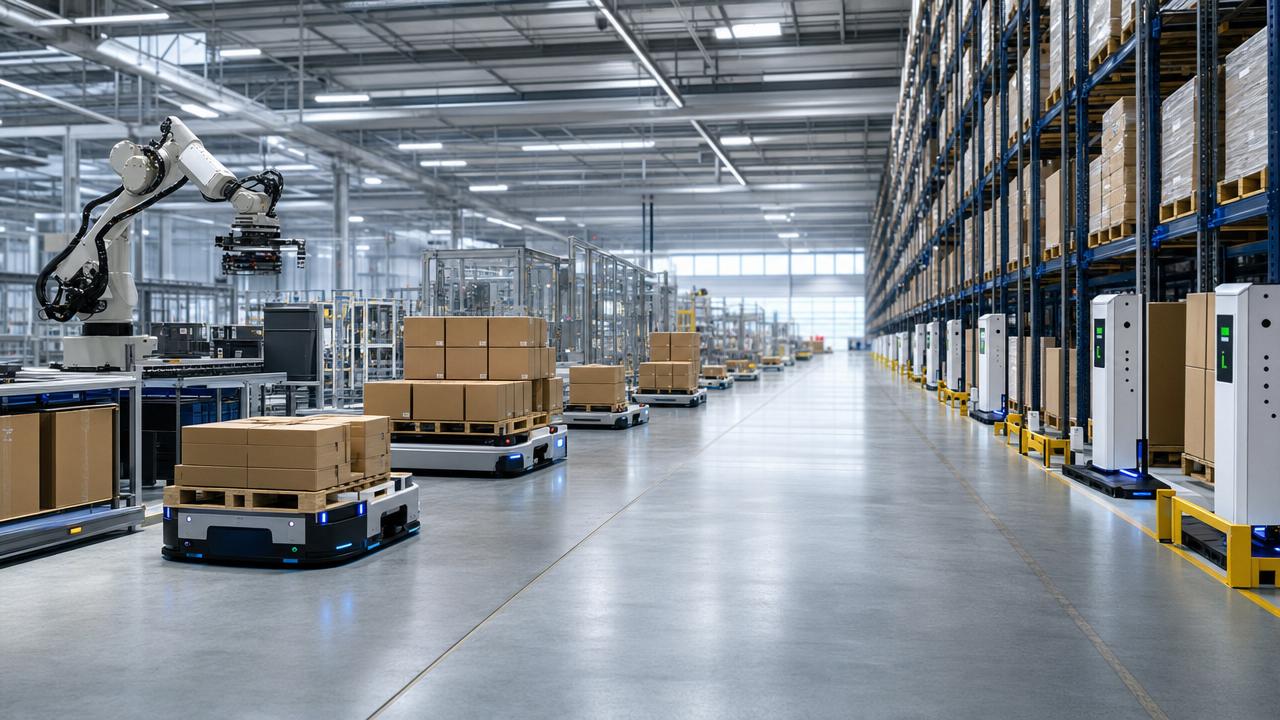
Warehouse robotics has moved beyond experimentation in modern logistics and manufacturing networks.
The decision is no longer only about automation appeal. It is about cost structure, labor exposure, fulfillment reliability, and payback discipline.
A typical ROI model should connect robotics investment with measurable operating outcomes.
These outcomes include labor savings, picking speed, inventory accuracy, space utilization, safety performance, and service consistency.
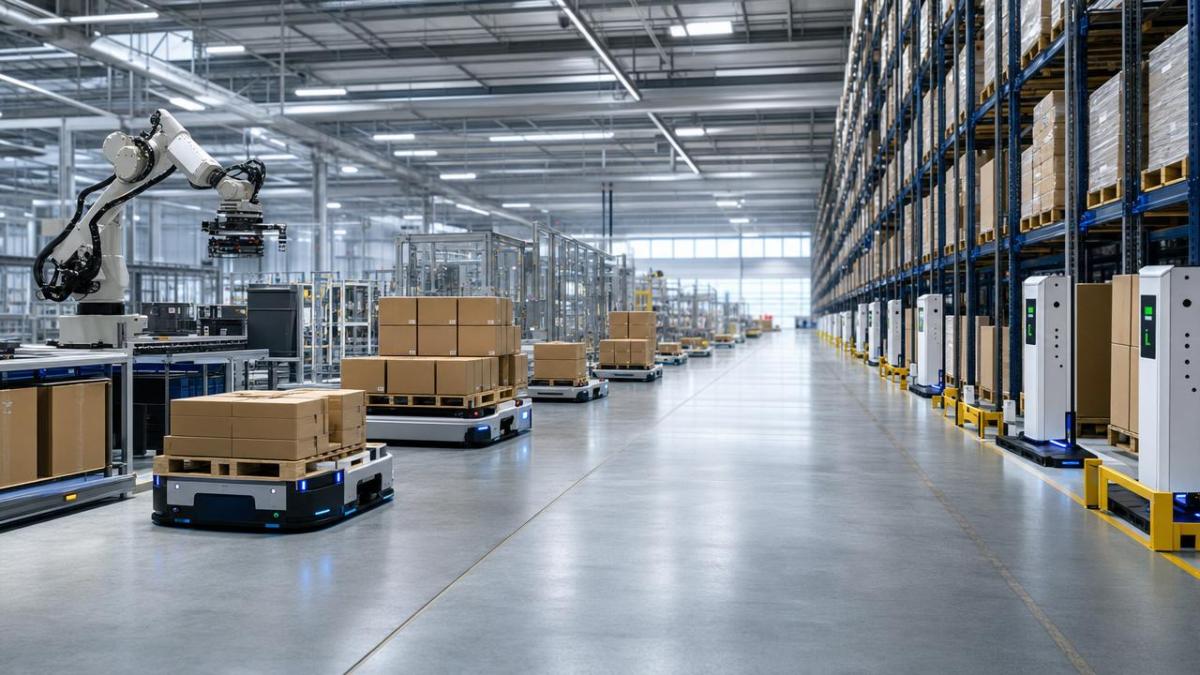
The following visual can represent the main cost and return layers in warehouse robotics evaluation.
The timing matters because warehouse pressure is increasing across global supply chains.
E-commerce cycles are shorter, customer tolerance is lower, and seasonal peaks are harder to staff.
For manufacturers, trading companies, and distribution operators, warehouse robotics can also support broader factory digitalization and supply chain resilience.
What warehouse robotics includes in practice
Warehouse robotics refers to automated systems that move, sort, pick, store, or count goods inside a warehouse.
It may include autonomous mobile robots, automated guided vehicles, robotic picking arms, palletizing robots, and automated storage systems.
Some deployments are narrow. A fleet of mobile robots may support order picking in one zone.
Other projects are wider. Robots may connect receiving, putaway, replenishment, picking, packing, and outbound staging.
The ROI profile changes depending on the automation scope.
A goods-to-person system may reduce walking time significantly, but require warehouse layout changes.
A pallet transport robot may be easier to justify where forklift labor, safety incidents, or night shifts create recurring cost pressure.
That is why warehouse robotics should be assessed against process economics, not only technical specifications.
The cost stack behind a robotics investment
The visible hardware price is only one part of warehouse robotics cost.
A sound investment review should include deployment, software, integration, training, maintenance, and operational disruption.
Ignoring these items often produces an optimistic payback estimate.
A capital purchase may look cheaper over a long horizon.
However, robotics-as-a-service can reduce upfront cash demand and shift costs into operating expense.
The best structure depends on cash policy, utilization certainty, and expected technology refresh cycles.
Labor savings are central, but not the whole story
Labor is often the largest driver in a warehouse robotics business case.
Robots reduce walking, manual transport, repetitive lifting, and idle time between tasks.
In many warehouses, associates spend more time moving than handling value-added work.
When warehouse robotics shortens travel distance, the same labor force can handle more lines per hour.
The result may be fewer temporary workers, lower overtime, or delayed hiring.
Still, labor savings must be calculated carefully.
- Separate direct labor reduction from productivity redeployment.
- Include wage inflation, overtime premiums, turnover costs, and agency fees.
- Estimate training needs for operators, supervisors, and maintenance teams.
- Avoid assuming full savings before process stabilization.
The strongest cases often combine labor relief with throughput gains.
That combination matters where order volumes rise faster than available headcount.
Productivity, accuracy, and space as financial returns
Warehouse robotics ROI improves when productivity gains convert into financial value.
More picks per hour can reduce unit handling cost.
Faster replenishment can prevent shipping delays and improve customer service levels.
Better accuracy can reduce returns, claims, rework, and customer penalties.
Space efficiency is also important, especially in high-rent regions or constrained industrial parks.
Some warehouse robotics systems allow denser storage by changing how inventory is accessed.
Avoided expansion can be a major benefit.
If automation delays a warehouse lease, reduces offsite storage, or improves dock flow, the return becomes broader.
These benefits should be quantified using baseline data.
Useful baselines include lines picked per hour, travel time, labor hours per order, error rate, and inventory cycle count accuracy.
How payback is usually calculated
Payback measures how long benefits take to recover the investment.
For warehouse robotics, simple payback is often the first screening metric.
A basic formula is investment cost divided by annual net savings.
Net savings should subtract recurring software, service, maintenance, and internal support costs.
For larger projects, payback alone is not enough.
Net present value, internal rate of return, and total cost of ownership provide a fuller view.
A robotics project with a longer payback may still be justified if it avoids facility expansion.
It may also support future volume growth without proportional labor increases.
A practical payback example
Assume a warehouse robotics project costs 900,000 dollars to implement.
Annual labor savings are estimated at 360,000 dollars after stabilization.
Annual software, service, and maintenance cost 90,000 dollars.
The net annual benefit is therefore 270,000 dollars.
Simple payback would be about 3.3 years.
If the same system also avoids a 150,000-dollar annual overflow storage cost, payback shortens significantly.
This example shows why the benefit base must include realistic operational impacts.
Where warehouse robotics tends to deliver stronger returns
Not every warehouse is equally ready for robotics.
The strongest ROI usually appears where volume, repetition, and labor constraints align.
Industrial distributors may focus on picking mixed SKUs accurately.
Manufacturers may use warehouse robotics to connect production lines, storage zones, and shipping docks.
Cross-border trading operations may value faster order consolidation and fewer shipment errors.
Cold chain facilities may prioritize reduced human exposure and controlled process timing.
Risk factors that can weaken the business case
Warehouse robotics projects can underperform when assumptions are weak.
The most common issue is overestimating utilization.
Robots only generate value when tasks, inventory flow, and labor planning are aligned.
Another risk is integration complexity.
If warehouse management data is inaccurate, automation may expose existing process problems.
Poor item master data, wrong slotting, or unstable order profiles can reduce gains.
Facility constraints also matter.
Floor quality, aisle width, wireless coverage, charging access, and fire regulations can affect deployment cost.
Supplier risk should not be ignored.
Service coverage, spare parts availability, cybersecurity standards, and software roadmap stability influence long-term value.
Key metrics for an approval-ready ROI model
A credible warehouse robotics proposal should translate operations into financial metrics.
It should also show sensitivity to volume changes, wage inflation, and downtime.
- Total cost of ownership across the expected life cycle.
- Annual net savings after software and service costs.
- Labor hours reduced, redeployed, or avoided.
- Throughput improvement during normal and peak periods.
- Error reduction, returns impact, and customer penalty avoidance.
- Utilization rate by shift, zone, and process flow.
- Implementation timeline and benefit realization schedule.
Sensitivity analysis is especially useful.
If payback depends on perfect volume growth, the case may be fragile.
If payback remains acceptable under conservative assumptions, the project is easier to defend.
Building the right comparison before committing capital
Warehouse robotics should be compared with realistic alternatives.
The alternative may be hiring, overtime, warehouse expansion, process redesign, or conventional conveyors.
In some cases, better slotting and labor planning may deliver partial savings before automation.
In other cases, manual improvement cannot solve structural labor scarcity or throughput limits.
A phased deployment often reduces risk.
Starting with one zone or process allows teams to validate productivity, downtime, and maintenance assumptions.
The pilot should not be too small, however.
If the test volume is unrealistic, it may fail to reveal true operating economics.
Vendor evaluation should combine technology, service capability, and commercial transparency.
Pricing clarity, uptime commitments, integration responsibilities, and data ownership need early review.
A practical path toward better robotics decisions
The best warehouse robotics decisions start with operational evidence.
Before requesting quotes, map current workflows and quantify pain points.
Measure labor hours, bottlenecks, error patterns, space limits, and peak-season cost exposure.
Then define which problem robotics must solve.
A project aimed at labor savings will be modeled differently from one focused on service levels.
A project designed for growth capacity will use different assumptions than one replacing manual transport.
Warehouse robotics can be a strong investment when costs, labor impact, and payback are examined together.
It becomes weaker when the decision is based only on equipment appeal or broad automation narratives.
The next step is to build a comparison framework with baseline data, vendor scenarios, and conservative assumptions.
That approach supports clearer capital allocation and more resilient supply chain operations.
Related Intelligence