
Automated Yard Stacking Logic: Rules That Improve Throughput
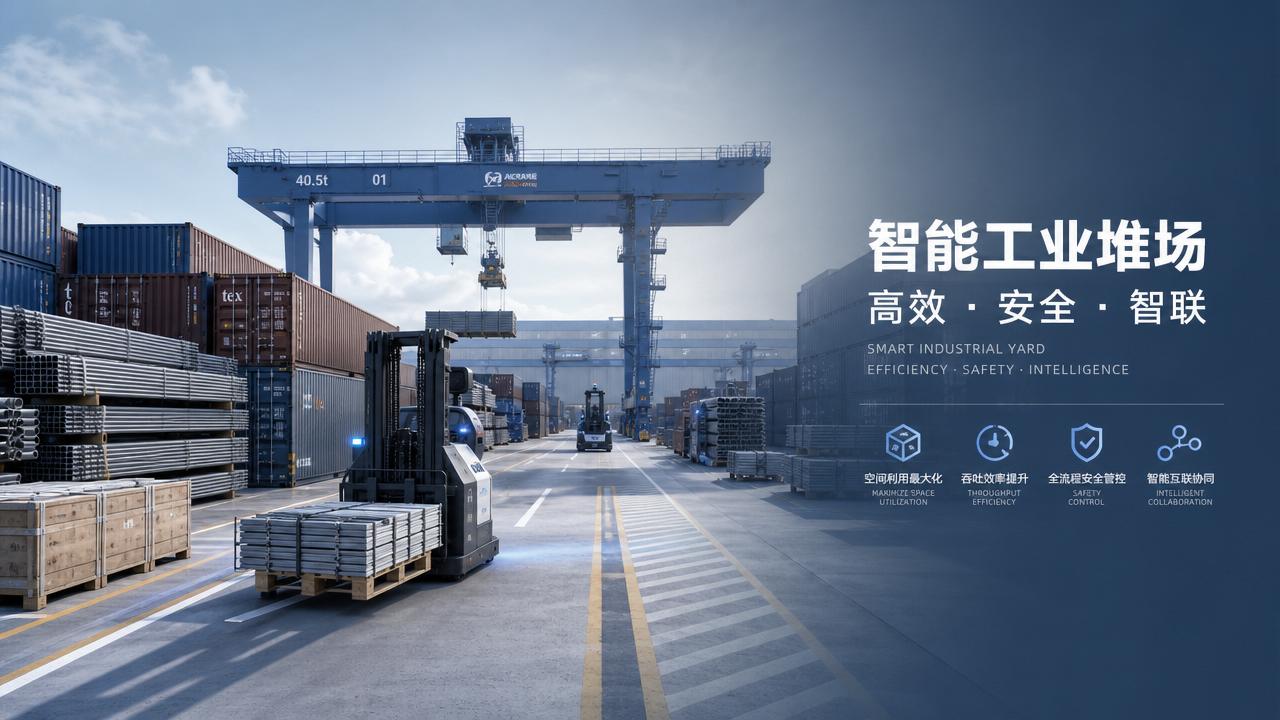
Automated yard stacking logic has moved from a technical detail to a planning issue that directly affects throughput, site safety, and schedule reliability. In busy industrial yards, stacking rules are no longer just about where cargo fits. They shape equipment travel distance, rehandling frequency, loading readiness, and how quickly materials can move from inbound arrival to production, storage, or outbound dispatch.
That shift matters across manufacturing, metals, logistics, and global trade operations. As industrial sites pursue digitalization and tighter execution control, yard performance becomes a measurable part of wider supply chain efficiency. This is why automated yard stacking logic now attracts attention not only in warehousing, but also in factory operations, export staging, raw material management, and infrastructure-linked projects.
Why stacking logic now sits closer to core operations
A yard often looks like a buffer zone, yet it behaves like an operating system. When stacking decisions are inconsistent, every later activity slows down. Cranes wait. Trucks queue. Picking sequences become harder. Emergency access narrows. Inventory records lose credibility.
In sectors such as steel, fabricated metals, heavy equipment, containers, and bulk materials, the yard is also exposed to weather, traffic, and variable cargo sizes. Static rules created for average conditions rarely hold. Automated yard stacking logic helps convert changing conditions into repeatable decisions.
This topic also aligns with broader industrial trends tracked by Baozhen Industrial Intelligence Portal, where automation equipment, factory digitalization, logistics efficiency, and supply chain resilience increasingly overlap. Yard logic is one of those cross-functional areas where operational improvement becomes visible quickly.
What automated yard stacking logic really means
At its simplest, automated yard stacking logic is a rule-based decision framework that determines where materials should be placed, in what sequence, under which constraints, and for which next movement.
The logic usually combines physical rules and operational priorities. Physical rules cover stack height, weight limits, ground conditions, aisle clearance, and equipment reach. Operational priorities cover turnover speed, order urgency, destination route, product compatibility, and loading sequence.
A strong system does more than assign a location. It predicts the downstream effect of that location. If a stack position saves space but creates extra moves tomorrow, the logic should treat that as a cost. If a location supports faster outbound loading, it may deserve higher priority even when it appears less space-efficient.
Core decision inputs
- Cargo dimensions, weight, packaging type, and stacking tolerance.
- Turnover frequency and expected dwell time.
- Equipment path, turning radius, and lift capability.
- Inbound and outbound schedules, including truck or vessel windows.
- Safety zones, fire lanes, and restricted access areas.
- Material segregation rules linked to quality, damage risk, or compliance.
The rules that improve throughput most effectively
Not every stacking rule delivers the same result. The most effective rules are those that reduce avoidable handling while preserving flexibility during execution.
Priority by movement timing
High-turn materials should not be buried behind slow-moving stock. Automated yard stacking logic works best when turnover frequency drives slot assignment. Fast-outbound cargo belongs closer to loading paths, not merely near open space.
Stacking by destination flow
Cargo heading to the same production line, customer order, export container, or transport mode should be grouped where possible. This reduces search time and lowers the chance of sequence errors during dispatch.
Rehandling avoidance
A stack that appears dense can still be inefficient if operators must move two or three units to reach one. Good logic estimates retrieval complexity before placement. Throughput improves when the next required unit is easy to access.
Equipment-centered placement
Many yards are designed around storage zones, but performance depends on equipment behavior. Automated yard stacking logic should reflect actual crane lanes, forklift visibility, travel distance, and congestion points. In practice, travel reduction often delivers faster gains than adding more yard area.
Safety as a routing rule
Safety rules should not sit outside the algorithm. They must be built into the stacking decision itself. Clearance, stack stability, hazardous material separation, and emergency access need rule priority, not manual correction later.
Where this logic creates the most business value
The value of automated yard stacking logic becomes clearer when linked to real industrial conditions rather than abstract efficiency claims.
In these settings, throughput is not only about speed. It also includes schedule confidence, lower damage exposure, better use of yard equipment, and more accurate coordination between storage and transport activities.
What usually goes wrong in implementation
Many sites introduce automation rules but still see weak results. The problem is often not the idea of automated yard stacking logic. It is the mismatch between algorithm assumptions and field reality.
One common issue is incomplete master data. If cargo dimensions, handling restrictions, or location status are unreliable, the stacking instruction will look precise but perform poorly. Another issue is excessive rigidity. Yards are dynamic environments. Logic that cannot respond to exceptions creates manual workarounds and weak adoption.
There is also an organizational problem. Yard, warehouse, transport, production, and trade documentation often operate with different priorities. A stacking rule may optimize local storage while hurting shipment preparation or line-side supply. Useful logic requires shared operating objectives.
Warning signs worth checking
- Frequent manual overrides during peak periods.
- High yard occupancy but low dispatch responsiveness.
- Repeated reshuffling before loading or production release.
- Different teams using different stack naming logic.
- Safety corrections happening after placement decisions.
How to evaluate yard stacking rules more practically
A useful review starts with flow, not software. Before selecting a platform or redesigning a layout, it helps to map where delays are created. Usually the key question is simple: which stacking decisions generate avoidable future moves?
From there, automated yard stacking logic can be assessed through a few practical dimensions.
Decision quality
Does the rule place cargo according to the next likely movement, or only according to current vacancy? Throughput improves when the logic anticipates retrieval, not just storage.
Operational fit
Can the rule reflect actual equipment limits, traffic density, weather disruption, and labor shifts? A good model respects site constraints instead of assuming ideal operations.
Data reliability
Are locations, stack status, and cargo attributes updated in near real time? Without trusted data, automated yard stacking logic becomes a planning guess.
Cross-functional impact
Does the rule support production staging, outbound coordination, and compliance handling? Strong yard logic should connect storage decisions with wider supply chain execution.
A practical direction for the next phase
For sites reviewing capacity, automation, or digital operations, automated yard stacking logic is a useful starting point because it turns visible yard friction into measurable action. It can reveal whether the real bottleneck sits in layout, rules, equipment assignment, data quality, or coordination between departments.
A sensible next step is to compare current stacking rules against actual movement patterns over several weeks. Focus on rehandling rate, travel distance, queue time, loading readiness, and safety exceptions. Those indicators usually show whether the yard is being used as storage space or managed as a throughput system.
As Baozhen Industrial Intelligence Portal continues to examine industrial automation, metals logistics, global trade execution, and supply chain efficiency, this topic remains especially relevant because it links physical operations with decision quality. Better stacking logic does not solve every yard problem, but it often creates the clarity needed for better layout choices, smarter equipment use, and more reliable project execution.
Related Intelligence