
Maritime Digital Twin Trends to Watch in 2026
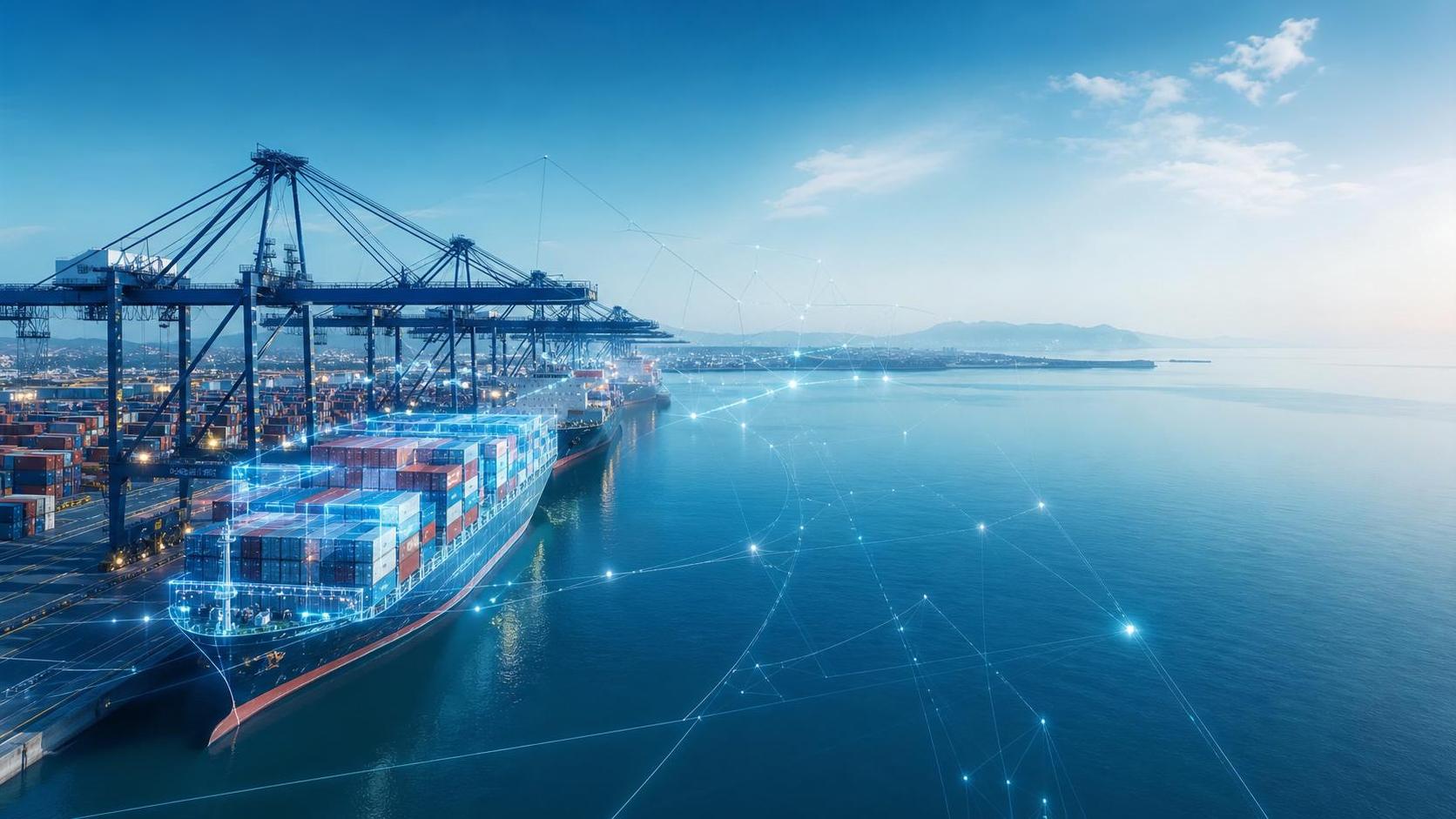
Maritime digital twin trends are entering a more practical phase in 2026. What began as a promising visualization tool is now becoming a decision layer for ports, fleets, terminals, and connected supply chains.
The shift matters because maritime operations now face tighter emissions rules, volatile freight conditions, rising maintenance costs, and higher expectations for cargo visibility. In that context, a digital twin is no longer only about seeing assets. It is about testing choices before they affect revenue, compliance, or service reliability.
For a B2B information environment focused on industry, manufacturing, metals, global trade, and supply chain performance, this topic connects several priorities at once. It touches industrial automation, logistics efficiency, international trade risk, infrastructure upgrades, and data-based operational management.
What a maritime digital twin really means
A maritime digital twin is a dynamic digital model of a physical asset, process, or network in the shipping ecosystem. That asset may be a vessel, an engine room, a container terminal, a berth, or even a wider trade lane.
The important point is not the 3D model itself. The value comes from live and historical data flowing into the model, then being used to simulate conditions, detect anomalies, predict failures, and compare operating scenarios.
In practical terms, maritime digital twin trends are moving away from isolated dashboards. The more advanced direction links sensor data, maintenance records, weather feeds, cargo status, fuel consumption, traffic patterns, and compliance data into one operational picture.
That broader view makes the technology relevant beyond ship operators. Port authorities, logistics planners, exporters, importers, equipment providers, and infrastructure investors all have reasons to pay attention.
Why 2026 becomes a turning point
The market has already passed the early awareness stage. In 2026, the main question is not whether digital twins are interesting. The question is which use cases can deliver measurable operational returns within acceptable data and integration costs.
Several pressures are converging at the same time. Decarbonization targets require better voyage planning and fuel management. Port congestion remains unpredictable in some regions. Asset downtime is more expensive when vessel schedules are tightly compressed.
At the same time, trade compliance and cargo traceability standards are becoming more demanding. A digital twin can support these pressures by turning fragmented information into a testable operational model.
This is why maritime digital twin trends now interest board-level planning. The technology sits at the intersection of operational resilience, capital efficiency, and risk control.
The trends worth watching most closely
From equipment monitoring to system simulation
Early projects often focused on single assets such as engines, pumps, cranes, or hull performance. That remains useful, but the bigger trend is system-level simulation.
Operators increasingly want to understand how vessel condition, berth assignment, yard congestion, labor scheduling, and inland transport interact. A local issue now gets evaluated for network impact.
Predictive maintenance with commercial context
Predictive maintenance is maturing beyond technical alerts. The stronger models combine component health with charter schedules, spare parts lead times, dry dock windows, and contract penalties.
That shift makes maintenance planning more financially intelligent. It also aligns with broader industrial practices seen in smart manufacturing and factory digitalization.
Twin-enabled emissions and energy decisions
Fuel efficiency is now linked to compliance and customer expectations. Maritime digital twin trends increasingly include route simulation, engine optimization, speed scenarios, and port waiting analysis tied to carbon performance.
This matters for both vessel operators and cargo owners. Transport choices affect landed cost, emissions reporting, and supply chain risk profiles.
Port twins becoming trade infrastructure tools
Port digital twins are expanding from terminal planning tools into infrastructure coordination platforms. They can model berth occupancy, crane productivity, vessel arrival waves, gate traffic, warehouse utilization, and disruption scenarios.
For global trade and supply chain planning, that creates better visibility across the handoff points that often generate delay and cost leakage.
Stronger links with procurement and supply chain visibility
Another notable change is the connection between operational twins and sourcing decisions. If a digital twin shows recurring delay patterns, energy inefficiencies, or maintenance bottlenecks, that insight can influence equipment replacement, supplier selection, and spare inventory policy.
This wider business relevance fits the needs of companies monitoring logistics efficiency, factory throughput, raw material flows, and international sourcing exposure.
Where the business value becomes visible
The strongest maritime digital twin trends are those tied to measurable decisions. Many organizations already have data platforms. The differentiator is whether the twin helps improve timing, capacity use, cost control, or resilience.
In short, the technology becomes useful when it improves a choice that already carries operational or financial consequences.
Typical scenarios across the wider industrial chain
Maritime digital twin trends do not belong only to shipping specialists. Their impact reaches industrial production, metals distribution, cross-border trade, and warehousing strategy.
- Bulk material supply chains use port and vessel twins to reduce uncertainty around ore, steel inputs, aluminum shipments, and other time-sensitive cargo flows.
- Manufacturing networks use twin-based arrival forecasts to plan production sequencing, safety stock, and maintenance shutdown timing.
- Trade compliance teams benefit when shipment events, route changes, and emissions data become easier to trace and validate.
- Infrastructure and automation providers can use performance twins to justify upgrades in cranes, energy systems, sensors, and terminal equipment.
This cross-functional relevance explains why industry information platforms increasingly treat maritime twin development as part of a larger digital operations story rather than a niche marine topic.
What to examine before treating a twin as strategic
Not every digital twin program creates value. The gap usually appears in data quality, scope definition, or weak integration with operating decisions.
A useful evaluation framework should stay grounded in business logic.
- Check whether the twin is linked to a specific decision, not only a visibility objective.
- Review data sources for reliability, update frequency, and ownership across vessel, port, and supply chain systems.
- Confirm that simulation outputs can be acted on within planning, maintenance, scheduling, or procurement workflows.
- Measure benefits through downtime reduction, fuel performance, throughput gains, delay avoidance, or compliance support.
- Assess cybersecurity, interoperability, and vendor lock-in risks early, especially where operational technology and enterprise systems converge.
These checks matter because maritime digital twin trends are increasingly shaped by execution quality, not presentation quality.
How to translate the trend into a 2026 roadmap
A practical roadmap usually starts with one operational bottleneck that already carries cost or service risk. For some organizations, that may be berth congestion. For others, it may be propulsion maintenance, cargo arrival variability, or port energy use.
The next step is to map the data chain around that problem. If sensor feeds, maintenance records, and scheduling systems cannot connect cleanly, the twin will struggle to produce trusted outputs.
From there, scenario design becomes critical. The most valuable twins do not simply mirror operations. They test alternatives such as slower steaming, different maintenance windows, changed yard allocation, or revised supplier routing.
Organizations following maritime digital twin trends in 2026 should also compare projects through a wider industrial lens. The strongest cases support not just marine efficiency, but sourcing resilience, trade reliability, asset utilization, and downstream production continuity.
That is where ongoing market observation becomes useful. Tracking maritime technology developments together with manufacturing shifts, logistics patterns, metals flows, and trade policy changes gives a clearer basis for investment timing and operational priorities.
The immediate task is not to adopt every new platform. It is to identify where a digital twin can sharpen one important decision, prove the result, and then expand from a controlled use case to a network-level capability.
- industrial automation
- smart manufacturing
- factory digitalization
- global trade
- trade policy
- international sourcing
- predictive maintenance
- cross-border trade
- trade compliance
- supply chain visibility
- manufacturing
- metals
- steel
- aluminum
- international trade
- supply chain
- logistics
- procurement
- supply chain risk
- warehousing
- logistics efficiency
- digital twin
- supply chain planning
Related Intelligence