
Container Shipping Options: FCL, LCL, Reefer, and Special Cargo
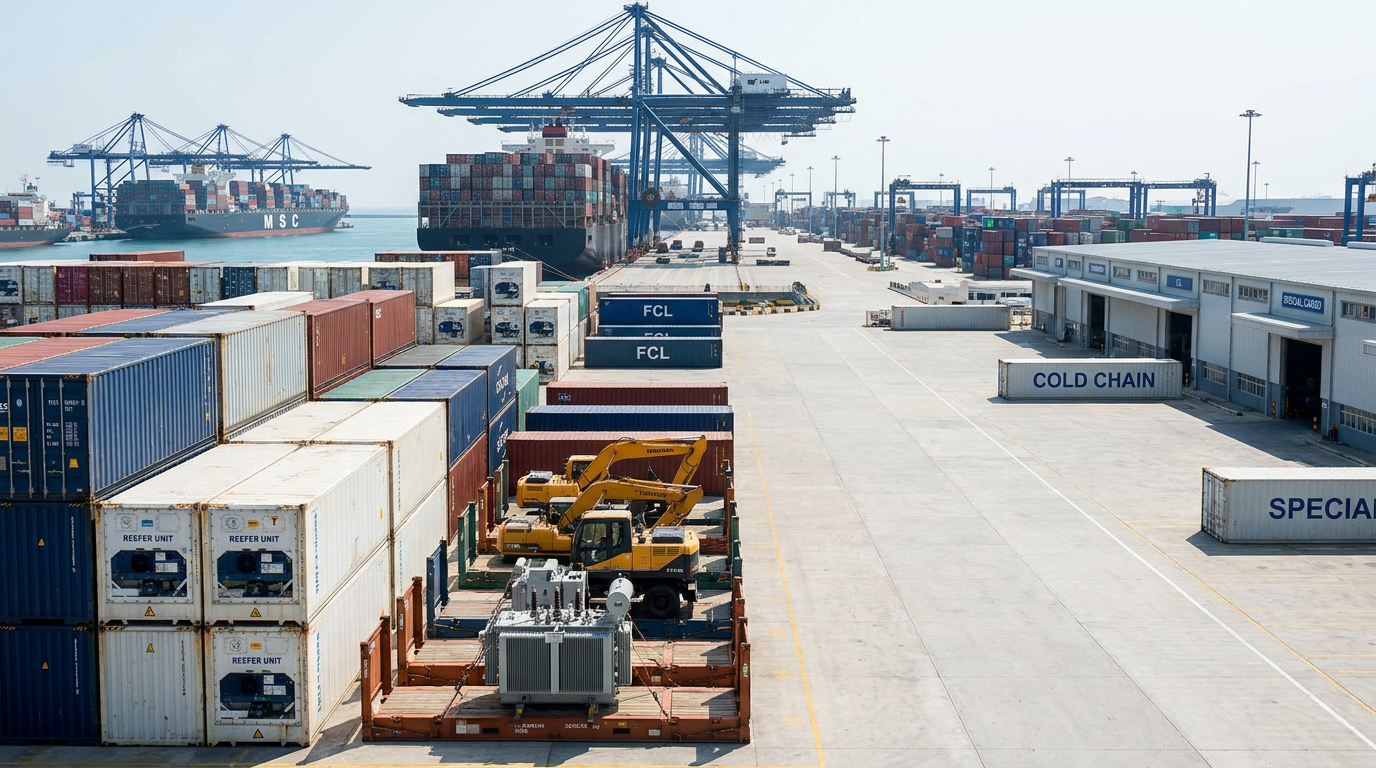
For international sourcing, container shipping is not only a freight arrangement. It shapes landed cost, delivery certainty, cargo condition, and supplier performance.
FCL, LCL, reefer, and special cargo solutions each fit different shipment profiles. The right choice depends on volume, product risk, timeline, and trade requirements.
A practical container shipping decision connects purchasing plans with port capacity, customs documentation, warehousing space, and inventory strategy.
Container shipping as a procurement decision
A typical container shipping route involves factory pickup, export clearance, port handling, ocean transit, import clearance, and final delivery.
The visible freight rate is only one part of the cost. Delays, demurrage, storage, inspection, and cargo damage can change the real outcome.
The following visual reference can support internal comparison of major container shipping options.
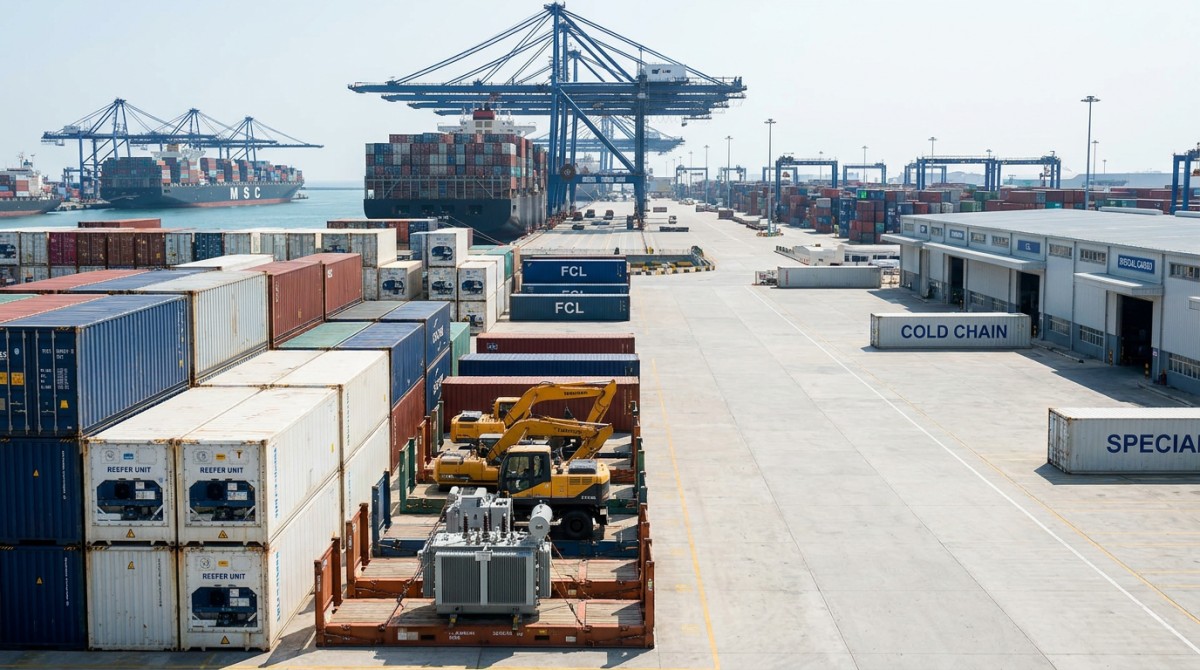
Industrial goods, metal products, machinery, electronics, chemicals, textiles, and food ingredients all move through containerized networks.
Yet these cargoes do not share the same handling needs. Weight, temperature, packaging strength, and documentation requirements vary widely.
That is why container shipping should be reviewed before purchase orders are finalized, not after production is complete.
FCL: better control when volume justifies the space
Full Container Load, usually called FCL, means one shipper uses the full container space under a single booking.
It is often selected when shipment volume is large, cargo is sensitive, or consolidation with other goods creates unnecessary risk.
In container shipping, FCL usually provides better control over loading, sealing, routing, and delivery planning.
For heavy metals, machinery parts, automotive components, or factory equipment, FCL can reduce handling frequency and exposure.
The cost logic is simple. If cargo nearly fills a container, paying for dedicated space is often more economical.
However, unused space still costs money. Poor loading design can leave air in the container while freight charges remain fixed.
Where FCL creates practical value
- Large purchase orders with predictable production schedules.
- Cargo requiring fewer touchpoints during container shipping.
- Goods with higher risk of contamination, scratching, or deformation.
- Shipments needing stronger coordination between factory loading and warehouse receiving.
FCL is not automatically the best option. It works best when volume, packaging, and delivery timing support container-level planning.
LCL: flexibility for smaller or mixed orders
Less than Container Load, or LCL, allows different shippers to share space in one container.
This model suits smaller orders, samples, replacement parts, seasonal replenishment, and early-stage supplier testing.
In container shipping, LCL can reduce the need to wait until a full container volume is available.
The trade-off is handling complexity. Cargo must be consolidated, loaded with other shipments, then deconsolidated at destination.
More handling may mean higher risk of delay, misrouting, label damage, or carton compression.
LCL pricing also deserves careful reading. Charges may include origin fees, destination fees, documentation, handling, and warehouse costs.
A low ocean rate can become less attractive after local charges are added.
When LCL needs extra attention
LCL is useful, but it needs stronger packaging discipline and clearer cargo information.
- Cartons should be stackable, labeled clearly, and protected against moisture.
- Pallet dimensions should match warehouse handling practices.
- Cargo descriptions should be accurate for customs and consolidation planning.
- Delivery dates should allow possible consolidation delays.
For mixed sourcing programs, LCL can support purchasing flexibility without forcing excessive inventory.
Reefer containers for temperature-sensitive trade
Reefer containers are refrigerated units designed to control temperature during ocean transit and related handling stages.
They are common in food, pharmaceuticals, chemicals, certain raw materials, and high-value temperature-sensitive components.
Reefer container shipping is not simply about keeping goods cold. It requires a defined temperature range and monitoring discipline.
Some products need chilled conditions. Others require frozen storage, ventilation, humidity control, or controlled atmosphere settings.
A reefer shipment can fail if pre-cooling is missed, packaging blocks airflow, or power connection time is poorly managed.
This makes planning essential from factory dispatch to destination warehouse receiving.
Cold chain decisions are also commercial decisions
Reefer freight usually costs more than standard dry container shipping. The equipment, power, monitoring, and port handling are different.
Still, the higher logistics cost may protect product value, compliance status, and customer acceptance.
For regulated goods, temperature records may be as important as the shipment itself.
A strong reefer plan should define temperature settings, acceptable deviation, data logging, emergency contact, and inspection procedure.
Special cargo solutions for oversized, heavy, or restricted goods
Not every product fits a standard dry container. Some goods require special equipment or handling approval.
Special cargo container shipping may involve flat racks, open-top containers, tank containers, or dangerous goods procedures.
Industrial machinery, steel structures, large molds, mining equipment, transformers, and fabrication parts often fall into this category.
The main challenge is not only size. Lashing, weight distribution, lifting points, and port restrictions must be confirmed early.
For metals and heavy equipment, container floor limits can be a critical issue.
If weight is concentrated in a small area, reinforcement or alternative equipment may be required.
Dangerous goods add another layer. Classification, Material Safety Data Sheets, packaging certificates, labels, and carrier approval are required.
Comparing options beyond the freight rate
A useful container shipping comparison should consider cost, lead time, risk, documentation, and inventory impact together.
The cheapest quote may not be the lowest-cost route after delays, claims, or stockouts are included.
This comparison helps connect freight selection with purchasing strategy, production timing, and receiving capacity.
For complex sourcing programs, one container shipping model may not cover every order.
A supplier may ship regular volume by FCL, urgent spare parts by LCL, and sensitive materials by reefer.
Current issues shaping container shipping choices
Container shipping decisions are affected by port congestion, vessel blank sailings, fuel costs, geopolitical disruptions, and customs enforcement.
Route reliability has become as important as price in many global trade lanes.
For manufacturing supply chains, late containers may interrupt production or increase air freight pressure.
For metals trading, freight timing can influence inventory value when material prices move quickly.
For cross-border e-commerce and industrial distribution, unstable arrival windows can affect warehouse labor and customer delivery promises.
Compliance is another concern. Incorrect HS codes, incomplete packing lists, or unclear origin documents can delay cargo release.
A good container shipping plan should align documentation checks with booking schedules, not leave paperwork until departure.
Practical checks before booking cargo
Before confirming a booking, several details should be reviewed across commercial, logistics, and compliance functions.
- Confirm cargo weight, volume, packaging type, and stackability.
- Check whether the route supports the required container shipping equipment.
- Compare port-to-port and door-to-door cost structures.
- Review customs documents before cargo reaches the terminal.
- Estimate free time, storage risk, and inland delivery capacity.
- Clarify Incoterms and responsibility for charges at each stage.
These checks reduce surprises and make container shipping performance easier to compare across suppliers and forwarders.
They also support better internal forecasting, especially when purchase orders involve multiple factories or delivery destinations.
Building a more resilient shipping framework
A resilient container shipping approach does not rely on one quote, one carrier, or one route assumption.
It creates decision rules that can be applied when order size, urgency, or market conditions change.
For example, stable monthly demand may justify FCL allocation, while uncertain demand may remain flexible through LCL.
Temperature-sensitive goods require reefer validation before price comparison. Heavy or oversized goods require engineering review before booking.
Industry information platforms can support this process by tracking trade policies, port conditions, freight trends, and supply chain risks.
Baozhen Industrial Intelligence Portal focuses on practical analysis across manufacturing, metals, global trade, and supply chain operations.
That perspective is useful because container shipping rarely stands alone. It interacts with sourcing, compliance, warehousing, and inventory planning.
A stronger next step is to map shipment types by volume, value, risk, and delivery urgency.
From there, compare FCL, LCL, reefer, and special cargo options against real operating constraints.
The most effective container shipping choice is the one that protects cost, cargo, and continuity at the same time.
Related Intelligence