
Cold Chain Technology ISO Certification: Costs, Steps, and Pitfalls
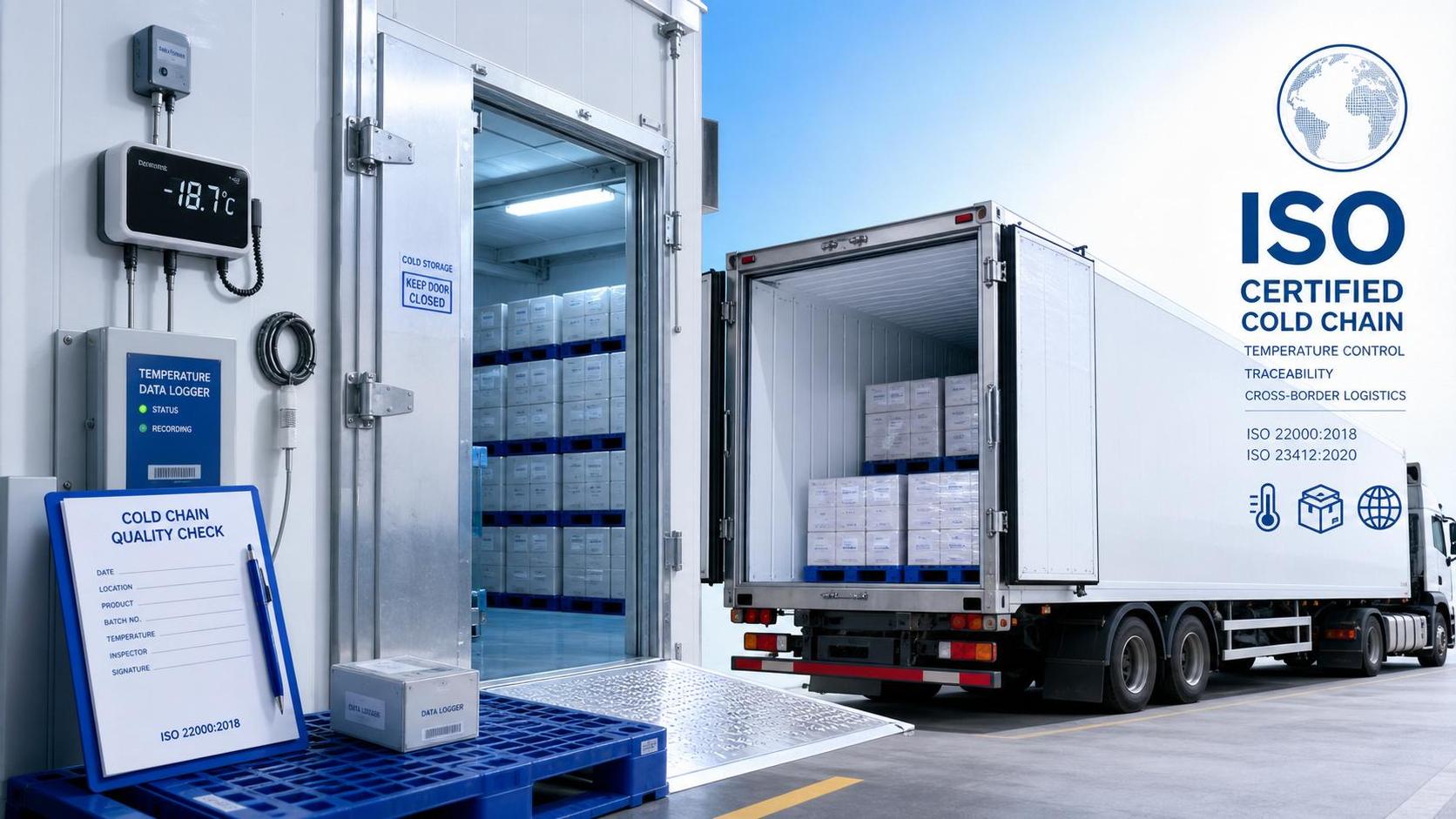
Cold Chain Technology ISO certification has moved from a technical detail to a commercial checkpoint. In cold storage, refrigerated transport, food logistics, pharmaceuticals, and cross-border distribution, certification affects supplier credibility, audit speed, and long-term operating risk.
For sourcing decisions, the issue is not only whether a supplier holds a certificate. The more useful question is what the certification actually covers, how much it cost to achieve, and whether the management system behind it supports stable cold chain performance.
Why this topic now carries more weight
Cold chain operations now sit at the intersection of manufacturing, logistics, compliance, and digital monitoring. That makes certification more visible in supplier reviews, especially where temperature deviation can damage product value or trigger legal claims.
The pressure is coming from several directions. Food safety standards are tightening. Pharmaceutical handling rules are stricter. Cross-border buyers want clearer traceability. Warehousing and transport networks are also expected to prove process control, not just promise it.
This is why Baozhen Industrial Intelligence Portal often treats cold chain issues as a supply chain topic rather than a narrow equipment topic. Certification now connects operational discipline, data visibility, sourcing reliability, and international trade readiness.
What Cold Chain Technology ISO certification usually means
Cold Chain Technology ISO certification is not one single universal certificate. In practice, it usually refers to a combination of ISO-based management systems and process standards that support cold chain design, operation, maintenance, monitoring, and quality assurance.
The exact mix depends on the business model. A cold room manufacturer may rely more on ISO 9001 and technical production controls. A logistics provider may combine ISO 9001 with ISO 22000, ISO 14001, or ISO 45001, depending on cargo type and market requirements.
For temperature-sensitive sectors, certification often acts as evidence that documented procedures exist for calibration, maintenance, deviation handling, traceability, sanitation, personnel training, and corrective action.
Common certification layers in cold chain projects
So, evaluating Cold Chain Technology ISO certification requires checking scope, site coverage, and operating relevance. A certificate may be valid, yet still fail to cover the exact facility, product line, or logistics activity under review.
The real cost structure behind certification
One reason buyers misread certification is that they focus only on the audit fee. The visible invoice is only one part of the total cost. The larger spend often comes from internal preparation and process upgrading.
For a cold chain operator or equipment manufacturer, certification costs usually include system consulting, document development, staff training, internal audits, process correction, facility improvements, instrument calibration, and external certification audits.
If remote monitoring, warehouse automation, or traceability software is missing, the bill rises further. In many cases, digital records are the difference between passing an audit and repeatedly explaining why temperature control cannot be demonstrated clearly.
Where expenses usually appear
- Gap assessment and consulting to align current operations with ISO requirements.
- Documentation work, including SOPs, risk registers, maintenance logs, and training records.
- Equipment validation, sensor calibration, and mapping of temperature-critical zones.
- Facility corrections, such as insulation repair, door sealing, airflow redesign, or sanitation upgrades.
- Certification body fees for stage audits, surveillance visits, and renewal.
This matters during sourcing because low-price suppliers sometimes present certification without showing the operational investment behind it. When the supporting system is thin, performance problems tend to reappear during seasonal peaks, customs delays, or equipment maintenance cycles.
How the certification process typically unfolds
Cold Chain Technology ISO certification is usually a staged process rather than a one-time approval. Organizations that complete it smoothly tend to treat it as an operating system project, not a paperwork exercise.
Step 1: define operational scope
The first task is to define what is being certified. That may include production lines, cold warehouses, reefer transport fleets, packaging operations, or export handling sites. Scope mistakes create confusion later.
Step 2: conduct a gap review
A realistic gap review compares existing controls with ISO requirements. It should examine maintenance discipline, sensor reliability, deviation records, traceability, cleaning routines, contractor management, and emergency response.
Step 3: build documented controls
Procedures must match field reality. If operators use one process while the manual states another, the audit risk increases. Good documentation is short, clear, and linked to actual responsibilities.
Step 4: run internal verification
Before the external audit, internal checks should test whether the system works under pressure. This includes alarm handling, product segregation, handover control, downtime response, and records retrieval.
Step 5: complete external audit and corrections
The certification body reviews documents and site execution. Findings may require corrective action. The strongest operators close findings quickly because responsibilities, records, and technical controls are already embedded.
Where buyers should look beyond the certificate
A valid certificate is useful, but not sufficient. In practical terms, a sourcing decision should test whether certified controls translate into daily reliability. This is especially important for imported goods, multi-stop logistics, and outsourced warehousing.
A supplier may pass an audit while still operating with weak backup power, incomplete calibration records, or poor subcontractor control. Those gaps do not always appear on a certificate, but they appear quickly in claims, spoilage, and delivery disputes.
Useful verification points
- Check whether the certification scope matches the exact site and service being offered.
- Review recent audit dates, nonconformities, and closure status.
- Ask how temperature excursions are recorded, escalated, and resolved.
- Confirm calibration cycles for sensors, data loggers, and control systems.
- Assess whether subcontracted transport or storage falls under the same control framework.
This approach fits broader industrial sourcing trends. Across manufacturing and supply chain operations, the best decisions usually come from combining formal certification with process evidence, operating data, and site-level consistency.
Frequent pitfalls that delay approval or weaken performance
Several problems appear repeatedly in Cold Chain Technology ISO certification projects. Most are not caused by the standard itself. They come from misalignment between technical operations, management expectations, and audit preparation.
Documentation without operational ownership
Some teams outsource documentation and assume the project is complete. But if supervisors and operators do not own the procedures, records become inconsistent and corrective actions lose credibility.
Ignoring hidden infrastructure weaknesses
Weak door seals, poor airflow balance, unstable backup refrigeration, and unverified alarm systems can undermine the entire management system. Auditors often trace paperwork failures back to these physical issues.
Treating certification as a one-off event
Cold chain risks change with product mix, lane changes, weather patterns, and export markets. If the system is not updated, the certificate remains on paper while performance drifts in practice.
Overlooking trade and compliance interfaces
For international shipments, certification must work together with customs documentation, labeling rules, handling specifications, and importer requirements. A compliant warehouse alone cannot solve a broken export process.
How to use certification in a sourcing decision
The most practical use of Cold Chain Technology ISO certification is as a screening and comparison tool. It helps narrow supplier options, but it should also guide deeper questions about resilience, traceability, and total cost.
A supplier with stronger certification discipline may not offer the lowest initial quote. Yet the overall economics can be better when claim risk, shipment loss, audit disruption, and requalification delays are considered together.
In sectors tracked by Baozhen Industrial Intelligence Portal, this broader view is becoming standard. Industrial purchasing is increasingly shaped by operational data, compliance readiness, energy efficiency, and supply chain continuity rather than unit price alone.
A practical next step
When reviewing cold chain suppliers, start by mapping certificate scope against the actual product flow. Then compare audit status, monitoring capability, maintenance discipline, and subcontractor control on the same checklist.
That simple structure turns Cold Chain Technology ISO certification from a document review item into a clearer decision framework. It also makes later negotiations, compliance reviews, and performance tracking far more grounded in real operating conditions.
Related Intelligence