
Where Is Stainless Steel Used? Applications Across Key Industries
From food processing equipment and medical instruments to building facades and chemical plants, stainless steel is used across a wide range of industries. Its corrosion resistance, durability, and ease of cleaning make it suitable for demanding environments, but performance depends on the grade, fabrication, and operating conditions. A stainless-steel sink, an offshore pipe, and a surgical instrument may all look similar; the requirements behind them are not.
The useful question is not simply where stainless steel can be used, but where its properties justify the cost and what could cause it to fail. This guide looks at common applications and the trade-offs behind them.
What makes stainless steel useful across industries?
Stainless steels are iron-based alloys containing chromium. Their corrosion resistance comes largely from a thin, protective oxide layer that can reform when the surface is damaged and suitable conditions are present. Different grades add other alloying elements or use different metallurgical structures to achieve particular combinations of corrosion resistance, strength, formability, and heat resistance.
That protective layer is effective, but it is not a guarantee against rust. Chlorides, trapped moisture, aggressive chemicals, high temperatures, contamination, and poor fabrication can all undermine performance. The finish and geometry of a component matter too: a smooth, drainable surface may be much easier to keep clean than a crevice where liquid collects.
Food processing and commercial kitchens
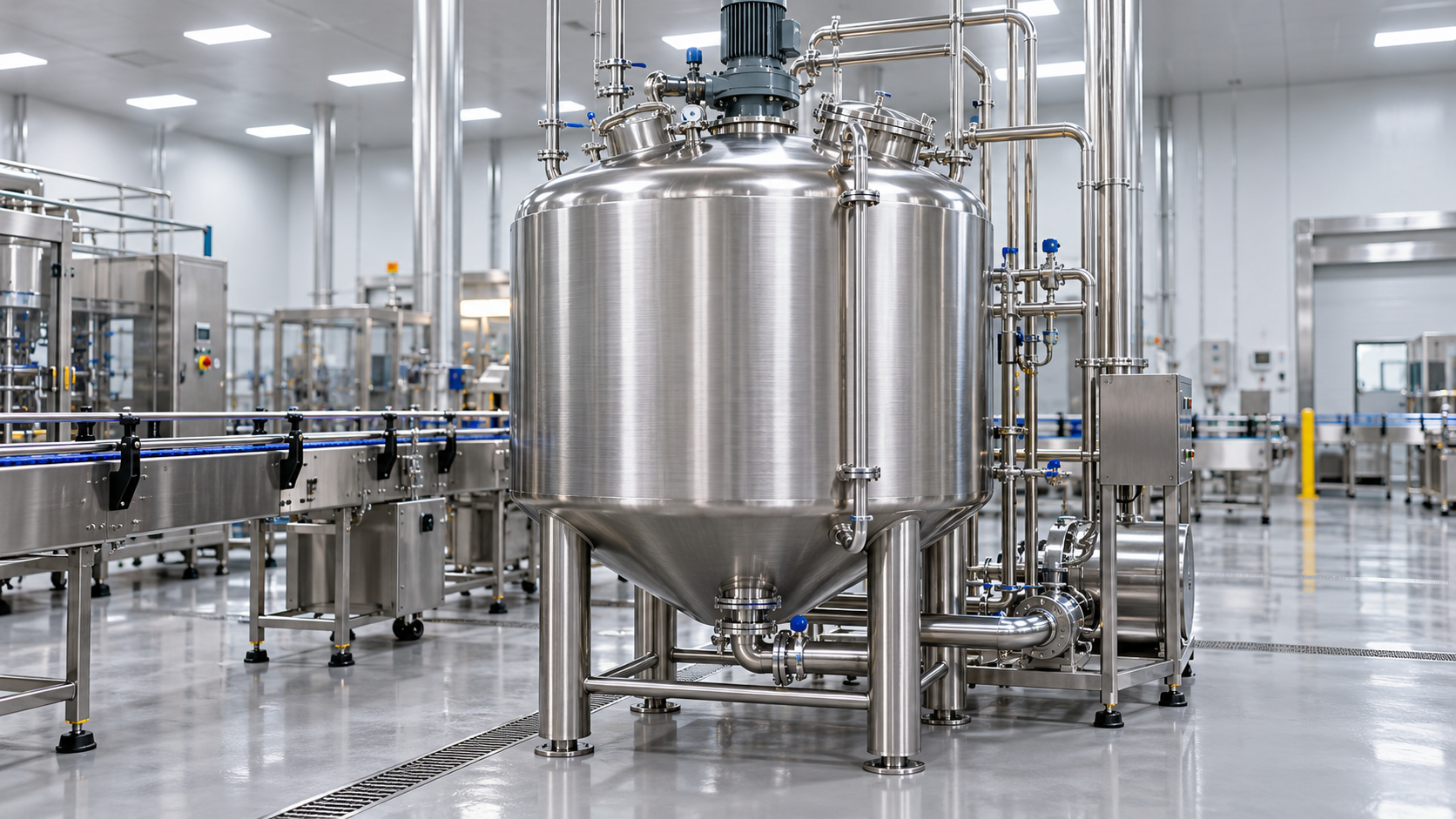
Food and beverage facilities use stainless steel for mixing tanks, conveyors, worktables, pipework, storage vessels, and equipment enclosures. It is common around sinks and preparation areas because it tolerates frequent cleaning and does not require a protective paint coating on the working surface.
Grade 304 is widely used in general food equipment, while 316 may be considered where the process or cleaning environment is more corrosive. That does not mean 316 is automatically the right answer for every food plant. Salt content, cleaning chemicals, exposure time, temperature, and rinse practices all matter. A grade that works well for a dry conveyor frame may not be suitable for a vessel holding a warm, salty product.
Hygiene also depends on fabrication. Poor welds, dead legs in piping, damaged surfaces, and joints that trap residue can make equipment harder to clean regardless of the alloy. For food-contact components, the applicable local requirements and the equipment design should be checked alongside the material specification.
Healthcare, laboratories, and pharmaceuticals
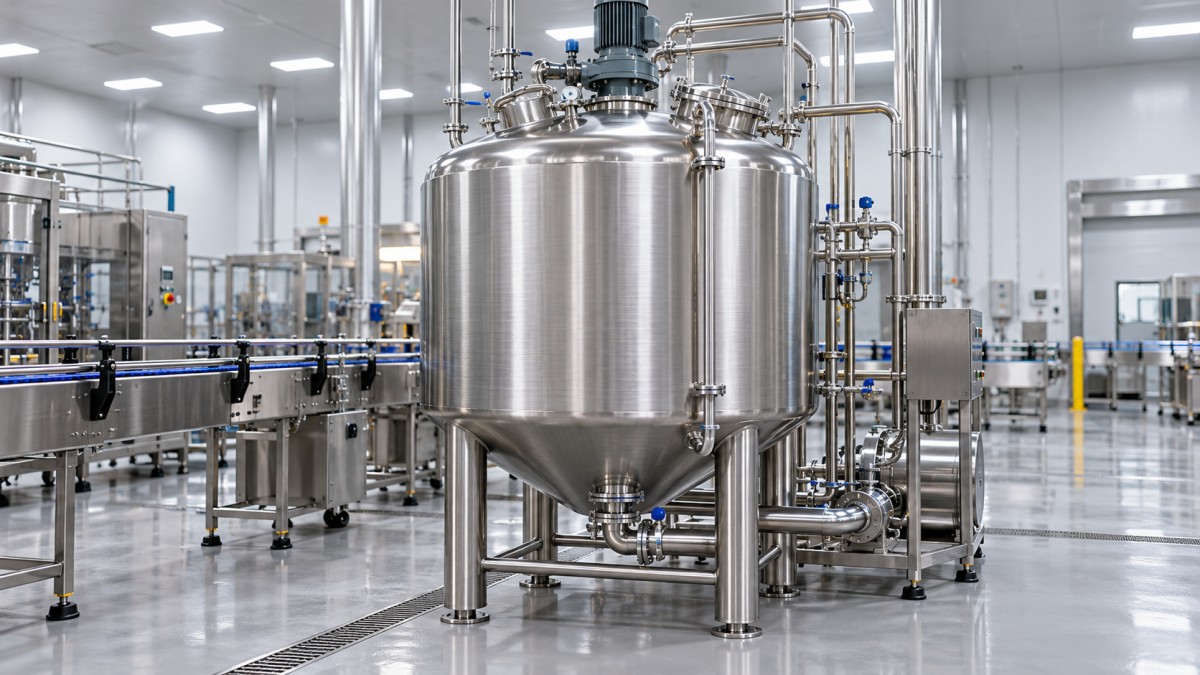
In healthcare settings, stainless steel appears in surgical instruments, trays, carts, sinks, and equipment surfaces. Laboratories and pharmaceutical facilities also use it for benches, vessels, tubing, and processing equipment where surfaces must withstand repeated cleaning or controlled production procedures.
Different uses call for different properties. Some surgical cutting instruments use hardenable stainless steels to obtain a suitable edge, while a pharmaceutical process vessel may prioritize corrosion resistance, cleanable welds, and surface finish. Medical implant applications have their own material and regulatory requirements; stainless steel used for an ordinary kitchen utensil should not be assumed suitable for an implant.
Repeated sterilization and exposure to disinfectants can also reveal weaknesses that are not obvious when an instrument is new. Cleaning instructions, water quality, and the chemical compatibility of the chosen grade deserve attention throughout its service life.
Buildings, infrastructure, and public spaces
Architects and construction teams use stainless steel for facades, roofing details, handrails, lift interiors, fasteners, and structural components. It can provide an exposed metal finish without the periodic repainting associated with some coated materials. In busy public spaces, resistance to wear and repeated cleaning may be just as relevant as appearance.
Location changes the decision. An interior handrail in a dry office building faces a very different environment from a facade near the sea or a poolside fitting exposed to warm, chloride-containing air. Coastal salt deposits, pollution, shelter from rain, and access for washing all influence maintenance needs. A more corrosion-resistant grade may be justified in a harsh location, but the full exposure and design still need review.
Visible staining is not always a structural failure, yet it can become a serious maintenance and appearance issue. Designers should consider drainage, avoid unnecessary dirt traps, and select fasteners compatible with the surrounding assembly. The finish also matters: a surface chosen only from a showroom sample may behave differently after years outdoors.
Chemical processing, water systems, and energy
Chemical plants use stainless steel in tanks, pumps, valves, heat exchangers, and process piping. Water treatment facilities may use it for screens, pipework, and equipment exposed to wet conditions. In energy operations, applications range from plant piping and exhaust components to equipment used in more corrosive oil and gas environments.
These uses show why “stainless” is not a complete specification. A chemical’s concentration and temperature can change its effect on an alloy, and a system may encounter different conditions during normal production, shutdown, and cleaning. Chloride-containing water, for example, can contribute to localized corrosion in susceptible grades, especially where deposits or crevices allow conditions to become more aggressive.
Grade 316 contains molybdenum and generally offers better resistance to chloride-related localized corrosion than 304, but it is not immune. Duplex stainless steels can offer higher strength and useful corrosion resistance for certain demanding applications; they also require appropriate welding and fabrication controls. For pressure-containing or safety-critical equipment, material selection should be based on the actual process conditions and relevant engineering requirements, not a generic corrosion-resistance chart alone.
Transport and industrial manufacturing
Vehicles, rail equipment, ships, and aircraft use stainless steel in different ways. Automotive exhaust systems are a familiar example: selected grades must tolerate heat, condensation, and exposure to road conditions while remaining practical to form and assemble. Rail vehicles may use stainless steel in body structures or interior fittings, depending on the design.
In marine environments, stainless steel can be found in deck fittings, fasteners, and selected piping or equipment. Seawater is nevertheless a demanding exposure, and a polished fitting above deck should not be treated as proof that the same grade is suitable for continuous immersion. Oxygen availability, crevices, seawater temperature, and contact with other metals can all affect the result.
Manufacturers also use stainless steel for machine guards, hoppers, springs, shafts, and precision components. Here the trade-off may be less about appearance than manufacturability. Some grades are easier to form or weld than others; machining behavior, distortion, and the need for post-fabrication cleaning can influence the final cost of a part.
Household products and everyday equipment
Cookware, cutlery, washing-machine drums, appliance panels, and water bottles make stainless steel one of the most visible metal applications in daily life. The material provides a useful balance of appearance, durability, and cleaning convenience, but manufacturers do not necessarily use the same grade for every component.
A knife blade may need hardness and edge retention, while a deep-drawn sink needs good formability. Cookware may combine stainless steel with another metal to improve heat distribution. Even a household item can stain or pit if salty residues or unsuitable cleaning products remain on its surface for extended periods.
How common stainless steel grades differ
Grade names are a useful starting point, not a substitute for a complete specification. These broad distinctions help explain why applications differ:
- 304: An austenitic grade commonly used for general-purpose equipment, food processing, and indoor architectural work. It combines formability with useful corrosion resistance in many environments.
- 316: An austenitic grade often considered for more demanding chemical or chloride exposure. It can cost more, and its suitability still depends on conditions.
- 430: A ferritic grade used in some appliances and decorative applications. It can be an economical choice where its corrosion resistance and fabrication properties meet the service requirements.
- Martensitic grades: Often selected where hardness or wear resistance is important, as in some blades and instruments. Corrosion resistance varies by grade and treatment.
- Duplex grades: Used in certain industrial and marine-related duties where a combination of strength and corrosion resistance is needed. Fabrication and operating limits require careful attention.
These are families and examples, not interchangeable labels. Product form, heat treatment, surface condition, and the applicable material standard can affect what a buyer actually receives. Where equivalence between international designations matters, verify it against the relevant specifications rather than relying on a similar-sounding name.
When another material may be the better choice
Stainless steel is not always the economical or technical winner. Coated carbon steel may be sufficient for a protected structure with an achievable maintenance plan. Aluminum can be attractive when lower weight is a priority. In some highly aggressive chemical environments, a different alloy or a suitable nonmetallic material may be needed.
The comparison should include more than the purchase price. Fabrication, joining, cleaning, inspection, expected maintenance, and the consequence of failure all affect the decision. Equally, paying for a more highly alloyed grade provides little benefit if poor design creates crevices or if the material is damaged during fabrication.
Questions to ask when comparing applications
For an initial assessment, start with the actual environment: What touches the metal, at what temperature, and for how long? Include cleaning agents, deposits, outdoor exposure, and abnormal conditions such as shutdowns. Then consider whether the part must be welded, formed, machined, polished, or repeatedly sterilized.
For industrial sourcing, request the grade, product form, applicable specification, and relevant material documentation rather than ordering simply as “stainless steel.” Traceability and inspection expectations should match the application, particularly for pressure equipment, food-contact surfaces, or regulated medical uses. Availability and lead time also deserve a check: a design based on an uncommon grade or finish may be harder to source consistently across regions.
The most useful comparison connects the metal to the operation around it. A material suitable for a dry indoor enclosure may be a poor choice for a chloride-rich process line, even when both carry the stainless-steel label. Define the exposure and fabrication requirements first; the shortlist of grades becomes much more meaningful after that.
- Last One:No more articles
- Next Article:China's Official Manufacturing PMI Falls to 49.3% in OctoberNov 01, 2026
Related Intelligence