
Metalworking in Japan: Capabilities, Quality Expectations, and Sourcing Considerations
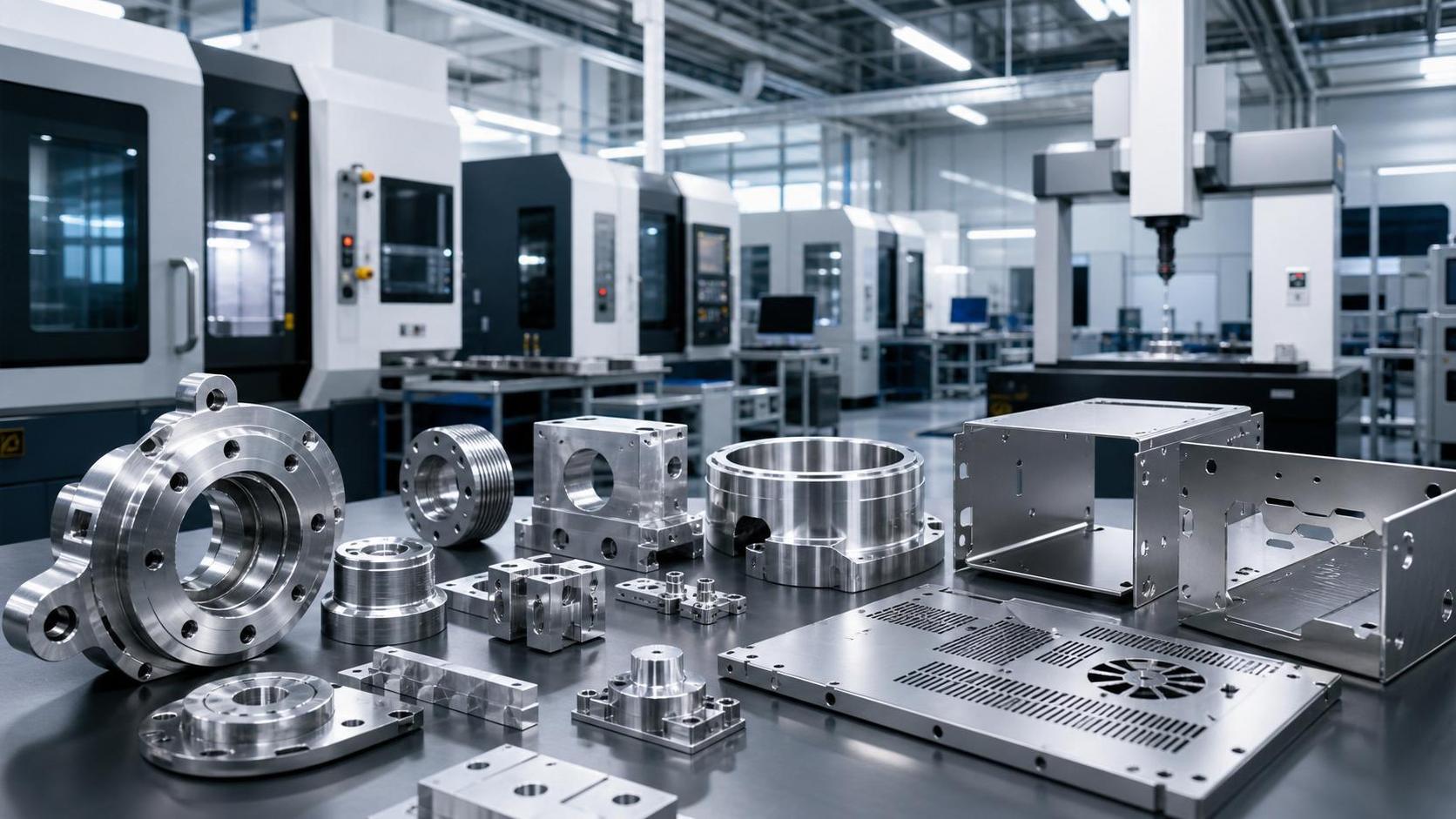
Metalworking in Japan remains a reference point for buyers seeking precise machining, disciplined process control, and dependable repeatability. Yet reputation alone does not answer the real sourcing question. A technically sound decision depends on process fit, drawing interpretation, inspection depth, delivery stability, and commercial alignment across the full supply chain.
That is why metalworking Japan continues to matter across industrial automation, transport equipment, energy systems, electronics housings, and specialized machinery. In practice, Japanese suppliers are often strongest where dimensional consistency, material traceability, and production discipline matter more than purely low unit cost.
From a broader industry perspective, this topic also connects manufacturing capability with metals knowledge, international sourcing, and delivery risk. That cross-functional view is increasingly important for companies comparing suppliers not only by price, but by process maturity and long-term execution reliability.
What metalworking in Japan usually means in practice
The phrase metalworking Japan often covers more than machining alone. It may include CNC turning, milling, grinding, stamping, laser cutting, welding, sheet metal fabrication, forging support, surface finishing, assembly, and quality documentation.
What distinguishes many Japanese operations is not one single process. It is the way process planning, tooling maintenance, shopfloor discipline, and inspection routines are integrated into daily production.
This matters because a supplier can own advanced machines and still underperform. Stable results usually come from documented work standards, controlled change management, and operators who understand both tolerance logic and defect prevention.
Common strengths buyers associate with Japanese suppliers
- Tight tolerance control on precision parts and assemblies.
- Strong consistency between pilot samples and repeat batches.
- Clear attention to material certification and lot traceability.
- Low tolerance for informal process deviations on the shop floor.
- Better alignment between manufacturing engineering and quality teams.
These advantages are especially relevant when parts interface with automation equipment, motion systems, medical devices, semiconductor tooling, or premium consumer products. In those cases, the cost of dimensional drift or cosmetic inconsistency can exceed any nominal savings elsewhere.
Why the market keeps watching metalworking Japan
Global sourcing conditions have changed. Buyers now evaluate not just factory capability, but resilience under labor pressure, energy volatility, material fluctuations, and trade policy uncertainty. Japanese metalworking stays relevant because it often offers a different value proposition from volume-driven sourcing regions.
In many segments, Japan is not chosen for the lowest quotation. It is chosen when the total cost of poor quality, delayed qualification, engineering rework, or unstable repeatability would create larger business risk.
This is also where an industry portal such as Baozhen Industrial Intelligence Portal adds context. Metalworking decisions are rarely isolated. They are influenced by raw material trends, smart manufacturing adoption, export compliance, logistics efficiency, and supplier risk visibility across borders.
Current areas of attention
Capability should be matched to part type
Not every Japanese supplier is ideal for every product. The real value of metalworking Japan appears when the factory’s equipment, engineering habits, and commercial model align with the part’s technical profile.
High-mix, low-volume precision work is one area where many suppliers perform well. These programs often require careful setup control, engineering review, and disciplined first article validation rather than aggressive throughput alone.
Complex machined parts with critical datums, fine surface finish requirements, or demanding concentricity targets can also fit well. The same is true for sheet metal products where downstream assembly tolerance stacks are sensitive.
Typical fit by manufacturing profile
- Precision machined components for motion, fluid, or instrument systems.
- Fabricated assemblies needing dimensional accuracy after welding or bending.
- Stainless steel or aluminum parts where finish quality affects final product value.
- Lower-volume programs requiring stable revision handling over several years.
By contrast, parts driven mainly by commodity pricing and large-scale volume may not always justify Japanese sourcing. In those cases, a strong technical offer can become commercially uncompetitive unless the quality differential is truly material.
Quality expectations go beyond inspection reports
A common mistake is to judge a supplier only by certificates, equipment lists, or sample appearance. Effective evaluation looks deeper into how quality is built into the process before the part reaches final inspection.
In metalworking Japan, quality expectations often include process discipline that may seem implicit. Drawings are expected to be clear, revision history controlled, and tolerance intent understood without repeated ambiguity.
This can create strong results, but it also means communication must be precise. If a buyer sends incomplete technical data, the supplier may respond conservatively, delay quotation, or exclude hidden assumptions from the offer.
Key signals of a mature quality system
- Critical dimensions are linked to process controls, not just end checks.
- Measurement methods are defined for difficult geometric features.
- Nonconformance handling includes root cause and corrective action traceability.
- Surface treatment, heat treatment, and outsourced steps are equally controlled.
- First article approval criteria are documented before production starts.
When quality expectations are high, supplier discussion should include Cp, Cpk where relevant, gauge strategy, sampling logic, and how the factory treats process changes after approval. That conversation says more than a generic capability brochure.
Sourcing considerations that affect feasibility
Commercial feasibility is where many sourcing projects become more nuanced. Metalworking Japan can deliver excellent production outcomes, but lead times, engineering hours, tooling economics, and documentation requirements may be heavier than expected.
Quotations can also reflect a lower tolerance for uncertainty. If annual volumes are unclear, drawing revisions remain unstable, or packaging requirements are not defined, the supplier may price in risk or hold back capacity.
Logistics should not be treated as an afterthought. For critical parts, ocean freight may reduce cost but complicate inventory planning. Air freight protects time but changes total landed economics. Customs classification and export documentation also require early review.
Points worth clarifying before nomination
- Whether the quoted process is fully in-house or partly subcontracted.
- Which tolerances drive cycle time, scrap risk, or fixture complexity.
- How material substitutions are controlled during supply disruption.
- What inspection records are standard and which are chargeable extras.
- How forecast changes affect capacity reservation and lead time commitments.
A practical way to assess suppliers
A useful assessment starts with the part itself. Separate critical-to-function features from features that are merely conventional. Then review whether the candidate supplier’s process path matches those technical priorities.
It helps to compare suppliers across four dimensions: process capability, quality system behavior, communication clarity, and supply chain stability. This creates a more realistic picture than unit price comparison alone.
For metalworking Japan, communication quality deserves particular attention. Clear responses on tolerances, datum strategy, finish standards, and acceptance criteria often indicate how the factory will behave once production pressure increases.
A structured trial order can also reveal more than an audit. Small-batch execution shows actual setup behavior, packaging discipline, documentation accuracy, and responsiveness to deviation handling.
Where to focus next
The most useful next step is to build a sourcing framework that links part complexity, quality risk, and delivery consequence. That makes it easier to decide when metalworking Japan is strategically justified and when another supply model is more efficient.
It is also worth tracking adjacent signals, including metal price movement, factory automation trends, export compliance updates, and logistics conditions. These factors shape the real value of a supplier long after initial qualification.
A strong evaluation does not begin with assumptions about national reputation. It begins with drawings, tolerances, materials, process evidence, and execution risk. When those elements are aligned, metalworking Japan can be a highly effective sourcing option for demanding industrial programs.
- industrial automation
- smart manufacturing
- automation equipment
- stainless steel
- metal fabrication
- trade policy
- export compliance
- international sourcing
- industrial intelligence
- process automation
- factory automation
- manufacturing
- metals
- steel
- aluminum
- sheet metal
- metal products
- global sourcing
- export documentation
- supply chain
- logistics
- logistics efficiency
- heat treatment
- surface treatment
- ocean freight
- air freight
- metalworking
- process control
- sheet metal fabrication
- raw material trends
- sheet metal products
- metalworking Japan
Related Intelligence