
PLC Programming Mistakes That Cause Downtime
PLC Programming Mistakes That Cause Downtime
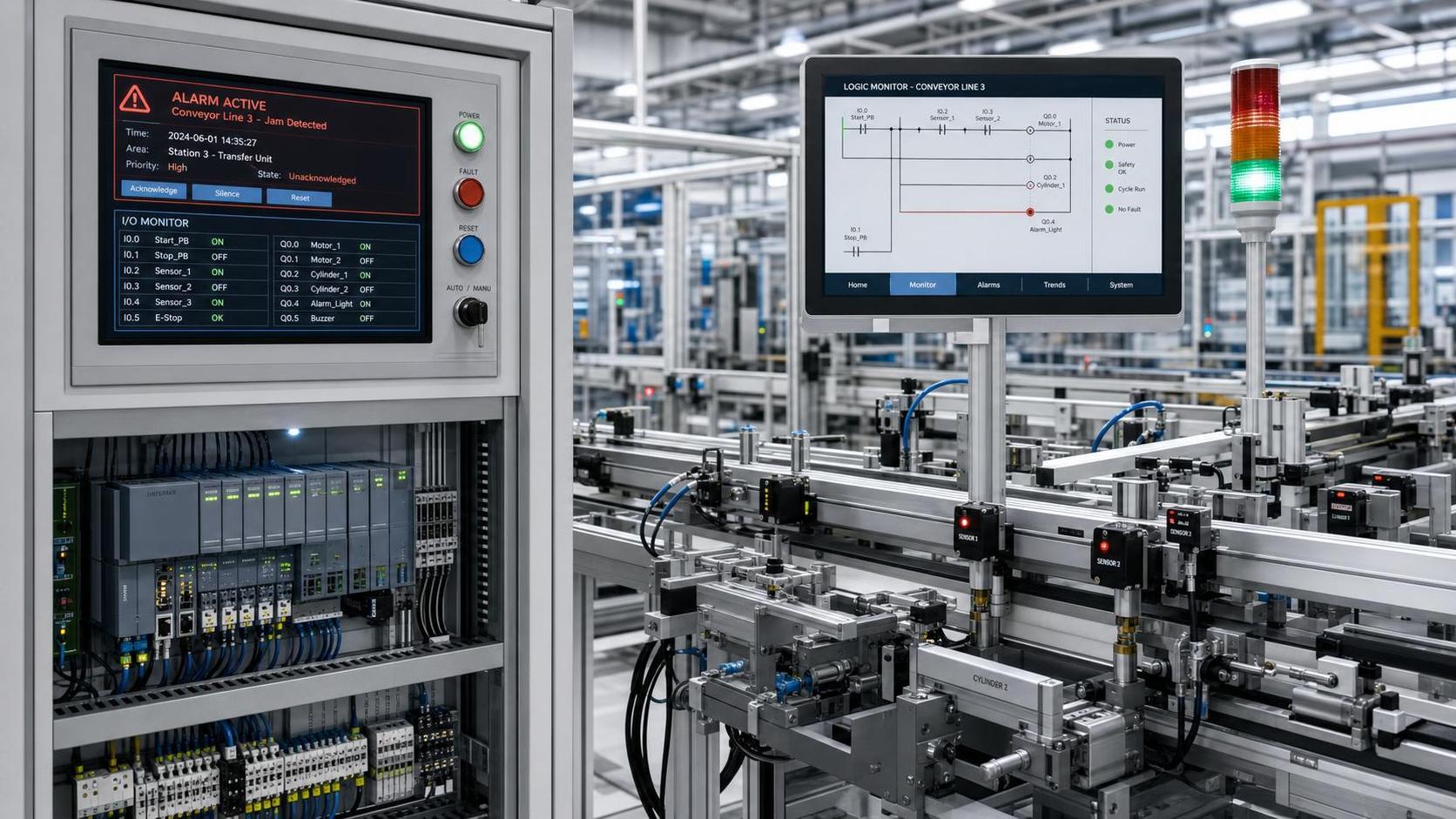
Even minor PLC programming mistakes can trigger unexpected downtime, unsafe machine behavior, and costly maintenance delays. For after-sales maintenance teams, understanding where PLC programming goes wrong is essential to restoring equipment faster, reducing repeat failures, and improving customer trust. This article outlines the most common errors that disrupt production and explains how to identify, prevent, and correct them in real industrial environments.
The failures that hurt production most are rarely dramatic at first. A conveyor starts stopping once per shift with no clear alarm. A filling line occasionally misses a reject signal. A hydraulic station trips after a restart even though the motor and valve checks look normal. On site, these events are often treated as electrical noise, operator error, or aging equipment. In many cases, though, the root cause sits inside the control logic: not a broken PLC, but a program that does not behave well under real factory conditions.
That distinction matters. A PLC program can appear correct during commissioning and still become a downtime source once production speeds increase, operators begin using manual mode heavily, sensors drift, or upstream and downstream equipment stop running in sync. Good troubleshooting is less about reading ladder logic line by line and more about asking where the logic assumes ideal timing, ideal signals, or ideal operator behavior.
When Sequence Logic Looks Fine but the Machine Still Stops
One of the most common PLC programming mistakes is sequence design that works only when every input changes in the expected order. This is easy to miss on packaging lines, transfer systems, palletizers, and multi-station assembly machines. During testing, engineers usually run a clean cycle. In production, a cylinder may extend slower because of air pressure fluctuations, a sensor bracket may vibrate, or an operator may interrupt the cycle in manual mode and resume from a half-finished state.
If the sequence depends on a single brief input transition and does not confirm the actual machine state, the system may hang between steps or jump forward at the wrong moment. Maintenance teams then see “random” downtime that is not random at all. It is sequence logic with weak state verification.
A reliable sequence usually needs more than step bits. It needs explicit permissives, timeout handling, and recovery paths after interruption. In real plants, restart behavior is often more important than normal cycle behavior. After a jam clearance, power dip, E-stop reset, or mode change, the PLC should know whether to return to a safe home state, request operator confirmation, or continue from a valid checkpoint. Programs that skip this design discipline create the kind of downtime that wastes the most maintenance hours because nothing appears physically broken.
Poor Signal Handling Creates False Faults and Missed Actions
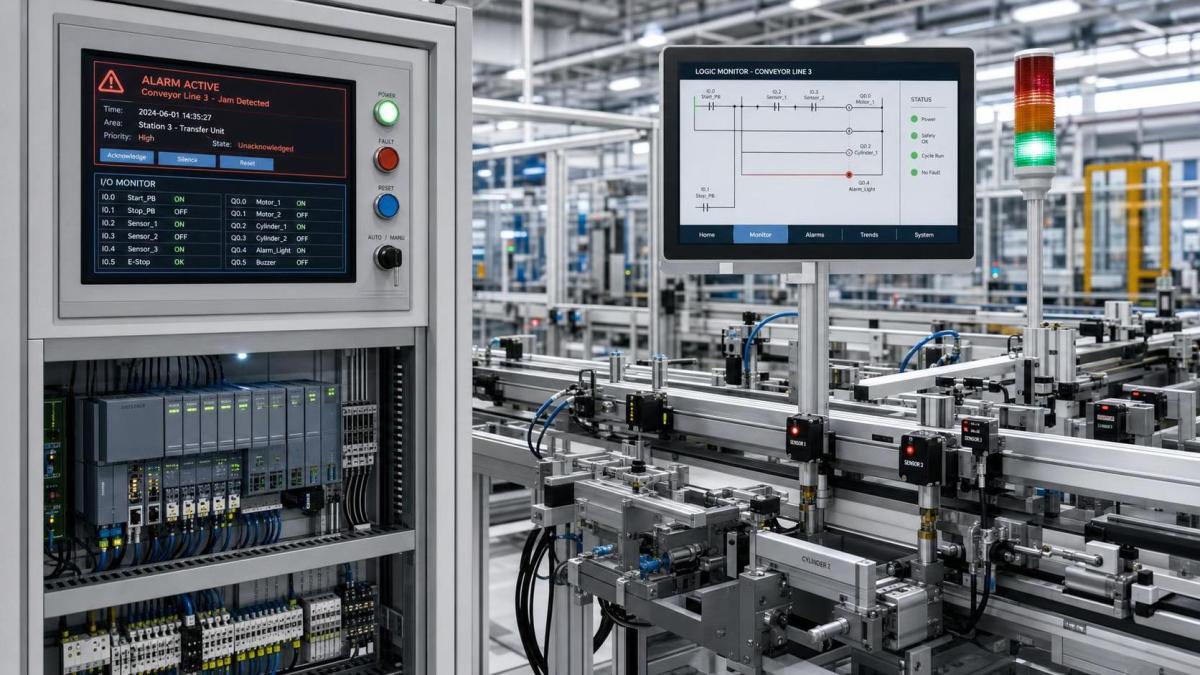
Another pattern shows up in sensor-heavy machines: the PLC logic treats every input as clean, stable, and equally trustworthy. That assumption does not survive long in dusty workshops, metal fabrication plants, washdown areas, or lines with strong vibration. A photoeye may flicker. A pressure switch may chatter near threshold. A proximity sensor may detect a metal part differently after tooling changes. None of this means the component has failed.
Programming mistakes here usually take two forms. The first is no filtering at all. The second is over-filtering, which delays response enough to break machine timing. Both cause downtime, but in different ways. Without sensible debounce or validation logic, the PLC can trigger nuisance alarms or double-count parts. With excessive delays, it can miss short but valid signals on high-speed equipment.
This is where site conditions matter more than generic coding rules. A press line, a bottling machine, and an overhead transfer unit do not experience signals the same way. The right approach depends on scan time, process speed, sensor type, and what happens if one transition is missed. In some projects, the practical fix is not a hardware replacement but a review of edge detection, input filtering, and how the PLC confirms a completed action before enabling the next step.
Manual Mode and Auto Mode Are Often Programmed as Afterthoughts
A surprising amount of downtime starts after maintenance work, tooling changes, or product changeovers rather than during normal automatic production. That usually points to weak mode management. Many PLC programs are built around automatic sequence flow, while manual jog, setup, and maintenance operations are added late. The result is logic that allows outputs to move without fully checking interlocks, or logic that blocks restart because internal step bits and field positions no longer match.
After-sales teams know this pattern well. The customer reports that “the machine was fine until we changed format” or “it stopped after manual jogging.” On investigation, no major component is damaged. The real issue is that the control logic was never designed to manage transitions cleanly between setup, manual intervention, fault reset, and automatic resume.
Good PLC programming does not treat manual mode as a side function. It defines what can move independently, what must remain mutually locked, and what the system should do before auto mode becomes available again. On machines with servo axes, pneumatics, or multiple guarding zones, this is not only a productivity issue. It is also tied to safe behavior and troubleshooting speed.
Alarm Logic That Tells You Too Little or Too Much
Not every PLC programming mistake stops a machine directly. Some mistakes extend downtime because the alarm strategy is weak. A single “general fault” alarm may satisfy basic functionality, but it does not help a maintenance technician standing beside a stopped line with a waiting production supervisor. At the other extreme, a badly structured program can flood the HMI with cascading alarms, making the original fault hard to identify.
The practical standard is not the number of alarms but whether they support diagnosis. A useful alarm should indicate what condition failed, where in the sequence it failed, and whether the machine is waiting for a sensor, a motion complete status, a communication handshake, or an operator action. Timeouts matter here. If a timeout is too short, nuisance trips increase. If it is too long, operators stand idle while the PLC waits for a condition that will never arrive.
This problem becomes more visible on integrated lines where the PLC is exchanging signals with robots, drives, weighers, printers, vision systems, or upstream MES functions. A fault may originate outside the PLC but still require clear logic inside the PLC to identify the failed handshake and isolate the stop reason. Without that structure, downtime expands from minutes to hours because everyone debates which device failed first.
Memory Mapping, Tag Reuse, and “Small” Changes That Break Running Equipment
Many downtime events are introduced during modification, not original build. A line has been running for years, a customer requests one small logic change, and a week later intermittent faults begin appearing. In older systems especially, reused memory bits, undocumented tags, copied rungs, and unclear comments make PLC programming fragile. One edit intended for a new conveyor branch may affect an existing reject station because internal bits are shared in ways no one documented properly.
This is common in retrofit work, mixed-brand production environments, and plants where multiple contractors have touched the same program over time. From a maintenance perspective, the lesson is straightforward: if the code structure is hard to read, every recovery action becomes slower and every future change carries more risk. Downtime is then caused not only by the bug itself, but by the extra time required to prove where the bug lives.
Where production continuity matters, version control, backup discipline, and change records are not administrative extras. They are part of downtime prevention. This is especially true for manufacturers managing several similar machines across different plants. A logic improvement that works on one line can create unexpected behavior on another if the I/O assignment, field device response, or operator sequence is slightly different.
Communication and Scan-Time Assumptions
As more equipment is linked through industrial networks, downtime increasingly comes from timing assumptions rather than hard device failure. A PLC may expect a drive status bit, robot ready signal, or remote I/O confirmation within a fixed interval that was acceptable in a simple standalone cell. Once the same logic is deployed in a larger networked system, that timing window may become too tight.
This does not mean communication protocols are unreliable. It means the program must be written with realistic expectations about update cycles, transient delays, startup order, and what should happen when data is stale or temporarily unavailable. A machine that trips on every short communication interruption will stop more often than one that distinguishes between a brief delay and a true device fault.
For after-sales engineers, this is one area where reproducing the fault offline is often difficult. The issue may only appear when the line is fully loaded, when multiple devices boot together after a plant outage, or when a remote cabinet experiences intermittent environmental interference. That is why trend logs, sequence history, and timestamped alarms are so valuable. Without them, teams end up replacing modules that were never faulty.
What Experienced Teams Check First
When a machine suffers repeated unexplained stops, experienced technicians usually narrow the problem through a few practical questions before touching hardware:
- Did the stop happen during automatic cycling, manual intervention, restart, or product changeover?
- Is the PLC waiting for a physical condition, or has it lost sequence position internally?
- Are the alarm and event records specific enough to identify the first failed condition?
- Was there any recent logic change, recipe modification, I/O replacement, or network adjustment?
- Does the fault correlate with speed changes, environmental conditions, or a particular operator action?
Those questions sound basic, but they separate PLC logic issues from mechanical wear, unstable utilities, and field device problems faster than random part replacement does. In many plants, the biggest gain comes from improving diagnostic structure inside the program and tightening change management around service interventions.
For companies focused on factory digitalization, automation reliability, and maintenance efficiency, PLC programming should be treated as an operational asset rather than a one-time commissioning task. The code has to survive imperfect signals, interrupted cycles, mixed skill levels on the shop floor, and years of modifications. If a line is already showing intermittent downtime, the next useful step is rarely to review every rung blindly. It is to examine where the logic assumes a cleaner, faster, or more predictable factory than the one that actually exists.
Related Intelligence