
Choosing a Baby Food Maker Machine: Capacity, Cleaning and Safety
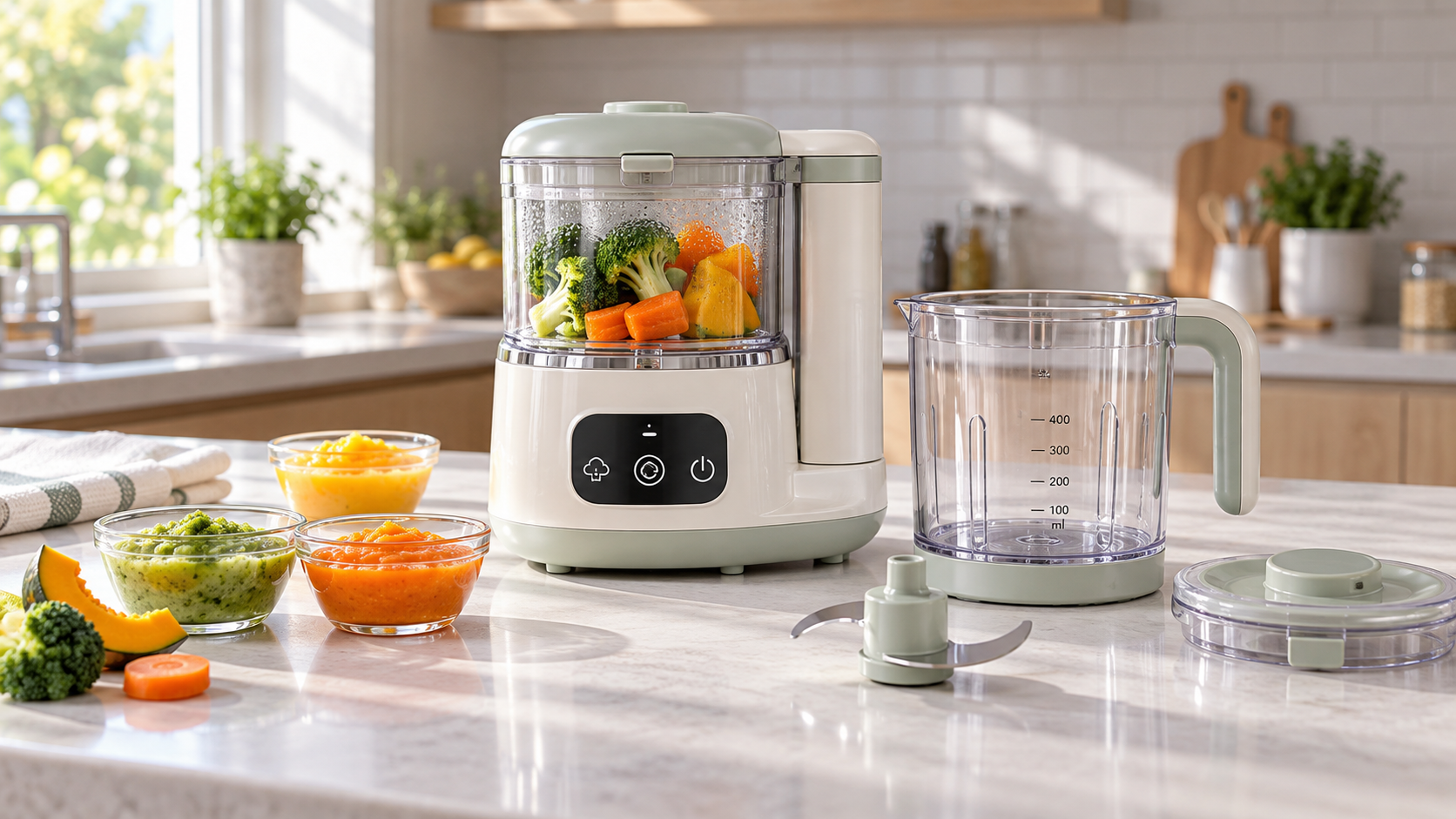
A baby food maker machine is most useful when its capacity and cleaning routine match the way your household prepares meals. For a family making small portions frequently, a compact appliance with a bowl that is easy to dismantle may be more practical than a larger model. For batch cooking, usable capacity and safe storage matter more than the size printed on the box.
Start by deciding whether you need an appliance that steams and blends, or simply a reliable way to make smooth food. A separate steamer and a blender you already own may be sufficient. A dedicated machine can reduce handling and countertop work, but it also adds another appliance to clean, maintain and store.
Choose capacity around the portions you will actually make
Manufacturers may advertise the total volume of a bowl, but the usable volume can be lower. Food may need space for steam to circulate, and a blender may have a separate maximum fill line for safe operation. Check the instructions for both cooking and blending limits, particularly if you intend to prepare several portions at once.
A small bowl suits families who prefer to prepare a little food at a time, want a compact appliance or have limited refrigerator and freezer space. It can also make sense when a baby is just beginning to eat solids and portions are small. The trade-off is that preparing several ingredients separately may require multiple cycles.
A larger bowl is useful if you plan to cook ahead, prepare food for more than one child or blend ingredients for family meals as well. But extra volume is only helpful if the machine can process the quantities you actually put in it. Some blenders struggle to move a very small amount of food around the blade, leaving an uneven texture or requiring frequent scraping.
Before choosing a larger model, consider the full batch: how much your child is likely to eat, how you will divide the remainder, and whether you have suitable storage containers and space. Follow current food-safety guidance from your local health authority for cooling, refrigerating, freezing and reheating homemade baby food. A bigger batch saves preparation time only when you can handle and store it safely.
Look beyond the bowl’s headline size
- Minimum working quantity: Check whether the instructions specify a minimum amount for blending. A large bowl may be inconvenient for a single small portion.
- Steam basket capacity: On combined machines, the basket may hold less than the blending bowl. Compare the capacity of each stage.
- Batch flexibility: Consider whether you want to cook ingredients together or separately. Different foods may need different cooking times and textures.
- Counter and storage space: Include the footprint of the machine, its cord, accessories and any containers you intend to use.
If you are unsure about future portion sizes, choose for your likely routine over the coming months rather than buying the largest model available. A machine that is awkward for everyday use can quickly become a storage item.
Inspect the parts you will have to clean
Cleaning is often the deciding factor between an appliance that gets used and one that stays in the cupboard. Food residue can collect around blades, seals, lids and narrow openings. Steam functions add another area to maintain: the water reservoir and any channels described in the instructions.
Look for a bowl and lid that come apart without excessive force, with surfaces you can reach and inspect. A removable blade assembly can make cleaning easier, provided it can be handled safely and reassembled correctly. Check whether seals are removable and whether the manufacturer explains how to clean and replace them. A fixed seal is not automatically a problem, but it should not leave inaccessible gaps where food can collect.
Dishwasher-safe parts are convenient, but the claim may apply only to selected components or a particular dishwasher rack. Confirm what can go in the dishwasher and what must be washed by hand. The motor base generally needs different care from food-contact parts; follow the appliance instructions and keep electrical components away from water.
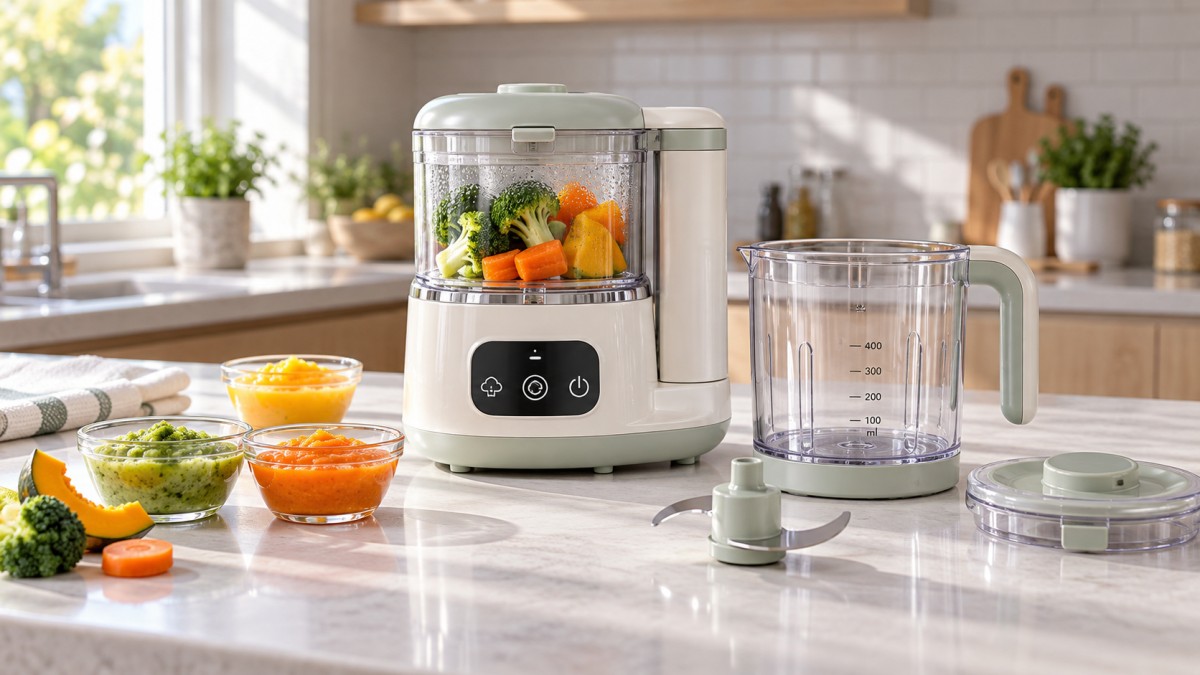
For a steam-and-blend model, read the reservoir maintenance instructions before buying. Depending on the design and local water conditions, mineral deposits may need periodic removal. Check how the reservoir opens, whether you can see inside and what cleaning or descaling method the manufacturer permits. Avoid assuming that a steam cycle cleans or sanitizes the whole appliance unless the manufacturer explicitly states how that function works.
A useful comparison is the number of steps after an ordinary meal: emptying the bowl, removing the blade or seal where permitted, washing and drying each component, then putting the machine back together. A model with fewer accessories may be easier to manage, even if another offers more functions.
Safety starts with the design and continues with use
Review the appliance’s instructions and safety information before purchasing. An interlock that prevents operation unless the bowl or lid is correctly fitted can reduce the chance of accidental operation. A stable base, secure lid and clear controls are also helpful when handling hot food.
For steam models, check how the lid opens and where steam escapes. Steam and hot cooking liquid can cause burns, so the machine should allow you to open it and remove food without reaching directly into the steam path. Keep the appliance and cord out of a child’s reach, and let hot parts cool as directed before cleaning.
Blades deserve attention even on a small appliance. Check how the assembly is removed and whether there is a safe way to grip it without touching the cutting edges. Unplug the machine before dismantling or clearing a blockage, and never put fingers or utensils near a moving blade.
Food-contact materials and replacement parts
Check the manufacturer’s description of the materials that touch food, including the bowl, lid, seals and blade assembly. The material should be intended for food contact and suitable for the temperatures and cleaning methods specified for that part. A material claim on the bowl alone does not tell you what the seals or other contact surfaces are made from.
Glass lets you see food and residue clearly, but it can be heavier and may break if mishandled or exposed to conditions outside the manufacturer’s instructions. Plastic can be lighter; check its permitted temperatures and cleaning instructions, and replace parts that become damaged. Stainless steel components can be durable, though an opaque bowl may make it harder to judge texture without opening it. No single material removes the need to inspect, clean and maintain the appliance.
Also look for a clear route to replacement bowls, blades and seals. A damaged or worn food-contact part can make an otherwise functional machine unsuitable for continued use. Replacement availability varies, so check before buying rather than assuming a component can be sourced later.
Match blending control to your child’s changing needs
A smooth puree may be useful at the start of complementary feeding, but a machine should also let you produce thicker or more textured food as your child develops. A pulse control or adjustable blending time can give you more control than a single automatic program. The result will still depend on the ingredient, cooking time and amount of liquid.
Be cautious about treating preset labels as a guarantee of a particular texture. Fibrous foods and small batches can behave differently from soft vegetables or larger quantities. Check the result before serving and adjust it to your child’s developmental stage. Follow advice from your child’s healthcare professional when you have questions about introducing foods or suitable textures.
Some combined machines allow cooking liquid to remain with the food for blending; others collect it separately. That difference affects how much control you have over consistency. Being able to add liquid gradually is useful when you want to avoid making a batch thinner than intended.
No machine can determine whether a meal is safe for a particular child. Check the finished food’s temperature before feeding, and prepare ingredients in a form appropriate for the child’s age and development. Follow professional guidance on introducing allergens and on foods or textures that pose a choking risk.
Which type is likely to suit your routine?
A combined machine can be convenient, but it does not necessarily eliminate transfers or washing. Some designs require you to move food from a steam basket into a blending bowl; others use the same container for both steps. Read the operating sequence, not just the list of functions, to understand how much handling is involved.
Similarly, an appliance with many presets is not automatically easier to use. Consider whether controls are legible, whether you can stop a cycle, and whether the instructions explain what to do if food sticks or the machine overheats. Simple controls may be preferable when the main task is cooking and blending a few ingredients.
Make the final comparison
Once you have narrowed the choice, compare models against the same preparation routine. Imagine making a small portion today and a larger batch later: can each machine handle both? Then trace the cleaning process from bowl to blade to reservoir, including drying and reassembly. Check the manual for fill limits, hot-food handling, dishwasher restrictions and replacement parts.
Price matters, but so does what is included. Check whether the advertised package contains the bowl, blade, steam basket and other components needed for normal use, and whether replacement parts are sold separately. Consider the space the machine will occupy and how often it will be used alongside equipment you already own.
The best choice is the one that makes your intended routine straightforward without creating uncertainty about cleaning or handling hot food. If an existing blender and steamer already do that well, a dedicated machine may add little. If combining those steps would make regular preparation easier, choose the model whose usable capacity, accessible parts and instructions fit your household.
- Last One:No more articles
- Next Article:From Experience to Data: Steelmaking Enters a High-End, Smart and Green EraOct 31, 2026
Related Intelligence