
Australia Imposes Anti-Dumping Duty on China HRC
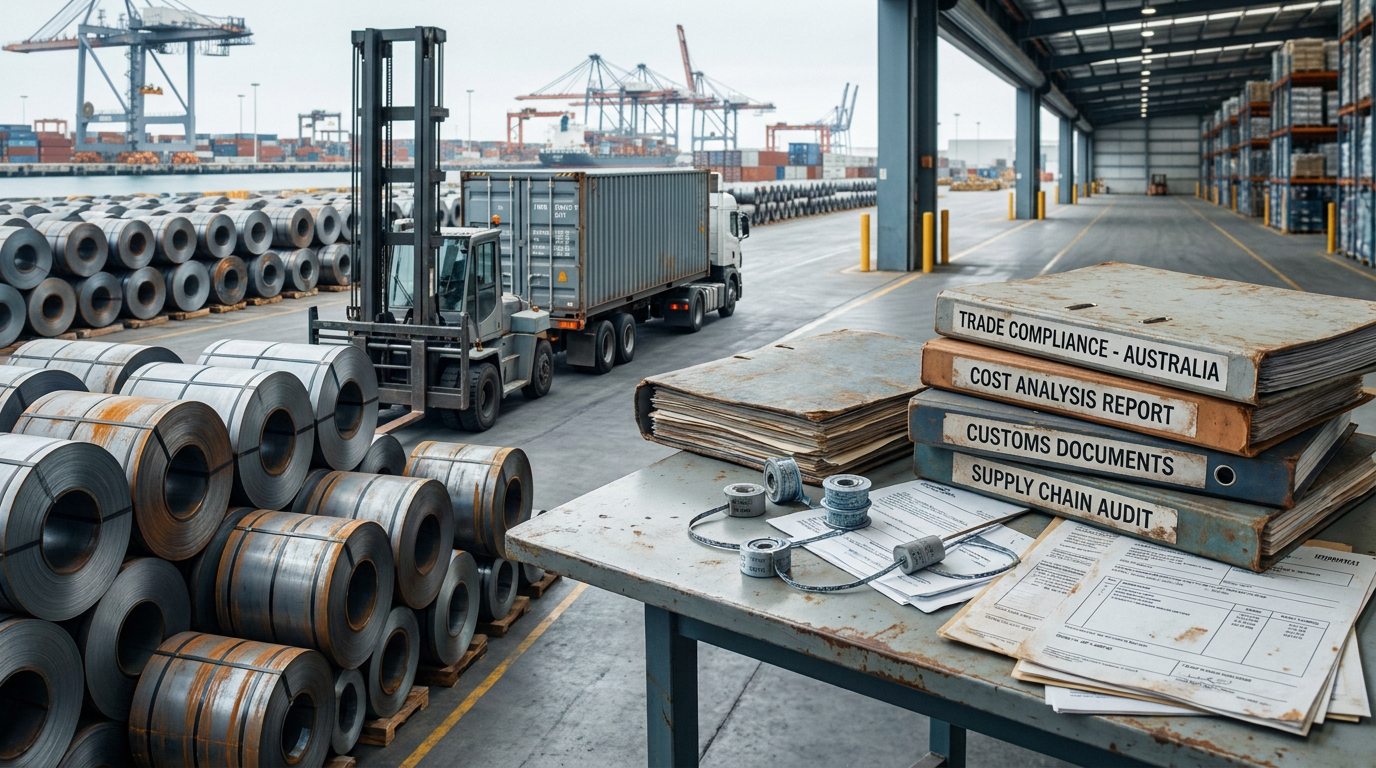
On May 4, 2026, a final anti-dumping decision in Australia took immediate effect against hot-rolled steel coil from China, creating a direct rule change for steel trade into the Australian market. The development matters not only to exporters, but also to importers, procurement teams, distributors, and supply-chain operators because it changes landed cost expectations and raises the importance of supplier qualification, origin documentation, and price review in ongoing and future transactions.
What the ruling confirms
According to the provided event summary, the Australian Anti-Dumping Commission issued a final determination on May 4, 2026 imposing anti-dumping duties on hot-rolled steel coil from China. The decision applies different duty levels to named major exporters, including Baoshan Iron & Steel and Meishan Iron & Steel, with rates ranging from 38.1% to 59.1%. Other Chinese exporters are subject to a unified rate of 79.0%.
The ruling became effective on the same day. The provided information states that this directly affects the cost structure and compliance access for Chinese steel exports to the Australian market, and that importers need to reassess supplier qualifications, certificates of origin, and price competitiveness.
Where the practical impact is likely to appear first
Pressure on export pricing and market access
From an industry perspective, Chinese exporters of hot-rolled steel coil are the most directly exposed because the duty rates alter the economics of selling into Australia. The main impact is likely to appear in quotation strategy, customer negotiations, contract review, and shipment planning. What deserves closer attention is whether exporter-specific treatment and the residual rate affect supplier selection by buyers.
Import-side checks become more important
Australian-side importers and procurement entities may face more immediate operational adjustments. Analysis shows that supplier qualification, origin documentation, and delivered-price comparison become more important once a final duty is already in force. In practice, this can affect sourcing approval, order placement, document review, and internal compliance screening before customs clearance or delivery scheduling.
Distributors and downstream buyers may need to revisit sourcing assumptions
Channel distributors and manufacturing buyers that rely on imported hot-rolled steel coil may also need to reassess procurement assumptions. Observably, the issue is not only the duty itself, but whether existing supplier arrangements still remain commercially workable under the new cost structure. This can influence purchasing cycles, supplier mix, and bid or resale pricing discussions.
Supply-chain service providers face higher document sensitivity
For logistics coordinators, trade service firms, and related supply-chain operators, the ruling increases the sensitivity of origin-related and trade-related documentation. Analysis shows that even where companies are not the importer of record, they may still need to pay closer attention to document consistency and supplier identification because these factors now connect more directly to compliance access and transaction viability.
What companies should review now
Recheck supplier status against transaction exposure
Companies trading or buying this product category should review whether their suppliers fall under exporter-specific rates or the unified rate for other Chinese exporters. This is not a prediction of outcome, but a practical screening step tied directly to the confirmed duty structure in the provided information.
Scrutinize origin documents and supporting records
Because the event summary specifically highlights certificates of origin, businesses should pay closer attention to the completeness and consistency of origin-related paperwork and supporting trade records. If internal approval processes rely on standard document sets, those processes may now need stricter review before shipment, import declaration, or payment release.
Reassess pricing, bids, and delivery commitments
Analysis shows that the immediate effectiveness of the ruling makes pricing review urgent for transactions linked to the Australian market. Exporters, importers, and downstream buyers may need to revisit quotes, supply offers, and delivery commitments to determine whether earlier commercial assumptions remain valid under the new duty burden.
Continue watching for execution details and market response
The provided information confirms the final decision and its immediate effect, but it does not provide detailed implementation guidance beyond that. It is therefore more appropriate to monitor subsequent official wording, procurement document changes, and market-side execution practices rather than assume all operational details are already settled.
Why this should be read as an execution signal
Observably, this development is more than a policy discussion point because the decision is described as final and effective immediately. That makes it closer to an executed trade-rule change than to a preliminary regulatory signal. At the same time, analysis shows that the full commercial impact still depends on how importers, suppliers, and downstream buyers adjust their qualification standards, sourcing choices, and pricing behavior in response.
What deserves closer attention is the compliance threshold now implied in routine transactions: supplier identity, origin proof, and price competitiveness are no longer background paperwork issues, but factors that may directly affect whether a deal remains workable in the Australian market.
How the market may best interpret the development
At this stage, the ruling is best understood as a landed rule change with immediate trade and compliance consequences for hot-rolled steel coil flows from China to Australia. A cautious reading is more appropriate than a broad market conclusion. The confirmed facts point clearly to higher trade barriers for affected exporters and more rigorous supplier and document review for import-side participants, while the broader market response still requires continued observation.
Basis of this article and points still requiring verification
This article is generated based on the user-provided news title, event date, and event summary. For developments of this kind, commonly relevant source types may include official announcements, releases from trade or regulatory authorities, customs or trade administration information, industry association updates, standards-related documents, and reporting by authoritative media.
No specific official source link was provided in the input, so the exact official publication path remains to be further verified. Analysis also suggests continued monitoring of any later implementation details, official interpretive wording, procurement document adjustments, industry feedback, and company-level execution practices.
Related Intelligence