
Industrial Sourcing for Manufacturers: How to Evaluate Suppliers
Industrial sourcing for manufacturers involves more than comparing prices. Procurement teams must determine whether suppliers can meet specifications, maintain consistent quality, deliver on time, and manage risk as market conditions change. A structured evaluation makes those judgments more defensible—and helps prevent a low initial quote from becoming an expensive supply problem.
The right level of scrutiny depends on what is being purchased. A standard fastener with several qualified sources does not require the same investigation as a custom casting, a safety-critical component, or a production machine with a long replacement lead time. Start with the consequences of failure, then build the evaluation around the evidence needed to control them.
Define the Purchase Before Comparing Suppliers
A supplier cannot quote reliably against an incomplete specification. Before sending a request for quotation, align procurement, engineering, quality, and operations on what must be supplied and how acceptance will be determined.
For manufactured parts, the package may include drawings and revision levels, material grades, dimensions and tolerances, surface treatment, inspection requirements, and packaging instructions. For equipment, it may also need operating conditions, utility requirements, installation responsibilities, spare parts, and service expectations. State the expected order volume, release pattern, delivery location, and required dates.
Distinguish mandatory requirements from preferences. A critical dimension or specified material is not a negotiating point unless engineering approves a change. A preferred packaging format may be more flexible. This distinction gives suppliers room to propose alternatives without creating confusion about what is acceptable.
Ask every bidder to identify assumptions and exclusions in writing. Otherwise, one quote may include tooling and inspection while another leaves both for a later negotiation.
Verify the Factory’s Actual Capability
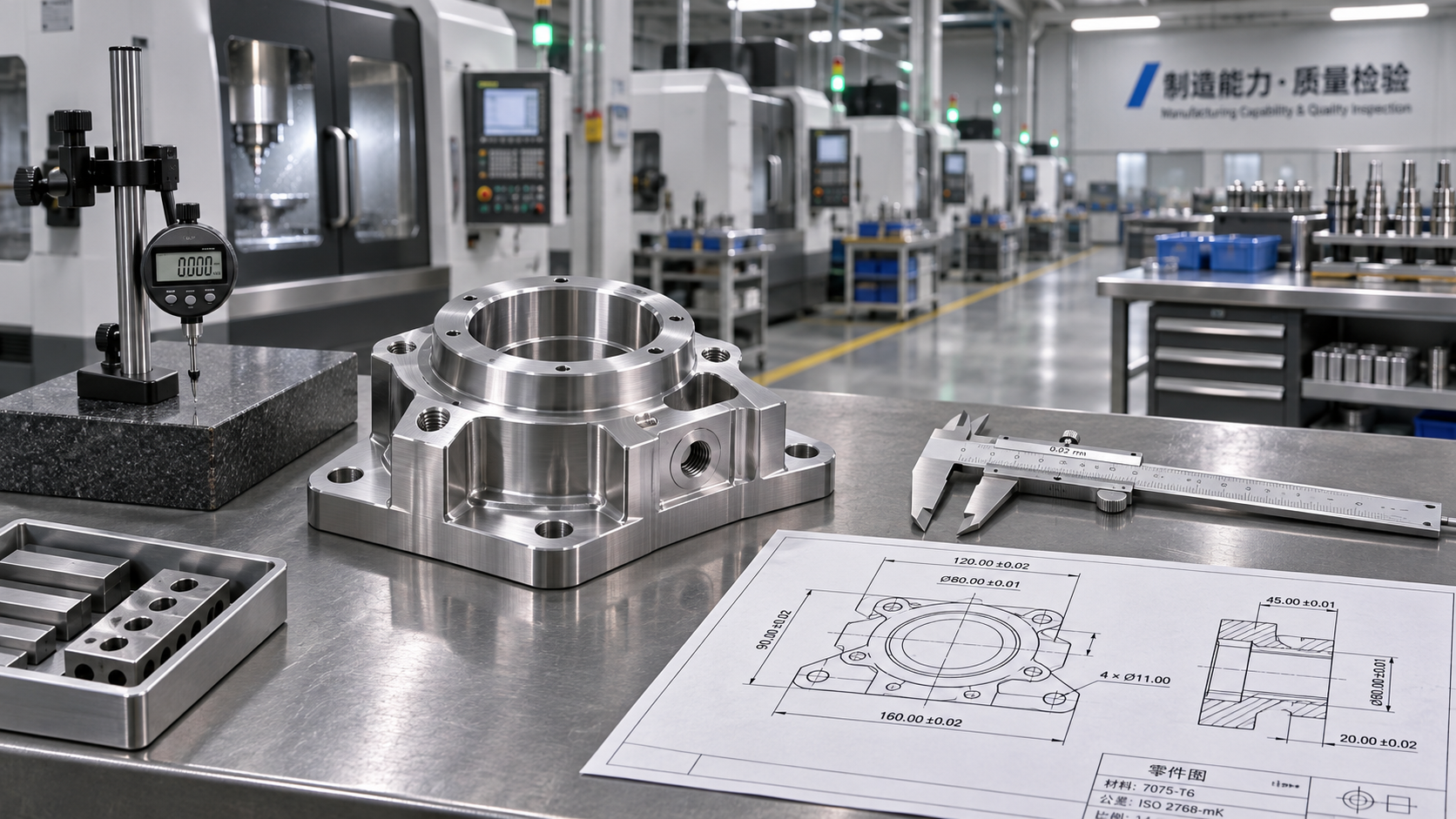
A supplier’s equipment list is a starting point, not proof that it can produce your part consistently. Look at the route from incoming material to finished shipment: which operations are performed in-house, which are outsourced, and who controls the interfaces between them?
For a machined component, relevant evidence might include comparable process experience, available inspection equipment, maintenance records, and the way operators manage tool wear. For fabricated metal products, ask how the supplier controls material identification, welding or forming requirements, distortion, finishing, and traceability where applicable. The specific checks should follow the drawing and the risks of the application.
Capacity also needs context. A machine may have the right technical capability but insufficient available time when existing orders, maintenance, setup changes, and outsourced processes are considered. Ask for a production schedule based on your expected releases, not just a stated monthly capacity. Clarify how the supplier would handle a demand increase or an urgent replacement order.
When an on-site visit is impractical, a remote process review can narrow the field. Request a live walkthrough of the relevant production and inspection areas, then verify documents and samples. For higher-risk purchases, a remote review may supplement rather than replace an audit or independent inspection.
Test Quality Controls, Not Just Certificates
A quality management certificate can be useful evidence, but it does not establish that a particular product meets your drawing. Check its scope, issuing body, validity, and relevance to the site and activities involved. Then examine how the supplier controls the characteristics that matter to your order.
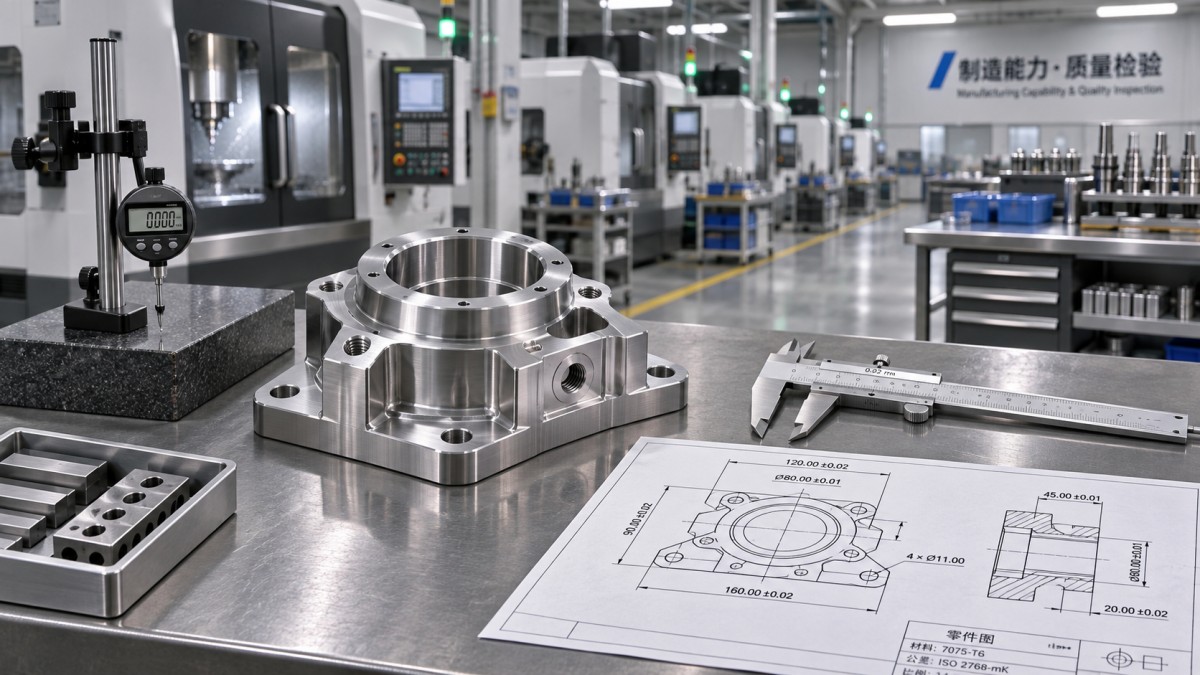
Ask to see the proposed inspection plan: what will be measured, at which production stages, with what equipment, and against which acceptance criteria. Measurement equipment should be suitable for the required tolerance and subject to an appropriate calibration process. If material properties are critical, agree on the test records or material certificates required and how they will be tied to the delivered lot.
A good question is: “What happens when a batch fails?” The answer should cover identification and containment of suspect material, notification, investigation, corrective action, and authorization before any rework or substitution. A supplier that can explain a disciplined response is more useful than one that merely promises defects will never occur.
Before volume production, agree on the purpose of samples or a trial run. A sample may confirm fit and finish, but it does not automatically demonstrate repeatability at production speed. Where the risk justifies it, review trial production records and inspect parts made through the intended process, using the intended tooling and material source.
Compare Total Landed Cost, Not Unit Price Alone
The cheapest quotation can still be the most expensive supply arrangement. Build a comparison using the same delivery point, order quantity, currency assumptions, and scope of work. Where a cost is uncertain, show it as an estimate or a scenario rather than hiding it inside the unit price.
Depending on the purchase, the comparison should account for tooling and setup, inspection and testing, packaging, freight, insurance, customs charges, warehousing, financing, and the expected cost of rejects or rework. For equipment, include installation, training, consumables, maintenance, and replacement parts over the intended operating period. Avoid counting the same charge twice when it is already included in the quoted price.
Delivery terms deserve particular attention in international sourcing. Identify the agreed Incoterms rule and named place, then confirm which party arranges and pays for transport, insurance where applicable, export formalities, import clearance, and duties. The point where risk transfers may differ from the point where all costs have been paid. Confirm current tariff treatment and import requirements for the product and destination rather than assuming a quoted duty estimate will remain valid.
For metal-intensive purchases, ask how the supplier handles changes in raw material prices. A fixed price may offer budget certainty for a defined period; an indexed or reviewable price may be more workable for a longer agreement. Either way, document the reference, review frequency, effective dates, and treatment of inventory or work in progress. The objective is to prevent an unexplained surcharge from appearing after an order is placed.
Examine Delivery and Supply Chain Exposure
A promised lead time is only useful when its starting point is clear. Does the clock begin at purchase order receipt, drawing approval, deposit payment, or material availability? Separate production lead time from transport and customs clearance, and ask which assumptions could change the date.
For critical items, map the dependencies behind the supplier’s promise. A factory may have reliable machining capacity but depend on one source for a special alloy, coating, electronic control, or heat treatment. Ask which subcontractors perform critical operations, whether alternatives are qualified, and how far upstream the supplier can trace material. A second supplier is not necessarily an independent source if both depend on the same mill or processor.
Discuss practical disruption responses before awarding business: access to safety stock, priority during shortages, alternate production sites, tooling access, and notification of delays. These arrangements have costs. Compare those costs with the potential impact of a line stoppage or missed customer delivery, rather than applying the same buffer to every item.
Check Commercial Stability and Compliance
A technically capable supplier can still be a fragile partner. Use proportionate due diligence to confirm the contracting entity, ownership of the production site where relevant, and whether the organization has the resources to support the order. Depending on the relationship and local availability of information, this may include financial statements, credit information, references, or a discussion of working-capital needs. No single document guarantees future stability; look for inconsistencies and unresolved concerns.
Check that the supplier understands the product and market requirements that apply to the transaction. These may include material restrictions, safety documentation, origin declarations, export controls, or sector-specific approvals. Requirements vary by product, destination, and end use, so assign responsibility for verification and obtain the relevant evidence before shipment. Do not assume that a supplier’s general statement of compliance covers every configuration.
Commercial terms should address ownership of drawings, tooling, and intellectual property; confidentiality; payment milestones; warranty; remedies for nonconforming goods; and the process for resolving disputes. For custom tooling, specify where it will be stored, who maintains it, how it is identified, and the conditions under which it can be transferred.
Make the Award Decision—and Keep Measuring
A scorecard helps teams compare evidence, but its weighting should reflect the purchase. For a safety-critical component, a price advantage should not compensate for an unverified production process. For a standardized, readily replaceable item, administrative cost and delivery reliability may matter more than an elaborate audit. Set pass-or-fail requirements before scoring commercial differences.
Record the reason for the decision, including open risks and who owns them. If a supplier is conditionally approved, define what must happen before full production: for example, acceptance of a trial lot, closure of an audit finding, confirmation of a subcontractor, or approval of a revised inspection plan. Put dates and evidence requirements against each condition.
After launch, review performance using measures both parties can calculate consistently. Agree on how on-time delivery is defined, how defects are counted, and how corrective-action response times are tracked. A recurring late shipment may reflect supplier capacity, but it can also expose unstable forecasts or frequent engineering changes from the buyer. The review should distinguish between them.
Market conditions also change after qualification. Baozhen Industrial Intelligence Portal covers metals markets, manufacturing processes, global trade, and supply chain developments that can provide useful context when reassessing a sourcing decision. Before renewing an agreement, revisit the specification, cost assumptions, capacity, and regulatory obligations—not just the latest quoted price.
- global trade
- international sourcing
- industrial intelligence
- manufacturing
- metals
- metal products
- customs clearance
- tariff
- supply chain
- procurement
- warehousing
- quality management
- export controls
- heat treatment
- surface treatment
- Incoterms
- industrial sourcing
- industrial sourcing for manufacturers
- fabricated metal products
Related Intelligence