Reefer Technology Upgrades That Actually Cut Temperature Drift
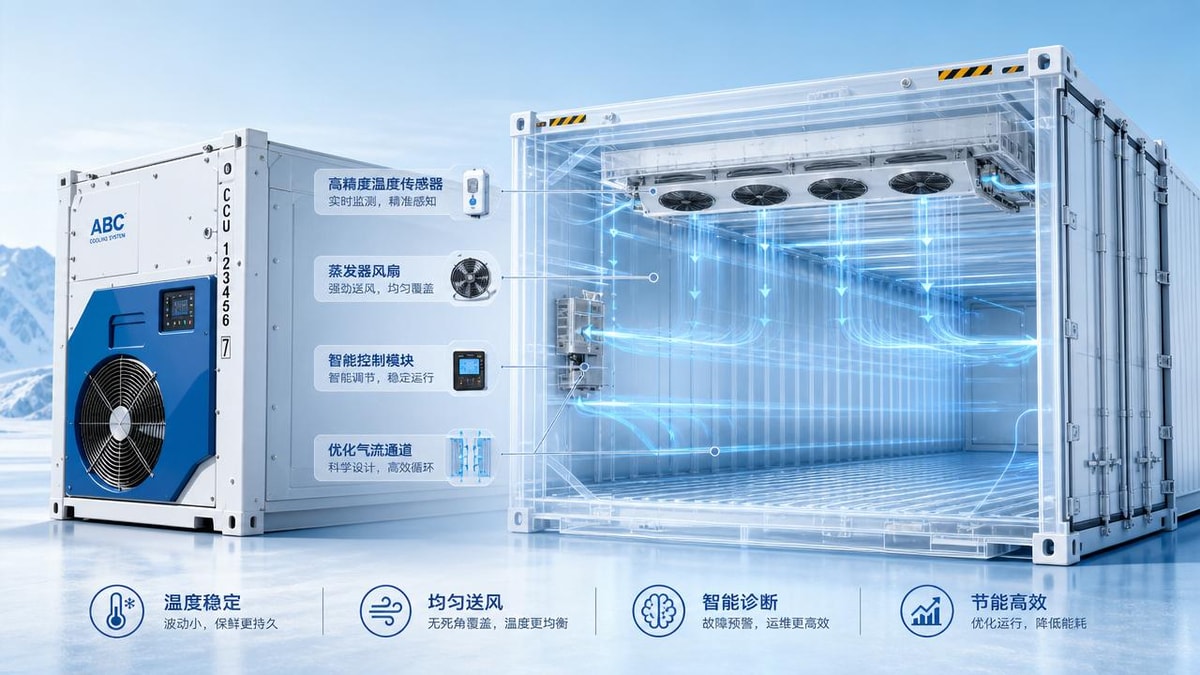
For after-sales maintenance teams, small failures in Reefer Technology can quickly become costly temperature drift events. As cold-chain standards tighten and uptime expectations rise, practical upgrades—not marketing claims—make the real difference. This article highlights the Reefer Technology improvements that help stabilize cargo temperatures, reduce service risk, and support more reliable diagnostics, preventive maintenance, and long-haul reefer performance.
When technicians search for reefer upgrades that actually reduce temperature drift, they are usually not looking for futuristic concepts. They want to know which hardware, controls, sensing, airflow, and monitoring changes measurably improve temperature stability in real operating conditions. For after-sales teams, the key question is simple: which upgrades reduce callouts, protect cargo, and make fault-finding faster?
The short answer is that the most effective improvements usually come from four areas: higher-accuracy sensing, smarter controller logic, more stable airflow and defrost performance, and better remote diagnostics. Not every upgrade delivers equal value. Cosmetic digital features may look impressive, but they do little if probe drift, evaporator icing, door leakage, fan inconsistency, or poor calibration still allow the box temperature to swing.
What maintenance teams should prioritize first
For service personnel, temperature drift is rarely caused by a single dramatic failure. More often, it builds from small deviations across the refrigeration cycle and control loop. A slightly inaccurate return-air sensor, a weak evaporator fan, delayed defrost termination, damaged door gaskets, or intermittent power quality issues can each push the reefer outside its ideal range.
That is why the best Reefer Technology upgrades are the ones that improve control stability under normal field conditions, not just in ideal factory tests. If an upgrade helps a unit recover faster after door openings, maintain tighter supply and return air spread, detect component degradation earlier, and simplify diagnosis, it has real maintenance value.
In practice, after-sales teams should evaluate upgrades using three criteria. First, does the upgrade reduce the frequency or amplitude of temperature deviation? Second, does it improve fault visibility so technicians can isolate root causes faster? Third, does it lower lifecycle service burden rather than adding another fragile subsystem to maintain?
Why sensor upgrades often deliver the fastest reduction in temperature drift
Accurate sensing is the foundation of stable reefer control. If the controller is reading biased or delayed data, even an efficient compressor and healthy evaporator cannot maintain temperature precisely. This is why upgraded air sensors, better product probes, and improved calibration routines often generate more immediate results than operators expect.
Many older or lower-spec systems rely on temperature probes that drift over time because of moisture ingress, connector corrosion, vibration fatigue, or uneven placement. In reefer applications, even a small error can trigger incorrect compressor cycling, delayed fan response, or misleading alarm behavior. Maintenance teams then waste time replacing major components when the real issue is poor sensing integrity.
High-value upgrades include tighter-tolerance digital sensors, improved probe housing design, more durable harness protection, and redundant sensor logic for cross-checking readings. Systems that compare supply-air, return-air, evaporator, and ambient values can identify unreasonable deviations earlier and flag likely sensor faults before cargo is affected.
Probe placement also matters. Upgraded sensor kits that improve airflow exposure and reduce thermal lag can make the control system more responsive without creating excessive hunting. For after-sales technicians, one major advantage is diagnostic clarity. When sensor data is trustworthy, it becomes much easier to separate refrigeration performance issues from control or airflow problems.
Just as important, some newer Reefer Technology platforms support easier field calibration verification. This reduces the gap between workshop performance and real deployment conditions. For fleets running mixed asset ages, upgrading sensing and calibration capability can be one of the lowest-cost ways to tighten temperature control across a large installed base.
Controller logic upgrades that improve stability instead of just adding features
Not all control software upgrades are equal. Some mainly add interface options, reporting functions, or compatibility layers. Others directly improve temperature stability by changing how the unit reacts to changing cargo load, ambient conditions, compressor cycling, and defrost intervals. Maintenance teams should care most about the second category.
Well-designed controller upgrades reduce overshoot and undershoot. They do this by refining compressor staging logic, fan-speed coordination, pull-down strategy, and alarm thresholds. In a reefer carrying temperature-sensitive goods, aggressive control can cool quickly but still create wide swings. Smarter logic maintains tighter average control by balancing recovery speed with stability.
Adaptive control is especially useful in long-haul and variable-climate operations. Instead of using one fixed response pattern, advanced controllers can adjust behavior based on ambient heat load, recent door openings, cargo thermal mass, and coil conditions. That means fewer unnecessary cycles and better consistency across changing routes.
Another meaningful upgrade is better event logging within the controller. When a reefer experiences drift, after-sales staff need to know whether the deviation began after a defrost cycle, a power interruption, a fan anomaly, or a prolonged door opening. A controller that stores actionable operating data turns troubleshooting from guesswork into evidence-based diagnosis.
Firmware quality matters too. In the field, poorly optimized software can create nuisance alarms, delayed recovery, or unstable responses around setpoint transitions. The real value of modern Reefer Technology is not the number of functions listed in a brochure, but whether the control logic remains predictable, serviceable, and stable under operating stress.
Airflow upgrades: the overlooked reason some reefers drift even when cooling capacity is fine
Temperature drift is often misdiagnosed as a cooling-capacity issue when the deeper problem is airflow management. A reefer can have sufficient refrigeration output and still fail to protect cargo evenly if air distribution is blocked, fan performance is inconsistent, or the evaporator side is partially fouled. For service teams, airflow deserves more attention than it often receives.
Upgraded evaporator fans, variable-speed fan systems, more durable motor assemblies, and better fan performance monitoring can significantly improve box stability. If air is not moving uniformly across the load, local hot spots and delayed return-air feedback can trick the controller into making poor decisions. This often appears as temperature drift even though the compressor is operating normally.
Improved airflow components are especially valuable for mixed loads, dense packaging, or routes with repeated openings. Variable-speed fans can help maintain circulation without always running at one fixed intensity, which supports more stable temperature distribution and can reduce unnecessary energy use at the same time.
Maintenance teams should also watch for upgrades that improve coil cleanliness management and fan fault detection. Small reductions in airflow from dirt accumulation, bent fins, bearing wear, or partial motor weakness can slowly degrade temperature control long before the unit triggers a hard alarm. Technology that identifies declining airflow earlier reduces both cargo risk and emergency service calls.
From a practical standpoint, many “temperature” complaints are solved by restoring designed airflow paths: proper air chute condition, unobstructed floor channels, healthy fans, and clean evaporator surfaces. The best Reefer Technology upgrades support these fundamentals instead of assuming software alone can compensate for poor circulation.
Defrost system improvements that prevent hidden drift events
Defrost performance has a direct but frequently underestimated effect on temperature stability. In humid operating environments or frequent door-open scenarios, evaporator icing changes heat exchange efficiency and airflow profile. If defrost is mistimed, incomplete, or overly aggressive, the reefer can show repeated drift patterns that maintenance teams may mistake for sensor or compressor faults.
Useful upgrades include smarter defrost initiation logic, better coil temperature sensing, more accurate termination control, and event recording that shows how defrost cycles affect recovery time. These features matter because the goal is not simply to remove frost, but to do so with minimal disruption to cargo temperature and system efficiency.
Older fixed-interval defrost strategies can be inefficient. They may trigger too early, causing unnecessary thermal disturbance, or too late, allowing airflow and cooling performance to degrade first. Smarter Reefer Technology can adapt the defrost cycle to actual coil condition and operating history, reducing both icing-related drift and avoidable thermal spikes.
For after-sales teams, better defrost visibility is a major service advantage. When a service record shows extended defrost duration, delayed recovery, or repeated icing patterns, the technician can narrow the inspection quickly to heaters, sensors, drain function, fan behavior, or door leakage. That shortens diagnosis time and improves first-time fix rates.
Door sealing, insulation, and structural upgrades that quietly protect temperature stability
Some of the most effective drift-reduction measures are not electronic at all. Door gaskets, panel integrity, insulation condition, and structural sealing determine how much thermal load the reefer has to fight. If warm, humid air enters continuously, no controller upgrade can fully compensate. The unit may still hold average temperature, but with larger swings, longer run time, and more icing risk.
After-sales maintenance personnel often focus on active components because those generate alarms and moving-part failures. Yet passive condition issues can be the root cause of persistent temperature instability. Worn gaskets, misaligned doors, damaged panel joints, and degraded insulation cause recurring drift that looks intermittent because it worsens under certain ambient or loading conditions.
Practical upgrades include improved gasket materials, better latch and hinge durability, thermal-break refinements, and inspection tools that make leakage detection easier. Even simple structural enhancements can reduce compressor workload and improve recovery after openings. In real operations, this can mean tighter temperature control without changing refrigeration capacity.
For fleets with aging reefer assets, passive thermal integrity checks should be part of any upgrade decision. If a unit shows chronic drift despite repeated component replacement, service teams should question whether enclosure performance is still within acceptable condition. Sometimes the best temperature upgrade begins with sealing the box properly.
Remote monitoring and diagnostics that reduce service risk before cargo is affected
Remote visibility is one of the most valuable developments in modern Reefer Technology, but only when it supports action rather than just data collection. After-sales teams benefit most from systems that detect drift trends early, classify likely fault categories, and provide usable service context before a technician is dispatched.
The strongest platforms do more than show current temperature. They track setpoint deviation patterns, compressor runtime changes, fan behavior anomalies, defrost recovery trends, power interruptions, and sensor disagreement. This allows maintenance teams to move from reactive troubleshooting to condition-based intervention.
For example, gradual return-air instability combined with longer pull-down periods may indicate airflow degradation before cargo alarms appear. Repeated short temperature spikes aligned with route events may point to door usage rather than refrigeration failure. Intermittent sensor mismatch may expose harness or connector issues that would otherwise be missed during a brief workshop inspection.
Remote diagnostics also improve spare-parts planning and service prioritization. Instead of sending a general technician with a broad parts kit, teams can prepare for the most likely repair path. That reduces repeat visits, shortens downtime, and lowers the chance that a marginal reefer remains in circulation until a major cargo claim occurs.
However, maintenance organizations should avoid being impressed by dashboards alone. The real test is whether the monitoring system supports root-cause analysis, alarm filtering, data retention, and integration with maintenance workflows. If the platform generates noise without clear service logic, it can increase workload instead of reducing it.
Which upgrades usually deliver the best return for after-sales maintenance teams
If budget and downtime windows are limited, maintenance teams should prioritize upgrades in the order most likely to cut temperature drift quickly. In many fleets, the best sequence is sensor integrity first, controller logic second, airflow reliability third, defrost optimization fourth, and remote diagnostics fifth. Structural sealing improvements should be applied whenever enclosure condition is suspect.
This ranking is practical rather than theoretical. Sensor and control upgrades directly improve how the reefer interprets and reacts to temperature conditions. Airflow and defrost upgrades address common hidden causes of uneven cooling and cyclical drift. Remote diagnostics then help preserve those gains by catching deviations earlier in the service lifecycle.
Teams should also distinguish between chronic drift and event-driven drift. Chronic drift often points to sensing, airflow, or insulation issues. Event-driven drift is more likely related to door activity, power interruptions, defrost timing, or unstable control logic. Understanding that difference helps determine which Reefer Technology investment is likely to solve the real problem.
It is also wise to measure upgrade success using a few operational indicators: temperature deviation frequency, average recovery time after door openings or defrost, nuisance alarm rate, emergency callout rate, and repeat repair incidence. If these do not improve, the upgrade may not be delivering meaningful maintenance value regardless of its technical branding.
How to evaluate vendors and upgrade claims without falling for feature inflation
Cold-chain suppliers often present long lists of digital capabilities, but maintenance teams should ask narrow performance questions. What reduction in temperature variance has been achieved in field conditions? How does the system behave during door openings, high ambient routes, partial load conditions, or extended runtime? What fault data is recorded, and how easily can it be accessed during service?
It is equally important to ask about calibration retention, connector durability, firmware update reliability, spare-parts availability, and backward compatibility with existing reefer fleets. A technically advanced system may still create service headaches if it requires specialized tools, fragile accessories, or difficult software support procedures.
Technicians and service managers should request evidence from real operating environments, not just laboratory pull-down charts. The most useful validation includes trend logs, alarm histories, and maintenance outcomes over time. If a vendor claims better temperature stability, they should be able to show reduced drift events, faster recovery, or lower service intervention rates in comparable applications.
For after-sales operations, serviceability is part of performance. A Reefer Technology upgrade that theoretically improves control but complicates troubleshooting may not produce net value. The best solutions reduce both cargo risk and diagnostic friction.
Conclusion: the upgrades that matter are the ones that make reefer behavior more stable and more visible
For after-sales maintenance teams, cutting temperature drift is less about chasing the newest feature and more about strengthening the reefer’s control fundamentals. The most reliable gains usually come from better sensors, smarter controller logic, stronger airflow performance, optimized defrost behavior, sound enclosure sealing, and remote diagnostics that support fast root-cause analysis.
In other words, effective Reefer Technology upgrades do two things at once: they make temperature control more stable, and they make failures easier to see before cargo is at risk. That combination is what reduces emergency interventions, improves first-time fix rates, and supports consistent cold-chain performance over long service intervals.
If a proposed upgrade cannot clearly show how it reduces drift, speeds diagnosis, or lowers lifecycle service burden, it is probably not the right priority. But when an upgrade strengthens the actual control loop and improves maintenance visibility, it becomes a practical tool rather than a marketing promise.
Related Intelligence