Reefer Technology Upgrades That Actually Cut Claim Rates
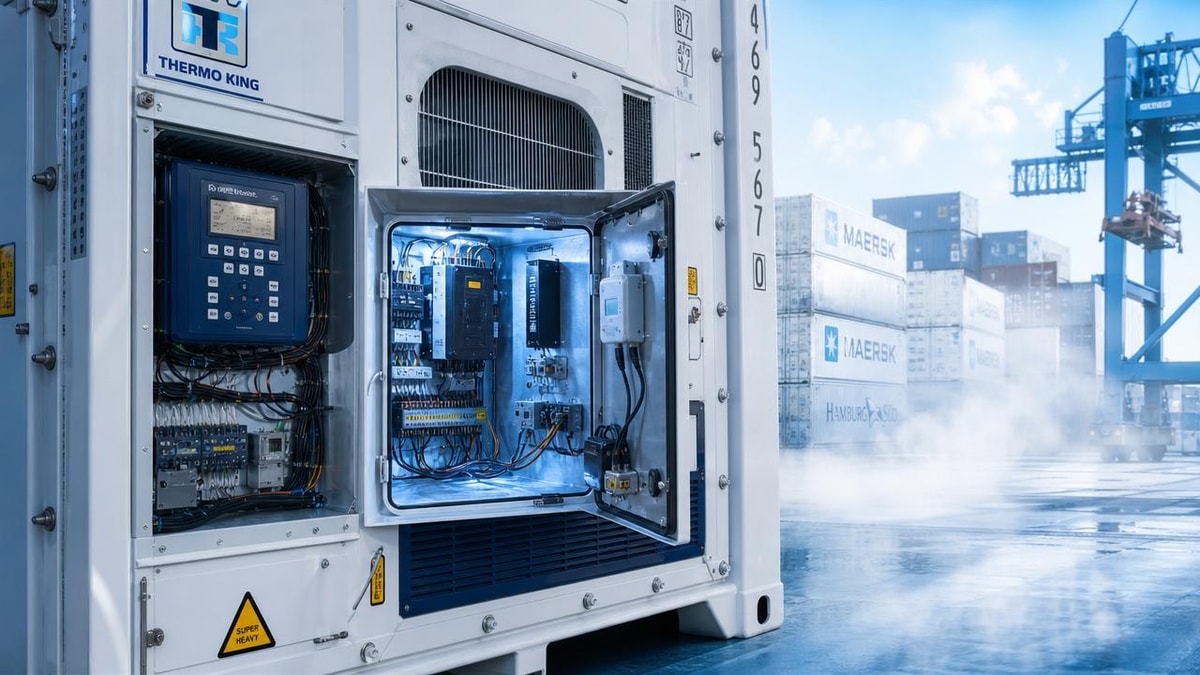
For after-sales maintenance teams, reefer failures rarely start with a catastrophic breakdown—they begin with small data gaps, sensor drift, or delayed response to alarms. That is why Reefer Technology upgrades matter: the right monitoring, control, and diagnostic improvements can reduce temperature excursions, speed root-cause analysis, and directly cut cargo claim rates. This article highlights the upgrades that deliver measurable results in real cold-chain operations.
In global cold-chain logistics, claim rates are often driven by preventable deviations rather than major equipment loss. A 20-minute unnoticed return-air anomaly, a door opening event without traceable records, or an outdated controller that logs too few data points can turn a stable shipment into a dispute. For maintenance teams supporting ports, depots, 3PL fleets, and cross-border reefer flows, the value of an upgrade is not theoretical—it is measured in fewer alarms escalated, faster repair cycles, and stronger evidence when cargo quality is questioned.
Within the broader smart-logistics environment, Reefer Technology now sits at the intersection of hardware reliability, sensor accuracy, software visibility, and data governance. Maintenance teams are expected to protect both physical performance and digital traceability. That means choosing upgrades that improve control stability, alarm intelligence, and serviceability across operating windows that may span 7 to 30 days in transit.
Why claim rates rise even when reefer units still appear operational
The first maintenance mistake is assuming that a reefer claim begins only when a compressor fails or a controller shuts down. In reality, many claims are linked to partial degradation. Units may still cool, but not within the tolerance the cargo requires. For chilled produce, a deviation of 1°C to 2°C over several hours can be commercially significant. For pharmaceuticals or high-value seafood, even tighter limits may apply.
The most common hidden failure paths
After-sales teams typically encounter five recurring causes behind claims: sensor drift, poor airflow, delayed alarm acknowledgement, incomplete event logs, and control lag after power interruption. None of these always trigger immediate shutdown. That is exactly why they are expensive. A shipment may arrive with the unit technically functional, while the cargo owner argues that the temperature profile was outside spec for 4 to 12 hours.
- Supply-air and return-air sensors drifting beyond practical tolerance, often after long vibration exposure.
- Door events or power cycling not captured with sufficient timestamp detail.
- Controllers logging too slowly, such as every 30 or 60 minutes instead of every 5 minutes.
- Defrost behavior not matched to cargo load pattern, causing avoidable temperature spikes.
- Technicians lacking remote diagnostics, extending mean time to identify root cause.
For maintenance organizations working in port yards or inland terminals, the operational impact expands quickly. One disputed container can trigger inspection hours, customer escalation, and repeated data extraction requests. If the reefer unit does not provide clean, continuous operational evidence, the maintenance team may struggle to prove whether the issue came from the machine, loading practice, cargo respiration, or external handling delays.
Which upgrade areas usually produce the fastest reduction in claims
Not every hardware refresh produces the same return. The most effective Reefer Technology investments are usually the ones that improve three measurable outcomes at once: tighter control, better visibility, and shorter diagnostic time. In practice, this means maintenance leaders should prioritize components and systems that affect data resolution, alarm quality, and service response within the first 15 to 60 minutes of an incident.
The table below maps common claim drivers against upgrade priorities and maintenance benefits.
The key takeaway is that claim reduction depends on evidence quality as much as cooling capacity. A reefer unit with better data, smarter alarms, and more stable sensing is easier to maintain and easier to defend when exceptions occur.
Reefer Technology upgrades that deliver measurable maintenance value
The most practical upgrades are the ones maintenance teams can verify during routine inspection, commissioning, and post-incident review. They should improve performance without creating excessive complexity or requiring unrealistic retraining. In most fleet or terminal environments, the highest-value bundle includes four layers: sensing, control, connectivity, and service diagnostics.
1. Higher-accuracy sensing and calibration discipline
Temperature control is only as reliable as the sensor inputs driving it. Upgrading older analog or lower-stability sensor assemblies to more robust digital sensing can reduce uncertainty, especially in routes exposed to vibration, salt, and repeated power transitions. For maintenance teams, the real gain is not only better readings, but more predictable calibration behavior over 6, 9, or 12 months.
What to check
- Sensor tolerance under operating temperature ranges such as -25°C to +25°C.
- Consistency between supply-air, return-air, and cargo probe values.
- Field calibration workflow that can be completed within 15 to 30 minutes.
- Digital traceability of calibration history for audit and claim documentation.
A sensor upgrade pays off most when paired with a disciplined calibration interval and pass-fail threshold. Maintenance teams that define a trigger, such as replacement when drift exceeds a practical tolerance band, usually gain better control consistency than teams that wait for outright sensor failure.
2. Smart controllers with denser data logging
Legacy reefer controllers may store limited event history or log at intervals too wide for effective diagnosis. Upgrading to controllers that capture operating variables at 1-minute to 5-minute intervals can transform fault investigation. Instead of seeing only a broad temperature trend, technicians can identify whether a deviation followed a door opening, a defrost cycle, a power interruption, or a compressor performance drop.
This is especially important in multimodal chains where equipment moves between port terminals, trucks, depots, and vessel power sources. Every transfer point creates another opportunity for a temperature excursion or undocumented interruption. Better logging reduces ambiguity.
3. Remote monitoring and alarm prioritization
A large share of avoidable loss occurs because alarms are seen too late or treated with the wrong priority. Remote visibility allows after-sales teams to act before the cargo is affected for several hours. The most effective systems do not simply push every alarm. They classify severity, distinguish between advisory and critical events, and support escalation when no response occurs within a defined window such as 10, 20, or 30 minutes.
For example, a temporary door-open event should not generate the same operational reaction as a rapid return-air rise combined with compressor overcurrent. Better alarm logic prevents fatigue and helps technicians focus on the 5% of events that can create 80% of claim exposure.
4. Diagnostic interfaces that shorten root-cause analysis
When a reefer issue becomes a customer claim, the clock starts immediately. Maintenance teams need to answer four questions fast: what happened, when it started, how long it lasted, and whether the unit or the operating environment caused it. Upgraded diagnostic tools that provide fault trees, component histories, power-quality records, and event exports can reduce troubleshooting time from several hours to under 1 hour in many cases.
The next table compares upgrade categories from a maintenance decision perspective.
In many programs, the strongest result comes from combining at least two categories instead of deploying a single isolated upgrade. Better sensors without better logs still leave evidence gaps. Better logs without faster alarms still allow avoidable excursions to continue too long.
How to implement upgrades without disrupting reefer service continuity
A good upgrade plan should reduce claims without increasing downtime, training burden, or parts complexity. Maintenance leaders should treat Reefer Technology modernization as a staged reliability project, not a one-time purchase. A 3-phase deployment is often more effective than a full fleet changeover, especially where assets vary by age, route profile, and cargo sensitivity.
Phase 1: baseline the failure pattern
Start with the last 6 to 12 months of incidents and classify them into categories: confirmed equipment fault, probable sensor issue, handling-related excursion, airflow/load issue, and unverified due to poor data. This baseline helps separate mechanical reliability problems from visibility problems. Many operators discover that a meaningful share of claims could not be conclusively assigned because logs were incomplete.
Phase 2: prioritize high-exposure lanes and assets
Not every reefer unit needs the same immediate investment. Focus first on assets serving high-value cargo, routes longer than 5 to 7 days, and operations with multiple transfer points. These are the environments where a single 2-hour excursion can create disproportionate commercial loss. Maintenance teams should also prioritize units with repeated nuisance alarms or unresolved intermittent faults.
Phase 3: standardize workflow and evidence handling
Upgrades only cut claim rates when the service process changes with them. Alarm thresholds, escalation paths, calibration intervals, and data retention rules should be standardized. A technician on the night shift should follow the same first-response logic as a day-shift engineer at another depot. In practice, that means defining 4 to 6 response triggers, documentation templates, and export procedures for customer-facing investigations.
A practical implementation checklist
- Audit current claim causes and missing data points.
- Test sensor accuracy and controller log intervals on representative units.
- Define alarm severity levels and response-time targets.
- Train technicians on new diagnostics and record handling.
- Review results after 30, 60, and 90 days to confirm reduction in unresolved incidents.
This structured approach also supports broader smart-port and logistics digitization goals. As cold-chain infrastructure becomes more integrated with terminal systems, fleet visibility platforms, and compliance reporting, maintenance teams that can deliver reliable reefer data become strategically more valuable to the whole supply chain.
Common mistakes when selecting Reefer Technology upgrades
The market offers many digital and hardware options, but not all of them reduce claims. Some simply generate more data without improving actionability. Others add complexity that field teams do not consistently use. The right procurement decision should balance technical capability, service practicality, and compatibility with existing cold-chain workflows.
Mistake 1: buying visibility without service workflow
A dashboard alone does not reduce excursions. If no one is assigned to review exceptions within a clear time window, alerting becomes decorative. For most maintenance operations, value comes from response design: who receives the alarm, what threshold matters, and what action must be taken within the first 15 minutes.
Mistake 2: focusing only on compressor or power components
Mechanical reliability remains critical, but many claims stem from control and information gaps rather than complete refrigeration loss. Teams that invest only in major hardware may still face recurring disputes if they cannot prove box conditions, identify sensor drift, or reconstruct event sequences across handoffs.
Mistake 3: ignoring training and calibration capacity
An upgrade is only effective if the field team can maintain it. Before procurement, ask whether calibration tools, replacement parts, and diagnostic procedures fit current staffing. If a solution requires specialist intervention for every adjustment, service delays may cancel out its technical advantage.
Mistake 4: failing to define success metrics
Maintenance teams should measure at least three outcomes after deployment: number of temperature excursion claims, mean time to diagnose, and percentage of incidents with complete usable data. Even a 15% to 25% improvement in documented incident clarity can materially strengthen customer communication and internal accountability.
What maintenance teams should ask vendors and internal stakeholders
Whether the reefer fleet is operated by a shipping line, leasing company, port support provider, or 3PL, maintenance personnel should influence upgrade selection early. The most useful vendor conversations go beyond feature lists and focus on operating scenarios, service intervals, and evidence needs during claims.
Key evaluation questions
- What is the standard logging interval, and can it be adjusted to 1, 5, or 15 minutes?
- How are alarms categorized, and can escalation rules be configured by depot or route?
- What calibration records and service histories can be exported for claim review?
- How long does a typical retrofit take per unit: 2 hours, half a day, or longer?
- Which spare parts and technician skills are required in the first 12 months?
These questions align reefer investment with the reality of high-throughput cold-chain operations. In environments shaped by port automation, digital freight visibility, and stricter cargo integrity expectations, the best Reefer Technology is the technology that turns maintenance from reactive repair into controlled risk prevention.
For after-sales maintenance teams, the most effective claim-reduction strategy is rarely a full hardware overhaul. It is usually a targeted combination of better sensors, denser data logging, smarter alarm handling, and faster diagnostics. Those upgrades improve both equipment performance and the quality of operational evidence, which is essential in modern cold-chain logistics where cargo disputes often hinge on minutes, not days.
If your organization is reviewing reefer reliability, port-side cold-chain infrastructure, or maintenance modernization priorities, now is the right time to map current claim drivers against upgrade opportunities. Contact us to discuss your operating profile, get a tailored Reefer Technology assessment, and explore solutions that fit real service conditions across global logistics networks.
Related Intelligence